Insulation lowers heating bills but can raise indoor moisture risk, costing roughly £200–£500 in avoidable repairs
Insulation reduces heat loss and saves energy, but it also makes homes more airtight, trapping moisture indoors. Condensation becomes a problem when warm, humid air meets cold surfaces like windows or uninsulated walls. Poorly installed or inappropriate insulation can worsen condensation, leading to mould and damp.
The key is balancing insulation with adequate ventilation and moisture management. According to the Department for Energy Security and Net Zero (DESNZ), the number of homes with full insulation has risen steadily, yet condensation-related repair costs for homeowners typically fall between £200 and £500 per incident (DESNZ, 2026). These costs cover mould remediation, redecorating, and minor structural repairs.
The primary cause of condensation in insulated homes is inadequate ventilation
Modern insulation standards, such as those in Building Regulations Part F, require mechanical ventilation in airtight homes (GOV.UK, 2026). Without extractor fans in kitchens and bathrooms, or trickle vents on windows, moisture builds up. Even with good insulation, cold spots from thermal bridging can cause condensation on walls and ceilings.
Thermal bridging occurs where insulation is interrupted, such as at wall-floor junctions or around window frames, creating a path for heat to escape and a cold surface for moisture to condense on. In practice, this means that even a well-insulated home can develop damp patches if the building fabric is not continuous.
Quick numbers typical condensation costs and insulation savings in 2026
| Item | Typical cost (GBP) | Frequency | Source |
|---|---|---|---|
| Mould remediation (per room) | £150–£500 | Once-off | Energy Saving Trust (EST, 2026) |
| New extractor fan installation | £100–£250 | Once-off | Energy Saving Trust (EST, 2026) |
| Loft insulation top-up (270mm) | £300–£500 | Once-off | Energy Saving Trust (EST, 2026) |
| Cavity wall insulation | £500–£2,000 | Once-off | Energy Saving Trust (EST, 2026) |
| Annual energy saving from full insulation | £200–£400 | Yearly | Ofgem (Ofgem, 2026) |
| Dehumidifier (annual electricity cost) | £50–£100 | Yearly | Energy Saving Trust (EST, 2026) |
These figures show that while insulation saves money on heating, failing to address ventilation can cost hundreds in repairs. Compare insulation costs vs repair costs for different house types
How to choose insulation that minimises condensation risk
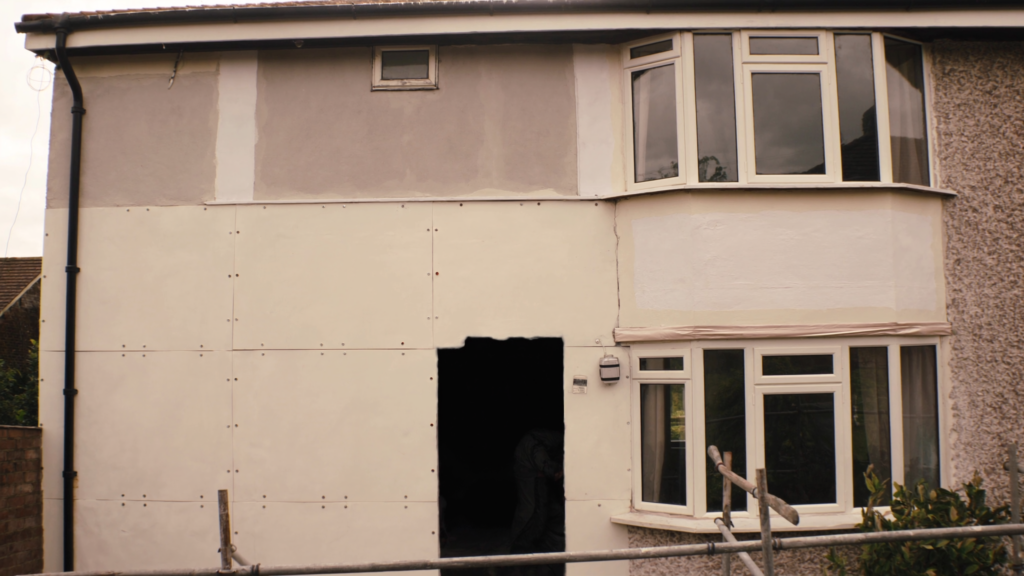
For solid walls, internal insulation (dry-lining) or external insulation can reduce cold surfaces, but must include a vapour control layer to prevent moisture penetrating the insulation. A vapour control layer is a plastic or foil sheet placed on the warm side of the insulation, stopping humid indoor air reaching the cold outer fabric. For cavity walls, blown-fibre or foam insulation must be installed correctly to avoid bridging and moisture trapping, as per MCS (Microgeneration Certification Scheme) installation standards (MCS, 2026).
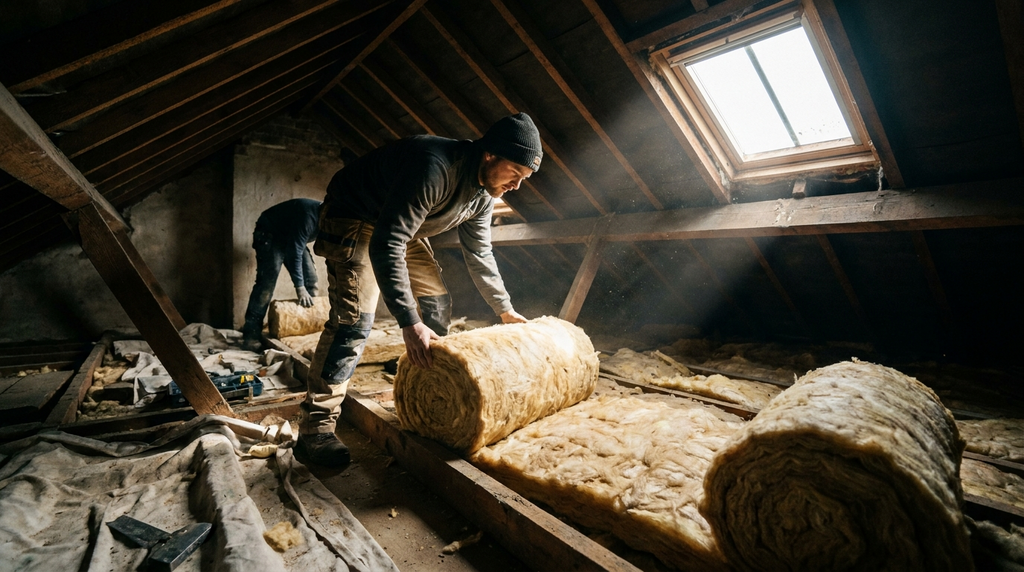
Loft insulation should not block eaves vents; ensure a 50mm air gap at the roof edge to allow airflow. The Energy Saving Trust’s Solid Wall Insulation Guide recommends checking for existing damp before installation and using breathable materials where possible (EST, 2026).
Eligibility and certification verifying an insulation installer in 2026
For cavity wall and solid wall insulation, check installers are registered with the National Insulation Association (NIA) or the Cavity Insulation Guarantee Agency (CIGA). For all insulation work, look for TrustMark accreditation for quality assurance. For loft insulation, any competent installer can do it, but CIGA-backed guarantees cover cavity and solid wall work only (CIGA, 2026).
You can find a TrustMark registered business through the government’s online tool (GOV.UK, 2026). Using certified installers ensures the work complies with building regulations and reduces the risk of condensation caused by poor installation.
The direct answer insulation alone does not cause condensation, but it can worsen it without ventilation
Condensation occurs when humid indoor air cools on surfaces; insulation raises surface temperatures, reducing condensation risk. However, if insulation is installed without addressing air leakage or ventilation, moisture is trapped. The Building Research Establishment (BRE) states that the solution is to combine insulation with mechanical ventilation (e.g., extractor fans, MVHR systems) and proper air sealing (BRE, 2026).
MVHR stands for mechanical ventilation with heat recovery, a system that extracts stale, moist air and brings in fresh, filtered air while recovering heat from the outgoing air. For existing homes, simpler options like continuous running extractor fans are effective.
How to check if your home has a condensation problem after insulation
Look for damp patches on walls, especially in corners and behind furniture, or mould on window frames. Measure relative humidity with a hygrometer; levels above 60% indicate risk. Check for blocked trickle vents or extractor fans not working; test by holding a tissue near the vent, if it does not stick, the fan is not drawing air (EST, 2026).
Other signs include a musty smell, peeling wallpaper, or water droplets on windows in the morning. If you notice these after installing insulation, the likely cause is insufficient ventilation rather than the insulation itself.
Ventilation solutions that work with insulation to prevent condensation
Mechanical extract ventilation (MEV) or continuous running extractor fans in kitchens and bathrooms are the most common solutions. Positive input ventilation (PIV) systems provide whole-house airflow, especially in lofts, by drawing in filtered air from outside. MVHR systems are best for new builds or major retrofits, as they recover heat while removing moisture (GOV.UK, 2026).
Simple measures also work: open windows daily for 10–15 minutes, use cooker hoods when cooking, and avoid drying clothes indoors. The Energy Saving Trust recommends combining these with insulation to maintain healthy indoor humidity levels (EST, 2026). Read more about choosing the right ventilation system for your home
Frequently Asked Questions
Yes, insulation can worsen condensation if the home becomes too airtight without adequate ventilation. According to the Energy Saving Trust (EST, 2026), mechanical ventilation is essential to manage indoor moisture.
Typical condensation damage costs £200–£500 per incident, covering mould remediation, redecorating, and minor structural repairs, as reported by the Department for Energy Security and Net Zero (DESNZ, 2026).
Thermal bridging is where insulation is interrupted, creating a cold surface for moisture to condense on. GOV.UK (2026) states that Building Regulations Part F require continuous insulation to prevent this.
Install extractor fans in kitchens and bathrooms, add trickle vents to windows, and ensure loft insulation is continuous. The Energy Saving Trust (EST, 2026) recommends mechanical ventilation for airtight homes.
Cavity wall insulation can reduce condensation by keeping internal walls warmer, but only if installed correctly. The Energy Saving Trust (EST, 2026) warns that poorly fitted insulation may create cold spots.