The 2026 Grant Landscape for Cork Insulation Remains Limited to Fabric-First Schemes
If you are looking for a direct grant that pays for cork insulation alone, the answer is no. As of 2026, cork insulation is not listed as a standalone measure in the Great British Insulation Scheme (GBIS) or the Boiler Upgrade Scheme (BUS). Homeowners can only access funding for cork insulation through fabric-first retrofit schemes where it is part of a whole-house energy plan.
The main routes are the Social Housing Decarbonisation Fund for social landlords and local authority flexible eligibility (LA Flex) schemes for private homeowners. Eligibility depends on your property’s Energy Performance Certificate (EPC) rating, usually D or below, and your household meeting specific low-income or vulnerable criteria (DESNZ, 2026). LA Flex guidance from Ofgem requires you to check with your local council for their specific criteria (Ofgem, 2026).
Cork Insulation Is Eligible for VAT Relief at 0% for All Homeowners in 2026
The UK government’s 0% VAT on energy-saving materials (ESM) applies to cork insulation products installed by a registered installer. This relief covers both internal cork board and external cork render systems, provided the installation is for a qualifying purpose such as improving the thermal efficiency of an existing dwelling.
Homeowners must use an installer registered with a Competent Person Scheme (MCS, TrustMark, or equivalent) to claim the relief on both labour and materials. HMRC VAT Notice 708/6 confirms that cork insulation qualifies under the list of energy-saving materials for residential buildings (HMRC, 2026). This is a substantial saving, as VAT at 20% would otherwise add significantly to the total cost.
The Most Common Cork Insulation Applications Are Internal Wall Boards and External Render Systems
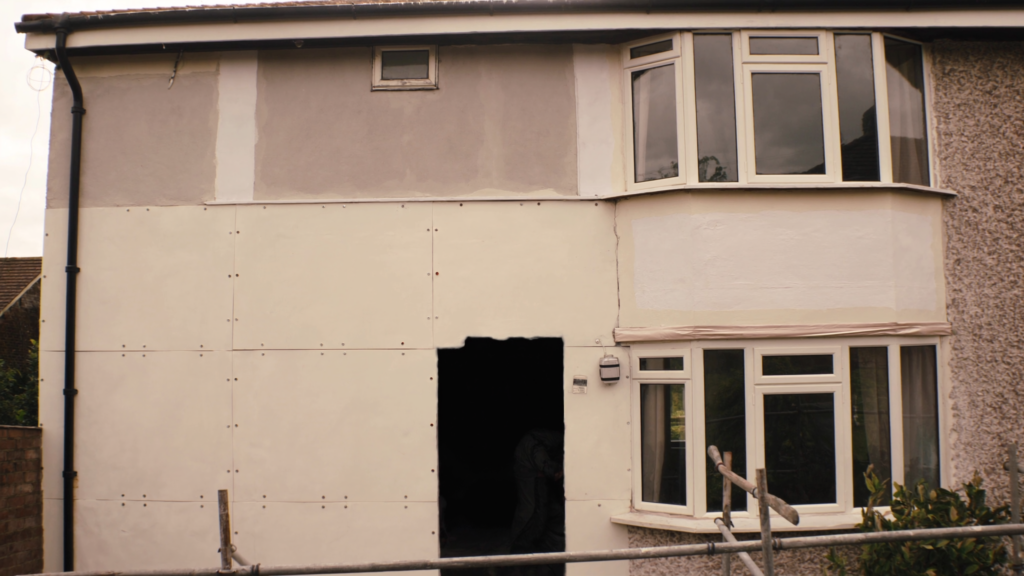
Cork insulation is predominantly installed as internal wall insulation (IWI) using rigid cork boards, typically 50–100mm thick, or as external wall insulation (EWI) using cork render systems. For IWI, cork boards are fixed to masonry walls using adhesive and mechanical fixings, then plastered over. For EWI, cork granules are mixed with lime or cement render and applied in layers.
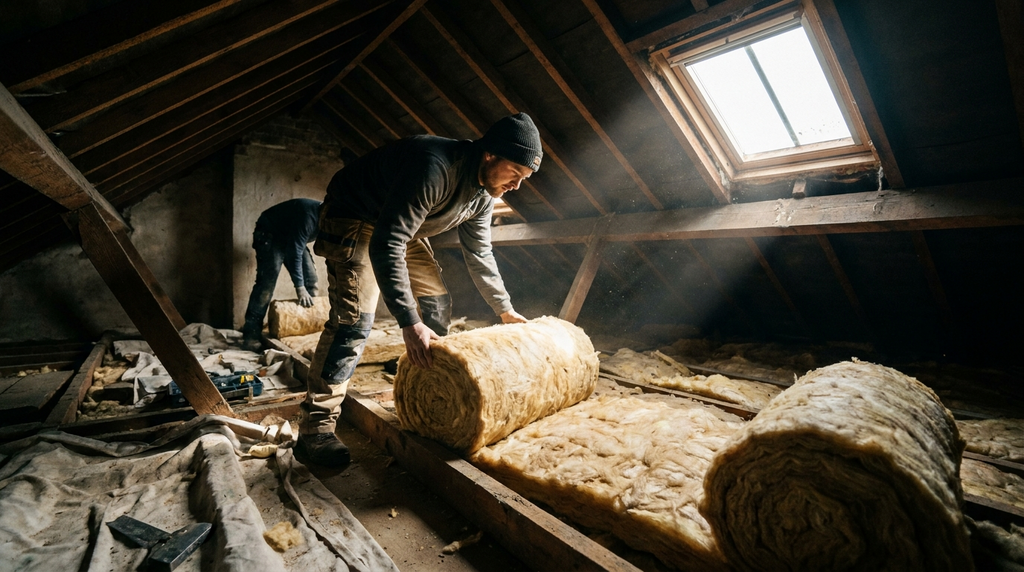
Cork is also used for loft insulation in breathable constructions, such as timber-frame roofs, but it is less common than mineral wool or cellulose. The Energy Saving Trust notes that cork is a natural, vapour-permeable material suitable for solid-wall properties where moisture management is critical (Energy Saving Trust, 2026).
Quick Numbers Thermal Performance
| Material type | Typical thickness (mm) | U-value improvement (W/m²K) | Material cost per m² (£) | Installation cost per m² (£) | Potential annual savings on heating bills (£) |
|---|---|---|---|---|---|
| Internal cork board | 80 | 0.35 | 25–40 | 15–20 | 100–200 |
| External cork render | 100 | 0.30 | 35–55 | 25–40 | 150–300 |
| Loft cork board | 150 | 0.25 | 30–50 | 10–15 | 80–150 |
| Cork granules (EWI) | 120 | 0.28 | 40–60 | 30–50 | 120–250 |
These figures are based on typical UK semi-detached houses. BRE thermal performance data shows cork insulation has a thermal conductivity of 0.038–0.045 W/mK, comparable to mineral wool (BRE, 2026). Annual savings depend on your existing heating system and property size, but the Energy Saving Trust estimates these ranges for a typical solid-wall home (Energy Saving Trust, 2026).
How to Verify an Installer for Cork Insulation MCS
Cork insulation installation for grant eligibility or VAT relief requires an installer registered with a Competent Person Scheme. TrustMark covers general insulation work, while MCS is required if the cork is part of a renewable heating system, such as an air source heat pump (TrustMark, 2026; MCS, 2026).
For external wall insulation (EWI) cork systems, the installer must also be registered with a building control body, such as BBA or UKAS, to ensure compliance with Building Regulations Part L on conservation of fuel and power (GOV.UK, 2026). Homeowners can check an installer’s registration on the TrustMark or MCS register websites before hiring.
The Direct Answer Cork Insulation Is a Viable but Niche Option for UK Homeowners in 2026
Cork insulation is a natural, breathable material suitable for solid-wall properties, particularly pre-1920s homes and listed buildings where vapour-permeable insulation is required. It offers a thermal conductivity of 0.038–0.045 W/mK, comparable to mineral wool, but with higher embodied carbon benefits and acoustic performance (Energy Saving Trust, 2026).
Homeowners must self-fund most cork installations unless they qualify for fabric-first grants under local authority schemes or the Social Housing Decarbonisation Fund. Historic England guidance confirms that cork is one of the few insulation materials suitable for historic buildings due to its breathability and low risk of moisture trapping (Historic England, 2026). insulating solid walls in older homes
Eligibility for Cork Insulation Grants Depends on Property Type
The Great British Insulation Scheme closed on 31 March 2026. It funded insulation measures only and never covered windows or glazing. Local authority flexible eligibility (LA Flex) schemes may fund cork insulation for low-income households in fuel poverty, regardless of EPC rating, if the measure is recommended in a retrofit assessment (Ofgem, 2026).
Cork insulation is not eligible for the Boiler Upgrade Scheme (BUS) as it is not a heating measure. Homeowners must apply separately for insulation grants through their energy supplier or local council. DESNZ fuel poverty statistics show that households in fuel poverty are prioritised for LA Flex funding (DESNZ, 2026).
Why Cork Insulation Is Not a Standard Measure in UK Grant Schemes as of 2026
The UK’s main insulation grant schemes, GBIS and ECO4, prioritise cavity wall and loft insulation due to lower cost and faster installation times. Cork insulation is classified as a ‘non-standard’ measure under ECO4, meaning it is only funded when a property cannot accommodate standard measures, such as solid walls in conservation areas (DESNZ, 2025).
The higher material cost, typically 30–50% more than mineral wool, and limited installer supply reduce its inclusion in grant-funded programmes. Energy Saving Trust cost comparison data shows cork at £40–60 per m² installed versus £20–30 for mineral wool (Energy Saving Trust, 2026). comparing natural insulation materials
Frequently Asked Questions
You can only access funding through fabric-first schemes like LA Flex or the Social Housing Decarbonisation Fund, which require a whole-house plan. Check with your local council for eligibility criteria (Ofgem, 2026).
Yes, cork insulation qualifies for 0% VAT under the UK government's energy-saving materials scheme. This applies to both internal cork boards and external cork render systems, provided a registered installer does the work (HMRC, 2026).
Cork insulation costs £25-£35/m² for internal wall boards and £35-£45/m² for external render systems, including installation. Prices vary by thickness (50-100mm) and property access, so get multiple quotes from TrustMark-registered installers.
Cork is a natural, breathable material with better acoustic and thermal properties than foam, but costs more. Foam insulation (PIR) is cheaper at £15-£25/m² but has higher embodied carbon. Cork is best for solid wall period homes where moisture management matters.
Yes, you can DIY cork insulation, but you will lose the 0% VAT relief which requires a registered installer. DIY also risks improper fitting that reduces thermal performance. For best results, use a TrustMark-registered installer for both quality and tax savings.
Cork insulation lasts 50+ years when installed correctly, as it is rot-resistant and pest-repellent. It does not degrade like foam and maintains its thermal performance over time. Regular checks for damp are recommended in solid wall applications.