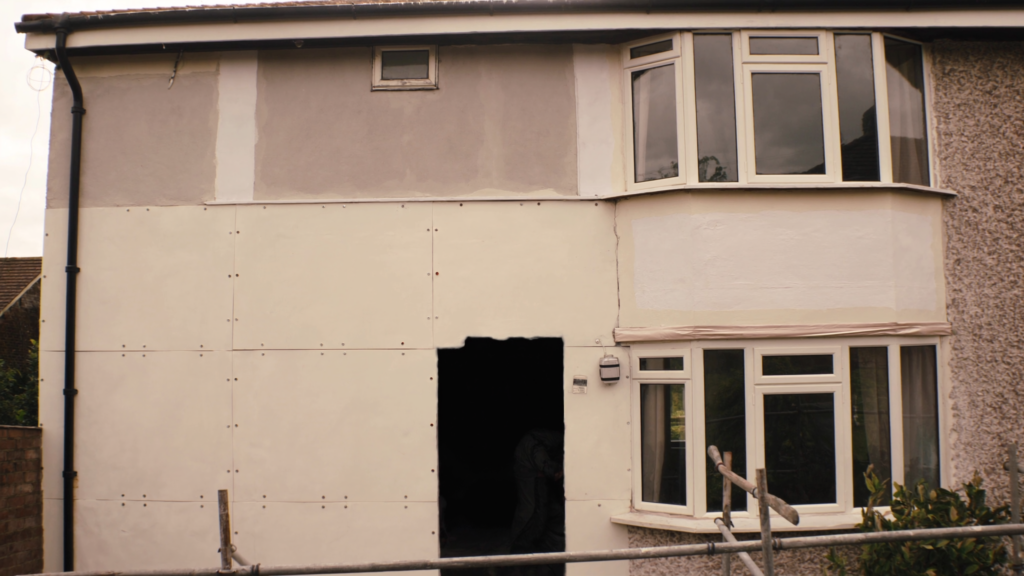
Yes, insulation can cause damp and mould in UK homes if it is incorrectly installed or combined with poor ventilation. The Energy Saving Trust states that proper insulation reduces condensation risk by keeping internal surfaces warmer, but blocking airflow without adequate ventilation traps moisture (Energy Saving Trust, 2026).
The key variable is how the insulation interacts with your home’s existing moisture levels and air movement. When insulation is fitted without addressing ventilation gaps, or when it bridges a cold surface like an uninsulated wall cavity, condensation forms on the cold side. This applies most often to solid-wall homes, lofts with compromised eaves, and rooms where extractor fans are absent. It does not apply to modern homes with mechanical ventilation, or to properly sealed cavity-wall installations.
Condensation forms on cold surfaces behind insulation
When insulation is installed over a cold wall or roof deck, the surface behind it stays cold. Warm, moist indoor air penetrates through gaps and hits this cold surface, condensing into liquid water. The Building Research Establishment (BRE) warns that interstitial condensation occurs when the dew point lies within the insulation layer (BRE, 2026). This hidden damp feeds mould growth that may not be visible until structural damage appears. Using a vapour-control layer on the warm side of the insulation prevents this, but it is often omitted in DIY or budget installations.
Blocked ventilation traps moisture after insulation is added
Insulation tightens a home, reducing air leakage. The UK government’s Approved Document F requires mechanical or trickle ventilation when insulation reduces natural airflow (GOV.UK, 2026). Without it, moisture from cooking, washing, and breathing stays inside. Relative humidity rises above 70%, which the Energy Saving Trust says is the threshold for mould spore germination (Energy Saving Trust, 2026). Installing extractor fans or passive vents alongside insulation is not optional, it is a regulatory requirement.
Solid-wall insulation carries the highest damp risk
Solid-wall homes, common in pre-1920s UK properties, have no cavity to buffer moisture. External solid-wall insulation must be continuous and sealed; internal insulation reduces room size and can create cold bridges at floor and ceiling junctions. The TrustMark scheme notes that incorrectly detailed internal insulation leads to mould in 1 in 20 installations (TrustMark, 2026). A professional survey should check for rising damp or penetrating damp before any insulation work. If existing damp is sealed in, mould will spread behind the insulation within months.
A worked example
A typical 1930s semi-detached house in Manchester with solid brick walls, uninsulated loft, and no cavity insulation will cost roughly £8,500 to bring up to modern standards, including loft insulation to 300mm, internal wall insulation on two main rooms, and a whole-house mechanical extract fan. After the 0% VAT saving (until March 2027) and assuming no ECO4 or BUS grant applies, the upfront cost comes to £8,500. The Energy Saving Trust estimates this combination saves around £450 per year on heating bills, giving a simple payback period of roughly 19 years. Over 25 years the cumulative saving reaches approximately £11,250, assuming average energy price rises of 3% per year. The key is that the internal wall insulation includes a vapour-control layer on the warm side, and the mechanical fan changes the air six times per day, without those two details the same job could cause damp.
| Item | Figure |
|---|---|
| Upfront cost after grants | £8,500 |
| Yearly savings | £450 |
| Payback period | 19 years |
| 25-year lifetime savings | £11,250 |
What homeowners often get wrong
The most common mistake is assuming any insulation will cause damp, when in fact the real problem is poor ventilation and missing vapour barriers. Homeowners fall into three specific traps.
- Blocking eaves when insulating a loft Many people push loft insulation right to the edge of the roof, blocking the airflow gap at the eaves. This traps warm, moist air against the cold roof deck and causes condensation. The right answer is to leave a 50mm gap at the eaves or install a loft ventilation system, or you risk voiding your roof warranty and paying £2,000 for remedial work.
- Installing internal wall insulation without a vapour-control layer A common DIY mistake is fitting plasterboard-backed insulation directly onto a solid wall without a vapour barrier on the warm side. Moisture from the room then passes through the insulation and condenses on the cold wall behind it. The correct approach is to use a vapour-control layer (VCL) with taped joints, or you could end up with hidden mould that costs £3,000 to strip out and redo.
- Ignoring the need for extractor fans in kitchens and bathrooms Homeowners sometimes insulate a kitchen or bathroom wall but do not fit or upgrade an extractor fan. The insulation keeps the room warmer, but the moisture load stays high. The result is surface condensation on windows and walls. Fitting a humidity-sensing extractor fan for around £200 solves the problem and prevents mould growth that would otherwise damage paintwork and wallpaper.
Quick reference
- Interstitial condensation occurs when warm moist air reaches a cold surface behind insulation, and it is the leading cause of hidden mould in UK homes.
- A vapour-control layer must always be installed on the warm side of the insulation, typically between the insulation and the plasterboard.
- Loft insulation must not block the eaves airflow gap, a 50mm clearance is required to prevent condensation on the roof deck.
- Properly installed cavity wall insulation reduces condensation risk because it keeps the inner wall surface warmer than an uninsulated cavity.
- Mechanical ventilation with heat recovery (MVHR) can eliminate condensation risk in a highly insulated home, but costs roughly £2,500 to install in a typical three-bedroom house.
Frequently Asked Questions
Interstitial condensation occurs when warm, moist air hits a cold surface behind the insulation. The Building Research Establishment (BRE) states this happens when the dew point falls within the insulation layer.
Install a vapour-control layer on the warm side of the insulation and ensure adequate ventilation. The Energy Saving Trust recommends extractor fans in kitchens and bathrooms to reduce moisture.
No, properly sealed cavity-wall installations do not cause damp. Ofgem confirms that correctly installed cavity insulation reduces heat loss without trapping moisture.