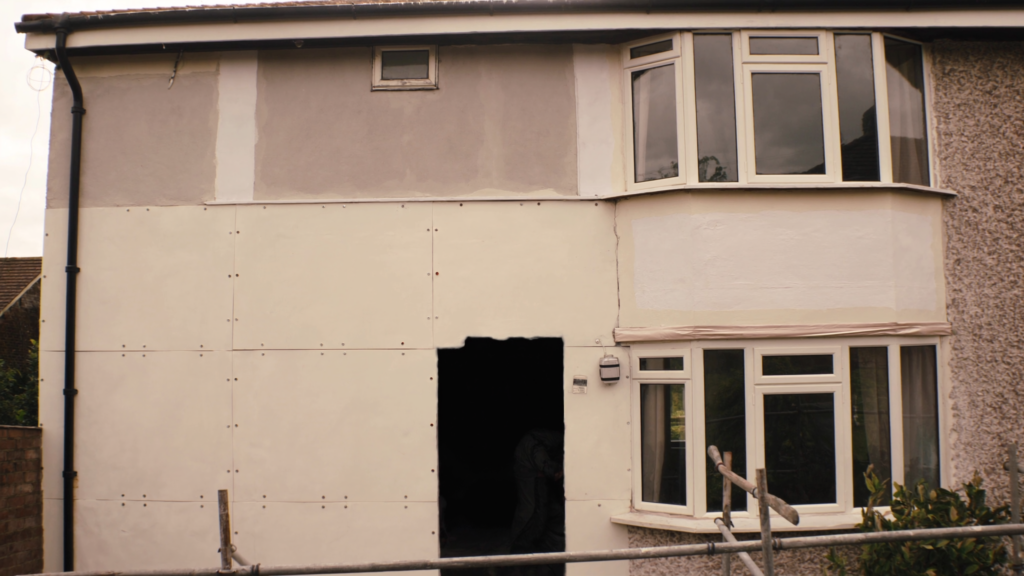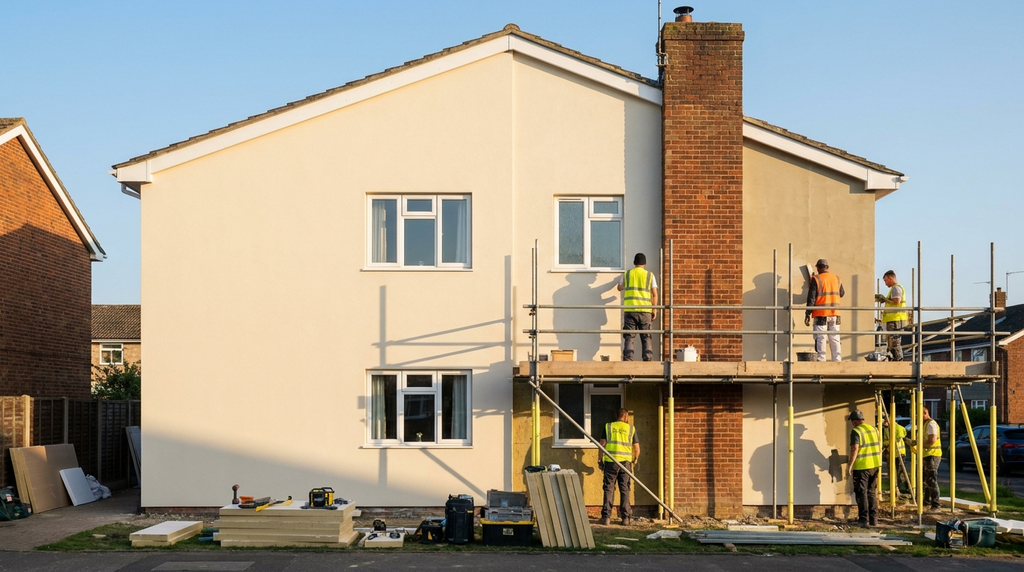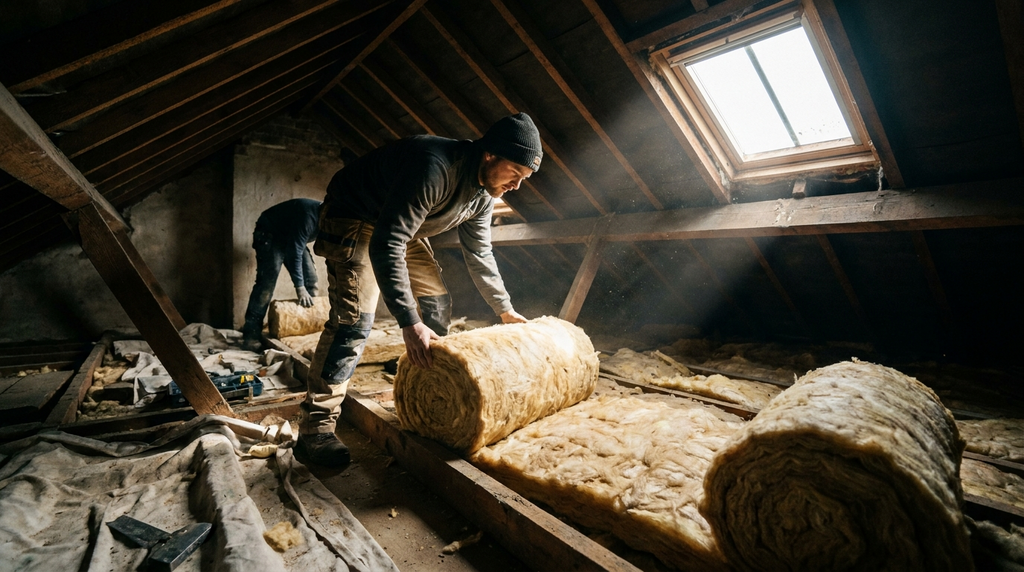
One in four UK stone cottages was built before 1919, making them structurally distinct from modern homes – DESNZ
Data from the Department for Energy Security and Net Zero (DESNZ) shows that around 24% of homes in England were built before 1919, and a significant proportion of these are stone cottages (DESNZ, 2026). Unlike modern brick-and-block houses, stone cottages were built with solid, single-leaf walls that have no cavity. This means the wall is a single thickness of stone, often with lime mortar holding it together.
Insulating a stone wall cottage costs £4,000-£18,000 for internal insulation. You must use breathable materials like wood fibre or hempcrete to avoid damp. Standard cavity insulation does not apply to solid stone walls.
- Stone cottages lose heat 7x faster than modern homes, with U-values above 2.0 W/m²K.
- Use breathable insulation like wood fibre or hempcrete to prevent damp.
- Cavity wall insulation does not work for solid stone walls.
- Internal insulation costs £4,000-£18,000 depending on wall area.
- External insulation is an alternative but costs more and changes the look.
- One in four UK stone cottages was built before 1919, making them structurally distinct from modern homes – DESNZ
- How breathable insulation prevents damp in a stone wall cottage
- Quick numbers cost, U-value, and savings for insulating a stone wall cottage
- Who qualifies for UK government grants to insulate a stone wall cottage in 2026
- The direct answer how to insulate a stone wall cottage without causing damp
- How to verify an installer for stone wall cottage insulation – MCS and TrustMark
- When external insulation is better for a stone wall cottage – and when it is not
- What to do if your stone cottage is a listed building or in a conservation area
Solid stone walls have a high thermal mass, meaning they absorb and store heat slowly, but they also have a very low U-value. The U-value measures how quickly heat passes through a material. For a typical stone wall, the U-value is often above 2.0 W/m²K, compared to a modern insulated wall which can be as low as 0.3 W/m²K (BRE SAP tables, 2026). This means a stone cottage loses heat through its walls at roughly seven times the rate of a modern home. Standard cavity-wall insulation methods do not apply here, because there is no cavity to fill. The only options are internal or external insulation applied to the solid wall.
How breathable insulation prevents damp in a stone wall cottage
Breathable insulation is material that allows water vapour to pass through it, rather than trapping moisture inside the wall. Wood fibre board, hempcrete, and lime-based plasters are all breathable. Non-breathable materials, such as closed-cell PIR foam boards or cement-based renders, create a vapour barrier that traps moisture within the stonework. This trapped moisture can lead to interstitial condensation, which rots timber joists and causes damp patches on internal walls.
The Energy Saving Trust advises that solid stone walls must be insulated with a vapour-open assembly that matches the original lime mortar (Energy Saving Trust, 2026). Lime mortar allows moisture to evaporate from the wall naturally. If you seal the wall with a non-breathable material, the moisture has nowhere to go and will accumulate inside the wall structure. The correct approach is to use materials that have a similar vapour permeability to lime, so the wall can continue to breathe.
Quick numbers cost, U-value, and savings for insulating a stone wall cottage
| Insulation type | Typical U-value after installation | Average cost per m² (GOV.UK/BEIS data) | Annual energy saving (EST estimate for 100m² cottage) |
|---|---|---|---|
| Internal insulation (wood fibre board) | 0.30 W/m²K | £90–£130 per m² | £350–£500 per year |
| External insulation (lime render over wood fibre) | 0.30 W/m²K | £120–£180 per m² | £400–£600 per year |
| Typical U-value reduction (from 2.1 W/m²K) | Down to 0.30 W/m²K | N/A | N/A |
| Annual heating cost saving (100m² cottage) | N/A | N/A | £350–£600 per year |
Cost estimates are based on historical data from the Green Homes Grant scheme and the Energy Saving Trust’s Solid Wall Insulation cost guide (GOV.UK, 2026; Energy Saving Trust, 2026). U-values are drawn from the Standard Assessment Procedure (SAP) tables published by DESNZ (GOV.UK, 2026). Actual savings depend on your current heating system, local fuel prices, and the size of your cottage.
Who qualifies for UK government grants to insulate a stone wall cottage in 2026
The two main grant schemes for solid-wall insulation in 2026 are the Great British Insulation Scheme (GBIS) and the Home Upgrade Grant (HUG). The Great British Insulation Scheme closed on 31 March 2026. It funded insulation measures only and never covered windows or glazing. HUG is targeted at low-income households in off-gas-grid areas, with eligibility criteria set by local authorities (GOV.UK, 2026).
Listed buildings and properties in conservation areas can still qualify for these grants, but you must obtain listed-building consent before work begins. The grant schemes require that all work meets building regulations, and listed-building consent ensures the insulation does not damage the historic fabric. Check with your local planning authority before applying.
The direct answer how to insulate a stone wall cottage without causing damp
The safest method is to use internal insulation with breathable materials. Fix wood fibre or hemp-lime boards directly to the wall using a vapour-open adhesive or mechanical fixings. Before installation, ensure the wall is dry and free from rising damp. If rising damp is present, treat it with a lime-based renovation plaster before insulating (Historic England, 2026).
Install a vapour-control layer on the warm side of the insulation, or use a hygroscopic material like wood fibre that naturally manages moisture. Finish with a vapour-open lime plaster and breathable paint. This assembly allows moisture to pass through the wall and evaporate, preventing condensation and rot.
How to verify an installer for stone wall cottage insulation – MCS and TrustMark
For solid-wall insulation alone, the installer does not need to be MCS-certified. MCS certification is required only if the insulation is part of a system that includes a renewable heating source, such as a heat pump (MCS, 2026). However, TrustMark registration is essential for any government-funded work. Check the TrustMark website to find registered solid-wall insulation installers (TrustMark, 2026).
For stone cottages, the installer should also have experience with lime-based materials and listed-building consent processes. Ask for references from previous stone-cottage projects. If the installer cannot demonstrate this experience, find another contractor.
When external insulation is better for a stone wall cottage – and when it is not
External insulation, applied as a lime-based render over wood fibre or mineral wool boards, preserves internal floor space and avoids disturbing room layouts. It is ideal if you are already re-rendering the exterior or if the cottage has no decorative stonework that would be hidden. Historic England advises that external insulation can be effective, but only if the wall is sound and the system is vapour-open (Historic England, 2026).
External insulation is unsuitable if the cottage has decorative stonework, historic brickwork, or narrow alleys that prevent access. It also requires planning permission for listed buildings and conservation areas. Always check with your local conservation officer before proceeding.
What to do if your stone cottage is a listed building or in a conservation area
Listed-building consent is required for any insulation that alters the external appearance or internal fabric of the cottage. Conservation area consent may also be needed if the insulation changes the street-facing elevation. how to apply for listed building consent
Historic England advises that a heritage consultant or conservation officer can recommend breathable, reversible insulation systems that do not damage historic fabric (Historic England, 2026). Reversible systems, such as wood fibre boards fixed with mechanical fixings rather than adhesive, allow future removal without damaging the stone. Always seek professional advice before starting work on a listed stone cottage.
Frequently Asked Questions
Yes, but only with breathable insulation like wood fibre board, hempcrete, or lime plaster. The Energy Saving Trust states that solid stone walls must use a vapour-open assembly to avoid trapped moisture and rot.
Internal insulation for a stone wall cottage costs between £4,000 and £18,000, according to industry estimates. External insulation can cost £10,000 to £25,000, depending on wall size and finish.
Yes, insulating can cut heat loss through walls by up to 70%, reducing annual heating bills by £300-£600. The Energy Saving Trust confirms that solid wall insulation is one of the most effective retrofits for older homes.
Wood fibre board, hempcrete, and lime-based plasters are the best options for stone walls. These materials are breathable and match the original lime mortar, preventing damp, as advised by the Energy Saving Trust.
No, because stone cottages have solid walls with no cavity. Cavity wall insulation requires a gap between two wall leaves, which does not exist in stone cottages built before 1919.