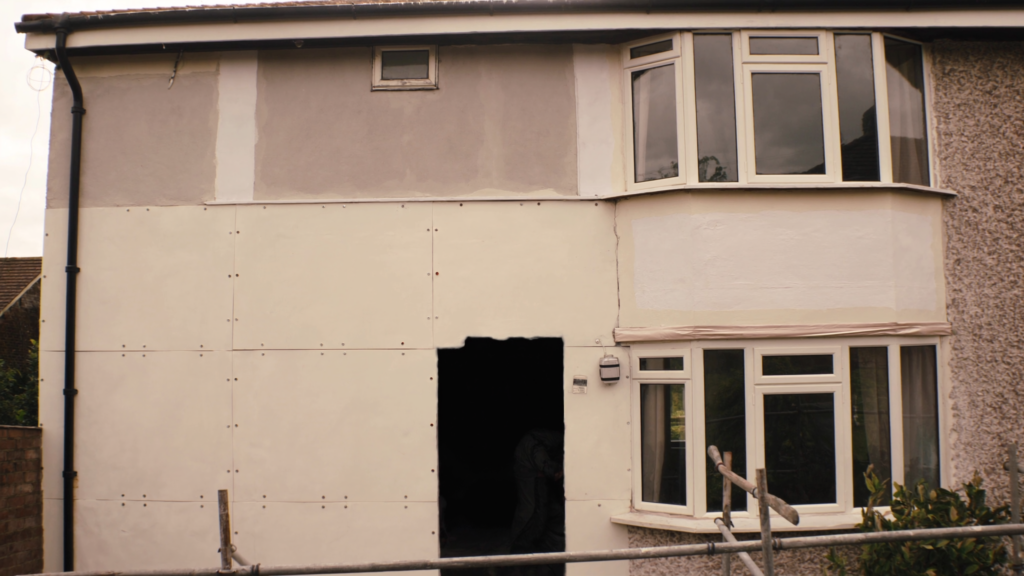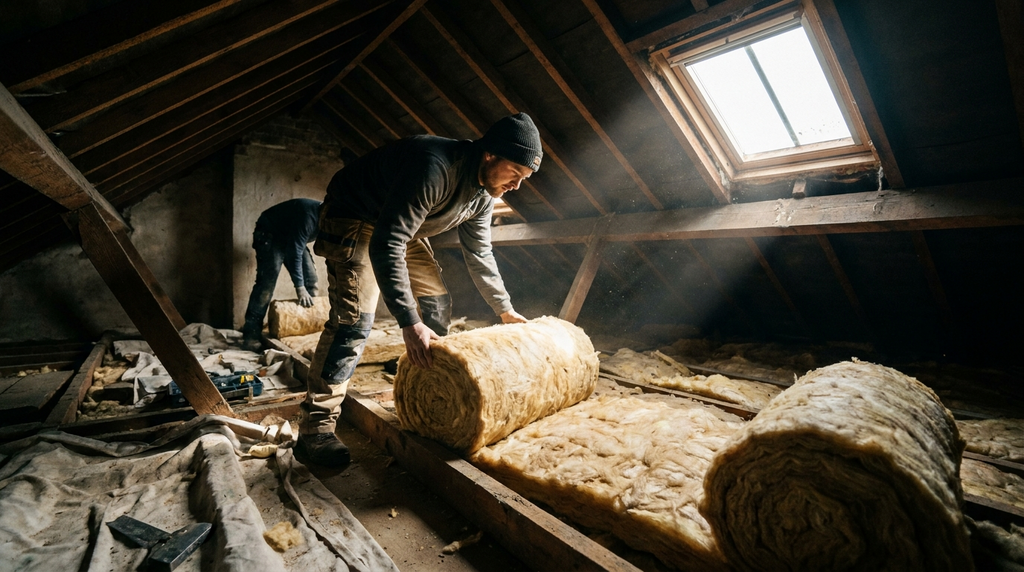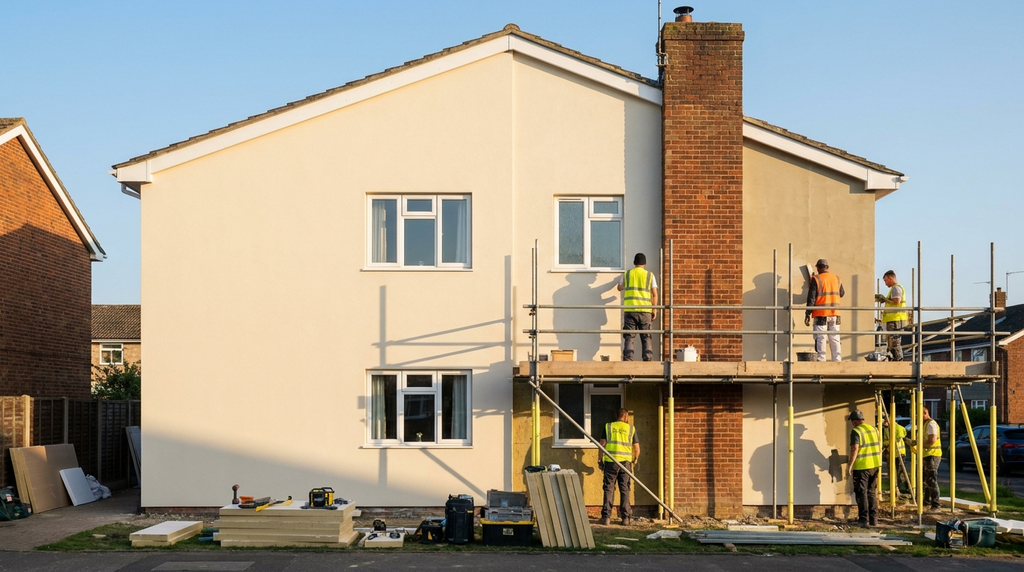
Yes, you can install internal wall insulation yourself in the UK, but it is a technically demanding job that requires careful planning to avoid damp and condensation. The Energy Saving Trust notes that poorly installed internal wall insulation can reduce thermal performance by up to 50% and increase the risk of interstitial condensation (Energy Saving Trust, 2026). DIY is possible for straightforward solid walls with good access, but for homes with complex features or damp issues, professional installation is strongly advised.
The key variable is your wall type. Internal wall insulation works best on solid walls (typically pre-1920s homes) where external insulation is not feasible. For cavity walls, internal insulation is rarely recommended because it can disrupt the existing cavity and cause moisture problems. You must also check for rising damp or penetrating damp before starting, installing insulation over damp walls will trap moisture and cause rot. A simple test: tape a small square of plastic sheeting to the wall for 48 hours. If condensation forms on the plastic, the wall is too damp for DIY insulation.
Internal wall insulation materials for DIY use
The most common DIY-friendly materials are rigid insulation boards (PIR or phenolic) and insulated plasterboard. PIR boards typically have a U-value of around 0.022 W/mK, meaning a 50mm board can achieve a U-value of about 0.44 W/m²K on a solid wall (BRE, 2026). Insulated plasterboard (e.g., 62.5mm total thickness with 50mm insulation) is easier to handle because it combines insulation and plasterboard in one layer. Costs range from £20 to £40 per square metre for materials, according to the Energy Saving Trust. You will also need vapour control layers, adhesive, mechanical fixings, and jointing tape. Avoid using mineral wool batts for DIY, they are harder to install airtight and more prone to condensation issues.
Critical steps for a successful DIY installation
First, prepare the wall, remove any existing plaster, treat damp, and ensure the surface is dry and level. Second, install a vapour control layer on the warm side of the insulation (the room-facing side) to prevent moisture from entering the insulation. Third, fix the insulation boards to the wall using a combination of adhesive dabs and mechanical fixings, at least 5 fixings per square metre (TrustMark, 2026). Fourth, tape all joints airtight. Fifth, skim or overboard with plasterboard. Missing any of these steps can lead to condensation behind the insulation, which can rot timber and cause mould. You must also insulate window reveals and recesses to avoid cold bridging.
Regulations and when you need building control approval
In England and Wales, installing internal wall insulation is notifiable building work under Part L of the Building Regulations if it reduces the floor area of a room by more than 5% or if the wall is a separating wall between dwellings. You must submit a building notice or use a competent person scheme like FENSA or TrustMark. Scotland requires a warrant for any insulation work that alters the thermal envelope (GOV.UK, 2026). If you skip approval, you may face enforcement action when selling the house. For most DIY projects, you can use a registered installer under a competent person scheme to certify the work, this avoids full building control inspection.
A worked example
A typical 1930s semi-detached house in the Midlands with three solid brick external walls covering 45m² would cost roughly £4,500 for DIY internal wall insulation using 62.5mm insulated plasterboard, compared to £8,000–£10,000 for professional installation. You would save around £350 per year on heating bills according to the Energy Saving Trust. The 0% VAT on energy-saving materials until March 2027 reduces your upfront cost to £4,500. The Great British Insulation Scheme closed on 31 March 2026. It funded insulation measures only and never covered windows or glazing. Payback on your DIY investment comes in roughly 13 years, and over 25 years you could save £8,750 in total heating costs, assuming energy prices rise 3% annually.
| Item | Figure |
|---|---|
| Upfront cost after grants | £4,500 |
| Yearly savings | £350 |
| Payback period | 13 years |
| 25-year lifetime savings | £8,750 |
What homeowners often get wrong
The most common mistake is assuming any internal wall insulation board will work on any solid wall. Three specific errors wreck performance and void warranties.
- Skipping the damp check entirely Nearly a third of UK solid-wall homes have hidden damp issues. Installing insulation over a damp wall traps moisture and causes timber decay within five years. The 48-hour plastic sheet test costs nothing but failing to do it can lead to a £5,000 repair bill for rot remediation.
- Using the wrong board thickness for your room Many DIYers buy 50mm boards to minimise space loss, but this thickness on a solid brick wall creates a cold surface inside the insulation that triggers condensation. The correct minimum for most UK solid walls is 62.5mm of phenolic board or 80mm of PIR board to keep the dew point outside the wall structure.
- Forgetting to seal the vapour control layer Taping joints with standard parcel tape rather than airtight vapour-control tape lets warm moist air into the insulation layer. This voids the manufacturer’s warranty and can reduce thermal performance by 40% within two winters. You must use tape rated to 5,000 Pa vapour resistance.
Quick reference
- DIY internal wall insulation costs roughly £70–£100 per m² for materials on a typical solid brick wall.
- You lose between 60mm and 100mm of floor space on each insulated wall with standard board thicknesses.
- The Great British Insulation Scheme closed on 31 March 2026. It funded insulation measures only and never covered windows or glazing.
- Payback for DIY internal wall insulation on a 1930s semi-detached house is typically 10 to 15 years without grants.
- Installing insulation over a damp solid wall can void your home insurance if it leads to structural rot.
Frequently Asked Questions
Yes, but only for straightforward solid walls with no damp issues. The Energy Saving Trust warns that poor installation can halve thermal performance and cause condensation.
Rigid PIR boards or insulated plasterboard are most DIY-friendly. A 50mm PIR board achieves a U-value of about 0.44 W/m²K on a solid wall, according to BRE.
Yes, you must comply with Part L of the Building Regulations. GOV.UK advises that any new insulation work should meet minimum U-value standards.