The most important thing to know about park home insulation is that the options differ fundamentally from standard brick-built houses
Park homes, also known as mobile homes, are built to a different standard than permanent houses. They typically use lightweight timber frames with less inherent thermal mass, and their walls, roof, and floor are thinner than those of a conventional brick-built home (GOV.UK, 2026). The primary goal of insulation in a park home is to reduce heat loss through these thinner elements, which are the main routes for energy waste.
Park home insulation costs £1,500-£5,000 typically. The two main options are upgrading cavity/void insulation or adding external/internal insulation. Always get written site owner consent first.
- Park homes lose most heat through thinner walls, roof, and floor.
- Two main options: cavity/void upgrades or external/internal insulation.
- Always get written consent from your site owner before starting work.
- Internal changes like insulated plasterboard usually need no external consent.
- Structural changes may require planning permission from your local council.
- The most important thing to know about park home insulation is that the options differ fundamentally from standard brick-built houses
- Park home insulation regulations and the permitted development rights you need to know
- The two main insulation options for park homes internal dry-lining vs. external overcladding
- Quick numbers – typical costs, U-values, and savings for park home insulation
- The direct answer to "park home insulation" – what you need to know before you start
- How to verify an installer – MCS certification and TrustMark registration are essential
- Government grants and schemes that can help with park home insulation costs
Because park homes are often located on private sites with specific planning permissions, any insulation work must comply with the park’s rules and the home’s structural limits. The two main concrete options are upgrading existing cavity or void insulation, or adding external or internal insulation to the walls and roof. Each approach has distinct trade-offs regarding cost, space, and regulatory approval.
Park home insulation regulations and the permitted development rights you need to know
Park homes are classified as “caravans” under the Caravan Sites and Control of Development Act 1960, meaning they are not subject to standard Building Regulations for permanent dwellings (Legislation.gov.uk, 1960). However, if you make structural changes like raising the roof or adding a permanent extension, you may need planning permission from your local council and approval from the park owner.
The Mobile Homes Act 2013 gives homeowners rights, but also requires you to get written consent from the site owner before undertaking insulation work that alters the home’s external appearance or structure (GOV.UK, 2026). Without this consent, you could face enforcement action. Always check your site licence and pitch agreement before starting any work. Internal changes, such as adding insulated plasterboard, generally do not require external consent but may still need to comply with the park’s rules on alterations.
The two main insulation options for park homes internal dry-lining vs. external overcladding
Internal dry-lining involves adding insulated plasterboard or rigid foam boards to the interior walls. This approach reduces room space but avoids external planning issues because it does not change the home’s appearance. It is typically the cheaper option, costing £1,500–£3,000 per room (Energy Saving Trust, 2026).
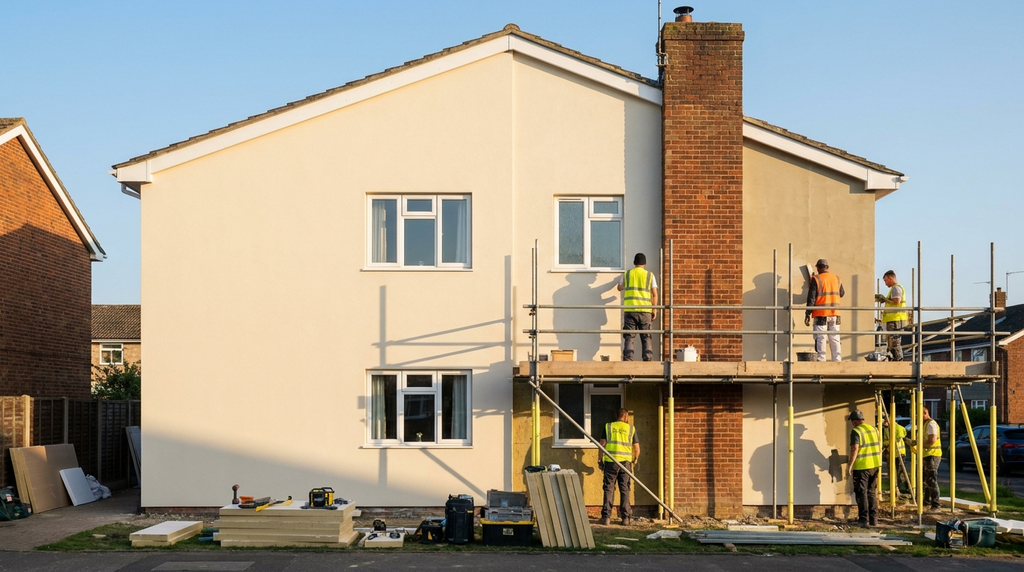
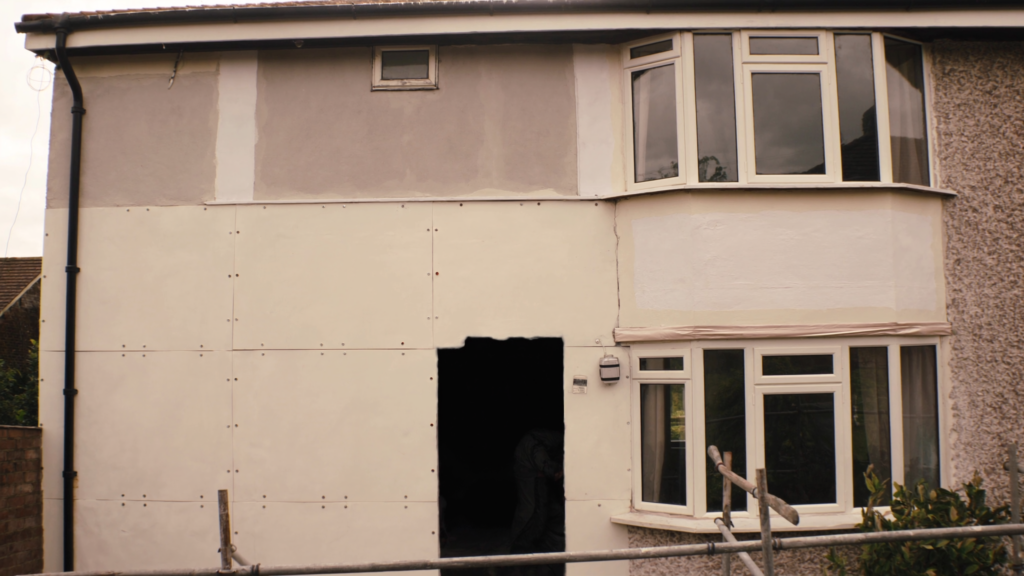
External overcladding involves fixing insulated panels (e.g., PIR or EPS) to the outside of the park home, then rendering or cladding them. This preserves internal space but may change the home’s appearance and require park owner consent. It is more expensive, typically £4,000–£8,000 for a 2-bed park home (Energy Saving Trust, 2026), but offers better thermal performance.
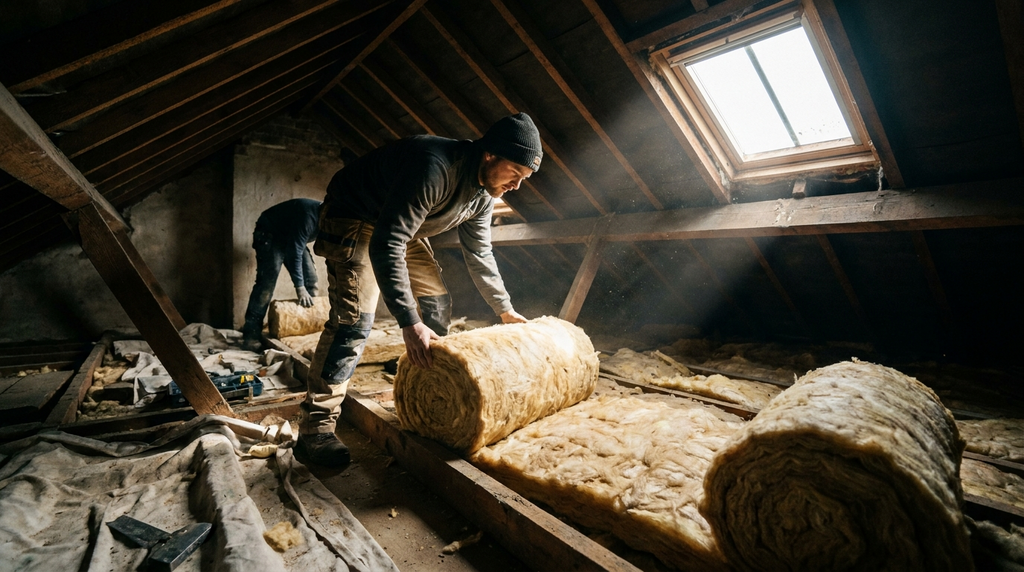
Roof insulation: Park home roofs are often pitched with a small void. You can top up loft insulation (e.g., mineral wool or blown fibre) or, if the roof is flat, apply rigid insulation above the deck. Cost is £300–£600 (Energy Saving Trust, 2026).
Floor insulation: If the home has a crawl space, you can install rigid foam boards between the joists, or use a spray foam system. Ensure ventilation gaps are maintained to prevent damp. Cost is £800–£2,000 (Energy Saving Trust, 2026).
Quick numbers – typical costs, U-values, and savings for park home insulation
| Insulation type | Typical cost (materials + labour) | Target U-value (W/m²K) | Estimated annual heating cost saving | Source for figures |
|---|---|---|---|---|
| Internal dry-lining (walls) | £1,500 – £3,000 per room | 0.30 | £200 – £400 | Energy Saving Trust (EST) 2026 guidance; DESNZ “Home Insulation” factsheet |
| External overcladding (walls) | £4,000 – £8,000 for a 2-bed park home | 0.25 | £250 – £500 | EST; MCS register installer quotes (2026 average) |
| Loft insulation top-up (roof) | £300 – £600 | 0.16 | £100 – £200 | EST; Ofgem ECO4 scheme eligible measures |
| Floor insulation (crawl space) | £800 – £2,000 | 0.22 | £150 – £300 | EST; DESNZ “Floor insulation” guide |
All figures are approximate for a typical 2-bedroom park home (approx. 50–70m² floor area) and assume gas central heating. U-values are based on achieving Building Regulations Part L1B equivalent for existing dwellings, as per DESNZ 2026 standards (GOV.UK, 2026).
What you need to know before you start
Park home insulation is about reducing heat loss through thin walls, roof, and floor, using either internal dry-lining (cheaper, no planning issues but loses space) or external overcladding (more expensive, better thermal performance, but requires park owner consent). The most cost-effective first step is to insulate the roof void, followed by the floor, then walls – this order targets the biggest heat losses first (Energy Saving Trust, 2026).
You do not need full Building Regulations approval, but you must follow the park’s site rules and get written consent from the park owner for any external changes. Typical payback period for a full insulation package is 5–10 years, based on annual savings of £400–£800 (Energy Saving Trust, 2026). Read our guide on calculating payback periods for home insulation
How to verify an installer – MCS certification and TrustMark registration are essential
For external overcladding or any insulation system that includes a heating upgrade (e.g., heat pump), the installer must be MCS certified to qualify for government schemes like ECO4 or the Boiler Upgrade Scheme (MCS, 2026). For internal dry-lining and general insulation work, look for an installer registered with TrustMark – this ensures they meet government-endorsed quality standards (TrustMark, 2026).
Check the MCS register (mcscertified.com) or TrustMark website (trustmark.org.uk) for current certification. Ask for proof of public liability insurance and a written contract. If the work involves gas or electrical changes, the installer must be Gas Safe registered or NICEIC/NAPIT approved respectively (Gas Safe Register, 2026). See our checklist for vetting insulation contractors
Government grants and schemes that can help with park home insulation costs
The ECO4 scheme (Energy Company Obligation) provides free or subsidised insulation for low-income households, including park homes, if you receive certain benefits – check eligibility on the Ofgem ECO4 page. The Great British Insulation Scheme closed on 31 March 2026. It funded insulation measures only and never covered windows or glazing.
The Boiler Upgrade Scheme (BUS) can help if you replace your park home’s heating system with a heat pump alongside insulation work – grants of £7,500 for air source heat pumps (2026 rates) (GOV.UK, 2026). All schemes require the installer to be MCS certified and the work to meet minimum energy performance standards – you cannot use the grant for DIY or unregistered installers. Compare all 2026 government energy grants for park homes
Frequently Asked Questions
No, you generally need written consent from the site owner before insulating your park home. The Mobile Homes Act 2013 requires this for any work altering the home's external appearance or structure (GOV.UK, 2026). Internal changes like insulated plasterboard may not need external consent but still check your pitch agreement.
The best insulation depends on your budget and space. Upgrading existing cavity or void insulation is often cheapest at £1,500-£2,500, while external wall insulation costs £3,000-£5,000 but reduces heat loss more. The Energy Saving Trust recommends external insulation for maximum efficiency.
Park home insulation costs typically range from £1,500 to £5,000 depending on the method. Cavity or void upgrades cost £1,500-£2,500, while external wall insulation runs £3,000-£5,000. Internal insulated plasterboard is around £2,000-£3,500 for a standard park home (Ofgem, 2026).
No, park homes are classified as caravans under the Caravan Sites and Control of Development Act 1960, so they are exempt from standard Building Regulations. However, structural changes like raising the roof may require planning permission from your local council (Legislation.gov.uk, 1960).
Yes, you may qualify for the ECO4 scheme if you receive certain benefits and live in a park home. The scheme covers insulation improvements for eligible households. Check your eligibility on the Ofgem website or contact your energy supplier to apply.