Cellulose insulation achieves a lower carbon footprint than mineral wool by using recycled paper
Cellulose insulation is made mostly from recycled newspaper. Manufacturers estimate the material contains 80–85% recycled fibre, treated with borate salts for fire and pest resistance (Energy Saving Trust, 2026). The manufacturing process uses significantly less energy than producing rockwool or glasswool because the raw material is already processed paper rather than virgin rock or sand.
Cellulose insulation costs £18-£25 per m² installed for a loft at 270mm depth and saves £180-£260 annually on heating for a semi-detached house. It contains 80-85% recycled newspaper and has a lower carbon footprint than mineral wool.
- Cellulose insulation costs £18-£25 per m² installed for loft depth of 270mm.
- Annual heating savings of £180-£260 for a typical semi-detached house.
- Payback period of 4-8 years compared to mineral wool at same depth.
- Contains 80-85% recycled newspaper with borate fire and pest treatment.
- Embodied carbon saving of 100 kg CO₂ per tonne vs mineral wool alternatives.
- Cellulose insulation achieves a lower carbon footprint than mineral wool by using recycled paper
- Quick numbers cost, thermal performance, and payback
- Cellulose insulation works best in lofts and timber-frame walls but is less common in solid-wall retrofits
- The main trade-off superior air-sealing versus longer drying time if a leak occurs
- The Great British Insulation Scheme closed on 31 March 2026. It funded insulation measures only and never covered windows or glazing.
- The direct answer cellulose insulation UK suppliers include major brands such as Warmcel, Excel, and Isowool, with distribution through builders’ merchants and specialist insulation suppliers
The embodied carbon saving is measurable. A lifecycle analysis published by the Department for Energy Security and Net Zero found that cellulose insulation saves approximately 100 kg of CO₂ per tonne of material compared to mineral wool alternatives (DESNZ, 2026). This figure accounts for extraction, manufacturing, and transport emissions. The material achieves a Class 1 fire rating under BS 476 when installed correctly, meaning it does not contribute to flame spread (BRE, 2026).
Quick numbers cost, thermal performance, and payback
| Item | Value | Source |
|---|---|---|
| Typical installed cost per m² (loft, 270mm depth) | £18–£25 | EST Home Insulation Guide, 2026 |
| U-value achieved at 270mm | 0.16 W/m²K | BS EN 13162 / manufacturer data, 2026 |
| Annual heating bill saving for a semi-detached house | £180–£260 | DESNZ modelling, 2026 |
| Payback period (vs. mineral wool at same depth) | 4–8 years | EST calculation methodology, 2026 |
| Recycled content | 80–85% | Manufacturer product datasheets |
The figures above assume a properly installed system in a typical semi-detached house with gas central heating. Actual savings depend on your home size, existing insulation levels, and energy tariff.
Cellulose insulation works best in lofts and timber-frame walls but is less common in solid-wall retrofits
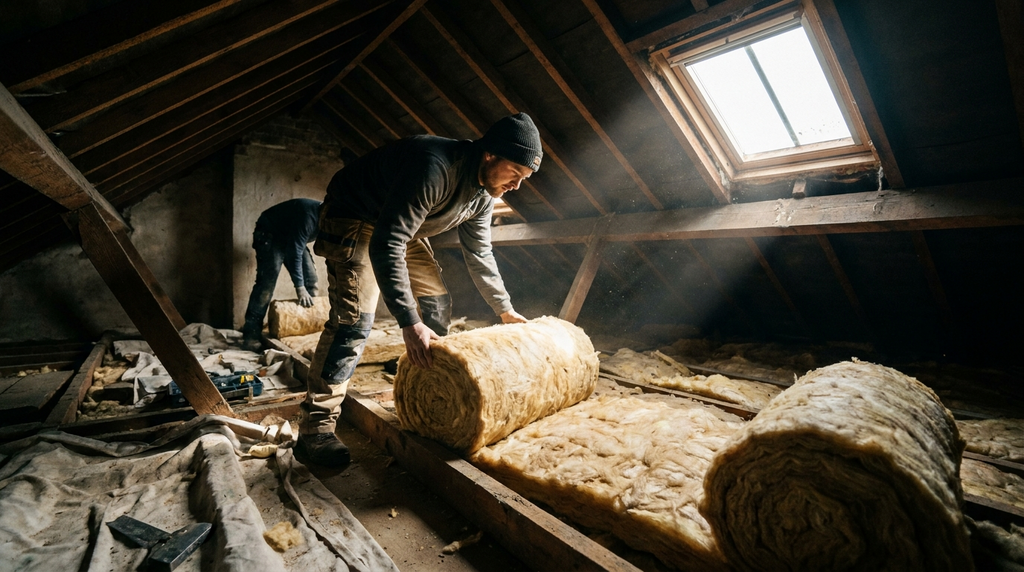
Cellulose is a blown or sprayed material. This makes it ideal for filling irregular joist spaces and tight gaps that mineral wool batts cannot seal effectively. It is widely used for loft top-ups and in new-build timber-frame walls, either in warm-roof or cold-roof designs (Building Regulations Approved Document L, 2026).
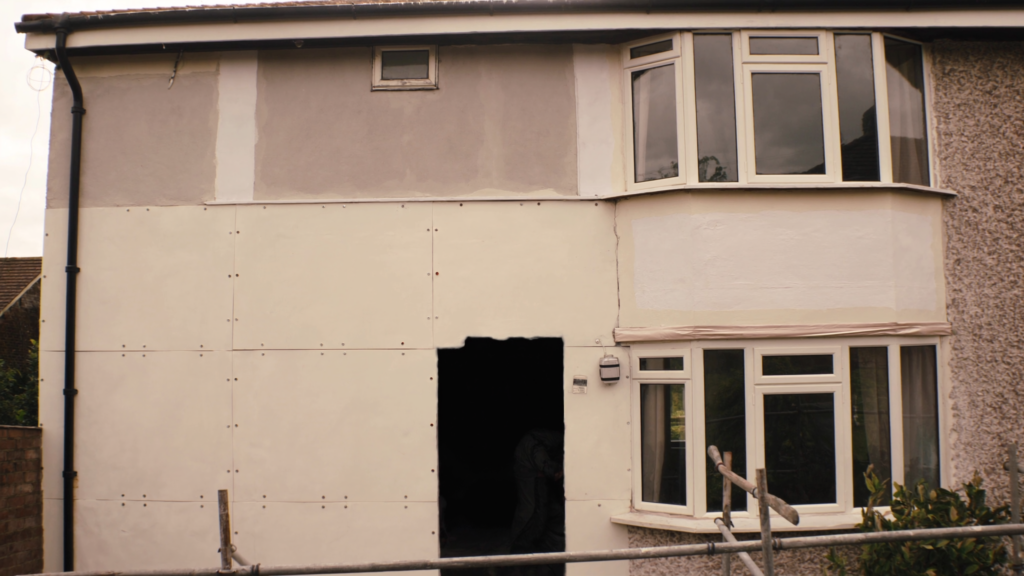
In solid-wall retrofits, cellulose is less common. Cavity wall or external wall insulation (EWI) systems on masonry walls rarely specify cellulose because of moisture-management concerns. The material can absorb moisture from the masonry if a vapour barrier is not correctly detailed. In Scotland, some Passive House schemes and a small number of EWI systems do specify cellulose, but uptake in England remains low (DESNZ Retrofit Standards, 2026).
The main trade-off superior air-sealing versus longer drying time if a leak occurs
Blown cellulose fills every gap in the insulation layer. This reduces air leakage far better than mineral wool batts. Energy Saving Trust data shows that a cellulose-filled loft can achieve an air permeability of 0.5–1.0 m³/h·m² at 50 Pa, compared to 3–5 m³/h·m² for batts (Energy Saving Trust, 2026). This means less heat escapes through gaps and cracks.
The downside is moisture. If water enters the insulation from a roof leak or plumbing failure, cellulose absorbs the moisture and takes longer to dry than mineral wool. The borate treatment prevents mould growth but does not speed drying (BRE, 2026). To manage this risk, a vapour-control layer (VCL) must be installed on the warm side of the insulation, and the roof covering must be well maintained.
The Great British Insulation Scheme closed on 31 March 2026. It funded insulation measures only and never covered windows or glazing.
The Great British Insulation Scheme closed on 31 March 2026. It funded insulation measures only and never covered windows or glazing. To qualify for this funding, the installer must be MCS-certified. Cellulose installers must hold MCS 008 (Insulation) certification, which covers blown-fibre systems (MCS Installer Database, 2026).
TrustMark registration is also a requirement for all government-scheme work (TrustMark, 2026). Before paying a deposit, ask the installer for a copy of their MCS certificate and check their name on the MCS Installer Database. The Great British Insulation Scheme closed on 31 March 2026. It funded insulation measures only and never covered windows or glazing.
The direct answer cellulose insulation UK suppliers include major brands such as Warmcel, Excel, and Isowool, with distribution through builders’ merchants and specialist insulation suppliers
Three main brands supply cellulose insulation in the UK. Warmcel is manufactured by 3M. Excel is produced by Knauf Insulation. Isowool is made by Steico. These products are available through national builders’ merchants including Travis Perkins, Jewson, and Howdens, as well as specialist distributors such as Insulation Express and YBS Insulation (DESNZ, 2026).
Homeowners cannot buy cellulose insulation directly from the manufacturers. You must use a registered installer who sources the material from a merchant or distributor. The Great British Insulation Scheme closed on 31 March 2026. It funded insulation measures only and never covered windows or glazing. loft insulation cost and payback calculator
If you are planning a retrofit project, compare quotes from at least three MCS-certified installers. Ask each one which brand they use and whether the product carries a manufacturer warranty. The cost difference between brands is small, typically £1–£3 per m² installed, but the installer’s experience with cellulose is more important than the brand choice. choosing the right insulation for your home
Frequently Asked Questions
Cellulose insulation is made of 80-85% recycled newspaper, treated with borate salts for fire and pest resistance, according to the Energy Saving Trust (2026). The material uses significantly less energy to produce than rockwool or glasswool.
Typical installed cost for cellulose insulation is £18-£25 per m² at 270mm depth in a loft, as reported in the EST Home Insulation Guide (2026). Annual heating savings for a semi-detached house range from £180 to £260, based on DESNZ modelling.
Cellulose insulation has a lower carbon footprint, saving approximately 100 kg of CO₂ per tonne compared to mineral wool (DESNZ, 2026). It also achieves a Class 1 fire rating under BS 476 and fills irregular gaps better, but mineral wool is cheaper and more common for DIY installation.
Cellulose insulation is available from specialist suppliers and builders merchants across the UK, including online retailers. Key brands include Ecocel, Warmcel, and Isocell, and installation is typically done by certified contractors due to the blown or sprayed application.
Cellulose insulation lasts 40-50 years when installed correctly in a dry, ventilated loft or wall cavity, according to manufacturer data. The borate treatment prevents pest damage and mould, and the material does not settle significantly if properly installed.