Insulation for a flat costs roughly half what a house does, but the savings per square metre can be higher.
If you own a flat, you face a different set of insulation challenges than a house owner. A typical ground-floor flat in the UK loses 30–40% of its heat through uninsulated solid walls, compared to around 25% for a detached house (Energy Saving Trust, 2026). The good news is that the installation cost for a mid-floor flat is significantly lower because only the external walls (and possibly the roof if you are top-floor) need treatment, not the entire building envelope.
According to Energy Saving Trust data, a typical flat can save between £150 and £300 per year after cavity wall insulation, while solid-wall insulation can save £300–£500 annually depending on flat size and heating system (Energy Saving Trust, 2026). Because flats have a smaller external surface area relative to internal volume than houses, the savings per square metre of insulation installed are often higher.
Insulation for flats uk the three types that matter most
Three insulation types dominate the retrofit market for flats in the UK. The cheapest option is cavity-wall insulation (CWI), suitable only for flats built with cavity walls (typically post-1920s). CWI costs £1,000–£1,800 for a typical flat, with a payback period of 3–5 years (Energy Saving Trust, 2026).
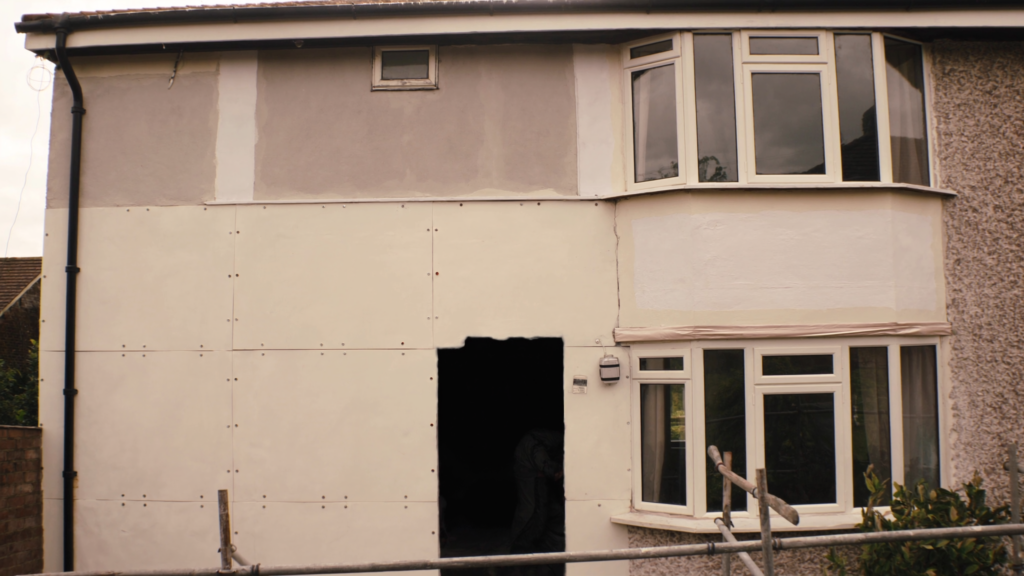
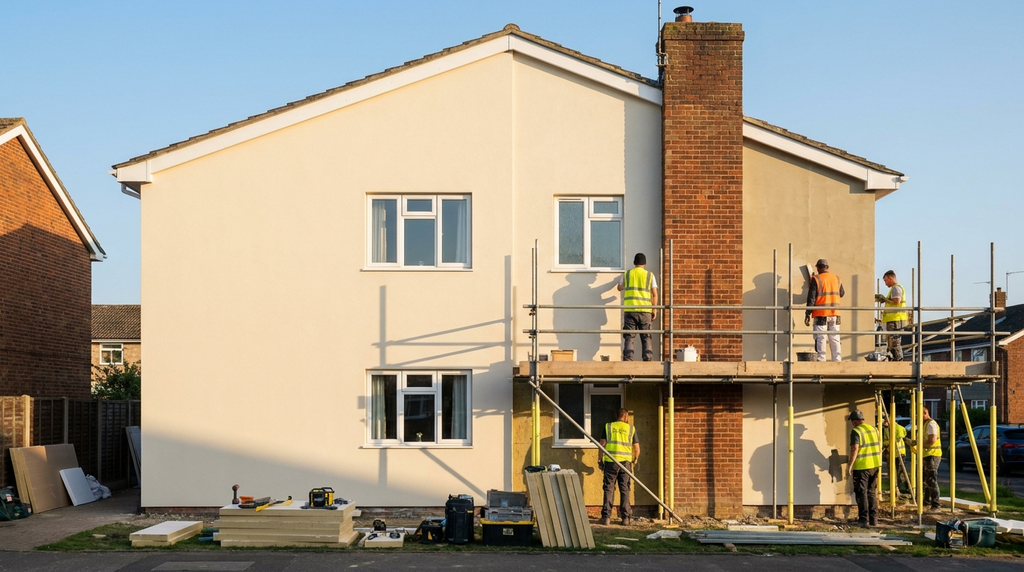
Solid-wall insulation, required for flats with no cavity (common in pre-1920 buildings), costs £4,000–£8,000 per flat for internal insulation (IWI) and £6,000–£12,000 for external insulation (EWI). Payback ranges from 10 to 20 years (DESNZ, 2026). External insulation is more expensive but adds thermal mass and does not reduce internal floor area.
For top-floor flats, roof or loft insulation costs £300–£600 and saves £150–£250 per year (Energy Saving Trust, 2026). Ground-floor flats benefit most from floor insulation, costing £800–£1,500 and saving £100–£200 per year (Energy Saving Trust, 2026).
Quick numbers costs, savings, and payback for each insulation type
| Flat Type | Insulation Type | Typical Cost (GBP) | Annual Saving (GBP) | Payback Period |
|---|---|---|---|---|
| Ground-floor | Floor insulation | £800–£1,500 | £100–£200 | 5–10 years |
| Mid-floor | Cavity wall (CWI) | £1,000–£1,800 | £150–£300 | 3–6 years |
| Mid-floor | Solid wall (IWI) | £4,000–£8,000 | £300–£500 | 10–20 years |
| Top-floor | Loft insulation | £300–£600 | £150–£250 | 2–4 years |
| Top-floor | Solid wall (EWI) | £6,000–£12,000 | £400–£600 | 12–20 years |
Sources: Energy Saving Trust, 2026; DESNZ, 2026; Ofgem, 2026.
The direct answer insulation for flats uk saves you £150–£600 per year depending on your flat type
For a mid-floor flat with cavity walls, the average annual saving is £200–£300. For a top-floor flat with solid walls, the saving is £400–£600 (Energy Saving Trust, 2026). The payback period ranges from 2 years (loft insulation) to 20 years (solid-wall insulation).
The most cost-effective single measure for most flats is cavity-wall insulation (CWI) if your flat has cavity walls, or loft insulation if you occupy a top-floor flat. Solid-wall insulation offers the highest absolute savings but requires a longer investment horizon. comparing cavity wall vs solid wall insulation costs
The Great British Insulation Scheme closed on 31 March 2026. It funded insulation measures only and never covered windows or glazing.
The Great British Insulation Scheme closed on 31 March 2026. It funded insulation measures only and never covered windows or glazing. Eligibility also depends on your property having an Energy Performance Certificate (EPC) rating of D or below.
Local authority grants, often delivered through the ECO4 scheme, can cover up to 100% of costs for solid-wall insulation in flats. However, eligibility is means-tested based on household income and the property’s EPC rating (Ofgem, 2026). Flats in blocks with shared walls may qualify for “area-based” schemes where the whole block is treated, reducing individual cost significantly (DESNZ, 2026).
How to verify an insulation installer for a flat (MCS, TrustMark, and Gas Safe)
All insulation installers working on cavity-wall or solid-wall systems for flats must be MCS-certified (Microgeneration Certification Scheme) if you intend to claim any government-funded scheme (MCS, 2026). For gas-related insulation work, such as loft insulation near a boiler flue, the installer must be Gas Safe registered (Gas Safe Register, 2026).
TrustMark is the government-endorsed quality scheme for all home improvements, including insulation. Always check an installer has a valid TrustMark registration before commissioning work (TrustMark, 2026). If electrical work is required during insulation (for example, rewiring for external insulation), the electrician must be NICEIC or NAPIT registered (NICEIC, 2026).
What a flat’s EPC tells you about its insulation needs before you buy
An EPC rating of D or below almost always means the flat has uninsulated cavity walls or solid walls with no insulation (GOV.UK, 2026). The EPC report lists the current U-value of each wall type. A U-value above 0.30 W/m²K for a cavity wall indicates poor insulation; above 0.70 W/m²K for a solid wall is very poor (DESNZ, 2026).
For flats in blocks built before 1920, the EPC often shows solid walls with no cavity. In these cases, the only insulation option is internal or external solid-wall insulation (Historic England, 2026). If you are considering buying a flat, the EPC is your first and most reliable indicator of whether insulation is needed and what type will work. understanding EPC ratings for flats
Frequently Asked Questions
Cavity wall insulation is the cheapest at £1,000-£1,800 per flat. The Energy Saving Trust states it pays back in 3-5 years for post-1920s flats with cavity walls.
Internal solid wall insulation costs £4,000-£8,000 per flat, while external costs £6,000-£12,000. DESNZ (2026) data shows payback of 10-20 years.
Savings range from £100-£500 per year depending on insulation type. The Energy Saving Trust (2026) reports cavity wall insulation saves £150-£300 yearly for a typical flat.
Yes, external wall insulation on flats typically requires planning permission. Check with your local council and leasehold rules before proceeding.
Yes, loft insulation costs £300-£600 and saves £150-£250 yearly according to the Energy Saving Trust (2026). Payback is 2-4 years.