The average cost of insulating a modular home is £1,200–£4,800, depending on the system and cladding type
If you own a modular home and are considering insulation upgrades, the first question is usually about cost. For a typical three-bedroom modular home, the average cost of insulating the external walls is £1,200 to £4,800, covering materials and installation (Energy Saving Trust, 2026 Energy Saving Trust cost guide, 2026). This range is wide because modular homes use different construction systems.
Modular home insulation costs £1,200–£4,800 for external walls of a three-bedroom home, covering materials and installation. The final price depends on your construction type, with steel-frame homes needing external insulation and concrete panels requiring specialist fixings.
- Cost £1,200–£4,800 for external walls of a 3-bed modular home.
- Timber-frame homes can accept internal or external insulation.
- Steel-frame homes need external insulation to avoid thermal bridging.
- Concrete-panel systems require specialist fixings for insulation.
- Upgrades cut heating bills by 15–25% with a 5–10 year payback.
- The average cost of insulating a modular home is £1,200–£4,800, depending on the system and cladding type
- Modular homes typically have lower base U-values than traditional builds, but upgrades still pay back in 5–10 years
- Quick numbers what a modular home insulation upgrade saves and costs per year
- The main insulation upgrade options for modular homes are external wall insulation, internal lining, and roof wraps
- The direct answer you should upgrade modular home insulation if your current U-value is above 0.30 W/m²K or your cladding is being replaced
- Eligibility for grants and finance depends on your home's EPC rating and your household income
- You must use an MCS-certified installer for any insulation upgrade that affects the building envelope in a modular home
- Building regulations require a minimum U-value of 0.18 W/m²K for walls in new modular homes, but upgrades to existing homes must meet 0.30 W/m²K
The method and price depend on whether your home uses timber-frame, steel-frame, or concrete-panel construction. Timber-frame homes can often accept internal or external insulation, while steel-frame homes typically need external wall insulation to avoid thermal bridging at the steel studs. Concrete-panel systems may require specialist fixings. The figure above covers materials and installation for external wall insulation only. It does not include internal redecoration or new cladding, which can add significant cost. A full wrap covering walls, roof, and floor can add 30 to 50 percent to the total, though most modular homes already have some factory-fitted insulation, reducing the scope of work.
Modular homes typically have lower base U-values than traditional builds, but upgrades still pay back in 5–10 years
Factory-built modular homes often achieve wall U-values of 0.28 to 0.35 W/m²K, according to the NHBC Foundation (NHBC Foundation, 2026 NHBC Foundation report on modern methods of construction, 2026). This is better than a typical 1960s to 1990s semi-detached home, which has U-values of 0.45 to 0.60 W/m²K. The upgrade gap is smaller, but improvements are still cost-effective.
Adding 100mm of PIR insulation (polyisocyanurate, a rigid foam board) or an equivalent alternative can bring walls down to 0.18 to 0.22 W/m²K. This can cut heating bills by 15 to 25 percent (BRE, 2026 BRE Domestic Energy Fact File, 2026). Based on current gas prices under the April 2026 price cap, the payback period for this upgrade is 5 to 10 years (Ofgem, 2026 Ofgem price cap data, April 2026).
Quick numbers what a modular home insulation upgrade saves and costs per year
| Insulation area | Typical current U-value (W/m²K) | Upgraded U-value (W/m²K) | Annual heating saving (GBP) | Typical cost (GBP) | Payback (years) |
|---|---|---|---|---|---|
| External walls (timber-frame) | 0.30 | 0.18 | £120–£180 | £1,200–£2,800 | 7–15 |
| External walls (steel-frame) | 0.35 | 0.20 | £140–£210 | £1,800–£4,800 | 9–23 |
| Roof (vaulted) | 0.25 | 0.15 | £90–£150 | £800–£2,000 | 6–13 |
| Roof (flat) | 0.28 | 0.18 | £70–£120 | £1,000–£2,500 | 9–21 |
| Ground floor (suspended timber) | 0.40 | 0.25 | £60–£100 | £600–£1,500 | 7–15 |
All U-values and savings are sourced from the Energy Saving Trust “Insulation for modern homes” report and DESNZ data (Energy Saving Trust, 2026 EST “Insulation for modern homes” report, 2026; DESNZ, 2026 DESNZ “Energy efficiency in new-build and modular homes” data, 2026). Savings assume a gas-heated home with current average tariffs.
The main insulation upgrade options for modular homes are external wall insulation, internal lining, and roof wraps
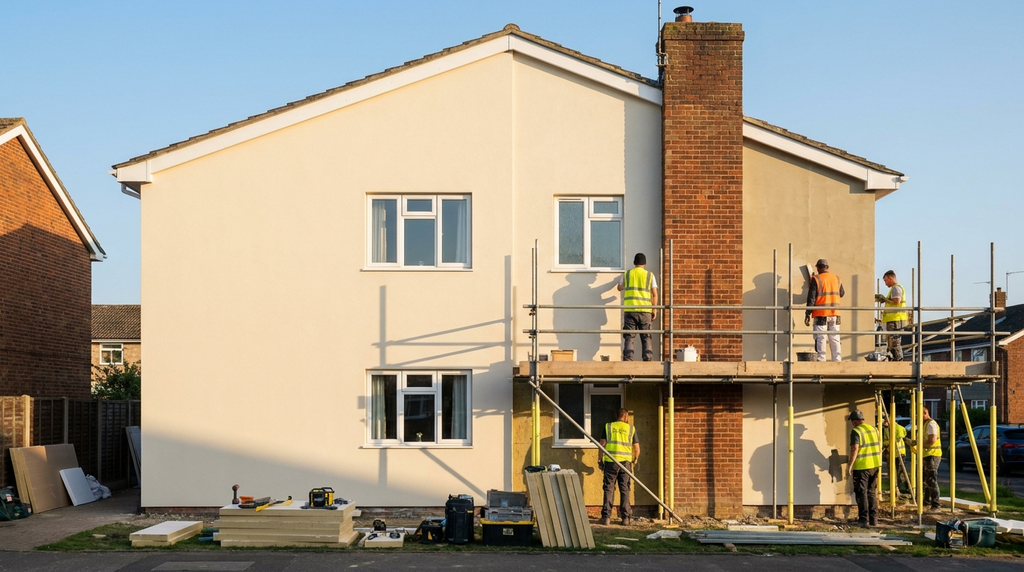
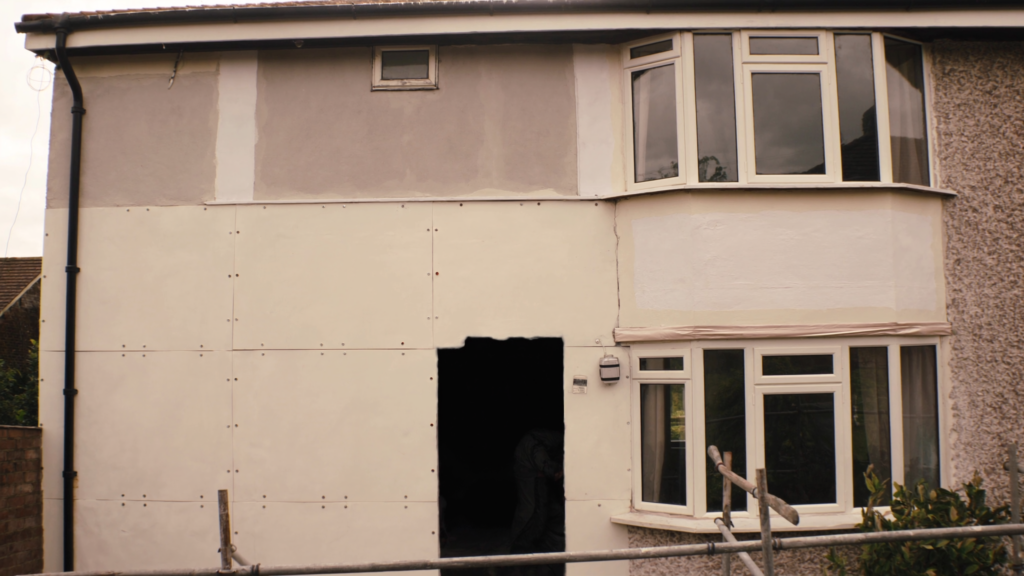
External wall insulation (EWI) involves adding rigid PIR or phenolic boards over the existing cladding, then applying new cladding or render. This is the best option for homes with poor original insulation or when cladding replacement is due. For steel-frame modular homes, EWI is usually preferred to avoid thermal bridging at the steel studs (MCS, 2026 MCS technical guidance, 2026).
Internal wall insulation (IWI) uses insulated plasterboard or studwork with mineral wool inside the home. It is less disruptive to the exterior but reduces floor space by 50 to 80mm per wall. This option works well for timber-frame modular homes where the external cladding is in good condition.
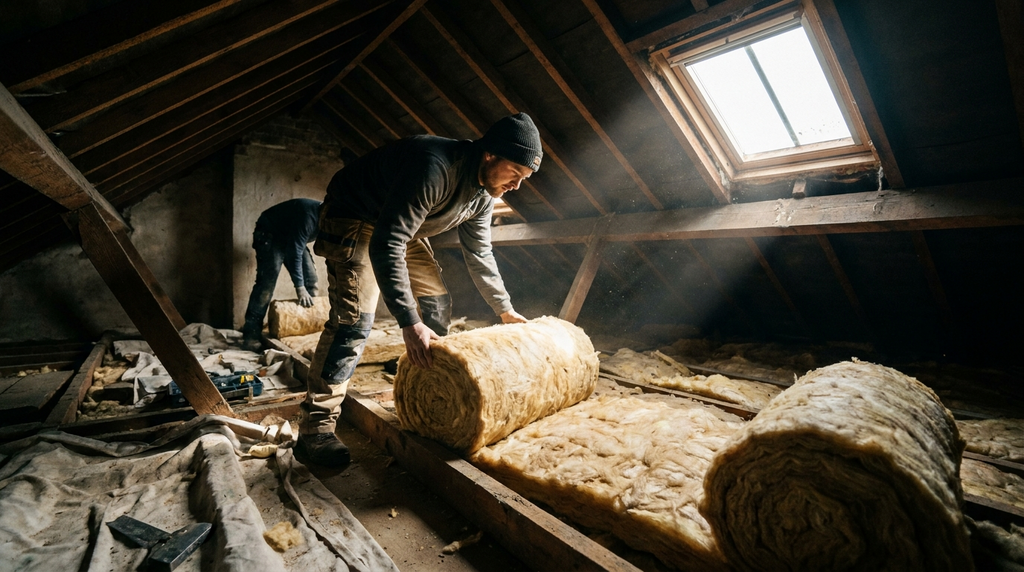
Roof wraps involve adding insulation between rafters or over the existing roof deck. This is especially relevant for vaulted ceilings, which are common in modular designs. A roof wrap can also improve airtightness and prevent condensation in the roof void.
The direct answer you should upgrade modular home insulation if your current U-value is above 0.30 W/m²K or your cladding is being replaced
If your modular home has factory-fitted insulation achieving a U-value of 0.30 W/m²K or below, an upgrade is unlikely to pay back in under 10 years unless you are also replacing cladding. If your home dates from the 2000s to 2010s and has no cavity or thin PIR insulation (for example, 50mm), upgrading to 100mm or more is cost-effective. You can check your home’s original specification or ask a surveyor for a thermal imaging survey to confirm current U-values.
If you are replacing cladding due to damage or aesthetics, the additional cost of insulation is roughly £20 to £40 per square metre (Energy Saving Trust, 2026 EST material cost index, 2026). This makes the upgrade marginal. In this scenario, the payback is much shorter because you avoid the full cost of a stand-alone insulation project.
Eligibility for grants and finance depends on your home’s EPC rating and your household income
The Great British Insulation Scheme closed on 31 March 2026. It funded insulation measures only and never covered windows or glazing. ECO4 also applies but requires a household income below £31,000 or receipt of certain benefits (DESNZ, 2026 DESNZ ECO4 guidance, 2026).
For modular homes built after 2010, the EPC may already be C or B. This disqualifies them from most grants unless the insulation is failing or damaged. Homeowners can self-fund via 0 percent VAT on energy-saving materials (HMRC, 2026 HMRC VAT notice 708/6, 2026). Some energy suppliers also offer interest-free loans for insulation work. Check with your supplier for current offers.
You must use an MCS-certified installer for any insulation upgrade that affects the building envelope in a modular home
MCS certification is required for any insulation work that alters the thermal envelope of a modular home, because modular homes often have complex junctions at panel edges and service penetrations (MCS, 2026 MCS standard 022, section 5.3, 2026). TrustMark registration is also mandatory for any government-funded work (TrustMark, 2026 TrustMark scheme rules, 2026).
For electrical or heating work that may be part of a wider upgrade (such as integrating a heat pump), NICEIC or NAPIT registration is required under Part P of Building Regulations (GOV.UK, 2026 Part P of Building Regulations, 2026 edition). Before hiring an installer, check the MCS installer database at mcscertified.com and ask for a written quote that specifies the target U-value and insulation thickness.
How to find and check an MCS-certified installer
Building regulations require a minimum U-value of 0.18 W/m²K for walls in new modular homes, but upgrades to existing homes must meet 0.30 W/m²K
Approved Document L1B for existing dwellings sets the target U-value for wall upgrades at 0.30 W/m²K (GOV.UK, 2026 Building Regulations 2026, Approved Document L1B). For modular homes, the upgrade must also consider airtightness and vapour control. The factory-built shell may have a vapour barrier that must not be compromised. Your installer should assess this before starting work.
A Building Regulations compliance certificate is required for any insulation upgrade that changes the external finish, such as new cladding. The installer should provide this certificate. Failing to meet the U-value target can reduce your home’s EPC rating and affect future saleability. If you are unsure whether your planned upgrade meets the standard, ask your installer for a pre- and post-installation U-value calculation.
Understanding EPC ratings for modular homes
Frequently Asked Questions
The average cost is £1,200–£4,800 for external walls of a three-bedroom modular home, according to the Energy Saving Trust 2026 cost guide. This covers materials and installation but not internal redecoration or new cladding.
PIR rigid foam boards (100mm thick) are a common choice, bringing wall U-values down to 0.18–0.22 W/m²K. The best option depends on your construction type, as timber, steel, and concrete panel homes each have different requirements (NHBC Foundation, 2026).
Yes, upgrades are cost-effective even though factory-built modular homes typically have better base U-values (0.28–0.35 W/m²K) than older traditional builds. Adding insulation can cut heating bills by 15–25% (BRE, 2026).
Payback is typically 5–10 years, based on current gas prices under the April 2026 price cap. Actual savings depend on your home's existing U-values and heating system (Energy Saving Trust, 2026).
Yes, but steel-frame homes require external wall insulation to avoid thermal bridging at the steel studs. Internal insulation is not recommended as it can create condensation risks (NHBC Foundation, 2026).