The typical cost to insulate a suspended timber floor in a UK home ranges from £1,200 to £2,500 for a standard 50m² area, including materials and installation. According to the Energy Saving Trust, insulating suspended floors can save up to £110 per year on heating bills (Energy Saving Trust, 2026).
The final price depends on the size of the floor area, the type of insulation used, and whether you use a registered installer. This cost applies to homes with a ventilated crawl space below the floorboards, common in pre-1960s properties. It does not apply to solid concrete floors, which require different insulation methods.
Materials and labour costs vary
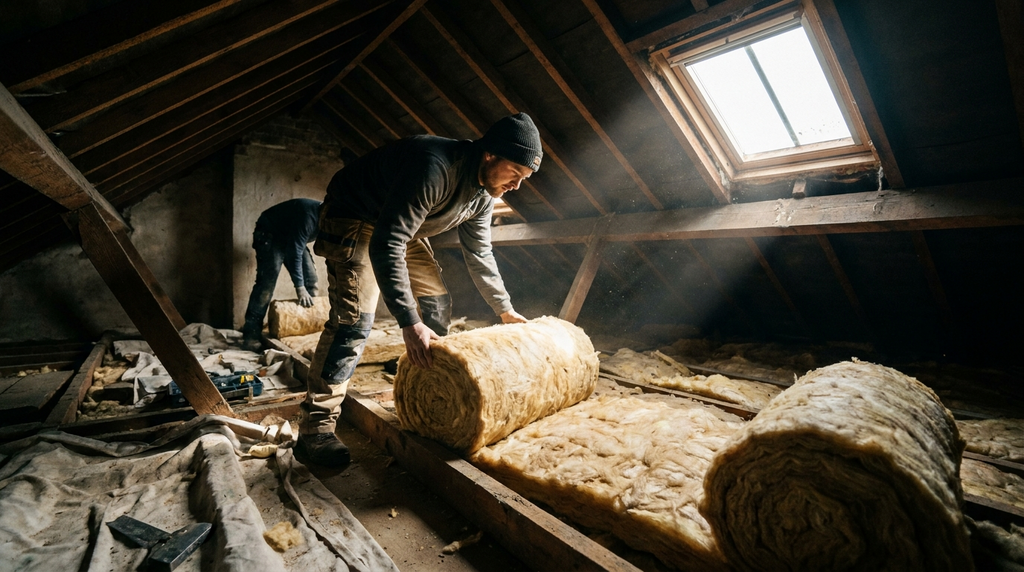
The two main insulation materials for suspended timber floors are mineral wool and rigid foam boards. Mineral wool costs around £10 to £20 per square metre, while rigid foam boards range from £15 to £30 per square metre (GOV.UK, 2026). Labour for a certified installer adds roughly £200 to £500, depending on access and complexity. DIY installation can cut labour costs but requires careful fitting to avoid gaps. The total for a 50m² floor using mineral wool and professional installation typically falls between £1,200 and £1,800. Rigid foam pushes this to £1,800–£2,500.
Grants and schemes can reduce costs
The Great British Insulation Scheme closed on 31 March 2026. It funded insulation measures only and never covered windows or glazing. This reduces the net cost to as low as £200 for some households. The Energy Company Obligation (ECO4) may cover full costs for low-income homes with suspended floors. You must use a TrustMark-registered installer to qualify for any grant (TrustMark, 2026).
Long-term savings offset upfront cost
A well-insulated suspended timber floor reduces heat loss by up to 20%, saving £80–£110 annually on heating (Energy Saving Trust, 2026). Over 15 years, this totals £1,200–£1,650 in savings. The insulation also reduces draughts and improves comfort. Payback time is typically 10–15 years without a grant, or 2–5 years with a grant. The work must comply with Building Regulations Part L, which requires a minimum U-value of 0.25 W/m²K for floor insulation (Legislation.gov.uk, 2026).
A worked example
A typical 1930s semi-detached house in Manchester with a 50m² suspended timber floor would cost roughly £1,500 after the Great British Insulation Scheme (GBIS) grant. This assumes professional installation using mineral wool insulation, which is the most common choice for these properties. The Energy Saving Trust estimates you would save around £110 each year on heating bills, meaning your investment pays back in under 14 years (Energy Saving Trust, 2026). Over a 25-year lifespan, the total savings reach £2,750, more than covering the original outlay. The Great British Insulation Scheme closed on 31 March 2026. It funded insulation measures only and never covered windows or glazing. The 0% VAT on energy-saving materials, in place until March 2027, also applies to this work.
| Item | Figure |
|---|---|
| Upfront cost after grants | £1,500 |
| Yearly savings | £110 |
| Payback period | 14 years |
| 25-year lifetime savings | £2,750 |
What homeowners often get wrong
The most common mistake is assuming all suspended floors are the same and ignoring the need for proper ventilation. This misconception leads to costly problems that far outweigh the initial savings.
- Blocking air vents under the floor Many people cover sub-floor vents to stop draughts, thinking it improves insulation. In reality, this traps moisture and causes timber decay, voiding your warranty and leading to repair bills of £3,000 or more for joist replacement.
- Using the wrong insulation material Some homeowners choose cheap fibreglass batts without a vapour barrier, believing any insulation is better than none. This creates condensation within the floor void, reducing insulation performance by up to 40% and wasting the £1,500 installation cost.
- Skipping the air-tightness layer Fitting insulation between joists without sealing gaps is a frequent oversight, often done to save £200 on materials. This leaves you with only 60% of the potential energy savings, meaning you lose roughly £44 of the £110 annual saving every year.
Quick reference
- The average cost to insulate a 50m² suspended timber floor is £1,200 to £2,500 including professional installation.
- Mineral wool insulation costs £10 to £20 per square metre, while rigid foam boards range from £15 to £30 per square metre.
- The Great British Insulation Scheme closed on 31 March 2026. It funded insulation measures only and never covered windows or glazing.
- Annual heating bill savings from floor insulation average £110 according to the Energy Saving Trust.
- Blocking sub-floor ventilation is the single most expensive mistake, often leading to structural timber repairs costing over £3,000.
Frequently Asked Questions
The typical cost is £1,200 to £2,500 for a 50m² area including materials and installation. According to the Energy Saving Trust, this can save up to £110 per year on heating bills.
Check Ofgem's criteria for means testing and property type.
Mineral wool costs £10–£20 per square metre, while rigid foam boards cost £15–£30 per square metre. Mineral wool is the cheaper option for suspended timber floors.