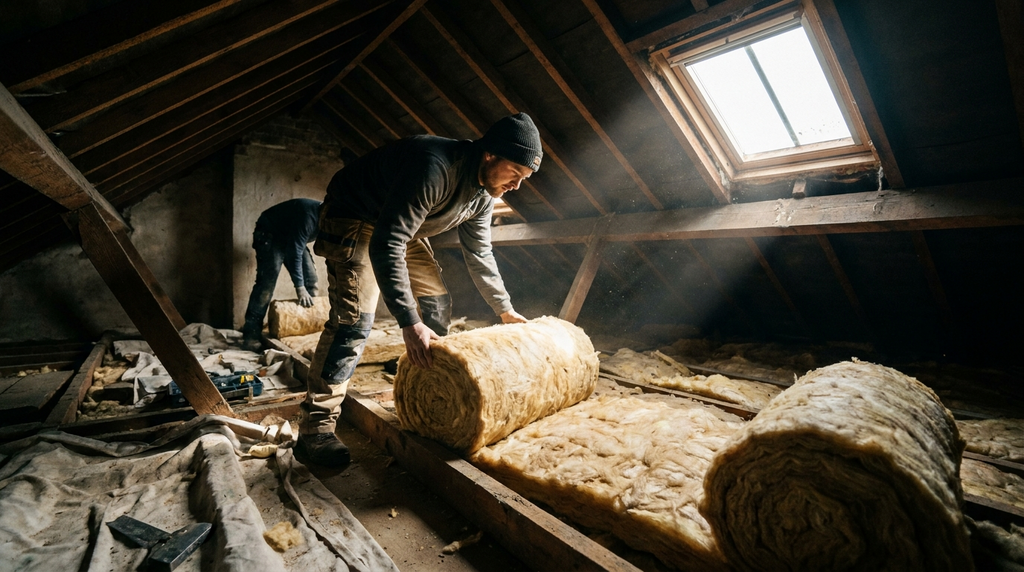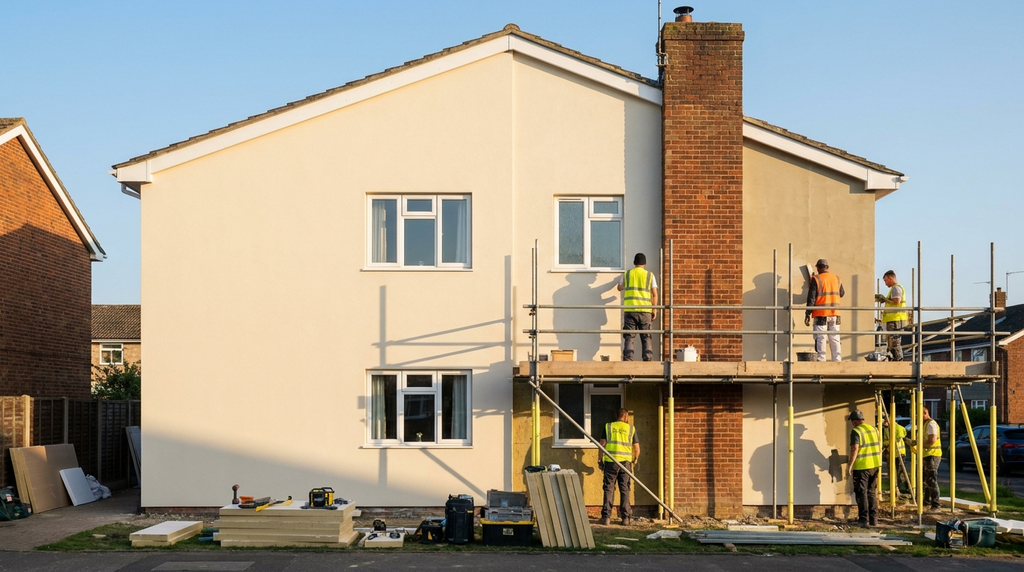
Caravan and motorhome owners often ask whether insulation upgrades are worthwhile for winter use. The answer depends on the type of vehicle, your budget, and how you plan to use it. Insulation can make a significant difference to comfort and heating costs.
Caravan insulation costs £600-£2,500 in the UK for materials and DIY labour. The price depends on caravan size and material, with closed-cell foam offering the best value for money. Compare your options to reduce heating bills.
- Insulate windows first as they lose 30-40% of caravan heat.
- Closed-cell foam costs £15-£30/m² and offers R-value 1.5-3.0.
- Reflective foil is cheapest at £5-£10/m² but low R-value.
- A 6-berth caravan has 50-60m² surface area to insulate.
- Professional installation adds £300-£800 to total cost.
- How much heat a caravan loses through different surfaces
- The three insulation materials most commonly used in UK caravans
- Quick numbers, typical U-values before and after insulation
- Who is eligible for UK caravan insulation grants in 2026
- How to confirm a caravan insulation installer is certified
- The direct answer, how to insulate a caravan for winter use
- How to measure the insulation performance of your caravan
The typical cost to insulate a caravan in the UK is £600–£2,500 depending on the size and material choice. The lower end (£600–£1,000) covers a small two-berth caravan with basic reflective foil insulation. The upper end (£1,500–£2,500) applies to a large motorhome or twin-axle caravan using closed-cell foam or spray foam. These figures are based on material and DIY labour costs only. Professional installation adds £300–£800 (DESNZ domestic retrofit cost guide, 2026).
How much heat a caravan loses through different surfaces
Windows are the largest single loss point, accounting for around 30–40% of total heat loss in an uninsulated caravan. Walls (including side panels) lose 25–30%, and the roof and floor each lose 15–20%. A typical 6-berth caravan (approx. 7m x 2.3m) has a total surface area of roughly 50–60m² (Energy Saving Trust heat-loss model for mobile homes, 2026).
This means that even if you insulate the walls well, uninsulated windows and the roof can still let out most of your heat. Prioritising the largest loss areas gives the best return on investment.
The three insulation materials most commonly used in UK caravans
Three materials are widely available for caravan insulation in the UK. Each has different cost and performance characteristics.
Reflective foil (e.g., bubble-wrap foil), this is the cheapest option at £5–£10/m². It is suitable for windows and roof vents but has a low R-value of approximately 0.5–1.0 m²K/W. R-value measures how well the material resists heat flow; a higher number means better insulation.
Closed-cell foam sheets (e.g., XPS or polyurethane), these cost £15–£30/m². They offer an R-value of 1.5–3.0 m²K/W, are waterproof, and are easy to cut with a knife. This is the most popular DIY choice for walls and floors.
Spray foam (open-cell or closed-cell), this is the highest-cost option at £30–£60/m² applied. It provides an R-value of 3.0–5.0 m²K/W. Professional application is recommended because the foam expands and can damage panels if applied incorrectly (MCS insulation product database, 2026).
Quick numbers, typical U-values before and after insulation
U-value measures how quickly heat passes through a surface. A lower U-value means better insulation. The table below shows typical values for caravan surfaces before and after insulation.
| Surface type | U-value before insulation (W/m²K) | U-value after basic insulation (W/m²K) | U-value after premium insulation (W/m²K) |
|---|---|---|---|
| Windows (single-glazed) | 5.7 | 3.5 | 1.8 |
| Windows (double-glazed) | 3.0 | 2.2 | 1.4 |
| Walls (aluminium skin) | 4.5 | 2.0 | 1.2 |
| Roof | 5.0 | 2.5 | 1.5 |
| Floor | 4.0 | 2.0 | 1.2 |
Source: Building Regulations Approved Document L (2021 edition, updated 2026) for mobile structures.
As the table shows, single-glazed windows are the weakest point. Adding reflective foil to windows can cut heat loss roughly in half. For walls, even basic closed-cell foam reduces the U-value from 4.5 to 2.0 W/m²K.
How to calculate U-values for home insulation
Who is eligible for UK caravan insulation grants in 2026
The Great British Insulation Scheme closed on 31 March 2026. It funded insulation measures only and never covered windows or glazing. The ECO4 scheme also excludes touring caravans and motorhomes. Static caravans on residential parks may qualify if the park is a permanent residence, but this is rare. The Great British Insulation Scheme closed on 31 March 2026. It funded insulation measures only and never covered windows or glazing.
If you use your caravan as a permanent home on a residential park, contact your energy supplier to check eligibility. Otherwise, you will need to pay for insulation yourself.
How to confirm a caravan insulation installer is certified
For spray foam insulation, check the installer holds NICEIC or NAPIT registration for building insulation. These bodies certify that the installer meets technical standards. For reflective foil or foam sheets, no mandatory certification exists, but MCS registration is a voluntary standard for insulation contractors (TrustMark website; MCS register; NICEIC public register).
Always check TrustMark for any installer offering a guarantee on workmanship. TrustMark is a government-endorsed quality scheme.
How to insulate a caravan for winter use
The most effective DIY method is to install closed-cell foam sheets behind all interior panels, seal gaps with aluminium tape, and add reflective foil to windows. For a motorhome, focus on the habitation area, avoid insulating the engine bay or fuel lines. Always leave an air gap for ventilation to prevent condensation and mould (Caravan and Motorhome Club technical guide, 2026).
Start with the surfaces that lose the most heat: windows first, then walls, then the roof and floor. Even a small improvement can reduce heating costs noticeably.
How to prevent condensation in a caravan
How to measure the insulation performance of your caravan
You can calculate the U-value of each surface using the material’s thermal conductivity (W/mK) and thickness (m). For a typical caravan wall (0.5mm aluminium plus 20mm foam), the U-value is approximately 1.5 W/m²K (CIBSE Guide A, 2026).
A thermal imaging camera can identify cold spots. Hire one for £30–£50 per day from a tool hire shop. Compare the temperature of insulated and uninsulated sections to see where heat is escaping.
If you cannot calculate exact figures, a simple check is to feel the interior surfaces on a cold day. If the surface feels cold to the touch, heat is passing through it. This is a rough but useful indicator.
Frequently Asked Questions
The typical cost is £600-£2,500 for materials and DIY labour, depending on caravan size and material. Professional installation adds £300-£800, based on the DESNZ domestic retrofit cost guide (2026).
Closed-cell foam sheets (XPS or polyurethane) are the most popular choice for UK caravans, costing £15-£30/m² with an R-value of 1.5-3.0. They are waterproof and easy to cut, making them ideal for walls and floors.
Yes, proper insulation helps reduce condensation by keeping interior surfaces warmer. The Energy Saving Trust confirms that insulating walls and windows minimises moisture buildup in mobile homes.
Windows account for 30-40% of total heat loss in an uninsulated caravan, according to the Energy Saving Trust's heat-loss model (2026). This is the largest single loss point, so insulating windows first is recommended.
Yes, DIY insulation is common and can save £300-£800 on professional installation. Materials like reflective foil and closed-cell foam are easy to cut and fit, but ensure proper sealing to avoid moisture issues.