UK homes lose up to 35% of their heat through uninsulated walls, and a further 25% escapes through the roof, meaning that without adequate home insulation, the average household wastes hundreds of pounds every year heating the outdoors. With energy prices remaining elevated in 2026 and the UK government’s net zero targets sharpening focus on domestic energy efficiency, insulating your home has never been more financially or environmentally compelling. The good news is that a well-insulated property can cut annual heating bills by £300–£700, depending on property type, and boost your EPC rating by one or two bands.
How Home Insulation Works
Heat moves in three ways, conduction (through solid materials), convection (via air movement), and radiation (electromagnetic energy). Your home loses warmth through all three mechanisms, and insulation tackles each one differently.
Thermal resistance, measured in R-values or expressed as U-values in UK building regulations, is the key metric. A U-value measures how much heat passes through a material per square metre per degree of temperature difference. The lower the U-value, the better the insulation. An uninsulated cavity wall typically has a U-value around 1.5 W/m²K; fill that cavity with mineral wool and it drops to roughly 0.5 W/m²K, a threefold improvement.
Most insulation materials work by trapping air in tiny pockets. Still air is an excellent insulator; it’s when air moves that it carries heat away. Mineral wool, foam boards, and loose-fill materials all use this principle. Reflective foil insulation takes a different approach, bouncing radiant heat back into the room rather than absorbing it.
Moisture management matters just as much as thermal performance. Poor insulation, or insulation installed without adequate vapour control, can cause interstitial condensation, where warm moist air hits a cold surface inside the wall structure and deposits water. This is why professional installation and correct specification aren’t optional extras; they’re essential to the system working as intended.
The Main Types of Home Insulation
Home insulation is not a single product, it’s a category covering several distinct applications, each suited to different parts of your property. Choosing the right type depends on your home’s construction, your budget, and what you’re trying to achieve. Below is a structured overview of the seven principal types, each of which is covered in depth in its own dedicated guide.
Cavity Wall Insulation
Cavity wall insulation fills the gap between the inner and outer leaves of a brick or block cavity wall, which is found in most UK homes built after around 1920. Installers drill small holes in the outer leaf and inject mineral wool, polystyrene beads, or polyurethane foam. A standard semi-detached house can be treated in under four hours.
Loft Insulation
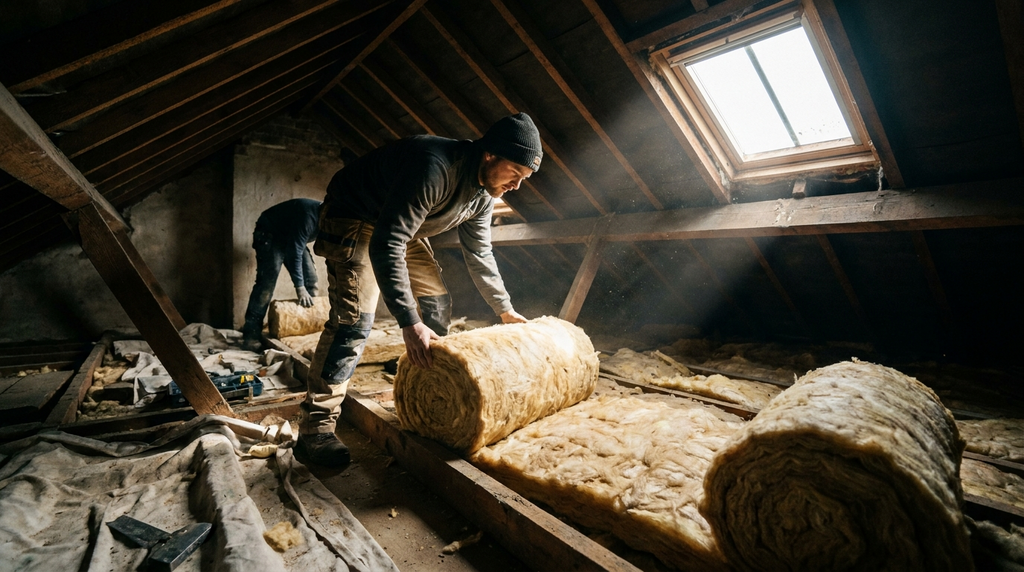
Loft insulation is typically the most cost-effective measure available to UK homeowners. Laying 270mm of mineral wool between and over the joists of a cold loft can save around £150–£250 per year on a typical semi-detached house, with payback periods as short as two years.
External Wall Insulation
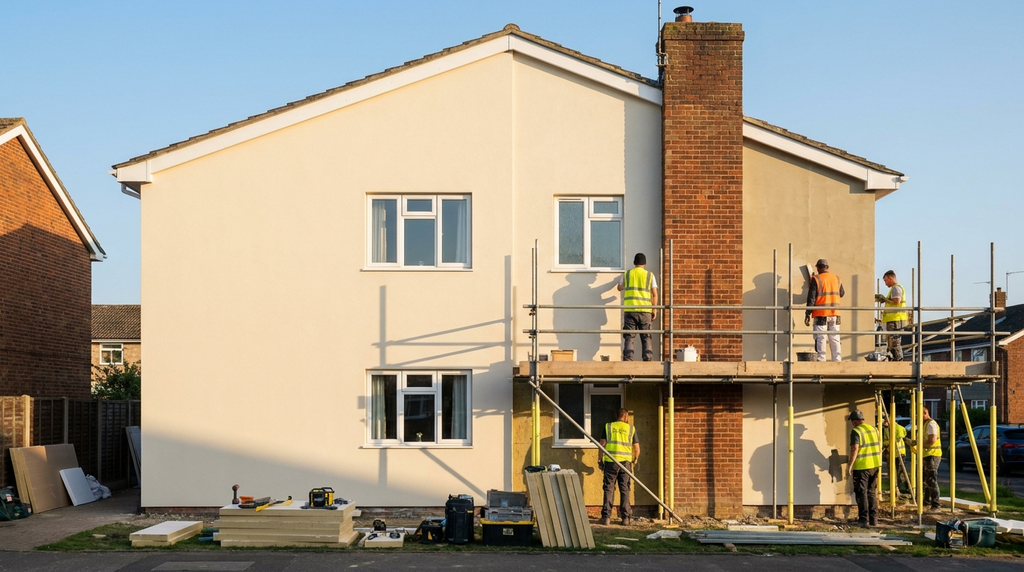
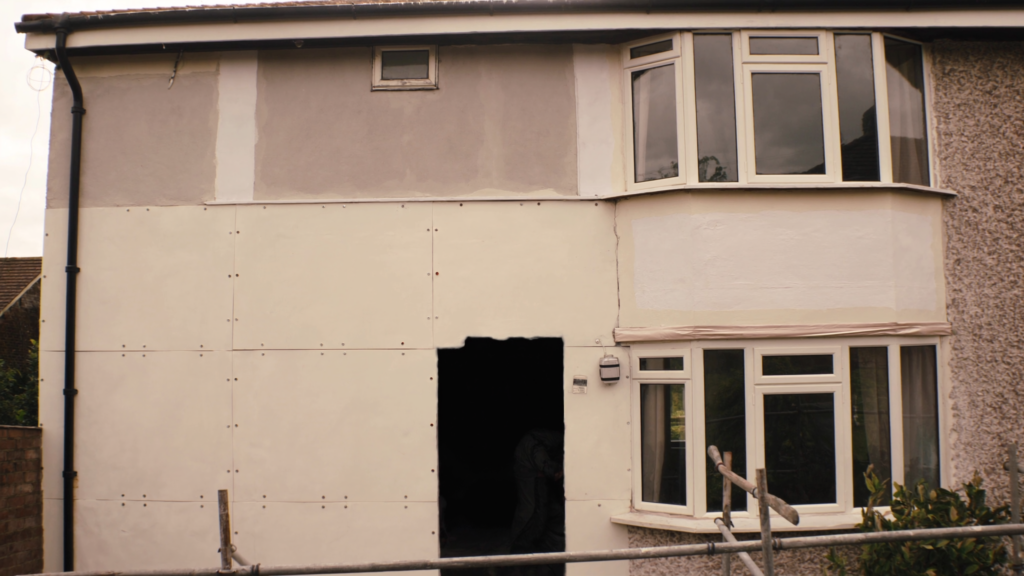
External wall insulation (EWI) is the primary solution for solid-walled properties, around 8 million UK homes have no cavity to fill. Insulation boards are fixed to the outside of the building, covered with a render or cladding finish. EWI dramatically improves thermal performance and refreshes the external appearance, though it is the most expensive wall insulation type.
Internal Wall Insulation
Internal wall insulation (IWI) is the alternative to EWI for solid walls, applied to the inside face. It costs less than external systems but reduces floor area and requires careful attention to cold bridging at floor and ceiling junctions. It’s particularly suitable where external treatment is restricted by planning rules, such as in conservation areas.
Underfloor Insulation
Underfloor insulation addresses a source of heat loss that many homeowners overlook, roughly 15% of a home’s heat can escape through an uninsulated ground floor. Suspended timber floors are insulated by fitting mineral wool or rigid boards between the joists, accessible from below if there is a crawl space. Solid concrete floors require insulation laid above or below the slab.
Roof Insulation
Roof insulation is distinct from loft insulation in that it treats the roof slope rather than the horizontal ceiling plane, converting the loft into a warm, usable space. Rigid foam boards or spray foam are fitted between and beneath the rafters. This approach costs more but adds habitable room and eliminates the thermal bypass of cold air circulating in the roof space.
Draught Proofing
Draught proofing seals uncontrolled air leakage through gaps around windows, doors, floorboards, and service penetrations. It is the cheapest insulation measure available, a full DIY draught-proofing job on a typical house costs £100–£300 in materials, yet it can save £60–£100 per year and makes every other insulation measure more effective by reducing convective heat loss.
Benefits of Home Insulation
The financial case for insulating your home is straightforward, but the benefits extend well beyond lower energy bills.
- Energy bill savings: The Energy Saving Trust estimates that fully insulating a typical three-bedroom semi-detached house (loft, cavity walls, and draught proofing) can save £500–£700 per year at 2026 energy prices.
- Improved EPC rating: Moving from an EPC E to a C or B can add 5–10% to a property’s market value, according to research by Nationwide Building Society. From 2028, new tenancy rules are expected to require rental properties to achieve EPC C, making insulation a legal necessity for landlords as well as a financial benefit.
- Reduced carbon emissions: A well-insulated home can cut CO₂ emissions by 1–2 tonnes per year, a meaningful contribution toward the UK’s legally binding net zero target.
- Thermal comfort: Insulated walls and ceilings maintain more even surface temperatures, eliminating cold spots, draughts, and radiant discomfort from cold wall surfaces, the kind of subtle misery that makes a room feel cold even when the air temperature reads 20°C.
- Condensation control: Correctly installed insulation raises the temperature of internal surfaces above the dew point, dramatically reducing condensation and the associated risks of mould growth and respiratory health problems.
- Sound insulation: Many insulation materials, particularly mineral wool, also provide meaningful acoustic benefits, reducing noise transmission between floors and from outside.
- Reduced boiler wear: A more efficient thermal envelope means your heating system runs for shorter periods under less stress, potentially extending boiler lifespan and reducing maintenance costs.
How Much Does Home Insulation Cost in 2026
Insulation costs vary enormously depending on the measure, property size, access conditions, and location. The figures below represent typical installed costs for a mid-sized UK semi-detached house (approximately 85m²) using professional contractors. DIY costs, where applicable, are considerably lower.
| Insulation Type | Typical Property Size | Cost Range (Installed) | Estimated Annual Saving | Typical Payback Period |
|---|---|---|---|---|
| Loft Insulation (top-up to 270mm) | 3-bed semi-detached | £300 – £600 | £150 – £250 | 2 – 4 years |
| Cavity Wall Insulation | 3-bed semi-detached | £500 – £1,500 | £150 – £300 | 3 – 6 years |
| External Wall Insulation | 3-bed semi-detached | £8,000 – £18,000 | £300 – £500 | 20 – 40 years |
| Internal Wall Insulation | 3-bed semi-detached | £4,000 – £12,000 | £250 – £450 | 15 – 30 years |
| Suspended Floor Insulation | Ground floor, 3-bed semi | £800 – £2,000 | £50 – £100 | 10 – 20 years |
| Solid Floor Insulation | Ground floor, 3-bed semi | £2,000 – £5,000 | £50 – £100 | 25 – 50 years |
| Roof (Warm Rafter) Insulation | 3-bed semi with loft room | £2,000 – £5,000 | £100 – £200 | 15 – 25 years |
| Draught Proofing | 3-bed semi-detached | £100 – £500 | £60 – £100 | 2 – 5 years |
These are guide prices. Detached houses will cost 20–40% more than the figures above; terraced houses may cost 15–25% less. Properties in remote rural locations can attract a 10–20% premium for contractor travel. Always obtain three quotes and check that installers hold PAS 2030 or equivalent certification.
Material Cost Breakdown
| Insulation Material | Typical Application | Cost per m² (Supply Only) | Thermal Conductivity (W/mK) |
|---|---|---|---|
| Mineral Wool (rolls) | Loft, suspended floors, stud walls | £3 – £8 | 0.032 – 0.044 |
| EPS (Expanded Polystyrene) Boards | EWI, solid floors | £6 – £15 | 0.030 – 0.038 |
| PIR (Polyisocyanurate) Boards | Roof, IWI, floors | £12 – £30 | 0.022 – 0.028 |
| Spray Polyurethane Foam | Roof slopes, hard-to-reach cavities | £20 – £45 (installed) | 0.024 – 0.035 |
| Blown Mineral Wool (cavity) | Cavity walls | £5 – £12 (installed) | 0.034 – 0.040 |
| Natural / Sheep’s Wool | Loft, stud walls | £10 – £25 | 0.035 – 0.045 |
Grants and Funding for Home Insulation
The UK government has maintained and expanded several funding routes for home insulation in 2025–2026. That makes it possible for eligible households to receive insulation measures at heavily subsidised or zero cost.
The Great British Insulation Scheme
The Great British Insulation Scheme closed on 31 March 2026. It funded insulation measures only and never covered windows or glazing. Owner-occupiers and private renters may qualify. The scheme prioritises properties with an EPC of D or below. Eligible measures include loft insulation, cavity wall insulation, and solid wall insulation.
The Energy Company Obligation
The Energy Company Obligation (ECO4) scheme, which runs until March 2026 and is expected to transition to ECO5, requires large energy suppliers to fund energy efficiency improvements for low-income and vulnerable households. ECO4 focuses on the least energy-efficient homes (EPC E, F, or G) and can fund multiple measures including wall insulation, loft insulation, and heating upgrades. Households receiving certain benefits, including Universal Credit, Pension Credit, or Child Benefit within income thresholds, are automatically eligible.
The Warm Home Discount and Local Authority Schemes
Local authorities across England, Wales, and Scotland administer their own insulation funding through the Home Upgrade Grant (HUG) and equivalent devolved programmes. These schemes target off-gas-grid homes, properties not connected to mains gas, which tend to have higher energy bills and worse insulation standards. Contact your local authority’s energy efficiency team to find out what’s available in your area.
Scottish and Welsh Government Schemes
Scotland’s Warmer Homes Scotland programme and Wales’s Nest scheme both provide free insulation and heating improvements to eligible low-income households, with eligibility criteria that are sometimes broader than equivalent English schemes. Scottish homeowners can also access the Home Energy Scotland loan, offering 0% interest loans of up to £15,000 for energy efficiency improvements including insulation.
VAT Relief
A practical benefit often overlooked is that insulation materials and installation are subject to 0% VAT in the UK, reduced from the standard 20% rate as part of the government’s energy efficiency incentives. This effectively makes insulation 20% cheaper than the equivalent home improvement subject to standard VAT.
How to Choose the Right Home Insulation
Selecting the right insulation for your home requires working through several key questions before you speak to a contractor or surveyor.
Step One, Understand Your Property’s Construction
The single most important factor is whether your walls have a cavity. Properties built after approximately 1920 and before the mid-1990s typically have unfilled cavity walls, the easiest and cheapest type to insulate. Solid-walled properties (pre-1920 Victorian and Edwardian terraces, and some system-built post-war homes) need either internal or external treatment. If you’re unsure, a surveyor can drill a small test hole, or you can check the wall thickness: solid brick walls are typically 225mm, while cavity walls are 260mm or more.
Step Two, Prioritise by Impact
Not all insulation measures deliver equal returns. A rough priority order for most UK homes is:
- Loft insulation (cheapest, highest return, quickest payback)
- Cavity wall insulation (excellent return for suitable homes)
- Draught proofing (very cheap, immediate comfort improvement)
- Floor insulation (moderate return, particularly valuable in cold climates)
- Solid wall insulation, internal or external (expensive, slower payback, but essential for solid-walled homes)
Step Three, Check for Pre-Existing Problems
Insulating a home that has damp, structural movement, or failed pointing can make existing problems significantly worse by trapping moisture. Before any insulation work, commission a damp survey if you have concerns, and ensure the building envelope is weathertight. This is especially important before installing cavity wall insulation or EWI.
Step Four, Consider Whole-House Strategy
Insulation measures work best as part of a coordinated strategy. Adding insulation without reviewing ventilation can increase humidity and condensation risk. If you’re planning to install a heat pump, which operates most efficiently with a well-insulated, low-heat-loss home, prioritise insulation improvements first. A whole-house retrofit plan, sometimes called a PAS 2035 assessment, provides a professional roadmap for sequencing improvements correctly.
Step Five, Verify Installer Credentials
Insulation is only as good as its installation. For cavity wall insulation, check that installers are registered with the Cavity Insulation Guarantee Agency (CIGA). For all insulation measures, look for PAS 2030 certification (the standard for domestic retrofit installers) and membership of trade bodies such as the Insulation Assurance Authority (IAA) or the National Insulation Association (NIA). TrustMark registration is a further mark of competence for publicly funded work.
Home Insulation Installation, What to Expect
The installation process varies significantly by insulation type, but understanding the general sequence helps you prepare your home, ask the right questions, and know what good workmanship looks like.
Before Installation
A reputable installer will carry out a pre-installation survey, checking wall condition, loft access, existing insulation levels, and any factors that might affect suitability. For cavity wall insulation this includes checking cavity width with a borescope camera. For loft insulation it means assessing joist depth and any obstructions such as water tanks or wiring. You should receive a written specification and quotation before any work begins.
During Installation
Most insulation jobs are completed in a single day. Loft insulation takes two to four hours; cavity wall insulation for a semi-detached house typically takes three to five hours. Solid wall insulation projects take longer, an EWI installation for a typical house usually runs across five to ten working days. You should expect some disruption and dust, particularly for loft and floor work. Reputable contractors will protect your belongings and clean up after the job.
After Installation
On completion, the installer should provide a post-installation certificate confirming the work meets the relevant standard, along with any warranty documentation. CIGA, for instance, issues a 25-year guarantee on cavity wall insulation work. The Great British Insulation Scheme closed on 31 March 2026. It funded insulation measures only and never covered windows or glazing. Update your EPC after significant insulation improvements, a new assessment typically costs £60–£120 and reflects the improvement in your home’s energy rating.
Common Problems and Maintenance
Insulation is generally low-maintenance, but there are specific issues to monitor to ensure your investment performs as intended over the long term.
Cavity Wall Insulation Failure
Poorly specified or installed cavity wall insulation can allow water to bridge the cavity, causing damp on internal walls. This is more likely in exposed locations where driving rain is a serious risk, in properties with narrow cavities under 50mm, or where the external masonry was already in poor condition. Signs include persistent damp patches, efflorescence (white salt deposits on walls), and peeling wallpaper. If you suspect a problem, contact a specialist surveyor, in some cases the fill can be extracted and the wall remediated.
Loft Insulation Compression and Settlement
Mineral wool loft insulation should not be compressed, its insulating performance depends on its thickness and the air trapped within the fibres. Avoid storing heavy items directly on the insulation. Over time, the material can settle slightly; an insulation depth check every ten to fifteen years is worthwhile. If your existing loft insulation is below 100mm, a top-up is strongly recommended regardless of age.
Ventilation and Condensation
As a home becomes more airtight through insulation and draught proofing, natural ventilation decreases. This is broadly desirable from an energy perspective but requires compensating measures to maintain air quality. Ensure trickle vents on windows remain open, extractor fans in kitchens and bathrooms are functional and used, and, in more comprehensively upgraded homes, consider a whole-house mechanical ventilation heat recovery (MVHR) system.
Spray Foam Insulation Caution
Spray polyurethane foam in lofts and roof spaces deserves specific mention because it has been associated with mortgage and remortgaging difficulties. Some lenders decline to lend on properties where spray foam has been applied to rafters or joists, citing concerns about potential concealment of structural defects. Before installing spray foam insulation, check with your mortgage provider, and obtain written assurance from the installer that the product is a breathable, reversible type.
Interstitial Condensation in Solid Wall Insulation
Both IWI and EWI systems require careful design to manage the movement of water vapour through the building fabric. Incorrectly specified vapour control layers, gaps in insulation continuity, or inadequate airtightness detailing can lead to moisture accumulation within the wall structure. Always insist that installers provide a condensation risk analysis (using a Glaser diagram or dynamic simulation) for solid wall insulation projects.
Home Insulation and Building Regulations
Most insulation work on existing homes falls under the permitted development framework and does not require planning permission. However, there are important exceptions. External wall insulation changes the external appearance of a building and may require planning consent, particularly in conservation areas, Areas of Outstanding Natural Beauty, or for listed buildings. EWI on a flat also requires consultation with neighbouring leaseholders under the terms of the lease.
Building Regulations approval under Part L (Conservation of fuel and power) and Part C (Site preparation and resistance to contaminants and moisture) is required for some insulation work, particularly when it forms part of a larger renovation. Your local building control officer or an approved inspector can confirm whether your project needs a Building Regulations application. The Great British Insulation Scheme closed on 31 March 2026. It funded insulation measures only and never covered windows or glazing.
Planning Your Insulation Project, A Practical Checklist
- Get a current EPC if you don’t have one, it identifies your home’s weakest areas and establishes a baseline for measuring improvement.
- Commission a professional survey before specifying any solid wall insulation to check for damp, structural issues, or pre-existing defects.
- The Great British Insulation Scheme closed on 31 March 2026. It funded insulation measures only and never covered windows or glazing.
- Obtain a minimum of three quotes from PAS 2030-certified installers and compare them on specification, not just price.
- Confirm installer warranties and guarantee schemes (CIGA for cavity walls, equivalent for other measures).
- Plan the sequencing of works, insulate before upgrading your heating system, not after.
- Review ventilation as part of any significant insulation project to avoid indoor air quality problems.
- Update your EPC after installation to capture the improved rating and support any future property sale or remortgage.
More on home insulation
- Ventilation after insulation and how to avoid mould
- Draught proofing your home to maximise savings
- Internal Wall Insulation Pros and Cons for Period Properties
- Insulate a solid wall house internally (2026)
- External wall insulation cost UK (2026)
- Underfloor Insulation Options for Suspended Timber Floors
- Porch insulation benefits and costs (2026)
- Lean-to conservatory insulation guide