You are a homeowner with a four-bedroom detached house and you are wondering how much it will cost to insulate it in 2026. The answer depends on which part of the house you insulate and whether your walls are suitable for cavity or solid wall insulation.
For a typical 4-bedroom detached home in 2026, the most cost-effective first step is loft insulation, followed by cavity wall insulation if your walls are suitable. This article covers the costs, savings, and payback periods for each main option.
A 4-bedroom detached home loses around 35% of its heat through uninsulated walls and loft
The Energy Saving Trust (EST) states that a typical uninsulated detached home could save between £590 and £710 annually on heating bills by topping up loft insulation to 270mm and installing cavity wall insulation (Energy Saving Trust, 2026). This article explains how these potential savings relate to the upfront costs for a 4-bedroom detached property. The focus is on helping you decide which insulation measure offers the best payback for your specific home type.
Insulation Cost 4 Bedroom Detached UK The Three Main Options
The three main insulation options for a 4-bedroom detached house are loft insulation top-up, cavity wall insulation, and solid wall insulation (internal or external). For a typical 4-bedroom detached house in 2026, the most cost-effective first step is loft insulation, followed by cavity wall insulation if your walls are suitable. Solid wall insulation is a much larger investment with a longer payback period.
Loft Insulation Costs and Savings for a Detached House
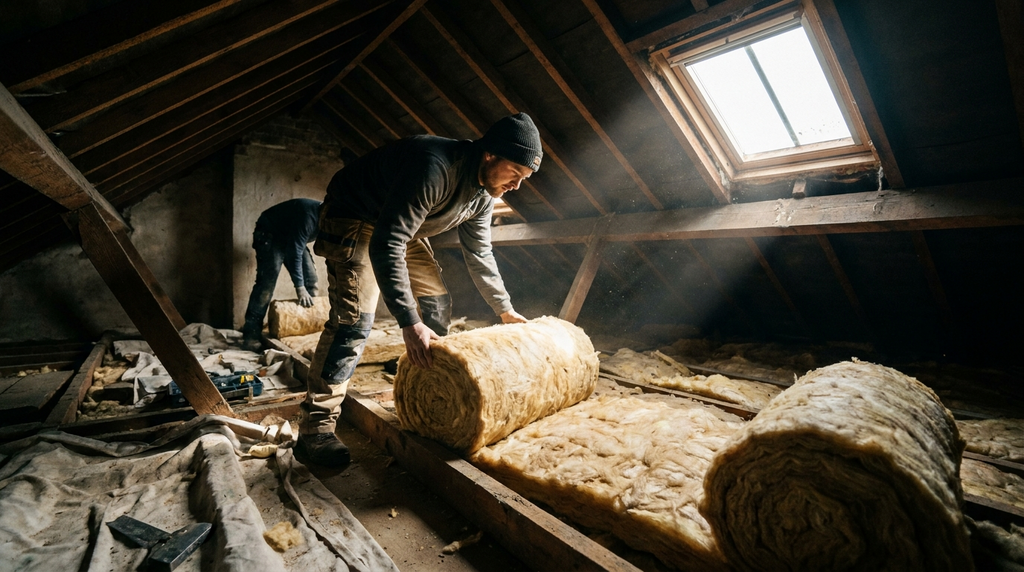
Loft insulation is the cheapest and quickest measure to install. The typical cost for topping up loft insulation to 270mm in a 4-bedroom detached home is between £500 and £700 (Energy Saving Trust, 2026). The annual saving on heating bills is between £355 and £405 (Energy Saving Trust, 2026). This gives a payback period of around 1.5 to 2 years. You can check if your loft already has some insulation by looking from the hatch. If it is less than 270mm deep, a top-up is likely worthwhile.
Cavity Wall Insulation Costs and Savings
Cavity wall insulation is suitable for homes with unfilled cavity walls, typically built after 1920. The typical cost for cavity wall insulation in a 4-bedroom detached home is between £580 and £750 (Energy Saving Trust, 2026). The annual saving on heating bills is between £245 and £285 (Energy Saving Trust, 2026). The payback period is around 2.5 to 3 years. A survey is required to confirm that your cavity walls are suitable and free from defects such as damp or rubble.
Solid Wall Insulation Costs (Internal and External)
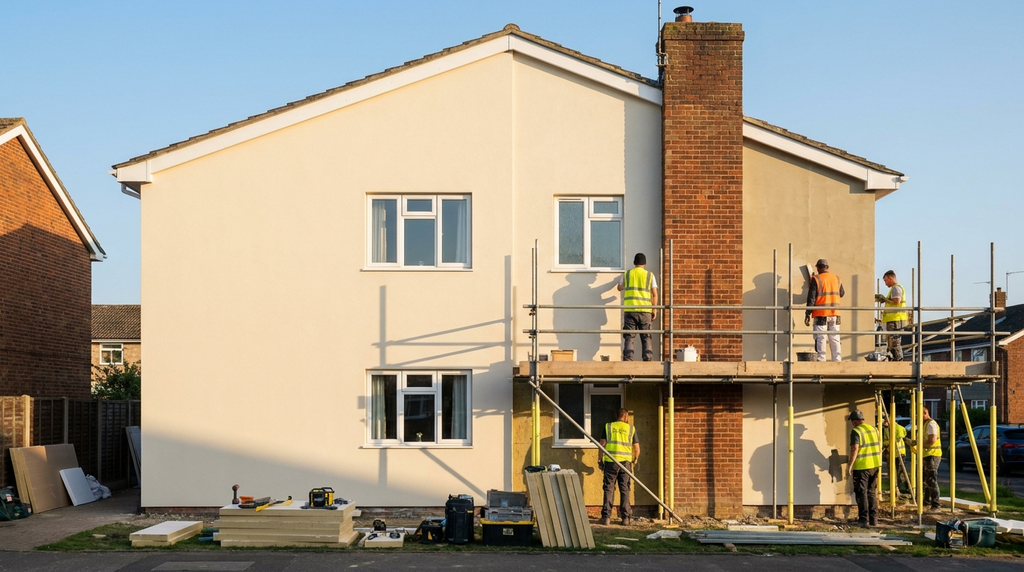
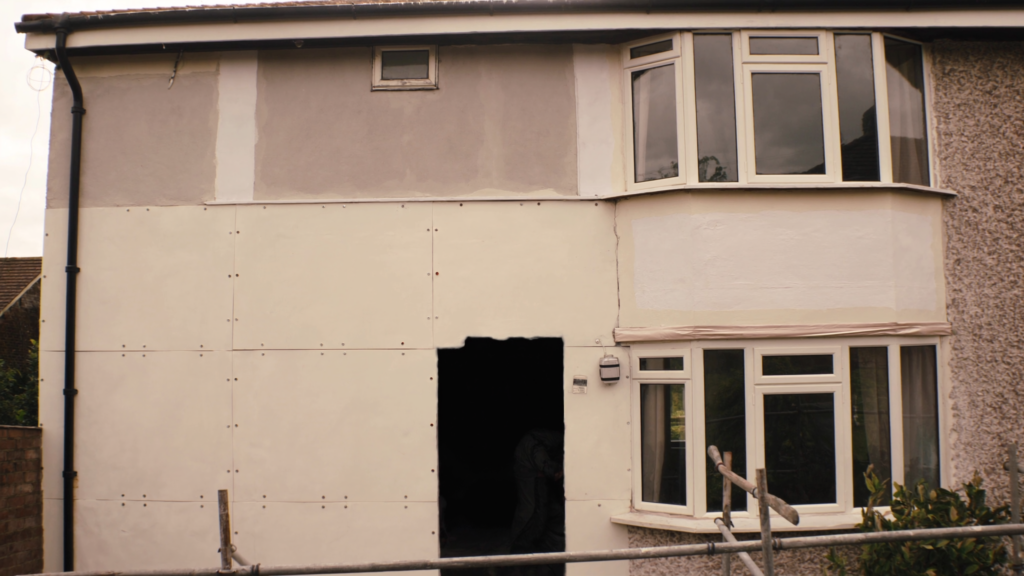
Solid wall insulation is more expensive because it involves adding insulation to the outside or inside of the wall. External wall insulation for a 4-bedroom detached home costs between £10,000 and £14,000 (Energy Saving Trust, 2026). Internal wall insulation (dry-lining) costs between £7,000 and £10,000 (Energy Saving Trust, 2026). The annual saving on heating bills is between £455 and £540 for external insulation and between £280 and £340 for internal insulation (Energy Saving Trust, 2026). The payback period is 18 to 25 years. That makes it a long-term investment.
Quick Numbers Cost, Savings, and Payback for a 4-Bed Detached Home
| Insulation Type | Typical Cost (2026) | Annual Saving | Payback Period |
|---|---|---|---|
| Loft Insulation Top-Up | £500–£700 | £355–£405 | 1.5–2 years |
| Cavity Wall Insulation | £580–£750 | £245–£285 | 2.5–3 years |
| External Solid Wall Insulation | £10,000–£14,000 | £455–£540 | 18–25 years |
| Internal Solid Wall Insulation | £7,000–£10,000 | £280–£340 | 18–25 years |
All figures are sourced from the Energy Saving Trust (2026) publications (Energy Saving Trust, 2026). These are typical costs and savings for a 4-bedroom detached home. Actual figures will vary based on house size, existing insulation levels, and local installer rates.
How to Verify an Insulation Installer (MCS, TrustMark, CIGA)
For cavity wall insulation, the installer must be registered with the Cavity Insulation Guarantee Agency (CIGA) to provide a 25-year guarantee (CIGA, 2026). For any insulation work, use a TrustMark-registered installer for quality assurance and consumer protection (TrustMark, 2026). For solid wall insulation, check if the installer is a member of the Insulation Manufacturers Association (IMA) or a similar trade body. You can find a registered installer on the GOV.UK “Find an installer” page (GOV.UK, 2026).
Grants and Funding for Home Insulation in 2026
The Great British Insulation Scheme closed on 31 March 2026. It funded insulation measures only and never covered windows or glazing. The Energy Company Obligation (ECO4) scheme targets low-income and vulnerable households, covering the full cost of insulation measures (GOV.UK, 2026). You can check eligibility on the GOV.UK page “Check if you can get help with your energy bills” (GOV.UK, 2026). If you are considering solid wall insulation, read our guide on solid wall insulation grants and costs to see if funding is available for your situation.
Frequently Asked Questions
Loft insulation top-up to 270mm costs between £500 and £700 for a 4-bed detached home, according to the Energy Saving Trust. Annual savings are £355-£405, giving a payback period of 1.5 to 2 years.
Cavity wall insulation for a 4-bed detached house typically costs £1,200 to £2,500, as reported by the Energy Saving Trust. You can save up to £405 per year, with a payback of 3 to 6 years.
Solid wall insulation is a major investment, costing £8,000 to £15,000 for a 4-bed detached home. The Energy Saving Trust estimates annual savings of £300-£500, so payback can take 20 years or more. It is most worthwhile if your walls are unsuitable for cavity insulation.
By topping up loft insulation and installing cavity wall insulation, you can save £590 to £710 per year on heating bills, according to the Energy Saving Trust. This is based on a typical uninsulated 4-bed detached home.
The most cost-effective first step is loft insulation top-up, costing £500-£700 with a 1.5-2 year payback. If you have cavity walls, cavity wall insulation is the next best option. Solid wall insulation is only recommended if your walls are not suitable for cavity insulation.