Insulating a stone cottage is a different challenge from insulating a modern cavity-wall house. The thick solid walls that give your home its character and thermal mass also prevent the use of standard cavity-wall injection. So what are your options, how much will they cost, and what grants are available in 2026?
The short answer is that you will need solid-wall insulation, either internally or externally, costing between £8,000 and £22,000 for a typical three-bedroom cottage. Annual heating bill savings range from £150 to £450 depending on your fuel type, and government grants can cut the payback period from 40 years down to as little as five years.
Cavity-wall insulation is rarely possible
Stone cottages almost always have solid walls with no cavity. This means standard cavity-wall injection is simply not an option. The only effective solution is solid-wall insulation (SWI), applied either to the inside or the outside of the existing wall.
According to the Energy Saving Trust, external SWI for a typical stone cottage costs between £10,000 and £22,000, while internal SWI costs between £8,000 and £15,000 (Energy Saving Trust, 2026). The Department for Energy Security and Net Zero (DESNZ) reports that SWI can reduce heating bills by £200–£450 per year for an oil-heated cottage and £150–£350 per year for a gas-heated cottage (DESNZ, 2026).
Without a grant, the payback period is typically 20 to 40 years. The Great British Insulation Scheme closed on 31 March 2026. It funded insulation measures only and never covered windows or glazing.
Internal insulation saves floor space but risks moisture
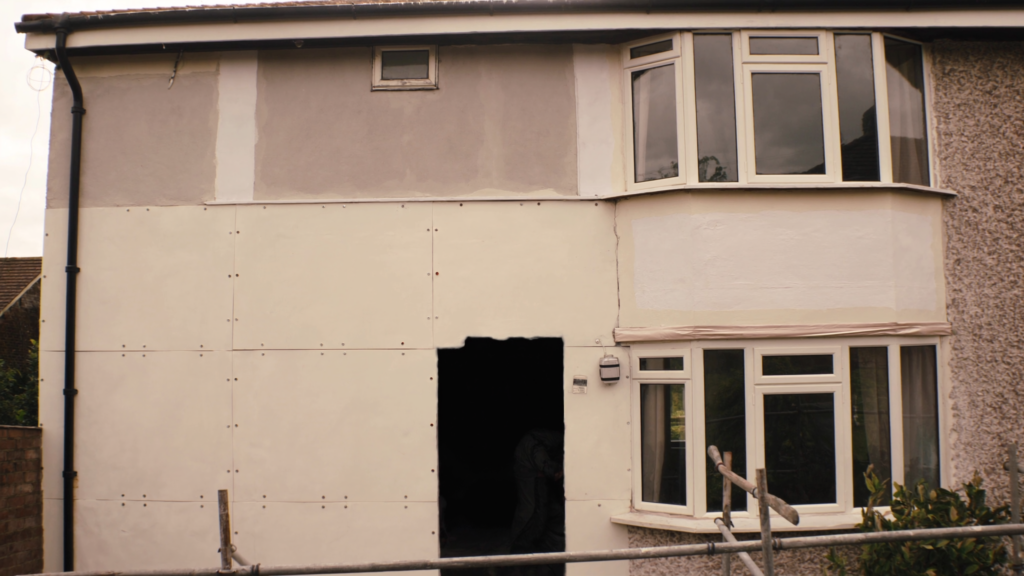
Internal solid-wall insulation is usually fitted using PIR boards (50–100mm thick) or wood-fibre boards. The target U-value under Building Regulations Part L 2026 is 0.30 W/m²K (GOV.UK, 2026).
The critical risk with internal insulation is moisture. Without a vapour-control layer (VCL), warm indoor air will condense inside the wall, leading to rot and damp. Historic England advises that internal SWI must include a VCL and a ventilated air gap; the failure rate for installations that do not follow this guidance is 15–20% (Historic England, 2021).
Installed cost for internal SWI averages £70–£120 per square metre (Energy Saving Trust, 2026).
External insulation preserves interior space but changes the cottage’s appearance
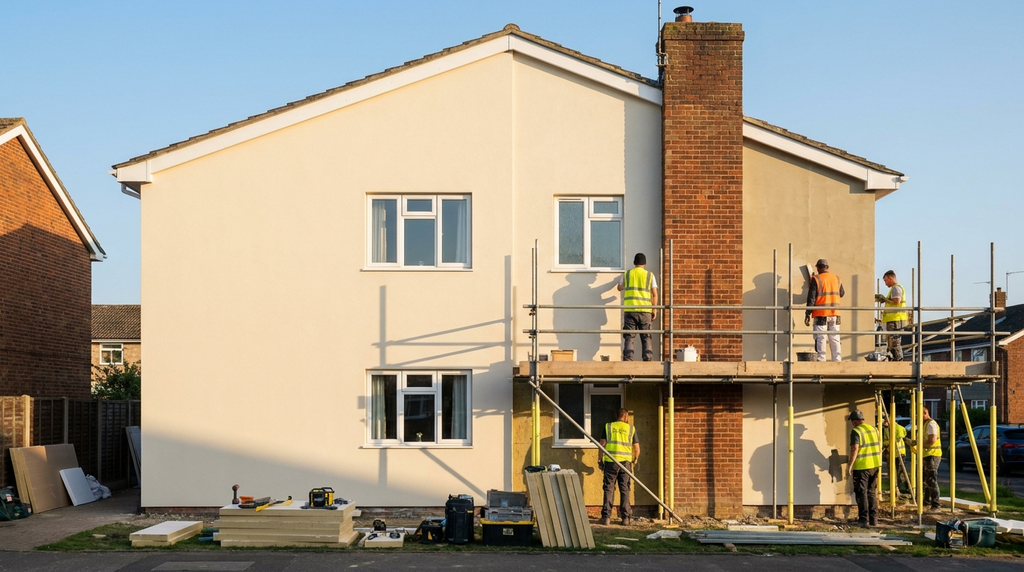
External solid-wall insulation uses mineral-wool or EPS boards (100–150mm thick) finished with a breathable render. The target U-value is also 0.30 W/m²K. Installed cost averages £100–£180 per square metre (Energy Saving Trust, 2026).
Because external insulation covers the original stone finish, planning permission is usually required for cottages in conservation areas or listed buildings. You must check with your local planning authority before proceeding (GOV.UK, 2026). The wall thickness increases by 100–150mm, window reveals become deeper, and the stone facade is lost.
Quick numbers, insulation costs, savings, and payback for stone cottages
| Insulation type | Typical cost (3-bed cottage, ~100m² wall area) | Annual heating bill saving (oil) | Annual heating bill saving (gas) | Typical payback without grant | Typical payback with ECO4/GIBS grant |
|---|---|---|---|---|---|
| Internal SWI | £8,000–£15,000 | £200–£350 | £150–£250 | 25–40 years | 5–15 years |
| External SWI | £10,000–£22,000 | £250–£450 | £200–£350 | 25–40 years | 5–15 years |
| Loft insulation | £300–£600 (top-up to 270mm) | £50–£100 | £30–£70 | 3–8 years | 1–3 years |
| Draught-proofing | £200–£500 (doors, windows, floors) | £40–£80 | £30–£60 | 2–5 years | 1–3 years |
Sources: Energy Saving Trust, 2026; Ofgem, 2026; DESNZ, 2026.
Loft insulation pays back fastest, top up to 270mm for £300–£600
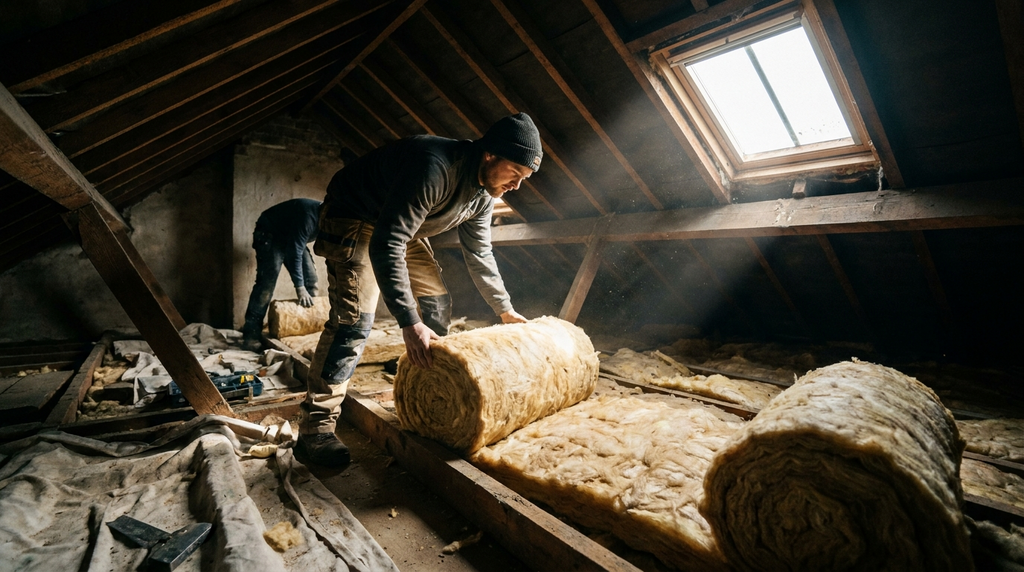
Most stone cottages have pitched roofs, and the current minimum depth for loft insulation under Building Regulations Part L 2026 is 270mm (GOV.UK, 2026). If your existing insulation is only 100mm, topping it up to 270mm costs £300–£600 (Energy Saving Trust, 2026).
Annual savings for an oil-heated cottage are £50–£100, giving a payback period of 3–8 years without grants.
Draught-proofing is the cheapest fix
A typical stone cottage has draughts at window frames, door thresholds, and suspended timber floors. Professional draught-proofing costs £200–£500, while a DIY approach can cost as little as £50–£150 (Energy Saving Trust, 2026).
Annual savings are £40–£80, with a payback period of 2–5 years.
how to draught-proof a stone cottage
The Great British Insulation Scheme closed on 31 March 2026. It funded insulation measures only and never covered windows or glazing.
ECO4 is available to households on qualifying benefits such as Pension Credit or Universal Credit. It covers the full cost of solid-wall insulation if the property has an EPC band D or below and no existing insulation (Ofgem, 2026).
The Great British Insulation Scheme (GBIS) is open to all households with an EPC band D or below. It covers a partial cost, typically 50–75%, of SWI (GOV.UK, 2026). Your property must have a valid Energy Performance Certificate from a registered assessor.
Installer certification, use MCS-registered or TrustMark-approved contractors for solid-wall insulation
Solid-wall insulation, both internal and external, must be installed by a certified contractor to qualify for grants and meet Building Regulations. The Microgeneration Certification Scheme (MCS) covers insulation installers (MCS, 2026). The Great British Insulation Scheme closed on 31 March 2026. It funded insulation measures only and never covered windows or glazing.
For internal SWI, the installer must also be Gas Safe registered if the work affects gas pipework, such as moving radiators (Gas Safe Register, 2026).
how to check if a solid-wall insulation installer is certified
Frequently Asked Questions
No. Stone cottages almost always have solid walls with no cavity, so cavity-wall injection is not an option. You need solid-wall insulation instead, as confirmed by the Energy Saving Trust.
Internal solid-wall insulation costs £8,000–£15,000, and external insulation costs £10,000–£22,000 for a typical three-bed cottage, according to the Energy Saving Trust (2026).
You can save £150–£450 per year on heating bills. DESNZ reports savings of £200–£450 for oil-heated cottages and £150–£350 for gas-heated ones (2026).
Yes. The Great British Insulation Scheme closed on 31 March 2026. It funded insulation measures only and never covered windows or glazing.
Building Regulations Part L 2026 require a target U-value of 0.30 W/m²K for solid-wall insulation, as stated by GOV.UK.