Why Middlesbrough Homeowners Are Looking at Double Glazing Right Now
There’s a quiet revolution happening across Middlesbrough’s terraced streets and suburban estates. With the average home here sitting at EPC Band E, that’s below the national average of Band D, local energy bills are running higher than they need to be, and more residents are realising that upgrading their windows is one of the most impactful changes they can make.
Middlesbrough also sits in the North East, which has the highest rates of fuel poverty in England. That’s not just a statistic, it means thousands of households here are genuinely struggling with heating costs, and double glazing offers a realistic, lasting way to take back some control. When you combine that with cold Teesside winters, ageing housing stock, and improving access to government grants, it’s no surprise that enquiries to local installers are up significantly.
Add to that the fact that labour costs in the North East are noticeably lower than in London or the South East, and Middlesbrough actually becomes one of the better places in England to get this work done affordably. The timing, for many homeowners, genuinely makes sense right now.
What Double Glazing Actually Involves for a Typical Middlesbrough Home
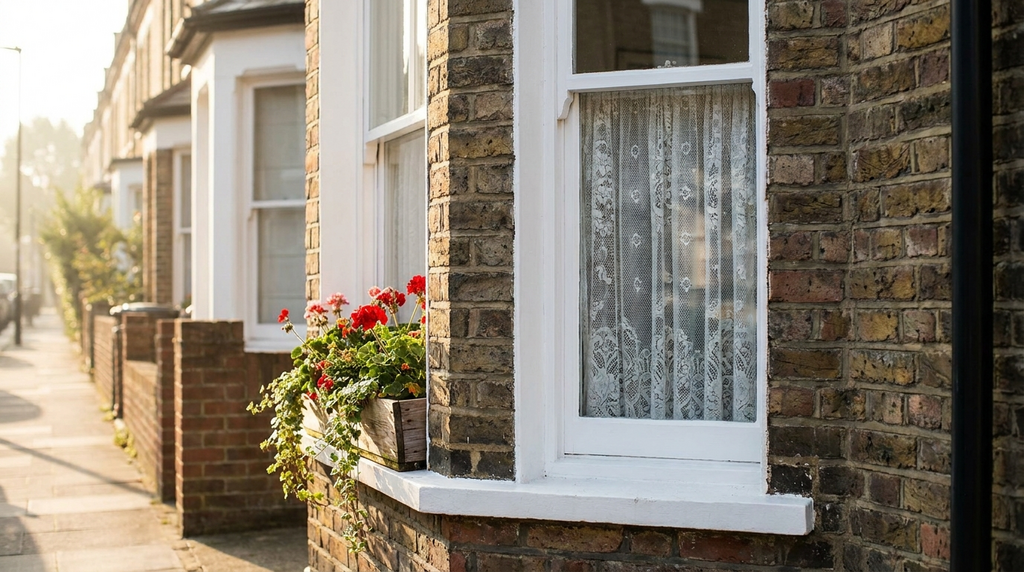
Most homes in Middlesbrough fall into two main categories, Victorian and Edwardian terraces built between roughly the 1880s and 1920s, and the post-war semi-detached estates that spread outward through the mid-twentieth century. Each type has its own personality for window installation.
The older terraced properties in areas like Linthorpe, Gresham, and the streets running off Marton Road often have original timber frames with non-standard window sizes. This matters because it means your installer can’t always use off-the-shelf units, some windows may need to be made to measure, which adds both time and cost. The good news is that modern double glazing can be installed to match the character of period properties far more sympathetically than the chunky white uPVC of the 1990s.
Post-war semis on estates like Berwick Hills, Pallister Park, and Coulby Newham tend to have more standardised openings and are generally simpler to work with. If your home was built between the 1950s and 1980s, there’s a reasonable chance it already has some form of older double glazing that simply needs replacing with a modern, better-performing unit.
- Terraced homes often have limited external access, meaning installers need to work primarily from inside, factor this into your planning
- Bay windows are common in Victorian terraces and require specialist fitting, always check your installer has done them before
- Cavity wall versus solid wall properties affect how heat loss interacts with your windows, older terraces are often solid wall, making good windows even more important
- Street parking restrictions in central Middlesbrough can slow down deliveries and add to job time
- Listed and conservation area properties need careful thought, more on that below
One thing local installers will tell you is that Teesside’s urban terraces often have very narrow alleyways or back lanes, which can make removing old frames and bringing in new ones a surprisingly physical job. It’s worth mentioning the access situation clearly when you get quotes.
How Much Double Glazing Costs in Middlesbrough and the North East Area in 2026
Let’s talk real numbers. Middlesbrough benefits from lower labour costs than most of England, you’re typically looking at 10–15% below the national average for installation work. However, if you’re in a conservation area or need bespoke sizes for a period property, that saving can be offset quickly.
| Property Type | Number of Windows | Standard uPVC (A-rated) | Premium uPVC or Composite | Aluminium Slim-Frame |
|---|---|---|---|---|
| Small terraced (2 bed) | 4–6 windows | £2,800–£3,800 | £3,800–£5,200 | £5,500–£7,000 |
| Mid terraced (3 bed) | 6–8 windows | £3,500–£4,800 | £4,800–£6,500 | £6,500–£9,000 |
| Semi-detached (3 bed) | 8–10 windows | £4,200–£5,800 | £5,800–£8,000 | £8,000–£11,500 |
| Semi-detached (4 bed) | 10–12 windows | £5,200–£7,200 | £7,000–£10,000 | £10,000–£14,000 |
| Bay window add-on | Per bay | £900–£1,400 | £1,400–£2,200 | £2,200–£3,500 |
These prices are for supply and installation with a reputable FENSA-registered installer. They include removal and disposal of your old frames. What they don’t include is any decorating or plastering that might be needed around the internal reveals, budget an extra £100–£200 per window if your internal finish needs attention.
Compared to nearby towns, Middlesbrough prices sit broadly in line with Stockton-on-Tees and Hartlepool, and are typically £200–£500 cheaper per job than equivalent work in Darlington, which draws more installers from the York and Leeds markets. Redcar quotes can sometimes come in slightly lower still, as competition between local firms serving the coastal stretch is fierce.
How Middlesbrough’s Weather and Location Affect Your Double Glazing Choices
Middlesbrough’s climate is shaped by its position in the Tees Valley, sheltered enough to avoid the worst of the coastal battering that Redcar and Saltburn get, but firmly in the cold northern English bracket with around 1,900–2,100 heating degree days per year. That’s significantly above the national average, and it means your windows are working hard for roughly seven or eight months of the year.
Rainfall sits between 700mm and 900mm annually, not extreme by North East standards, but consistent enough that weather-sealing and drainage quality really matter. Poor gaskets or badly fitted frames in a Middlesbrough terrace will show problems faster than they might in a drier climate. This is one reason why cutting corners on the cheapest possible installation tends to cost more in the long run here.
The Tees Valley also generates its own localised fog and damp conditions, particularly in lower-lying parts of the town closer to the river. Properties near the Tees, around areas like Port Clarence or industrial Middlesbrough, can experience higher ambient moisture, which puts greater demands on frame quality and the integrity of sealed units. Argon-filled units with warm-edge spacer bars are well worth the small extra cost here.
One positive, Middlesbrough gets a reasonable 850–950 sunshine hours per year, with the bulk falling between April and September. South and west-facing windows can meaningfully contribute to passive solar gain, so it’s worth thinking carefully about glazing specifications for those elevations rather than just fitting the same unit throughout the house.
The Products and Options That Work Best Here
Given Middlesbrough’s climate and housing stock, here’s what genuinely performs well, not just what looks good in a brochure.
For uPVC frames, look for a multi-chamber profile with at least five internal chambers. The Deceuninck 2800 series and Rehau Synego are both solid performers common in the North East market, offering good thermal values without the premium pricing of some German imports. Avoid single-chamber budget profiles, they won’t hold up well through a Teesside winter.
For glazing units, specify A-rated or A+ rated double glazing as a minimum. Triple glazing is worth serious consideration for north-facing windows or bedrooms on exposed elevations, the additional cost per window is typically £80–£150, and the difference in comfort during a cold January night is very noticeable in an older terrace.
- Argon gas fill, standard and non-negotiable, don’t accept krypton alternatives unless specifically budgeting for premium triple glazing
- Warm-edge spacer bars (look for SuperSpacer or ThermaBar), reduces cold-edge condensation, particularly relevant in Middlesbrough’s damp climate
- Low-E coating (soft coat on inner pane), keeps heat in during winter while still allowing passive solar gain
- Trickle vents, essential in well-sealed modern installations to maintain air quality without opening windows in cold weather
- Anthracite grey or heritage cream finishes, increasingly popular on Linthorpe and Acklam period properties where pure white looks out of place
For the Victorian terraces, consider flush casement windows rather than standard ovolo-beaded profiles. They sit flatter in the frame and look considerably more appropriate on period properties, and they won’t cost you significantly more with most good installers.
How to Find a Trustworthy Double Glazing Installer Near Middlesbrough
The North East has a healthy spread of double glazing installers, and the Middlesbrough area is well served by both local independents and regional companies covering the Teesside cluster, most firms operating here also cover Stockton, Hartlepool, and Redcar without a travel surcharge, so you’ve got genuine competition working in your favour.
The key certification to look for is FENSA registration. This is the scheme that means your installer self-certifies compliance with Building Regulations, which saves you paying for council approval separately. Without a FENSA-registered installer, you’d need to apply for Building Regulations approval yourself, an extra cost and hassle most people want to avoid.
Also look for TrustMark accreditation, which is the government-endorsed quality scheme. It gives you an additional layer of consumer protection and is increasingly required for grant-funded work.
Questions worth asking before you commit
- Are you FENSA registered and can I verify that online before signing anything
- Who manufactures your profiles and sealed units, local or UK-based fabrication is generally more reliable for replacements
- What is your guarantee on sealed units specifically, look for at least 10 years on the sealed unit and 5 years on installation
- Have you done bay windows in Victorian terraces locally, ask for local examples
- What is your current lead time, reputable firms in the North East are typically booking 4–8 weeks out
Red flags include pressure to sign on the day, unusually short guarantees, installers who can’t name their profile manufacturer, and anyone offering to do the work without mentioning Building Regulations compliance.
Grants and Funding That Could Reduce Your Costs in 2026
This is where Middlesbrough homeowners genuinely have an advantage. The combination of EPC Band E ratings across much of the town and the North East’s high fuel poverty levels means a significant proportion of residents qualify for meaningful financial support.
ECO4 (Energy Company Obligation), This is the big one. If you’re on certain qualifying benefits (Universal Credit, Pension Credit, Income Support, and several others), or if your household income is below the scheme threshold, you may qualify for fully or heavily subsidised glazing upgrades. Your home also needs to be EPC Band D or below, which, given the average here is Band E, most Middlesbrough homes will meet. Contact Middlesbrough Council’s housing team or use the government’s ECO4 referral service to check eligibility.
Great British Insulation Scheme (GBIS), A parallel scheme that targets the least energy-efficient homes. Band E properties in Middlesbrough sit squarely in the target group. Window upgrades can sometimes be included alongside other insulation measures.
Warm Homes Fund (North East), The North East Combined Authority and local councils periodically run area-based retrofit schemes with enhanced funding. Middlesbrough Council has participated in previous rounds, and the programme continues in 2026. Glazing is standard-rated for VAT at 20%. The zero rate for energy-saving materials covers insulation, heat pumps and solar panels; HMRC names secondary and double glazing as excluded from it (VAT Notice 708/6, checked August 2026). This is a straightforward saving, ensure your installer shows it clearly on their quote rather than absorbing it.
A realistic grant scenario for a qualifying Middlesbrough household could see ECO4 covering £2,000–£4,000 of the cost of a full window upgrade, bringing a job that might otherwise cost £4,500 down to genuinely affordable territory.
Planning Permission and Regulations in Middlesbrough
For most Middlesbrough homeowners, double glazing falls under permitted development rights, meaning you don’t need to apply for planning permission. This applies to the vast majority of terraced and semi-detached properties in the borough, as long as the replacement windows are similar in appearance to the originals.
However, there are important exceptions you need to know about.
Middlesbrough has several conservation areas, including parts of the Linthorpe Road corridor and areas near the historic town centre. If your property falls within a conservation area, permitted development rights for window replacements may be restricted or removed. You should check with Middlesbrough Council’s planning department before proceeding, they offer pre-application advice that can save you a lot of trouble.
If your home is listed (relatively uncommon in Middlesbrough but not unheard of in the older Victorian streets), you’ll need listed building consent for any window changes. This is a separate process from standard planning permission and involves stricter criteria.
For most homes, the regulatory requirement is simply that your installation meets Building Regulations Part L (energy efficiency) and Part K (safety glazing where applicable). A FENSA-registered installer handles all of this for you automatically, it’s one of the main practical reasons to use one.
What You Will Actually Save, Honest Numbers for Middlesbrough Homes
Let’s work through this honestly using Middlesbrough’s actual energy figures rather than optimistic marketing claims.
With an average gas usage of 13,500 kWh per year and gas currently costing around 6.4p per kWh under the 2026 price cap, the average Middlesbrough household is spending roughly £864 per year on gas. Windows typically account for around 10–15% of a home’s heat loss, in an older solid-wall terrace it can be higher.
Upgrading from single glazing (still present in a significant minority of Middlesbrough’s older terraces) to modern A-rated double glazing could realistically save £150–£250 per year on heating bills for a mid-terraced property. That’s the honest, middle-ground figure, not the top-end number sometimes quoted in marketing.