Why Darlington Homeowners Are Looking at Double Glazing Right Now
There’s a quiet revolution happening on the terraced streets of Cockerton, the semis of Mowden, and the Victorian rows running off Northgate. Darlington homeowners are upgrading their windows at a faster rate than almost anywhere else in the North East, and it’s not hard to understand why.
With average gas usage of 12,500 kWh per year and an EPC Band D rating that matches the national average, Darlington sits right at the tipping point where double glazing upgrades make genuine financial sense. Cold North East winters push heating bills well above what homeowners in, say, Surrey or Bristol face. Those old single-glazed sash windows or failed sealed units from the 1980s? They’re quietly haemorrhaging heat every single night from October through to April.
The North East also has the highest fuel poverty rates in England. That’s not a statistic to brush past, it means Darlington families are genuinely feeling the squeeze on energy bills in a way that makes every home improvement decision feel more urgent. Add to this the fact that the local installer market is well-developed, with companies serving the Darlington–Newton Aycliffe–Stockton corridor able to offer competitive pricing, and you’ve got a moment where the numbers finally stack up.
There’s also a planning factor worth noting early. Darlington Borough Council has several conservation areas, including parts of the town centre and older residential streets, where window choices aren’t entirely your own to make. More on that later. But for the majority of Darlington’s housing stock, double glazing is straightforward, affordable, and genuinely transformative.
What Double Glazing Actually Involves for a Typical Darlington Home
Most Darlington homes fall into two broad camps, Victorian and Edwardian terraces built between roughly 1880 and 1910 (think the streets around Albert Hill, Haughton Road, and North Road), and post-war semis built across estates like Eastbourne, Firthmoor, and Lingfield Point’s surrounding residential areas from the 1950s through to the 1980s.
These two property types have very different starting points for double glazing.
Victorian and Edwardian Terraced Homes
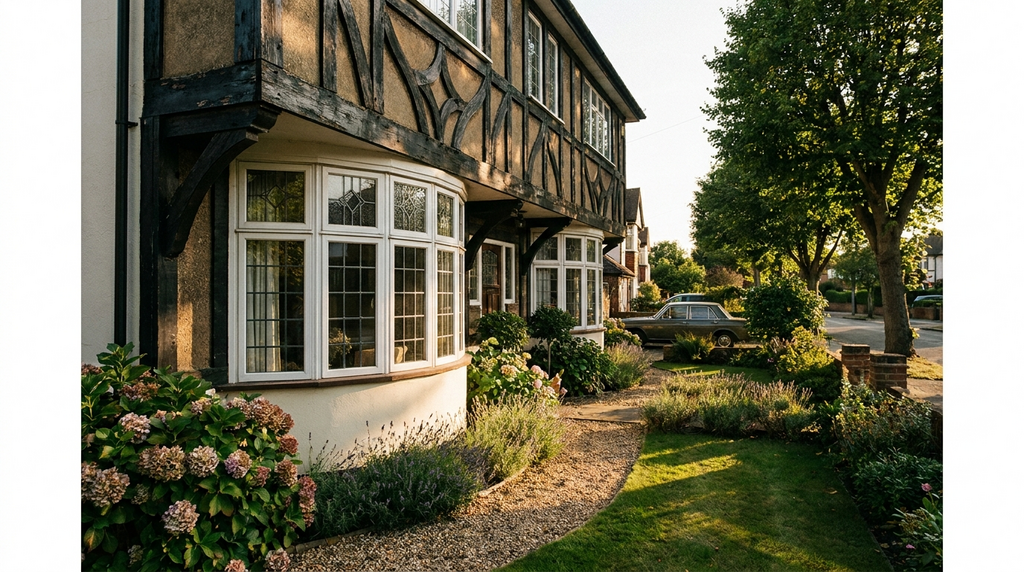
The older terraced properties typically feature large bay windows at the front, timber sash or casement windows of non-standard sizes, and sometimes original single-pane glass that’s over a century old. Replacing these isn’t as simple as swapping out a standard uPVC unit, the openings may need careful measuring, and you’ll often find reveal depths that don’t suit off-the-shelf frames.
If your terrace is mid-row, access is easier from the front but the rear can be tricky. Back-to-back yards with shared ginnels are common in Darlington’s older streets, and installers need to account for awkward access when quoting. That can add time (and occasionally cost) to the job.
Post-War Semis and Estates
The 1950s–1980s semis across Darlington’s outer estates are often a different story. Many already had double glazing installed in the 1990s or early 2000s, and those units are now failing. Misty glass, draughty frames, and condensation between the panes are the calling cards of 25–30-year-old sealed units that have reached the end of their life.
For these homes, you’re often looking at a full replacement rather than a repair. The good news is that modern uPVC systems are far superior in thermal performance, and the regular window sizes on 1970s semis make pricing competitive and installation faster.
What Makes Darlington Installations Slightly Easier
- Good road access throughout most residential areas means delivery and skip logistics are rarely a problem
- Moderate rainfall (800–950mm annually) means fewer weather-related delays than coastal towns
- Strong local installer competition across the Darlington–Newton Aycliffe–Bishop Auckland cluster keeps prices honest
- Lower labour costs than the national average, typically 15–20% below the South East
How Much Double Glazing Costs in Darlington and the North East Area in 2026
Let’s get specific. These are real-world 2026 prices for Darlington, not London-inflated figures or optimistic starter prices. Always get three quotes, but use this as your benchmark.
| Property Type | Windows Replaced | Frame Material | Estimated Cost (Darlington) | National Average |
|---|---|---|---|---|
| 2-bed mid-terrace | 6 windows | uPVC | £2,800 – £3,800 | £3,200 – £4,500 |
| 3-bed end-terrace | 8 windows | uPVC | £3,400 – £4,800 | £4,000 – £5,500 |
| 3-bed semi-detached | 9–10 windows | uPVC | £3,800 – £5,200 | £4,500 – £6,200 |
| 4-bed detached | 12–14 windows | uPVC | £5,500 – £7,500 | £6,500 – £9,000 |
| 3-bed semi-detached | 9–10 windows | Composite/Aluminium | £6,500 – £9,000 | £7,500 – £11,000 |
| Victorian terrace (conservation-style) | 6 windows + bay | Timber-look uPVC or timber | £5,500 – £8,500 | £6,000 – £10,000 |
Darlington consistently comes in 10–18% below the national average for double glazing installation. Compared to Stockton-on-Tees (16km away) you’ll typically find similar pricing, while Newton Aycliffe (11km) and Bishop Auckland (17km) often attract travelling surcharges from national chains, local independents based in Darlington proper tend to offer better value for the surrounding area.
What pushes prices up locally, conservation area requirements for heritage-style frames, non-standard window openings in pre-1919 homes, parking restrictions on terraced streets during installation, and any requirement for external scaffolding on upper-floor bay windows.
How Darlington’s Weather and Location Affect Your Double Glazing Choices
Darlington sits in a sheltered inland position, you’re not facing the brutal coastal winds that batter Hartlepool or Whitby. But don’t let that fool you into thinking the climate is mild. You’re looking at 1,800–2,200 heating degree days per year, which is firmly in the “cold winters demand good insulation” bracket.
The town gets around 850–950 sunshine hours annually. That matters more than you might think, it means decent passive solar gain through south and west-facing windows during spring and autumn, which can meaningfully reduce heating demand if you choose the right glass specification.
Wind and Draught Performance
While sheltered from coastal gales, Darlington does experience cold north-easterly winds in winter, the kind that make single-glazed or failed double-glazed windows feel brutal. A good weather seal and quality gaskets on your new frames matter here. Ask installers specifically about their draught-exclusion performance ratings, not just the glass U-value.
Thermal Bridging in Cold Snaps
During Darlington’s cold snaps, and the town regularly sees sub-zero nights from November through February, thermal bridging through low-quality frames becomes a real problem. Cheaper uPVC profiles with basic steel reinforcement can transmit cold into the room in ways that undermine an otherwise decent glass unit. In this climate, spending a little more on quality frames pays back faster than it would in the Midlands.
Condensation and Moisture
Darlington’s 800–950mm annual rainfall and relatively moderate humidity levels mean external condensation on new high-performance windows is actually common and completely normal, it’s a sign the glass is working well. Internal condensation, however, signals either a failed unit or inadequate ventilation. Worth understanding the difference before you panic-call your installer.
The Products and Options That Work Best Here
Based on Darlington’s climate, housing stock, and energy profile, here’s what genuinely makes sense, not what has the biggest marketing budget.
Glass Specification
For Darlington’s climate, you want a minimum U-value of 1.2 W/m²K for the whole window (frame and glass combined), and ideally 1.0 or below. Triple glazing is increasingly popular in the North East, and in Darlington it can make sense for north-facing rooms or properties on exposed hillside positions. Expect to pay 20–30% more than equivalent double glazing for triple, with a payback period roughly 3–4 years longer.
- Low-E (low emissivity) glass, essential in this climate, not optional. Reflects heat back into the room during cold months
- Argon gas fill, standard on any decent unit; krypton fill is available for premium triple glazing
- Warm-edge spacer bars, reduces cold bridging at the glass edge, particularly valuable on north-facing elevations
- Solar control glass, worth considering for south-facing rooms on Darlington’s newer detached properties to prevent summer overheating
Frame Materials for Darlington Homes
White uPVC remains the most practical and cost-effective choice for most Darlington semis and terraces, it performs well in the climate, requires minimal maintenance, and modern profiles are far better looking than the chunky 1990s versions many homes already have.
For the Victorian terraces around Albert Hill or Northgate, consider woodgrain-effect uPVC or genuine engineered timber frames. These maintain the character of older properties, often matter to Darlington Borough Council in sensitive streetscapes, and perform well thermally when properly installed.
Aluminium frames suit contemporary extensions and newer-build properties, the slim sightlines look good on 2000s and 2010s homes across Mowden and the newer Lingfield estate areas, and aluminium performs excellently in the North East climate without the maintenance burden of traditional timber.
How to Find a Trustworthy Double Glazing Installer Near Darlington
The Darlington area has a healthy installer market, with local companies covering the town alongside firms from the Stockton–Newton Aycliffe corridor. That’s good for competition, but it also means you need to know how to separate the genuine specialists from the travelling sales teams.
Certifications That Actually Matter
- FENSA registration, non-negotiable for any company replacing windows in England. FENSA installers self-certify compliance with Building Regulations, saving you the hassle of a local authority inspection. Check the FENSA website yourself, don’t just take their word for it
- TrustMark accreditation, government-endorsed quality scheme, particularly relevant if you’re applying for any grant funding
- CERTASS membership, alternative to FENSA, equally valid
- Which? Trusted Trader status, useful but verify the reviews relate to North East work, not just aggregate national ratings
Questions Worth Asking Before You Sign Anything
- Are you FENSA or CERTASS registered and can you show me your current certificate?
- Do you carry your own public liability insurance, and what is the level of cover?
- Who actually installs the windows, your own employed fitters or subcontractors?
- What is your warranty on both the sealed units and the frames separately?
- Have you worked on similar properties in Darlington, can you provide local references?
Red Flags Specific to the North East Market
Be wary of national companies that send salespeople from outside the region who quote “tonight only” prices. This practice is unfortunately still common in the North East, and it rarely indicates a fair deal. A reputable Darlington-area installer will give you a written quote that’s valid for at least 28 days.
Lead times from reputable local installers currently run 4–8 weeks in Darlington, if someone can do it in a week, ask why. If someone quotes 16 weeks, they may be overstretched.
Grants and Funding That Could Reduce Your Costs in 2026
Here’s where things get genuinely interesting for Darlington homeowners, especially given the North East’s specific fuel poverty context.
ECO4 (Energy Company Obligation)
ECO4 is currently the most significant source of free or heavily subsidised window upgrades for eligible Darlington residents. If you receive means-tested benefits (Universal Credit, Pension Credit, income-related ESA/JSA, child tax credit) or have a household income below £31,000, you may qualify for fully funded double glazing as part of a wider energy efficiency package.
Darlington Borough Council works with local ECO4 installers, contact the council’s housing team directly or use the government’s ECO4 eligibility checker. The North East’s high fuel poverty rate means the region typically has good ECO4 installer availability compared to other parts of England.
Great British Insulation Scheme (GBIS)
The Great British Insulation Scheme closed on 31 March 2026. It funded insulation measures only and never covered windows or glazing. Both means-tested and a broader “general group” (based on EPC rating alone) are eligible. This is a scheme worth checking even if you don’t receive benefits.
Warm Homes – Local Grant
This successor to the Home Upgrade Grant provides funding for low-income households not on the gas grid, but Darlington properties with gas (the majority) may still qualify under certain council-led applications. Contact Darlington Borough Council’s energy efficiency team for current availability, North East councils including Durham County Council adjacent areas have historically been active in administering these funds.
North East Specific Opportunities
The North East Combined Authority has supported various retrofit programmes targeting fuel poverty. Keep an eye on community energy initiatives, several active groups operate across County Durham that can help navigate grant applications and identify funding that national websites don’t always advertise clearly.
Key tip, always apply for grants before signing an installation contract. Retrospective grant applications are rarely successful.
Planning Permission and Regulations in Darlington
For most Darlington homeowners, double glazing falls under permitted development, meaning you don’t need planning permission. However, there are important exceptions you need to check before