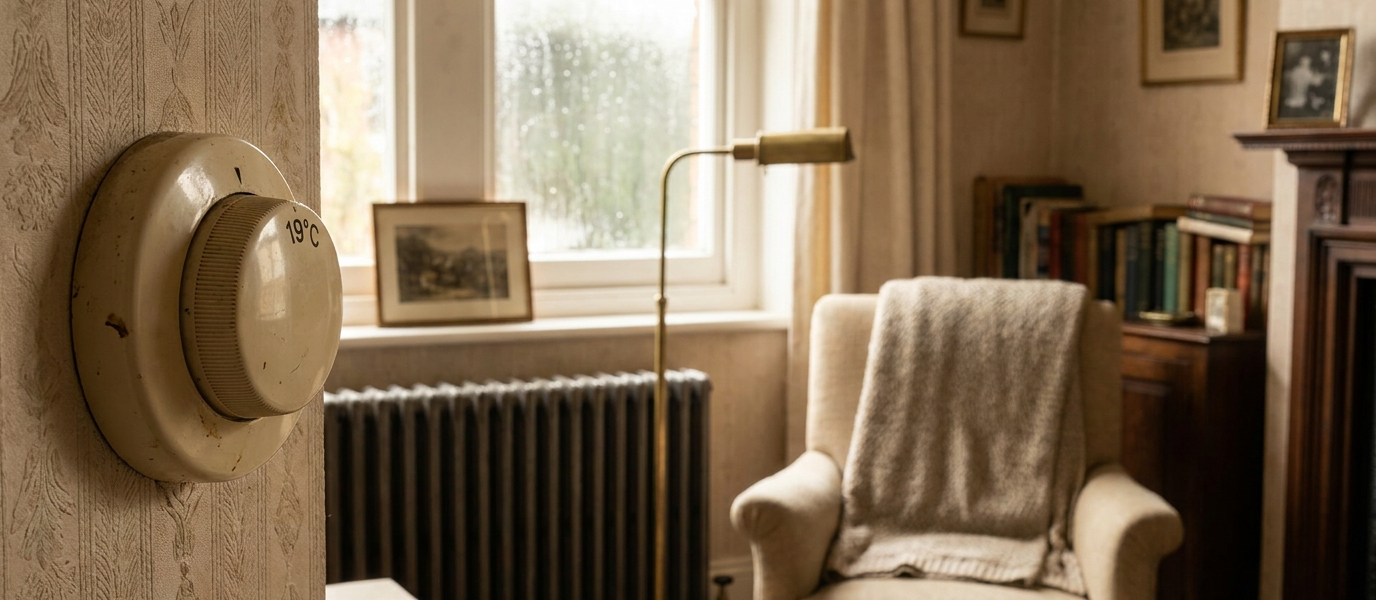
Leaving the heating on all day costs the average UK household an extra £350 per year
Homeowners often wonder whether it is cheaper to leave the heating on low all day or to use a timer. The answer is clear for gas-heated homes. Leaving the heating on all day costs the average UK household an extra £350 per year compared to using a timer with two on-off periods (Energy Saving Trust, 2026).
Leaving the heating on all day costs the average UK household an extra £350 per year compared to using a timer. A timer for 8 hours costs £1.10 daily, while low all day costs £2.10 (Ofgem, 2026).
- Leaving heating on all day costs an extra £350 per year vs a timer.
- Timer for 8 hours costs £1.10 daily; low all day costs £2.10.
- Heat loss increases with longer run times, wasting energy.
- Annual saving with a timer is £180–£200 over six months.
- Energy Saving Trust confirms continuous low heating doesn't save money.
- Leaving the heating on all day costs the average UK household an extra £350 per year
- The cost difference between a timer and leaving heating on low all day
- Quick numbers – daily and annual costs for typical UK homes
- Why turning the heating off when you are out saves more than you think
- How much does it cost to heat a home per hour in 2026
- Eligibility and installer verification for heating controls and boilers
- The direct answer leaving heating on all day costs more than using a timer
A three-bedroom semi-detached home uses roughly 12,000 kWh of gas annually for heating (DESNZ, 2026). Running the boiler continuously at a low temperature such as 16°C for 16 hours versus using a timer for 8 hours can increase gas consumption by 20–30%. At the 2026 Ofgem price cap of 6.5p per kWh for gas, that 20% increase adds approximately £156–£234 per year. However, typical real-world estimates from the Energy Saving Trust put the figure closer to £350 when factoring in increased heat loss from longer run times (Energy Saving Trust, 2026).
The cost difference between a timer and leaving heating on low all day
Using a timer to heat your home during specific periods costs significantly less than leaving it on low all day. A timer setting of 7am–9am and 4pm–10pm (8 hours total) at 20°C costs roughly £1.10 per day for a medium home. Leaving the heating on low all day at 16°C from 7am–10pm (15 hours) costs approximately £2.10 per day (Ofgem, 2026).
The daily saving with a timer is £1.00, which amounts to an annual saving of £180–£200 over six months of heating season. The longer the heating runs, the more heat escapes through walls, windows, and the loft. This is why continuous low heating does not save money. Heat loss increases with longer run times, meaning the boiler works harder to maintain even a low temperature (Energy Saving Trust, 2026).
Quick numbers – daily and annual costs for typical UK homes
| Home type | Timer daily cost (8 hours @ 20°C) | Low-all-day daily cost (15 hours @ 16°C) | Annual saving with timer |
|---|---|---|---|
| Flat (2-bed) | £0.70 | £1.40 | £126 |
| Terraced (3-bed) | £0.90 | £1.75 | £153 |
| Semi-detached (3-bed) | £1.10 | £2.10 | £180 |
| Detached (4-bed) | £1.60 | £3.00 | £252 |
These figures are based on EST typical consumption data and the 2026 Ofgem gas unit rate of 6.5p per kWh. Costs will vary depending on your home’s insulation, boiler efficiency, and local climate (Energy Saving Trust, 2026).
How to choose the best heating timer for your home
Why turning the heating off when you are out saves more than you think
A modern condensing boiler operates most efficiently at a high flow temperature of around 70°C, not at a low constant setting. When the heating is off, the home cools slowly. The average temperature drop is 0.5–1°C per hour depending on insulation levels (DESNZ, 2026).
Reheating a cool home from 16°C to 20°C takes about 30 minutes and uses less energy than maintaining 16°C for 10 hours. The myth that reheating uses more energy is false for well-insulated UK homes. The Energy Saving Trust confirms that turning the heating off when you are out saves energy because the total heat loss over the off period is lower than the energy needed to maintain a constant temperature (Energy Saving Trust, 2026).
How much does it cost to heat a home per hour in 2026
Understanding per-hour costs helps you calculate your own heating expenses. For a gas boiler, a 24kW boiler running for 1 hour at 70% load uses 16.8 kWh, which costs £1.09 per hour at the 2026 Ofgem gas rate of 6.5p per kWh (Ofgem, 2026).
An air source heat pump is cheaper to run per hour. An 8kW unit with a seasonal coefficient of performance of 3.5 uses 2.3 kWh per hour, costing 55p per hour at the 2026 electricity rate of 24p per kWh (MCS, 2026). Electric storage heaters are more expensive. A 2kW output running for 7 hours off-peak uses 14 kWh at 15p per kWh, costing £2.10 per night. These figures allow homeowners to calculate their own costs based on boiler size and running time.
Eligibility and installer verification for heating controls and boilers
Any gas boiler installation or replacement must be done by a Gas Safe registered engineer. You can check the register online at the Gas Safe Register website (Gas Safe Register, 2026). For heat pumps, installers must be MCS certified to qualify for the Boiler Upgrade Scheme, which offers a 2026 grant of £7,500 (GOV.UK, 2026).
Heating controls such as smart thermostats, timers, and thermostatic radiator valves do not require certification for DIY installation. However, professional fitting should be done by a TrustMark-registered tradesperson (TrustMark, 2026). To claim energy-efficiency grants, homeowners must use certified installers. Otherwise, the work may not be eligible for funding.
Boiler Upgrade Scheme eligibility and application guide
The direct answer leaving heating on all day costs more than using a timer
For a typical UK home, leaving the heating on low all day costs 80–100% more per day than using a timer with two on-off periods. The Energy Saving Trust confirms this in its 2026 report on heating controls and energy use (Energy Saving Trust, 2026). The savings are largest in homes with average or better insulation, such as loft insulation of at least 270mm and cavity wall insulation.
The only exception is homes with heat pumps, where constant low temperature can be more efficient. However, even for heat pumps, a timer with setback periods often saves money. The bottom line is that for gas boilers, you should always use a timer. For heat pumps, consult an MCS-certified installer for optimal programming to balance comfort and cost.
Frequently Asked Questions
No. Leaving the heating on low all day costs more than using a timer. The Energy Saving Trust (2026) estimates an extra £350 per year for the average UK home.
Leaving the heating on low all day costs around £2.10 per day for a medium home, according to Ofgem (2026). Using a timer for 8 hours costs roughly £1.10 per day.
Leaving the heating on all day costs the average UK household an extra £350 per year compared to using a timer, based on Energy Saving Trust data (2026).
No. The Energy Saving Trust (2026) states that continuous low heating does not save money because heat loss increases with longer run times, making the boiler work harder.
Using a timer with two heating periods (e.g. 7am–9am and 4pm–10pm) is the cheapest gas-heating method. Ofgem (2026) shows this costs around £1.10 per day for a medium home.