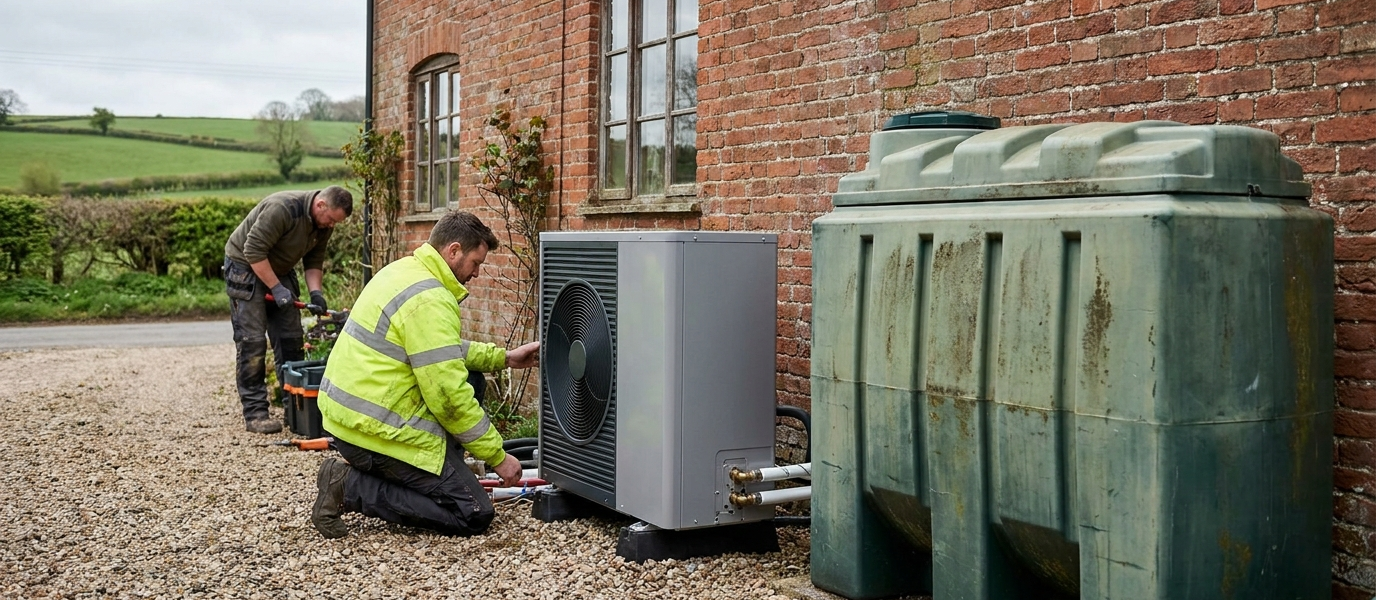
Oil boiler users in rural Britain will see the heat pump grant rise to £9,000 under a Labour proposal reported by This is Money. The increase from the current £7,500 targets the 1.2 million households off the gas grid who pay the highest heating bills in the country.
As This is Money reports, the scheme would apply only to homes currently using oil, LPG, or coal, not those on mains gas. The logic is simple: oil costs roughly 12p per kWh, while a heat pump running at a seasonal efficiency of 300% delivers heat at 4–5p per kWh. For a typical 3-bed detached rural home using 18,000 kWh a year, the saving is about £600 annually.
Who qualifies, and who doesn’t
The Boiler Upgrade Scheme currently offers £7,500 to all homes. Labour’s proposal carves out a higher rate for off-grid properties, recognising that oil boiler replacements cost more, typically £10,000–£15,000 compared to £7,000–£11,000 for gas-to-heat-pump swaps. The £9,000 grant would cover most or all of a standard installation, though ground-source systems remain more expensive at £15,000–£25,000.
Homes on mains gas are excluded. The government estimates 23 million gas boiler households will need to switch eventually, but the priority is the 1.2 million off-grid homes where carbon savings per installation are highest. Ofgem data shows oil emits 3.2 tonnes of CO2 per household annually, roughly double a gas boiler and four times a heat pump on the current grid mix.
What it costs a typical 3-bed semi
A rural 3-bed semi using 18,000 kWh of oil currently pays £1,440 a year at 8p per litre (roughly 12p/kWh). A heat pump at 300% efficiency (6,000 kWh input) would cost £1,440 at the current electricity price cap of 24p/kWh, no saving at face value. But the real picture changes with a heat pump tariff: Octopus Cosy, EDF GoElectric, or similar off-peak rates bring the effective cost to 9–12p/kWh, cutting the annual bill to £540–£720.
The grant covers the installation. Running costs depend on tariff choice and insulation. Homes with solid walls or single glazing will need upgrades first, the Energy Saving Trust recommends cavity wall insulation (£2,000–£5,000) and loft insulation (£300–£1,000) before installing a heat pump. The Great British Insulation Scheme closed on 31 March 2026. It funded insulation measures only and never covered windows or glazing.
The catch, and why it matters
The £9,000 grant is not yet law. Labour has pledged the change in its manifesto but no legislation has been tabled. The current Boiler Upgrade Scheme runs until March 2028, but applications are capped at 50,000 per year, and the fund was oversubscribed in 2023. If demand spikes, the queue could stretch months.
Yet the bigger barrier is installer capacity. MCS-certified heat pump installers number roughly 4,000 in the UK, compared to 130,000 gas-safe engineers. The government’s Heat Pump Installer Training Programme aims to train 10,000 new engineers by 2028, but that timeline lags behind the grant surge. Homeowners in rural areas may wait 6–12 months for an installation slot.
For those who can act: check your EPC rating now. A heat pump needs a property with at least an EPC D, ideally C or above. If your home is rated E or F, spend the next 12 months on insulation first, then apply when the grant is confirmed. The Energy Saving Trust estimates that a well-insulated home with a heat pump can achieve an EPC B, adding £10,000–£15,000 to resale value according to Nationwide data.
Households on oil should start comparing heat pump quotes from MCS-registered installers now. The grant change is expected to pass in the 2025 Finance Bill, with applications opening from April 2025. Those who prepare early will avoid the rush.
Frequently Asked Questions
Labour has proposed increasing the heat pump grant to £9,000 for homes currently using oil, LPG, or coal, up from the current £7,500 under the Boiler Upgrade Scheme. This targets the 1.2 million households off the gas grid, where oil costs around 12p per kWh and heat pumps can deliver heat at 4–5p per kWh. However, the proposal is not yet law and is part of Labour's manifesto pledge.
The £9,000 grant applies only to homes off the gas grid that use oil, LPG, or coal for heating. Homes on mains gas are excluded, as the government prioritises off-grid properties where carbon savings per installation are highest, oil emits 3.2 tonnes of CO2 per household annually, roughly double a gas boiler. The grant covers most or all of a standard heat pump installation, typically costing £10,000–£15,000 for oil-to-heat pump swaps.
For a typical 3-bed detached rural home using 18,000 kWh of oil per year, switching to a heat pump with a seasonal efficiency of 300% could save around £600 annually. At current electricity price cap rates of 24p/kWh, running costs are similar, but using a heat pump tariff like Octopus Cosy or EDF GoElectric at 9–12p/kWh cuts the annual bill to £540–£720, compared to £1,440 for oil. Savings depend on insulation and tariff choice.
Yes, the Energy Saving Trust recommends cavity wall insulation (£2,000–£5,000) and loft insulation (£300–£1,000) before installing a heat pump for best performance. The Great British Insulation Scheme closed on 31 March 2026. It funded insulation measures only and never covered windows or glazing. Homes with solid walls or single glazing may need additional work to benefit fully from a heat pump.
No, the £9,000 grant is not yet law, it is a Labour manifesto proposal, and no legislation has been tabled. The current Boiler Upgrade Scheme offers £7,500 until March 2028, but applications are capped at 50,000 per year and were oversubscribed in 2023. If the change passes, homeowners should expect potential delays due to limited MCS-certified installers (around 4,000 in the UK) and possible wait times of 6–12 months in rural areas.





