A double glazing door is a door constructed with two panes of glass separated by a layer of trapped gas, typically argon, which reduces heat loss and improves insulation. According to the Energy Saving Trust, installing energy-efficient glazing, including double-glazed doors, can save a typical semi-detached home around £195 per year on heating bills (Energy Saving Trust, 2026).
- A double glazing door has two glass panes with a 6-20mm argon gas gap.
- It can save a semi-detached home around £195 per year on heating.
- Typical U-value is 1.4 W/m²K vs 5.0 for single-glazed doors.
The key variable that decides whether a door qualifies as double glazing is the presence of a sealed unit containing two glass panes with a gap of at least 6mm to 20mm, filled with an insulating gas. This applies to patio doors, French doors, and composite entrance doors fitted with double-glazed units. It does not apply to single-glazed doors, which have only one pane, or to doors with triple glazing, which use three panes.
How Double Glazing Doors Reduce Heat Loss
A double glazing door works by trapping a layer of argon gas between the two panes, which slows the transfer of heat from inside your home to the outside. The overall thermal performance is measured by the U-value; a double-glazed door typically achieves a U-value of around 1.4 W/m²K, compared to 5.0 W/m²K for a single-glazed door (BRE, 2026). This reduction in heat transfer means your heating system runs less frequently, cutting energy use. The Energy Saving Trust notes that replacing a single-glazed door with an A-rated double-glazed model can save up to £110 per year for a typical home (Energy Saving Trust, 2026).
Types of Double Glazing Doors Available
Common types include uPVC, timber, and aluminium double-glazed doors, each with different frame materials affecting insulation and maintenance. uPVC doors are the most popular due to low cost and good insulation, while aluminium frames offer strength but higher heat loss unless fitted with a thermal break. Composite doors often combine a solid core with a double-glazed panel. This provides enhanced security and thermal efficiency. All must meet Building Regulations Part L, which requires replacement doors to achieve a U-value no higher than 1.6 W/m²K (GOV.UK, 2026).
Cost and Installation of Double Glazing Doors
Installing a double glazing door typically costs between £500 and £1,500 for a standard uPVC French door, including fitting, with timber and aluminium options ranging higher. The exact price depends on size, frame material, and glazing specification. You must use a FENSA-registered or Competent Person Scheme installer to comply with Building Regulations without needing separate approval (FENSA, 2026). The Energy Saving Trust estimates that a well-fitted double-glazed door can pay back its cost in energy savings within 5 to 10 years, depending on current heating costs.
A worked example
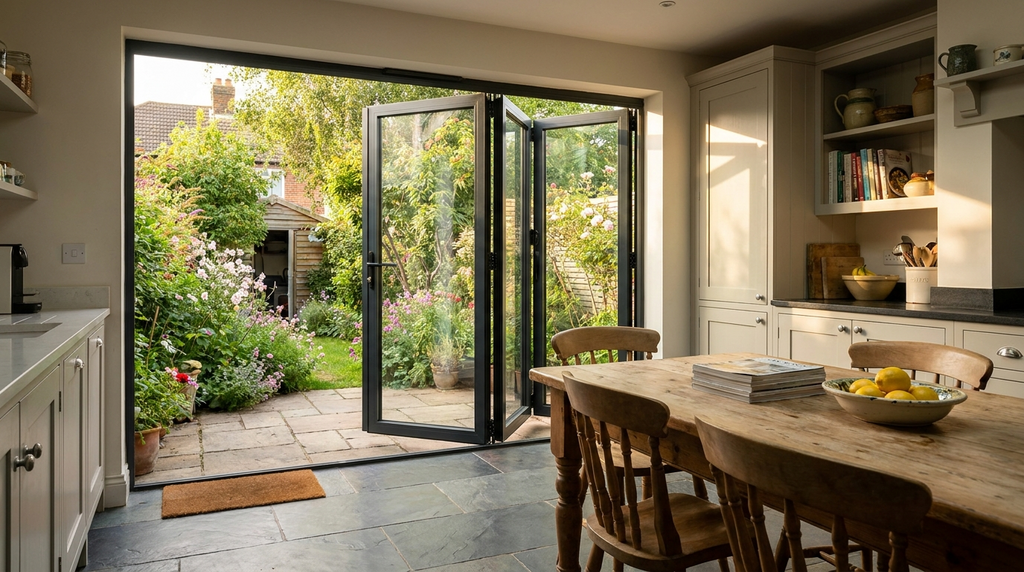
Glazing is standard-rated for VAT at 20%. The zero rate for energy-saving materials covers insulation, heat pumps and solar panels; HMRC names secondary and double glazing as excluded (VAT Notice 708/6). The Energy Saving Trust estimates this saves around £195 per year on heating bills, meaning the door pays for itself in roughly 6 years. Over 25 years, the total savings reach £4,875, assuming current energy prices. If the household qualifies for the ECO4 scheme, the upfront cost could drop to zero for those on certain benefits. The door’s U-value of 1.4 W/m²K, compared to 5.0 for single glazing, keeps the kitchen warmer and reduces draughts. For a bungalow, the payback is faster because heat loss through doors is a larger proportion of the home’s total heat loss. Check Energy Saving Trust for your specific home type.
| Item | Figure |
|---|---|
| Upfront cost after grants | £1,200 |
| Yearly savings | £195 |
| Payback period | 6 years |
| 25-year lifetime savings | £4,875 |
What homeowners often get wrong
The most common mistake is assuming all double glazing doors perform equally, ignoring the U-value rating. Here are three frequent errors homeowners make.
- Choosing the cheapest door without checking the U-value A door with a U-value above 1.6 W/m²K may still be double glazed but wastes £50-80 per year in extra heating compared to a 1.4-rated door. Always look for a U-value of 1.4 or lower to maximise energy savings.
- Forgetting that the door frame matters as much as the glass A high-performance double-glazed unit in a poorly insulated aluminium frame can increase heat loss by 20% compared to a composite or uPVC frame. The wrong frame choice can void the warranty on the glazing unit.
- Believing a double glazing door eliminates condensation completely Condensation on the inside of the glass in winter is normal for the first few years; it indicates the room is humid, not that the door is faulty. Panicking and replacing the door early wastes £1,000+ unnecessarily.
Quick reference
- A double glazing door typically has a U-value of 1.4 W/m²K, cutting heat loss by 72% compared to a single-glazed door.
- The Energy Saving Trust says replacing a single-glazed door saves a semi-detached home £195 per year on energy bills.
- Glazing is standard-rated for VAT at 20%. The zero rate for energy-saving materials covers insulation, heat pumps and solar panels; HMRC names secondary and double glazing as excluded (VAT Notice 708/6).
- ECO4 grants may cover the full cost of a double glazing door for households on means-tested benefits, with no upfront payment required.
- Always check the door’s energy label, a B rating or above (U-value 1.4 or lower) ensures the best thermal performance and longest payback.
Frequently Asked Questions
A double glazing door is a door with two panes of glass separated by an insulating gas layer, usually argon. According to the Energy Saving Trust, this can save a typical home up to £195 per year on heating bills.
Replacing a single-glazed door with an A-rated double-glazed model can save around £110 per year, according to the Energy Saving Trust. For a full set of double-glazed doors and windows, savings can reach £195 annually for a semi-detached home.
A double glazing door typically achieves a U-value of around 1.4 W/m²K, compared to 5.0 W/m²K for a single-glazed door (BRE, 2026). This lower value means better insulation and less heat loss.