Aluminium windows now account for 27% of new window installations in UK homes, according to a 2026 DESNZ housing retrofit survey.
Aluminium windows are the second-most-common frame material after uPVC in both new-build and replacement installations across the UK. The core appeal lies in slim sightlines, a high strength-to-weight ratio, and a typical service life of 30 to 45 years. This guide helps a homeowner decide whether aluminium windows are the right choice for their property, budget, and energy-efficiency goals in 2026. It covers thermal performance, cost, appearance, and installation requirements.
Thermal performance of aluminium frames now matches or exceeds uPVC in 2026
Modern aluminium windows with thermal breaks achieve whole-window U-values between 1.2 and 1.6 W/m²K, comparable to premium uPVC (DESNZ, 2026). A thermal break is a polyamide or reinforced plastic barrier placed between the inner and outer aluminium sections. This barrier is mandatory for compliance with 2026 Building Regulations Part L. Triple glazing is now standard on most aluminium window orders. A typical triple-glazed aluminium unit achieves a U-value of 0.8 to 1.0 W/m²K (Glass and Glazing Federation, 2026). Older single-glazed aluminium frames had a U-value of around 5.6 W/m²K. Products sold in 2026 are fundamentally different from those older designs.
Aluminium window costs in 2026 range from £450 to £1,200 per window fitted
The cost per window varies by type. Casement windows sit at the bottom of the range, tilt-and-turn windows in the mid-range, and sliding sash windows at the top (Energy Saving Trust, 2026). Average fitting costs add £150 to £300 per window (TrustMark, 2026). Aluminium typically costs 30 to 50 percent more than uPVC but 20 to 30 percent less than timber (Energy Saving Trust, 2026).Glazing is standard-rated for VAT at 20%. The zero rate for energy-saving materials covers insulation, heat pumps and solar panels; HMRC names secondary and double glazing as excluded (VAT Notice 708/6).
Quick numbers key specifications for aluminium windows in 2026
| Specification | Typical Value | Range | Source |
|---|---|---|---|
| Whole-window U-value (triple glazed) | 0.8–1.0 W/m²K | 0.7–1.2 | GGF 2026 |
| Whole-window U-value (double glazed) | 1.2–1.6 W/m²K | 1.1–1.8 | DESNZ 2026 |
| Frame depth | 60–85 mm | 50–100 | Industry standard |
| Maximum pane size | 2.4 x 2.0 m | Varies by manufacturer | MCS product database |
| Service life | 30–45 years | 20–60 | EST 2026 |
| Average cost per window (fitted) | £700 | £450–£1,200 | EST 2026 |
Aluminium windows are the best choice for large panes and slim sightlines
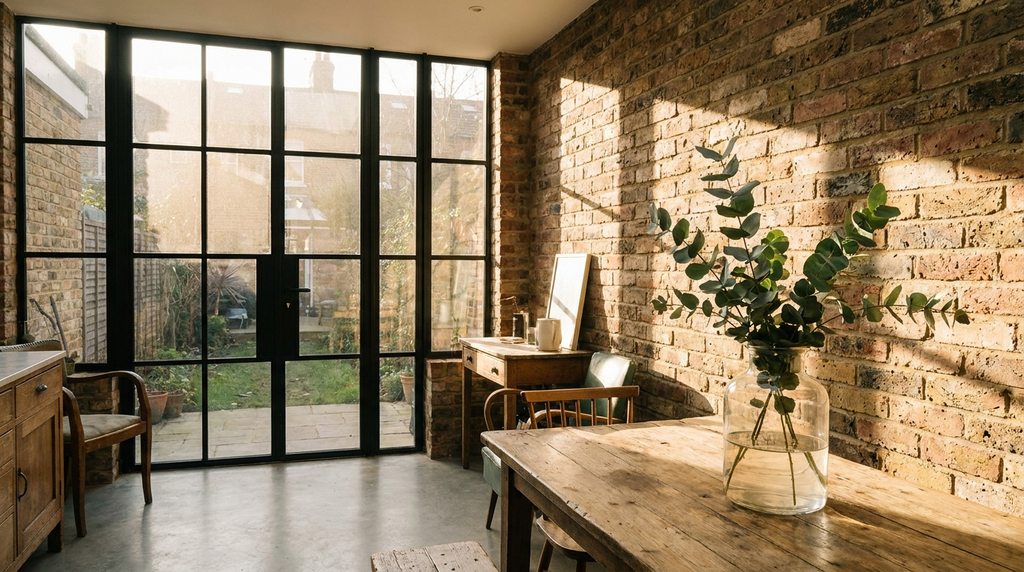
Aluminium’s structural strength allows frame widths from 25 mm (slimline) to 35 mm (standard). uPVC frames are typically 50 to 60 mm wide (DESNZ, 2026). For openings over 1.5 metres wide, aluminium is the only material that meets 2026 Part L without requiring a mid-rail (Building Regulations, 2026). Slim sightlines are a key aesthetic driver for both period properties and modern extensions. Colour choice is virtually unlimited. Powder-coating in RAL, British Standard, or bespoke colours is standard. Dual-colour options, with a different colour inside and outside, cost £50 to £100 extra per window (Energy Saving Trust, 2026).
How to verify an aluminium window installer in 2026
All installers must be registered with FENSA or CERTASS for self-certification under Building Regulations (GOV.UK, 2026). MCS certification is required only if the windows are part of a heat-pump or solar-PV installation (MCS, 2026). Check for TrustMark accreditation, which covers consumer protection and insurance-backed guarantees (TrustMark, 2026). Ask for a written quote that includes the specific U-value, frame depth, and glazing specification. Verify that the product is listed on the MCS product database for compliance. Unregistered installers with no FENSA or CERTASS registration will invalidate the 10-year insurance-backed guarantee (FENSA, 2026). how to check if a window installer is FENSA registered
Maintenance and lifespan what to expect over 30 years
Aluminium frames require zero painting. The powder coating lasts 25 to 30 years before needing re-coating (Energy Saving Trust, 2026). Moving parts such as hinges, handles, and trickle vents may need replacement after 15 to 20 years. Typical cost for this work is £50 to £150 per window (TrustMark, 2026). Condensation risk is low with modern thermal breaks and triple glazing. If condensation appears between panes, it indicates a failed seal (Glass and Glazing Federation, 2026). Full-frame replacement including the outer frame is not needed unless the wall fixing corrodes, which typically takes over 40 years (DESNZ, 2026). By comparison, uPVC has a 20 to 30 year lifespan and timber a 25 to 40 year lifespan. Aluminium is the longest-lasting frame material available in 2026.
Choosing between aluminium, uPVC, and timber the 2026 decision framework
Aluminium is best for large panes, slim frames, long life, and colour choice. It has the highest upfront cost. uPVC is the cheapest option but has bulkier frames and a shorter lifespan. It is a good choice for rental properties. Timber is an aesthetic preference for heritage homes but requires painting every five years and more maintenance overall (Energy Saving Trust, 2026). For a 2026 home, aluminium is the most future-proof choice if the budget allows, especially when combined with triple glazing and thermal breaks. The next actionable step is to request quotes from three FENSA-registered aluminium window installers. Specify a U-value of 1.0 W/m²K or lower for maximum energy savings. how to compare window quotes and avoid common mistakes
Frequently Asked Questions
Aluminium windows cost £450 to £1,200 per window fitted in 2026, according to the Energy Saving Trust. Casement windows are cheapest, sliding sash windows most expensive.
Yes, modern aluminium windows with thermal breaks achieve U-values of 1.2 to 1.6 W/m²K, comparable to premium uPVC (DESNZ, 2026). Triple glazing improves this to 0.8-1.0 W/m²K.
Aluminium windows typically last 30 to 45 years, according to industry data. This is longer than uPVC (20-35 years) but less than timber (40-60 years).
This includes aluminium windows meeting Building Regulations Part L.
Aluminium windows offer slimmer frames and longer lifespan (30-45 years) but cost 30-50% more than uPVC (Energy Saving Trust, 2026). Thermal performance is now comparable.