Andy Burnham wants the standing charge taken off domestic gas bills. The BBC reports the proposal landed on 21 October, with the mayor arguing that households should not pay a fixed daily fee before they have used a single kilowatt-hour. Nine days earlier, the same outlet reported unions telling Burnham to tax banks to fund energy bill cuts, two ideas, one political direction: shift the cost of energy away from the household bill and onto someone else’s balance sheet.
The detail matters more than the headline. Standing charges are the fixed daily amount every gas and electricity customer pays regardless of usage. They cover network costs, meter maintenance, the warm home discount levy and supplier administration. On a typical dual-fuel bill they run to roughly £110–£120 a year, split between gas and electricity. Removing the gas element would save a 3-bed semi something in the order of £55–£65 annually, before any compensating increase in the unit rate.
What Burnham has actually proposed
According to the BBC’s report on the proposal, the plan would strip standing charges from gas bills specifically, not electricity. That is a narrower intervention than some coverage implies. Electricity standing charges, which have risen faster, driven by network reinforcement and the warm home discount, would remain.
The earlier BBC story on union demands adds the fiscal context. Unions want banks taxed to pay for bill reductions. That is a funding mechanism, not an energy policy, and it sits with the Treasury rather than with any mayor. Burnham can propose; only Westminster can legislate on taxation or on the licence conditions that govern standing charges.
That gap is the story. A mayor’s proposal is a signal of intent, not a statutory instrument. Officials have not confirmed a consultation date, a costed impact assessment or a mechanism for recovering the lost revenue.
The catch: fixed costs do not disappear
Every standing charge exists because the gas network costs money to maintain whether a household uses 1 kWh or 20,000 kWh. Remove the fixed fee and the same cost must be recovered through the unit rate. The distribution is what changes.
For a low-user household, a one-bed flat, a retired couple, that is a clear win. For a poorly insulated 3-bed semi burning 12,000 kWh of gas a year, the unit rate rise needed to recover the same revenue could wipe out the standing-charge saving and then some. The policy is progressive only if the unit-rate uplift is small or if it is funded from general taxation, which is where the union demand for a bank levy re-enters the argument.
There is a second-order effect that the BBC’s coverage does not address. Standing charges are the stable, predictable part of a bill. Suppliers use them to recover fixed costs with certainty. Move those costs into volumetric charges and suppliers face more revenue risk, which they price back in through higher unit rates or tighter tariffs. The saving on paper and the saving on the bill are rarely identical.
What it means for a typical 3-bed semi
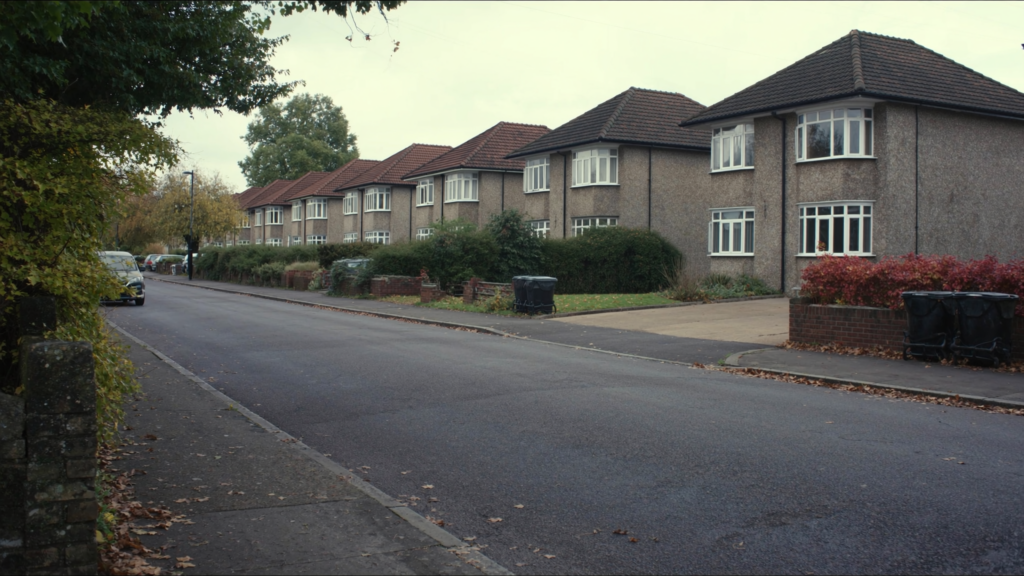
Take a gas-heated 3-bed semi using 12,000 kWh of gas and 2,900 kWh of electricity. Current standing charges are around £60 a year on gas and £55–£60 on electricity, depending on region and supplier. Burnham’s proposal would remove the gas element, roughly £5 a month.
That is not nothing. It is also less than the annual saving from loft insulation, which typically costs £300–£500 installed and saves £150–£250 a year on gas. It is smaller than the £7,500 Boiler Upgrade Scheme grant available towards an air source heat pump, which removes gas standing charges entirely because the property leaves the gas grid.
Homeowners weighing the announcement against real action should treat it as a signal, not a plan. The live routes to cutting bills in 2026 remain the Boiler Upgrade Scheme, ECO4 for households on qualifying benefits, and the Great British Insulation Scheme for cavity and loft work. None of these depend on Burnham’s proposal clearing Parliament.
Why the design question matters more than the headline
A standing-charge-free gas bill is popular politics. It reads as a cut for everyone. The reality is a redistribution: from high users to low users, from the fixed to the volumetric. That is defensible. But it is not a reduction in the total cost of the gas network, and it does nothing to reduce the 12,000 kWh a semi actually burns.
The unions’ bank-tax proposal, reported separately by the BBC, points at the honest version of the policy: if you want to cut bills without shifting costs onto high users, you need a funding source outside the bill. Whether a bank levy is the right one is a Treasury question. Whether bill-payers should fund network costs through a flat fee or through usage is an energy question. Burnham has opened the second; the first remains unanswered.
For homeowners, the practical conclusion is unglamorous. Check your current standing charges on your latest bill, they are itemised separately from unit rates. If you are a low gas user, ask your supplier whether a low-standing-charge tariff exists; a handful offer them. If you are a high user in a poorly insulated home, the standing charge is the least of your costs. Fabric first, then heat pump, then tariff.
The Boiler Upgrade Scheme application window is open now through gov.uk; vouchers are issued on a first-come basis within regional installer capacity. ECO4 eligibility is checked through your supplier or a registered installer. Both deliver savings this winter. Burnham’s proposal, on the current timetable, will not.
Frequently Asked Questions
Only if the lost revenue is not recovered through higher unit rates. On a typical 3-bed semi the gas standing charge is around £60 a year. If the unit rate rises to compensate, high gas users could pay more overall. Low users would save.
No. Standing charges are set through supplier licence conditions regulated by Ofgem, and taxation is reserved to Westminster. A mayor can propose and campaign, but implementation requires Ofgem, the regulator, or government legislation.
Check your EPC, apply for the £7,500 Boiler Upgrade Scheme grant if replacing a fossil-fuel boiler, check ECO4 eligibility if on qualifying benefits, and ask your supplier about low-standing-charge tariffs. Loft and cavity wall insulation typically pay back in two to four years.