Why Westminster Homeowners Are Looking at Double Glazing Right Now
If you live in Westminster, you already know the noise never really stops. If you’re in a mansion flat near Victoria, a Victorian terrace in Pimlico, or a purpose-built block close to the Edgware Road, the combination of traffic, sirens, and the general roar of central London is a constant backdrop to daily life. That acoustic reality is one of the biggest reasons Westminster residents are actively seeking out double glazing upgrades right now, and the energy savings are almost a bonus by comparison.
There’s something else happening too. Westminster City Council has been pushing hard on its climate action commitments, and EPC Band D is the current average rating across the borough. That means a huge proportion of Westminster’s 261,000 residents are living in homes that are underperforming on energy efficiency, and with energy bills still biting, double glazing sits right at the top of the practical upgrade shortlist. It’s one of the few improvements you can make that simultaneously cuts your heating bills, reduces noise, and adds genuine resale appeal in one of the world’s most competitive property markets.
Add to that the fact that Westminster has an unusually high proportion of older properties, many pre-dating World War Two, still fitted with original single-glazed sash windows, and you have a borough that is genuinely overdue for a double glazing wave.
What Double Glazing Actually Involves for a Typical Westminster Home
Westminster’s housing stock is remarkably specific in character. The bulk of residential properties are Victorian and Edwardian terraces (typically built between the 1860s and 1910s), inter-war mansion flats, and post-war local authority blocks. Each of these presents its own set of double glazing realities.
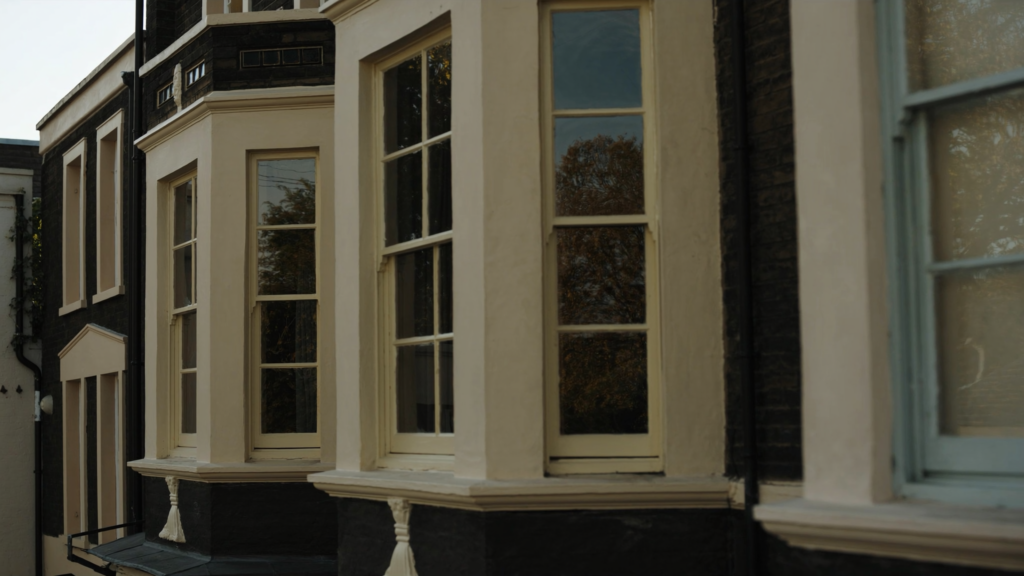
In a Victorian terrace, very common in Pimlico, Church Street, and the Maida Vale area, you’re almost certainly dealing with timber sliding sash windows. These are integral to the architectural character of the building, and if your property sits within a conservation area (which a significant chunk of Westminster does), simply swapping them for standard uPVC casements isn’t an option. You’ll need to look at sympathetic timber or aluminium alternatives that replicate the sash profile while incorporating modern double-glazed units inside.
For flats, which make up a very large share of Westminster’s housing, the situation depends heavily on whether you own the freehold or hold a leasehold. Most Westminster flats are leasehold, and your lease will almost certainly require you to obtain freeholder or management company consent before changing any windows. This is a step many people overlook, and it can add weeks to the project timeline. Get written consent early.
Access is another Westminster-specific complication. Narrow streets in Belgravia, restricted parking on single yellow lines, and residents-only parking zones across much of the borough mean that installation vans and any scaffolding equipment face real logistical hurdles. Installers familiar with central London will factor this in, but it does push costs up compared to, say, a detached house in the suburbs with a driveway.
- Victorian terraces, sash window replacement, often conservation-sensitive
- Edwardian properties, bay windows and larger front elevations are common, requiring more complex framing
- Mansion flats, leasehold consent required, communal hallway access can be tight
- Post-war council blocks, may have existing programmes through Westminster City Council; worth checking before commissioning privately
How Much Double Glazing Costs in Westminster and the London Area in 2026
Let’s be honest about what you’re going to pay. Westminster sits in the highest labour cost zone in the country, expect to pay 15 to 25% more than the UK national average as a baseline. Throw in parking permit requirements, congestion charge zone costs for installers, and ULEZ compliance for vehicles, and you’ll understand why London quotes often come in noticeably higher than what comparison websites suggest.
Here’s a realistic breakdown for Westminster in 2026:
| Property Type | Number of Windows | Standard uPVC Double Glazing | Timber or Aluminium Sash | Triple Glazing Upgrade |
|---|---|---|---|---|
| One-bed flat | 4–6 windows | £2,800 – £4,200 | £4,500 – £6,500 | Add £600 – £900 |
| Two-bed flat | 6–8 windows | £3,800 – £5,500 | £5,800 – £8,500 | Add £900 – £1,400 |
| Victorian mid-terrace | 8–12 windows | £5,500 – £8,000 | £8,500 – £14,000 | Add £1,200 – £2,000 |
| Edwardian end-terrace (with bay) | 10–14 windows | £7,000 – £10,500 | £11,000 – £17,000 | Add £1,500 – £2,500 |
For comparison, the same Victorian terrace job in Camden or Lambeth would typically come in at a similar range, these neighbouring boroughs share Westminster’s labour market. Venturing slightly further out to Kensington or Southwark doesn’t change costs significantly, as all fall within the same high-cost central London zone. The national UK average for a Victorian terrace double glazing job sits around £4,800 – £7,000, so Westminster prices carry a meaningful premium.
Insider tip, always get three quotes from installers who specifically mention working in Westminster. A company based in outer London or the Home Counties may quote low but then hit you with a surcharge for parking, congestion charges, or travel time once work is underway.
How Westminster’s Weather and Location Affect Your Double Glazing Choices
Westminster’s climate is actually one of the mildest in the UK. With only around 1,200 to 1,500 heating degree days per year, your heating demand is considerably lower than homes in, say, Yorkshire or Scotland. So if you’re expecting double glazing to slash your bills dramatically, you need to go in with realistic expectations, more on that in the savings section below.
What Westminster does experience is cold easterly winds in winter. These cut across the Thames corridor and hit the east-facing elevations of terraces particularly hard. If your home faces east, which applies to a significant number of properties along the north-south terrace rows in Pimlico and Westminster North, prioritise high-performance units on those elevations first. Look for a U-value of 1.2 W/m²K or lower.
Westminster also benefits from excellent solar irradiance, with around 1,100 to 1,200 kWh/m² per year, some of the best figures in the UK. South-facing windows should be specified with a solar gain coefficient (g-value) of at least 0.45 to let passive heat in during winter, while north-facing windows can prioritise thermal retention over solar gain. This is a nuance many installers won’t mention unless you ask.
The relatively low rainfall in Westminster (500 to 700mm per year) is good news for window frames, particularly timber alternatives that might warp in wetter climates. If you’re opting for timber sash windows in a conservation area, Westminster’s drier climate compared to western parts of the UK means they’ll generally last longer with routine maintenance.
The Products and Options That Work Best Here
Given Westminster’s specific mix of conservation sensitivities, noise issues, cold easterly exposure, and good solar gain potential, here’s what genuinely works well in this borough:
For Conservation Area Properties and Listed Buildings
Slimline double-glazed units in authentic timber sash frames are the gold standard. Look for a 4mm–6mm–4mm unit configuration, which fits within the slimmer rebate of traditional sash frames. These achieve a U-value of around 1.6 to 1.8 W/m²K, not as impressive as modern uPVC, but a massive improvement over original single glazing, and importantly, planning-compliant in most Westminster conservation areas.
For Modern Flats and Non-Conservation Properties
uPVC double glazing with argon-filled units and low-emissivity (Low-E) glass is the practical choice. Specify units rated to at least A on the Window Energy Rating (WER) scale. A U-value of 1.2 W/m²K is achievable and represents genuinely strong thermal performance. For south-facing windows, ask for a g-value between 0.45 and 0.55.
Acoustic Performance, A Westminster Priority
Given the urban noise environment, strongly consider acoustic double glazing using asymmetric glass panes (for example 6mm outer and 4mm inner rather than the standard 4mm–4mm). This disrupts sound wave resonance and can reduce noise ingress significantly compared to standard units. In areas close to the A5, Victoria Street, or the Embankment, this is worth every extra pound.
Secondary Glazing as an Alternative
For Grade II listed properties where full replacement isn’t permitted, secondary glazing, a second independent pane fitted inside the existing window, is often the approved solution. It can achieve acoustic performance equal to or better than double glazing in some configurations, and Westminster City Council’s conservation team is generally supportive of it.
How to Find a Trustworthy Double Glazing Installer Near Westminster
The London installer market is large but variable in quality. For Westminster, you want someone who understands conservation area requirements, knows their way around a leasehold consent process, and has genuine experience with sash window replacement in central London. That rules out a lot of the national franchise operations that excel at suburban uPVC installations but struggle with older, more complex stock.
Key certifications to look for:
- FENSA registered, legally required for replacement window installation in England; FENSA registration means the installer self-certifies compliance with Building Regulations
- TrustMark approved, the government-endorsed quality scheme; particularly useful for ECO4 and grant-funded work
- CERTASS membership, an alternative to FENSA for Building Regulations compliance; equally valid
- GGF membership, the Glass and Glazing Federation; members follow a code of practice and offer a deposit indemnity scheme
Questions worth asking any installer before signing a contract:
- Have you worked in Westminster conservation areas before, and which ones
- Are you able to advise on the planning consent process or do I need to handle that myself
- How do you handle parking and access in central London, is that included in your quote
- What is your lead time currently for a Westminster job
- Do you carry public liability insurance above £2 million
Lead times in central London in 2026 are typically 6 to 12 weeks from order to installation for quality installers. Be wary of anyone promising installation within two weeks, it usually means they’re cutting corners somewhere. Installers covering Westminster also commonly serve Camden, Southwark, Kensington, and Lambeth, so a well-regarded company operating across this cluster of central boroughs is a good sign of established local expertise.
Red flags to watch for, high-pressure sales tactics on the doorstep, quotes that don’t itemise frame material and glass specification separately, no physical business address in or near London, and deposits demanded in cash above £500.
Grants and Funding That Could Reduce Your Costs in 2026
Funding options for double glazing in Westminster are available, but eligibility criteria are specific, don’t assume you qualify without checking carefully.
ECO4 (Energy Company Obligation)
This is the main national scheme for households on low incomes or means-tested benefits. Double glazing is an eligible measure under ECO4 when it forms part of a broader package of improvements. Westminster residents on qualifying benefits (Universal Credit, Pension Credit, or Child Tax Credit, among others) should contact Westminster City Council’s housing team or a registered ECO4 installer directly to check eligibility. Fully funded installation is possible for eligible households.
Great British Insulation Scheme (GBIS)
The Great British Insulation Scheme closed on 31 March 2026. It funded insulation measures only and never covered windows or glazing. Check your Council Tax band first; many flats in Westminster are in bands B, C, or D and will qualify under the income-independent strand of the scheme.
Westminster City Council Schemes
Westminster City Council has published retrofit guidance aligned with the GLA’s borough-level targets. Their Warmer Homes programme offers support to eligible low-income residents, including referrals to grant-funded energy efficiency work. Contact the council’s housing sustainability team directly, the process has become more streamlined in recent years. The GLA also runs periodic top-up funding rounds that Westminster residents can access through the council.
Home Upgrade Grant (HUG)
HUG funding targets off-gas-grid properties, which is less relevant for most of Westminster where gas is common, but if your flat uses electric heating only, it’s worth investigating.
The Great British Insulation Scheme closed on 31 March 2026. It funded insulation measures only and never covered windows or glazing. Many qualified installers can run the eligibility check for free and offset grant funding against your invoice directly.
Planning Permission and Regulations in Westminster
This is where Westminster gets more complex than most places in England, and getting it wrong can be expensive.
Westminster has an unusually high number of conservation areas and listed buildings relative to other London boroughs. Neighbourhoods including Belgravia, Mayfair, Pimlico, St James’s, and significant parts of Paddington and Marylebone fall within designated conservation areas. In these zones, permitted development rights for window replacement are restricted or removed entirely.
For most non-conservation, non-listed properties in Westminster, replacing like-for-like windows (same material, same opening style, broadly similar appearance) falls under permitted development. You don’t need planning permission, but the work must comply with Building Regulations Part L (energy efficiency) and Part K (safety glazing where relevant). Your FENSA or CERTASS-registered installer handles the Building Regulations compliance paperwork.
If your property sits within a conservation area, the rules tighten considerably:
- Like-for-like timber sash replacement with slim double-glazed units is often approved without a full planning application, but you should confirm with Westminster City Council’s planning department first
- Changing from timber to uPVC in a conservation area will almost certainly require a planning application and is unlikely to be approved
- Any alteration that changes the appearance of the frontage, different opening style, different frame colour, different profile, will typically require prior approval
For flats in listed buildings, permitted development rights are removed entirely regardless of conservation area status. Every window change needs Listed Building Consent, which is a separate application from planning permission and is assessed by Westminster’s heritage team. Budget extra time (typically 8 to 12 weeks for the consent process) and potentially extra cost for heritage-appropriate specifications.
Westminster City Council’s planning