A roof lantern costs roughly three times more per square metre than a standard flat rooflight, but delivers significantly more natural light and architectural impact.
If you are planning a kitchen extension, you will need to choose how to bring light into the new space. A roof lantern is a pitched, glazed structure that sits on a flat roof, while a flat rooflight is a simple, flat pane of glass set into the roof surface.
The average installed cost per square metre for an aluminium, double-glazed roof lantern is £650–£900, compared to £200–£300 for a flat rooflight (Energy Saving Trust, 2026). The pitched design of a lantern captures low-angle winter sunlight, increasing daylight penetration by up to 40% compared to a flat rooflight (DESNZ daylighting research, 2026).
This price premium reflects the added structural framing, more complex installation, and higher-grade glazing that a roof lantern requires. You are paying for a dramatic architectural feature as much as for a source of natural light.
Roof lantern sizes and how to choose the right one for your extension
Standard roof lantern widths range from 600 mm to 3,000 mm, and lengths can go up to 6,000 mm (MCS-registered manufacturer specifications, 2026). The minimum pitch for a roof lantern is 15 degrees, and the maximum is 45 degrees (Building Regulations Approved Document K, 2026).
A useful rule of thumb is that the lantern area should be 15–25% of the extension’s floor area for balanced daylight (Energy Saving Trust daylighting guide, 2026). For a 20 m² kitchen extension, that means a lantern of 3–5 m². Bespoke sizes are available but add 20–30% to the cost and 4–6 weeks to the lead time (Glass and Glazing Federation industry data, 2026).
If your extension is narrow or oddly shaped, a bespoke lantern may be your only option. For standard rectangular extensions, off-the-shelf sizes will save you money and time.
Aluminium vs uPVC frames – which performs better for a kitchen extension
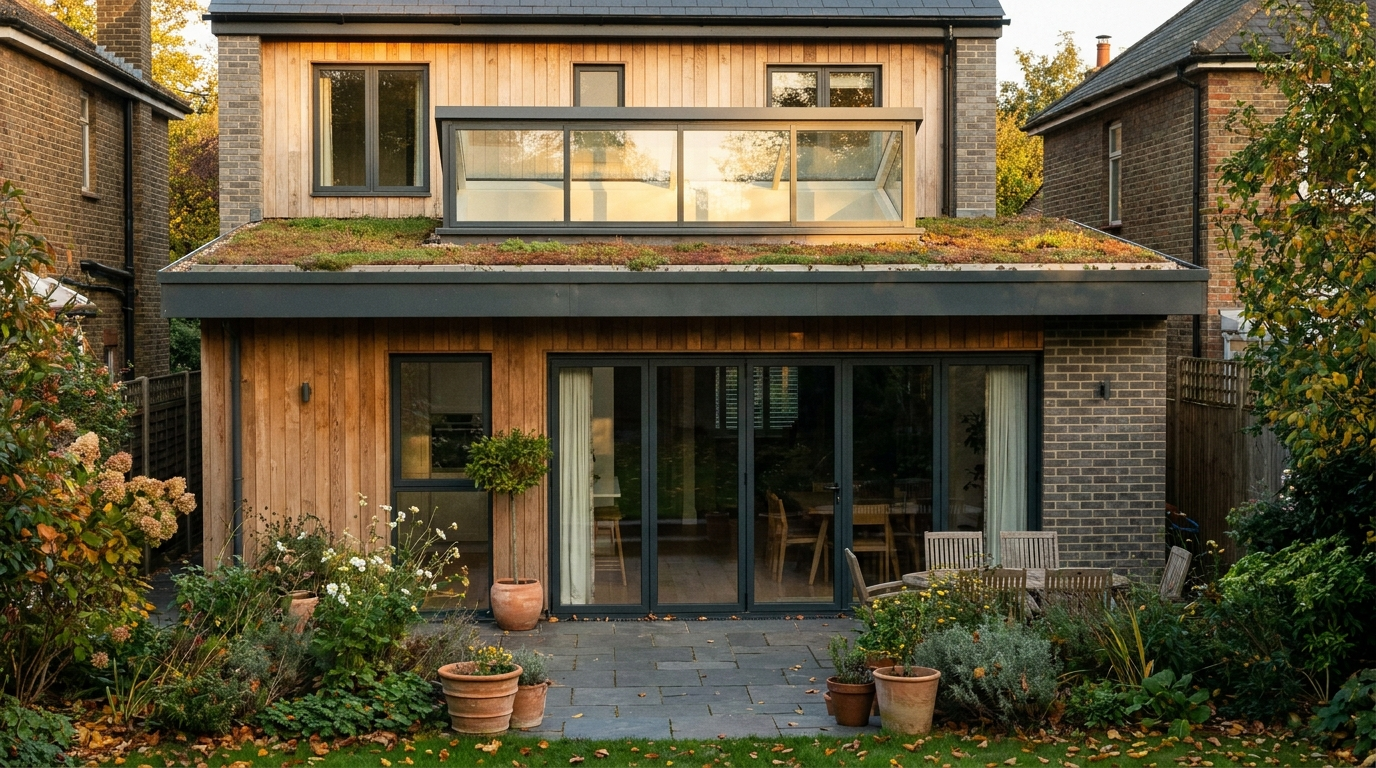
Aluminium frames offer U-values of 1.2–1.6 W/m²K, while uPVC frames are typically 1.4–1.8 W/m²K (Glass and Glazing Federation, 2026). A lower U-value means better insulation. Aluminium is stronger than uPVC. This allows larger panes and slimmer sightlines (frame width 60–80 mm vs uPVC 80–100 mm).
uPVC is cheaper, at roughly 40% less than aluminium, but has a shorter lifespan of 20–25 years compared to 35–40 years for aluminium (Energy Saving Trust product durability data, 2026). For a kitchen extension, aluminium is recommended for its thermal performance and longevity. uPVC is a budget option that will need replacing sooner.
Aluminium also requires less maintenance over its lifetime. It does not warp, rot, or fade like uPVC can in direct sunlight.
Self-cleaning glass and other glazing options – what to specify on plans
Self-cleaning glass uses a photocatalytic coating that breaks down dirt when exposed to UV light, reducing cleaning frequency by 70–80% (Pilkington technical data, 2026). This is particularly useful for roof lanterns, which are difficult to reach and clean.
Specify double-glazed units with low-E coating and argon fill for U-values of 1.0–1.2 W/m²K (Building Regulations Part L, 2026). Triple glazing offers U-values of 0.7–0.9 W/m²K but adds 25–30% to cost and 15% to weight (Energy Saving Trust glazing guide, 2026).
Solar-control glass is recommended for south-facing extensions to reduce glare and heat gain (DESNZ overheating risk guidance, 2026). Without it, a south-facing lantern can make a kitchen uncomfortably hot in summer.
Quick numbers – key specs at a glance
| Specification | Typical value | Source |
|---|---|---|
| Typical width range | 600 mm – 3,000 mm | MCS, 2026 |
| Typical length range | Up to 6,000 mm | MCS, 2026 |
| Minimum pitch | 15 degrees | Approved Document K, 2026 |
| Aluminium U-value | 1.2 – 1.6 W/m²K | GGF, 2026 |
| uPVC U-value | 1.4 – 1.8 W/m²K | GGF, 2026 |
| Self-cleaning glass cost premium | 10–15% above standard glass | Pilkington, 2026 |
| Average installed cost per m² (aluminium) | £650 – £900 | EST, 2026 |
| Average installed cost per m² (uPVC) | £400 – £550 | EST, 2026 |
| Triple-glazing U-value | 0.7 – 0.9 W/m²K | EST, 2026 |
Building Regulations Part L and structural requirements for roof lanterns
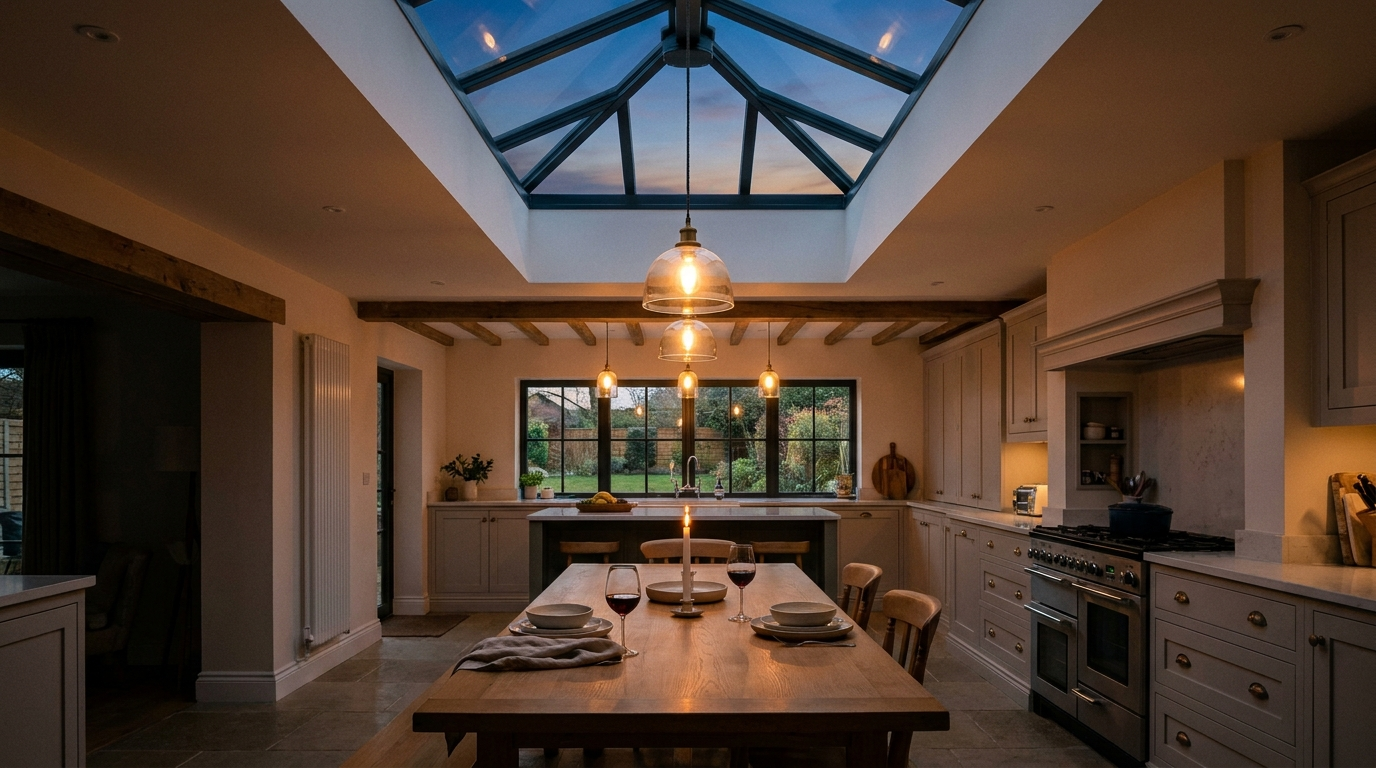
Building Regulations Part L (2026) requires a U-value of 1.2 W/m²K or better for rooflights in extensions (Building Regulations Approved Document L, 2026). This means your roof lantern must meet that standard to be compliant.
Structural calculations must confirm the lantern can support snow loads of 0.75 kN/m² in most UK zones and wind loads (Approved Document A, 2026). Planning permission is not normally needed if the lantern is within permitted development limits on height and volume (GOV.UK planning portal, 2026).
A structural engineer or architect must specify the lantern on your plans. The installer must provide a structural warranty covering the work. Without these documents, your extension may fail building control inspection.
guide to building regulations for kitchen extensions
How to verify a roof lantern installer – MCS, TrustMark, and FENSA certification
MCS certification is not mandatory for roof lanterns, but it is required if you integrate solar thermal or PV systems into the lantern (MCS website, 2026). TrustMark certification is government-endorsed and covers building work including rooflight installation (TrustMark website, 2026).
FENSA certification is the standard for window and door installations, and roof lanterns are classed as rooflights falling under FENSA’s scope (FENSA technical standards, 2026). Always request proof of insurance (public liability £2 million minimum) and check the installer’s registration on the relevant register (Energy Saving Trust consumer advice, 2026).
Using a certified installer protects you if the work is defective. Uncertified work may also invalidate your building insurance.
The direct answer to “roof lanterns uk” – what they are and why they are popular for extensions
A roof lantern is a pitched, glazed rooflight that sits on a flat roof, typically over a kitchen extension, to flood the space with natural light. UK popularity is driven by their ability to make small extensions feel larger, their energy efficiency when specified correctly, and their compliance with modern building regulations.
They are a permanent, fixed structure, not a window. They do not open, though vented versions are available but uncommon. For most UK homeowners, a roof lantern is the most cost-effective way to achieve a dramatic, light-filled extension without the cost of a full vaulted ceiling.
If you are comparing options, a roof lantern offers the best balance of cost, light quality, and architectural impact for a kitchen extension. The higher upfront cost is offset by better thermal performance and a longer lifespan than cheaper alternatives.
comparing roof lanterns with skylights and roof windows
Frequently Asked Questions
An aluminium, double-glazed roof lantern costs £650–£900 per m² installed, compared to £200–£300 for a flat rooflight (Energy Saving Trust, 2026).
For a 20 m² extension, choose a lantern of 3–5 m², or 15–25% of floor area (Energy Saving Trust daylighting guide, 2026). Standard widths are 600–3,000 mm, lengths up to 6,000 mm.
Yes, aluminium is stronger, more durable, and requires less maintenance than uPVC for a kitchen extension. It also allows larger spans and slimmer frames (Glass and Glazing Federation, 2026).
The minimum pitch for a roof lantern is 15 degrees, and the maximum is 45 degrees (Building Regulations Approved Document K, 2026).
Yes, a roof lantern captures low-angle winter sunlight, increasing daylight penetration by up to 40% compared to a flat rooflight (DESNZ daylighting research, 2026).