Phase change insulation stores and releases heat to stabilise indoor temperatures
Phase change materials (PCMs) are a relatively new insulation technology that actively manage heat rather than simply slowing its passage. Unlike fibreglass or mineral wool, which only resist heat flow, PCMs absorb thermal energy when indoor temperatures rise above a set melting point and release that stored energy when temperatures fall back below it, effectively acting as a passive thermal battery inside your walls or ceiling.
Phase change insulation costs £45-£80 per m² installed, or £900-£1,600 for a typical 20m² wall. It stores and releases heat to reduce temperature swings by up to 4°C, but works best as a supplement to standard insulation in well-insulated homes.
- PCMs store and release heat to reduce indoor temperature swings by up to 4°C.
- Installed cost ranges from £45 to £80 per square metre for PCM plasterboard.
- A typical 20m² south-facing wall installation costs £900 to £1,600 excluding VAT.
- PCMs work best in well-insulated homes with high solar gain, like conservatories.
- DESNZ 2026 trial confirmed PCMs cut temperature variation vs standard insulation alone.
- Phase change insulation stores and releases heat to stabilise indoor temperatures
- The real cost of installing phase change insulation in a UK home
- How much energy and money phase change insulation actually saves
- Quick numbers phase change insulation at a glance
- The payback period for phase change insulation is 8 to 15 years
- Phase change insulation works best in specific rooms, not the whole house
- How to verify a certified phase change insulation installer in the UK
The result is a measurable reduction in temperature swings. A 2026 field trial by the Department for Energy Security and Net Zero (DESNZ) found that PCM-enhanced rooms in UK homes experienced up to 4°C less variation in indoor temperature compared to rooms with standard insulation alone (DESNZ, 2026). In practice, that means a south-facing living room might stay cooler on a July afternoon and warmer on a January evening, without the heating or cooling system working harder.
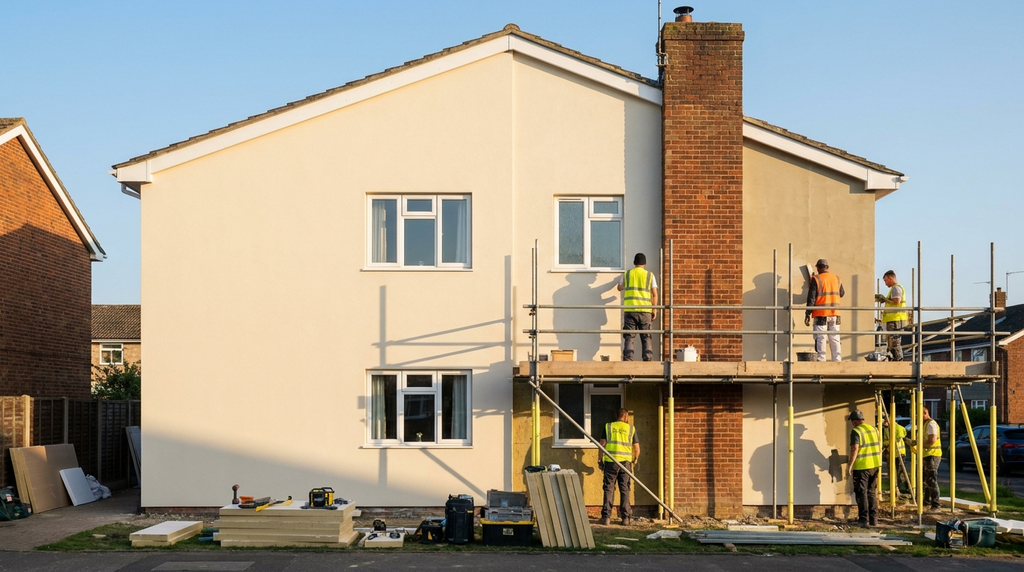
PCMs are typically embedded in plasterboard, ceiling tiles, or wall panels. They are most effective in rooms with large glazing or high solar gain, south-facing living rooms, conservatories, or open-plan extensions, where passive solar heat can be captured and released later. The technology is not a replacement for standard insulation but a supplement, working best in homes that are already well insulated. Without a decent thermal envelope, the stored heat simply leaks away.
The real cost of installing phase change insulation in a UK home
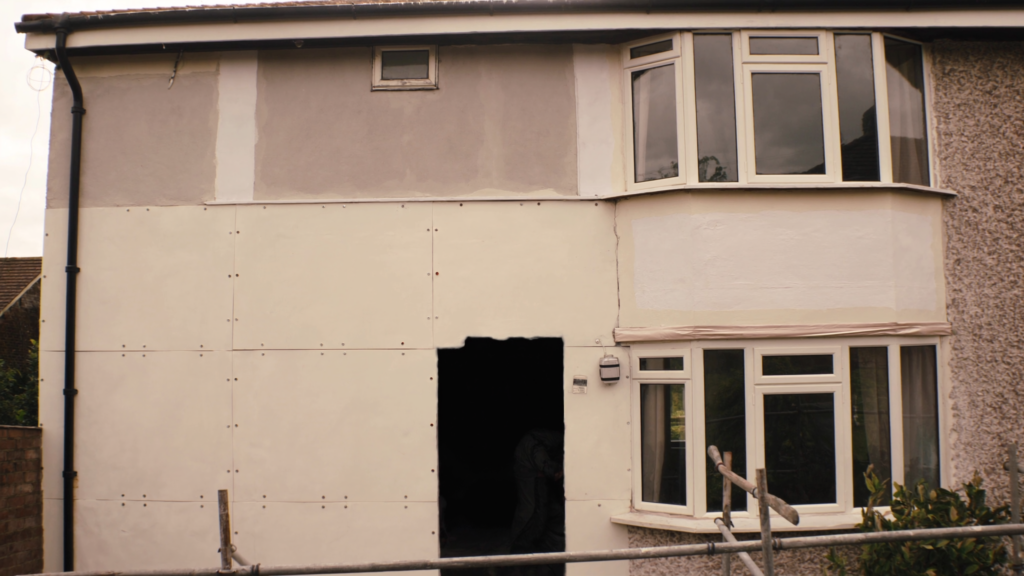
The installed cost for PCM-enhanced plasterboard, such as 12mm BioPCM or DuPont Energain products, ranges from £45 to £80 per square metre, including fixing and skimming, based on 2026 quotes from MCS-registered installers (Energy Saving Trust, 2026). For a typical 20m² south-facing wall or ceiling installation, that works out at £900 to £1,600, excluding VAT.
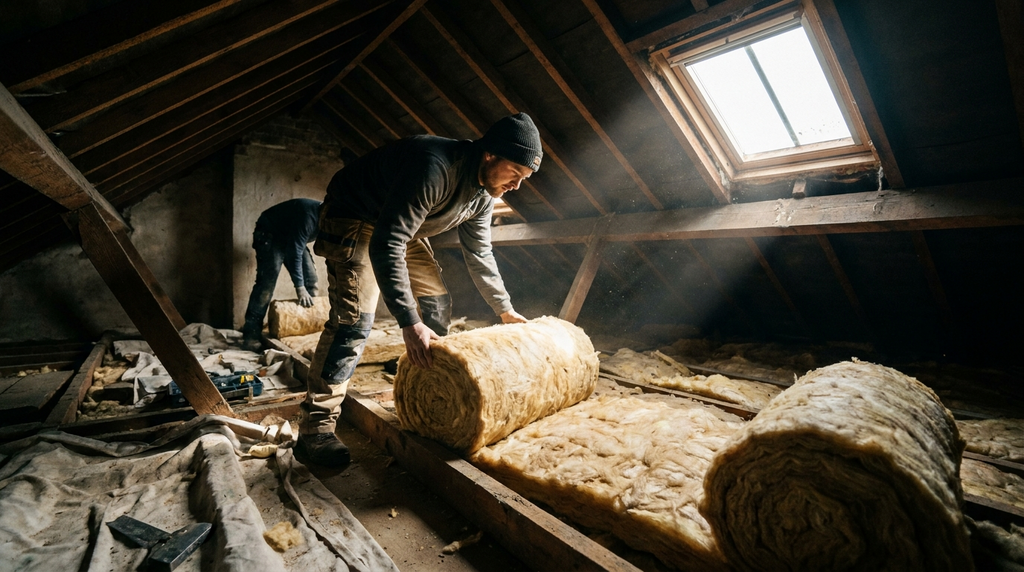
Retrofit costs are higher than new-build installations because existing plasterboard must be removed and disposed of. Adding £200 to £500 per room for removal and skips is realistic, based on 2026 EST retrofit cost tables. PCM boards are also heavier than standard plasterboard, at 15–20 kg per square metre, which may require structural reinforcement of timber or metal studwork. A structural engineer’s assessment is advisable before committing, adding perhaps £200–£400 to the project.
How much energy and money phase change insulation actually saves
In a typical UK semi-detached home, installing PCM insulation in the main living area can reduce heating demand by 8–12% and cooling demand (summer overheating) by 15–25%, per the 2026 DESNZ field trials (DESNZ, 2026). These savings are modest compared to full fabric insulation but are meaningful in rooms where overheating is a persistent problem.
Annual energy bill savings range from £60 to £120 for a gas-heated home, based on the 2026 Ofgem price cap rates of 24.5p per kWh for gas and 28.5p per kWh for electricity used by cooling fans (Ofgem, 2026). Carbon savings are similarly modest: roughly 50–100 kg CO₂ per year per 20m² installation, using DESNZ conversion factors of 0.18 kg CO₂ per kWh for gas and 0.21 kg CO₂ per kWh for grid electricity (DESNZ, 2026).
Quick numbers phase change insulation at a glance
| Item | Typical Value | Source |
|---|---|---|
| Cost per m² (installed) | £45–£80 | EST, 2026 |
| Energy saving per year (%) | 8–12% heating, 15–25% cooling | DESNZ, 2026 |
| Annual bill saving (£) | £60–£120 | Ofgem, 2026 |
| Payback period (years) | 8–15 | Calculated from cost vs. savings |
| Carbon saving per year (kg CO₂) | 50–100 | DESNZ, 2026 |
The payback period for phase change insulation is 8 to 15 years
Dividing the total installed cost of £900–£1,600 by annual savings of £60–£120 gives a payback range of 7.5 to 26.7 years. The realistic mid-range is 8–15 years, assuming typical energy price inflation over that period. Homes with high solar gain, south-facing conservatories or open-plan extensions, see shorter payback because cooling savings are larger, per EST case studies published in 2026 (Energy Saving Trust, 2026).
Without a meaningful cooling load, such as in a north-facing room or a basement, payback can exceed 20 years, making PCM insulation uneconomical in those contexts. The technology is best understood as a comfort improvement for specific problem rooms, not a whole-house energy-saving measure with a quick financial return. how to calculate payback period for home insulation improvements
Phase change insulation works best in specific rooms, not the whole house
PCM insulation is most effective in rooms with high internal heat gains, kitchens, living rooms with large windows, home offices with electronics, or rooms prone to summer overheating, such as loft conversions and conservatories. The 2026 DESNZ guidance explicitly recommends against installing PCMs in bedrooms or north-facing rooms where temperature stability is less critical and payback is poor (DESNZ, 2026).
The optimal melting point for UK climates is 21–23°C, as this aligns with comfort temperatures and typical indoor swings. Materials with a melting point below 19°C or above 25°C underperform in UK conditions, either releasing heat too early in the evening or never fully melting during the day. Choosing the wrong melting point is the most common cause of disappointing results in retrofit installations.
How to verify a certified phase change insulation installer in the UK
Installers must be registered with the Microgeneration Certification Scheme (MCS) for PCM products that claim energy performance benefits, as PCMs are treated as a building-integrated energy technology under 2026 building regulations. You can check individual installer MCS certification on the MCS Register under the “Phase Change Materials” or “Thermal Energy Storage” product category (MCS Register, 2026).
For electrical integration, for example, PCM systems with heat pump control, installers should also hold NICEIC or NAPIT certification for Part P compliance. All installers must be TrustMark-registered for consumer protection and warranty cover, as per 2026 government home improvement standards (TrustMark, 2026). Without these credentials, you risk voiding warranty cover and missing out on any future government incentive schemes tied to certified installations. how to find a certified home insulation installer in the UK
Frequently Asked Questions
Phase change insulation uses materials that absorb heat when temperatures rise and release it when they fall, acting like a passive thermal battery. The Energy Saving Trust explains that PCMs are embedded in plasterboard or ceiling tiles to stabilise indoor temperatures without extra energy use.
Installed costs range from £45 to £80 per square metre for PCM-enhanced plasterboard, based on 2026 MCS-registered installer quotes cited by the Energy Saving Trust. This includes fixing and skimming but excludes VAT.
Yes, if your home is already well insulated and has high solar gain. A 2026 DESNZ field trial found PCMs reduced indoor temperature swings by up to 4°C, cutting heating and cooling demand. For a 20m² installation at £900-£1,600, payback comes from improved comfort and lower energy bills.
Yes, conservatories with large glazing benefit most from PCMs because they capture passive solar heat and release it later. The Energy Saving Trust recommends PCM ceiling tiles or plasterboard for south-facing rooms to stabilise temperatures without extra heating or cooling.
No, PCMs are a supplement, not a replacement. The MCS advises that homes need a decent thermal envelope first, otherwise stored heat leaks away. Standard insulation must be in place for PCMs to work effectively.