An air source heat pump costs roughly half as much to install as a water source system, but the running costs can be higher
When choosing between an air source and a water source heat pump for your home, the upfront cost is the most immediate difference. An air source heat pump (ASHP) installation typically costs between £7,000 and £13,000, while a water source heat pump (WSHP) ranges from £15,000 to over £25,000 (Energy Saving Trust, 2026).
An air source heat pump costs £7,000–£13,000 to install, roughly half the £15,000–£25,000+ for water source. However, water source systems can save £300–£550 annually versus a gas boiler, compared to £200–£400 for air source. Check your property's water access before deciding.
- Air source heat pump installation costs £7,000–£13,000, half of water source.
- Water source heat pump saves £300–£550 annually vs a gas boiler.
- ASHP payback period is 8–12 years, WSHP takes 10–15 years.
- Boiler Upgrade Scheme offers £7,500 grant for both pump types.
- Check if your property has a river or lake for WSHP eligibility.
- An air source heat pump costs roughly half as much to install as a water source system, but the running costs can be higher
- Quick numbers upfront cost, annual savings, and payback
- The key difference is where the heat comes from and what that means for your property
- An air source heat pump is the standard option for most UK homes without a nearby water source
- A water source heat pump is more efficient but only viable for a small minority of properties
- The Boiler Upgrade Scheme grant covers both, but the net cost differs
- You must use an MCS-certified installer to qualify for the Boiler Upgrade Scheme grant
- The direct answer an air source heat pump is the right choice for most UK homes, a water source heat pump is only for those with a suitable water body
The direct answer is that an ASHP is roughly half the price to install, but a WSHP can be more efficient and cheaper to run over time. The payback period for an ASHP is typically 8–12 years, while a WSHP can take 15 years or more to pay back without a grant (DESNZ, 2026).
Your decision depends on your property’s location, access to a water source, and how long you plan to stay in the home. If you have a river or lake on your land, the higher efficiency of a WSHP may offset the higher installation cost over time. For most homes without a nearby water body, an ASHP is the only practical option.
Quick numbers upfront cost, annual savings, and payback
The table below compares the key financial figures for both heat pump types against a standard gas boiler. All savings assume a typical 3-bedroom semi-detached home with gas central heating replaced by a heat pump. Actual figures vary by property size, insulation levels, and energy tariffs.
| System type | Average installation cost (GBP) | Annual heating cost saving vs gas boiler (GBP) | Payback period (years) | Boiler Upgrade Scheme grant (GBP) |
|---|---|---|---|---|
| Air source heat pump (ASHP) | £7,000–£13,000 | £200–£400 | 8–12 | £7,500 |
| Water source heat pump (WSHP) | £15,000–£25,000+ | £300–£550 | 10–15 (with grant) | £7,500 |
| Gas boiler (baseline) | £2,000–£4,000 | £0 | N/A | £0 |
Sources: Energy Saving Trust, 2026; Ofgem, 2026; DESNZ, 2026.
The savings column shows annual running cost reductions compared to a gas boiler. A WSHP saves more per year because its higher efficiency uses less electricity to produce the same heat. However, the larger upfront cost means the payback period is longer even with the grant.
The key difference is where the heat comes from and what that means for your property
An ASHP extracts heat from the outdoor air, even at temperatures as low as -15°C. A WSHP extracts heat from a body of water such as a lake, river, or borehole. This fundamental difference dictates efficiency, installation requirements, and feasibility for your home.
The Seasonal Coefficient of Performance (SCOP) measures how efficiently a heat pump converts electricity into heat. A SCOP of 3.0 means 1 kWh of electricity produces 3 kWh of heat. WSHPs typically achieve a SCOP of 3.5–4.5, while ASHPs range from 2.5–3.5 (MCS, 2026). The higher SCOP of a WSHP means lower running costs, but only if the water source is consistent and reliable.
A WSHP requires a water source within approximately 100 metres of your property and a licence from the Environment Agency for water abstraction (GOV.UK, 2026). An ASHP only needs an outdoor unit with adequate clearance and airflow. That makes it far simpler to install in most settings.
An air source heat pump is the standard option for most UK homes without a nearby water source
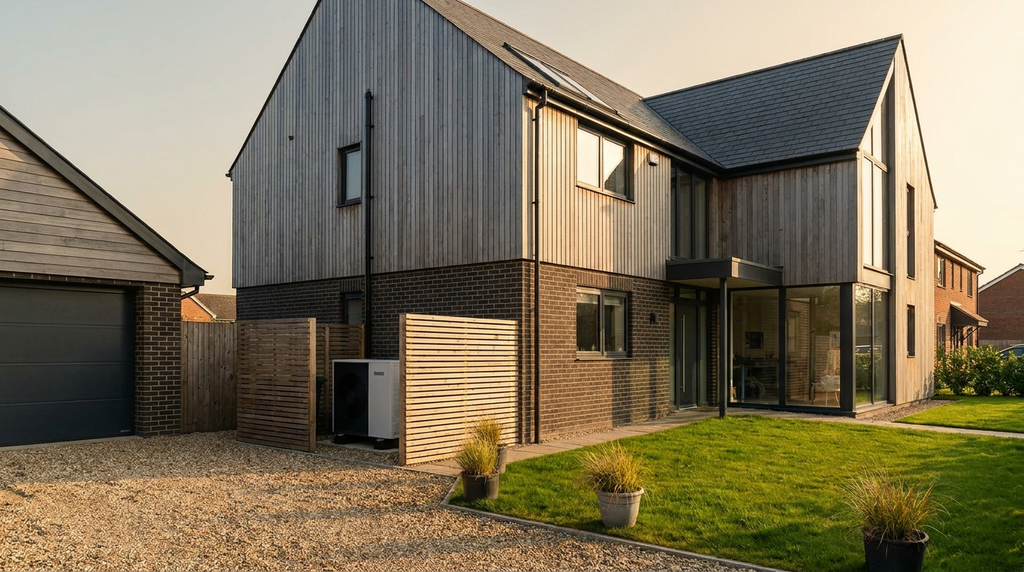
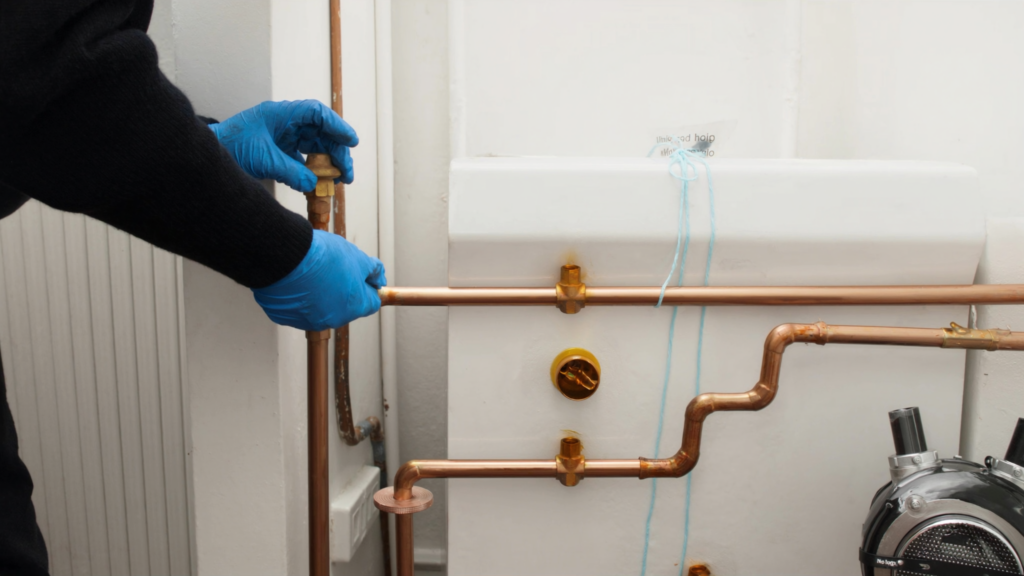
ASHP installation is relatively straightforward: an outdoor unit, an indoor unit, and pipework connecting them. No drilling, no water extraction, and no environmental licence are needed. The average SCOP for a modern ASHP is around 3.0, meaning 1 kWh of electricity produces 3 kWh of heat (Energy Saving Trust, 2026).
Noise is a consideration. Outdoor units typically operate at 40–60 decibels, similar to a refrigerator or quiet conversation. Permitted development rights require the unit to be at least one metre from your property boundary and not exceed 100 cubic decimetres in volume (Planning Portal, 2026).
ASHPs are best suited to homes with a garden or external wall space, no nearby water source, and good insulation. If your home has cavity wall or loft insulation gaps, installing those first will improve the heat pump’s efficiency and reduce running costs.
A water source heat pump is more efficient but only viable for a small minority of properties
A WSHP achieves a SCOP of around 4.0, meaning 1 kWh of electricity produces 4 kWh of heat (MCS, 2026). This higher efficiency translates to lower annual running costs, typically £100–£150 less than an ASHP for the same home size.
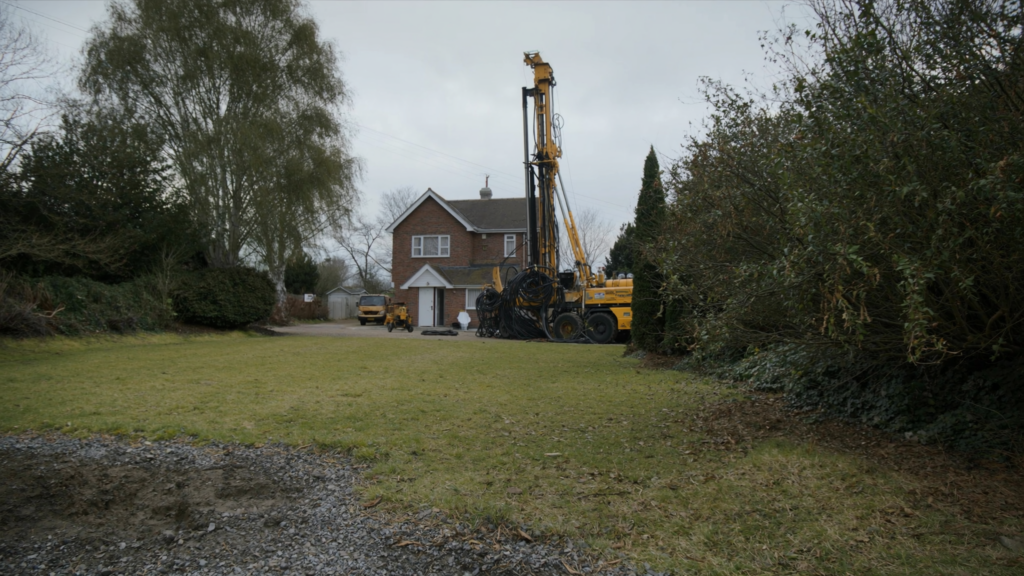
However, the feasibility is highly restrictive. You need a water source with consistent flow and temperature throughout the year. If you do not have a river or lake on your land, you may need to drill a borehole, which costs £5,000–£15,000 (British Geological Survey, 2026). You must also apply for a water abstraction licence from the Environment Agency. The application fee is £135, with an annual charge that varies by water volume abstracted (GOV.UK, 2026).
WSHPs are best suited to rural properties with a river or lake on the land. In urban settings, the space and licensing requirements make them impractical for almost all homes.
What is a heat pump and how does it work
The Boiler Upgrade Scheme grant covers both, but the net cost differs
The Boiler Upgrade Scheme (BUS) offers a flat £7,500 grant for both ASHP and WSHP installations (Ofgem, 2026). After the grant, the net cost for an ASHP is £0–£5,500, while a WSHP still costs £7,500–£17,500 or more.
To qualify, your property must have a valid Energy Performance Certificate (EPC) with no outstanding recommendations for loft or cavity wall insulation (GOV.UK, 2026). This means you may need to insulate your home before applying. The grant is deducted from the installer’s invoice, so you pay the reduced amount directly.
For most homeowners, the £7,500 grant makes an ASHP significantly more affordable. For a WSHP, the grant helps but does not close the gap in upfront cost.
You must use an MCS-certified installer to qualify for the Boiler Upgrade Scheme grant
To receive the £7,500 BUS grant, your installer must be certified under the Microgeneration Certification Scheme (MCS) (Ofgem, 2026). The installer must also be registered with TrustMark, which provides consumer protection and dispute resolution (TrustMark, 2026).
You can check the MCS register at mcscertified.com to find local installers and verify their certification is current. For a WSHP, the installer should also have experience with water abstraction licensing and borehole drilling, as these add complexity to the project.
Always obtain at least three quotes from different MCS-certified installers. Compare not just the price but also the SCOP they guarantee and any ongoing maintenance costs.
How to find a reliable heat pump installer
The direct answer an air source heat pump is the right choice for most UK homes, a water source heat pump is only for those with a suitable water body
An ASHP is suitable for over 90% of UK homes, with lower upfront costs and simpler installation (Energy Saving Trust, 2026). A WSHP is only viable for less than 5% of properties, primarily those with a river or lake on the land (DESNZ, 2026).
The payback period for an ASHP is typically 8–12 years. For a WSHP with the grant, payback is 10–15 years; without the grant, it can stretch beyond 20 years. The higher efficiency of a WSHP does not compensate for its much higher installation cost in most cases.
Choose an ASHP unless you have a river or lake on your property and can secure a water abstraction licence. For the vast majority of homeowners, the ASHP is the practical, cost-effective choice.
Frequently Asked Questions
An air source heat pump extracts heat from outdoor air, while a water source heat pump uses a nearby water body like a river or lake. According to the Energy Saving Trust, air source costs £7,000–£13,000 to install, half the £15,000–£25,000+ for water source.
Water source heat pumps are typically more efficient because water temperatures are more stable than air. The Energy Saving Trust states WSHPs can achieve higher coefficients of performance (COP), often 3.5–5.0, compared to 2.5–4.0 for ASHPs.
An air source heat pump installation costs between £7,000 and £13,000 for a typical 3-bed semi. Ofgem confirms the Boiler Upgrade Scheme provides a £7,500 grant, reducing your net cost to £0–£5,500.
Yes, the Boiler Upgrade Scheme offers a £7,500 grant for water source heat pumps in England and Wales. Ofgem states eligibility requires a valid MCS certificate and an eligible property.
Heat pumps typically last 15–20 years, similar to a gas boiler's 10–15 year lifespan. The Energy Saving Trust notes that regular servicing can extend a heat pump's life to 25 years.