Why Southwark Homeowners Are Finally Taking Double Glazing Seriously
If you live in Southwark and you’re still putting up with rattling sash windows, draughty Victorian frames, or single-glazed panes that steam up every winter morning, you’re far from alone. With 318,000 residents packed into one of inner London’s most densely built boroughs, Southwark has an enormous amount of ageing housing stock that’s quietly haemorrhaging heat and money every single year.
The average Southwark home sits at EPC Band D. That’s the national average, but it masks a real divide between the newer flats around Canada Water and Bermondsey, and the older terraced streets of Peckham, Walworth, and East Dulwich where single glazing or original timber frames are still surprisingly common. If your home falls into that second category, upgrading to double glazing is probably the single most impactful thing you can do for warmth and noise reduction.
Noise is a big deal here. Living near the Old Kent Road, the Elephant and Castle interchange, or under the Thameslink rail corridor means external noise is a constant companion. Double glazing, particularly acoustic-rated units, genuinely transforms the quality of life in these locations. That’s driving a huge chunk of enquiries in 2026, quite separately from energy savings.
Then there’s the cold easterly wind factor. Southwark sits in a part of London that’s more exposed to sharp winter easterlies than you might expect for inner London. Those winds cut through poorly sealed frames and make rooms feel significantly colder than the thermostat suggests. Double glazing addresses this directly.
What Double Glazing Actually Involves for a Typical Southwark Home
Most Southwark homes fall into two categories, Victorian and Edwardian terraces (1880s–1910s) and post-war council-era flats and estates (1950s–1980s). These two property types have very different installation realities.
Victorian and Edwardian Terraces in Peckham, Dulwich, and Walworth
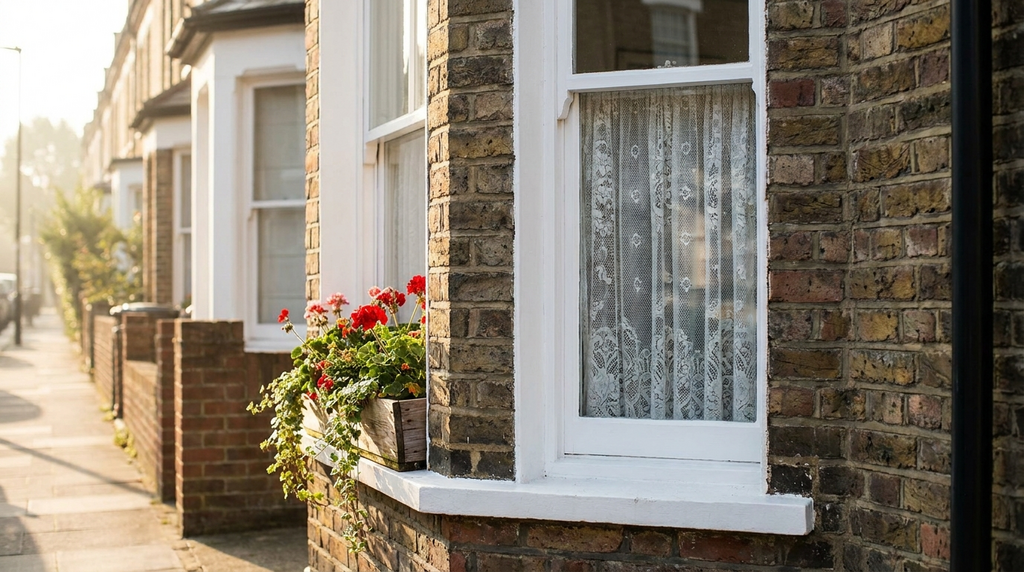
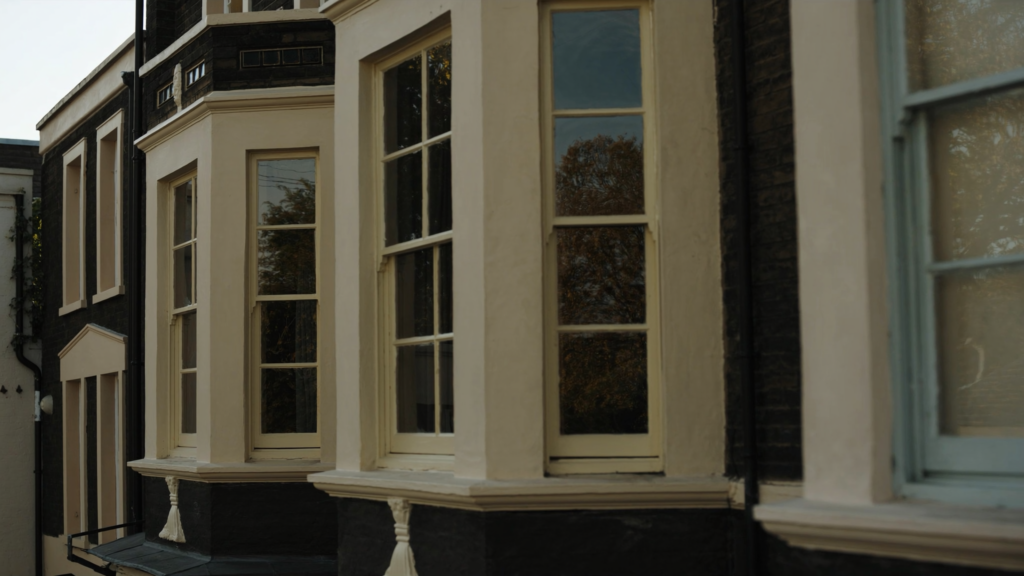
These homes were built with thick brick walls, deep reveals, and original timber sash windows. The frames themselves can be beautiful, and in many cases they’re worth preserving or replicating. Slim-profile double glazed sash units are now manufactured specifically to mimic the original look, which matters enormously if you’re in or near a conservation area (more on that below).
Fitting double glazing into these older reveals isn’t always straightforward. Frames are rarely perfectly square after 120 years of settlement. Expect a good installer to spend time measuring carefully and possibly trimming or rebuilding window boards. Budget for this, it’s normal, not a problem.
Post-War Flats and Council Estates
If you’re in a flat, whether that’s in a converted Victorian terrace or a purpose-built block, you almost certainly need to get permission from your freeholder or management company before replacing windows. This is a legal requirement, not just good manners. Many larger Southwark Council-managed estates have standard window specifications, so your options may be more constrained than in a private house.
Access on larger blocks is another issue. Upper-floor installations may require scaffolding or specialist access equipment, which adds cost. Southwark’s dense street layouts, particularly around Bermondsey and Borough, also mean parking for installation vans is a constant headache. Good local installers factor this in and know the area well.
How Much Double Glazing Costs in Southwark and the London Area in 2026
Let’s be direct about costs. London is expensive for installation work, labour rates run 15–25% above the national average, and Southwark is firmly in that bracket. The congestion charge zone and ULEZ coverage also adds to installer costs, which gets passed on. Here’s what you should realistically expect to pay in 2026.
| Property Type | Number of Windows | Southwark Average Cost | National Average Cost | London Premium |
|---|---|---|---|---|
| 1-bed flat (leasehold) | 3–4 windows | £2,800–£4,200 | £2,100–£3,400 | ~20% |
| 2-bed flat or maisonette | 5–6 windows | £3,800–£5,600 | £3,000–£4,500 | ~22% |
| 2-bed terraced house | 6–8 windows | £4,500–£7,000 | £3,600–£5,600 | ~20% |
| 3-bed terraced house | 8–11 windows | £5,800–£9,500 | £4,600–£7,500 | ~23% |
| Victorian terrace with sash units | 8–10 sash windows | £8,000–£14,000 | £6,000–£10,000 | ~25% |
Sash window replacement carries a premium because the mechanical operation requires more precision manufacturing. If you want slim-profile units that match Victorian proportions, expect to pay toward the top of that range.
What pushes costs up in Southwark specifically
- Scaffolding on narrow terraced streets with no front forecourt
- ULEZ and congestion charge costs for installation vehicles
- Conservation area requirements (heritage-style frames cost more)
- Leasehold admin and freeholder approval processes on flats
- Limited parking meaning longer carry distances for materials
Neighbouring boroughs like Westminster (4km north) and Islington (4km north-east) carry similar cost profiles. Camden and Hackney (both within 5km) tend to come in at similar rates. You won’t save meaningfully by trying to source an installer from outside inner London, travel time costs usually eat any apparent saving.
How Southwark’s Weather and Location Shape Your Double Glazing Decisions
Southwark sits in the drier, sunnier eastern part of Greater London, annual rainfall sits between 550mm and 650mm, which is noticeably lower than the UK average. That’s actually good news for window frames and seals. Less moisture ingress means uPVC and timber frames both last longer here than in wetter parts of the country.
The winter cold easterlies are the main weather challenge. These winds funnel up the Thames corridor and hit south-facing and east-facing elevations hard in January and February. If your terrace or flat faces east, which many in the Elephant and Castle and Old Kent Road areas do, prioritising high-performance gas fills in your double glazing is important. Argon-filled units are the minimum; krypton-filled units offer better performance in thin-profile frames.
On the upside, Southwark enjoys some of the best solar irradiance in the UK, around 1,100–1,200 kWh per square metre per year. South and south-west facing windows in homes along Denmark Hill or on the Nunhead ridge get serious solar gain. In these properties, consider low-emissivity (low-E) glass that keeps solar heat in during winter while limiting summer overheating, it’s a genuine quality-of-life upgrade, not just a marketing term.
Noise should genuinely influence your specification choices here. If you’re within 200 metres of the Thameslink line, the Jubilee Line infrastructure south of London Bridge, or any major A-road, acoustic laminated glass on the inner pane of a double-glazed unit makes an audible difference. This is a Southwark-specific recommendation, it matters here more than it would in a quiet market town.
The Products and Options That Actually Perform Well Here
Given everything above, here’s what an experienced installer familiar with Southwark’s housing stock would actually recommend.
For Victorian Terraces
Slim-profile double glazed sash windows with a 16mm argon-filled cavity and low-E glass coating. Look for a U-value of 1.4 W/m²K or better. Timber or composite frames suit the aesthetics, uPVC can look out of place on a handsome Edwardian terrace and may face objections in conservation areas. Draught seals and reinforced locks are worth specifying from the outset.
For Flats in Modern or Post-War Blocks
Standard casement double glazing with uPVC frames performs reliably and is cost-effective. A 28mm sealed unit (4mm glass–20mm cavity–4mm glass) with argon fill is the modern standard. Aim for a certified window energy rating of Band A or Band B minimum.
For Noise-Affected Homes Near Rail or Road
Specify acoustic laminated glass on the street-facing inner pane. A 6.4mm or 6.8mm laminated pane combined with a wide cavity (20mm+) offers meaningful sound reduction. Some installers will quote you standard units unless you specifically ask, so ask.
Key Specification Targets
- U-value of 1.4 W/m²K or better (the Building Regulations minimum is 1.6 W/m²K for replacement windows)
- Window energy rating of Band A (BFRC rated)
- Argon or krypton gas fill, not air-filled units
- Warm-edge spacer bars rather than aluminium spacers (reduces cold bridging at the edge)
- PAS 24 security rating on all ground-floor and easily accessible windows
Finding a Trustworthy Double Glazing Installer Near Southwark
The London double glazing market has plenty of excellent installers, and a fair few who’ll take your deposit and disappear. Here’s how to protect yourself.
The certifications that matter
- FENSA registration, This is non-negotiable. FENSA-registered installers self-certify that replacement windows comply with Building Regulations, saving you the cost of separate Local Authority approval. Always ask for a FENSA certificate on completion.
- TrustMark, Government-endorsed quality scheme. Particularly relevant if you’re using any grant funding.
- GGF Member, The Glass and Glazing Federation membership provides additional consumer protection including deposit insurance.
- CERTASS, An alternative to FENSA; equally valid for self-certification.
Questions worth asking before you sign anything
- Are you FENSA or CERTASS registered and will you provide a certificate on completion?
- Do you have experience with Victorian sash units in conservation-sensitive areas?
- How do you handle parking and access on narrow Southwark streets?
- What’s your current lead time from order to installation?
- Is your deposit protected by a deposit protection scheme?
Lead times in London currently run 6–12 weeks for standard orders and up to 16 weeks for bespoke sash units. Don’t let anyone pressure you into signing for a “this week only” price, reputable companies don’t work that way.
Most established installers serving Southwark also cover Westminster, Islington, Camden, and Hackney as part of their regular coverage area. This means you can legitimately compare quotes from companies based in those neighbouring areas without worrying about them being unfamiliar with inner London working conditions.
Grants and Funding That Could Cut Your Costs in 2026
Double glazing sits in an interesting position with grant funding, it’s not always the lead measure that schemes fund, but it can often be included as a secondary measure alongside insulation or heating upgrades.
ECO4 Scheme
The Energy Company Obligation (ECO4) requires energy suppliers to fund upgrades in lower-income households. If you’re in Southwark and receiving qualifying benefits (Universal Credit, Housing Benefit, Pension Credit, etc.), or if your home is EPC Band D or below, you may qualify. Double glazing can be funded as part of a wider ECO4 package. Contact Southwark Council’s housing team or a TrustMark-registered assessor to check eligibility, don’t rely on cold-call companies claiming to offer “free windows.”
Great British Insulation Scheme (GBIS)
The Great British Insulation Scheme closed on 31 March 2026. It funded insulation measures only and never covered windows or glazing. The Great British Insulation Scheme closed on 31 March 2026. It funded insulation measures only and never covered windows or glazing.
Southwark Council and the GLA
Southwark Council has engaged with the Greater London Authority’s retrofit programmes and the GLA’s borough-level retrofit guides. The council has historically run supplementary schemes for social housing tenants and qualifying owner-occupiers, check the Southwark Council website for the current offer, as these programmes update regularly. The GLA’s Green Homes programme is also worth monitoring for London-specific funding that sits outside the national schemes.
VAT on Energy-Saving Materials
Glazing is standard-rated for VAT at 20%. The zero rate for energy-saving materials covers insulation, heat pumps and solar panels; HMRC names secondary and double glazing as excluded (VAT Notice 708/6). This applies to most modern double glazing installations and is a genuine saving built into every qualifying quote. Make sure your installer confirms VAT treatment in writing.
Planning Permission and Southwark’s Rules for Window Replacement
For most Southwark homeowners, replacing windows with double glazing falls under permitted development rights, meaning no planning permission is needed, provided the replacement windows are similar in appearance to what was there before. However, there are some important local exceptions.
Southwark’s Conservation Areas
Southwark has a significant number of conservation areas, including parts of Dulwich Village, Camberwell Grove, Peckham Rye, and areas around Borough and Bermondsey. In these areas, permitted development rights for window changes are often withdrawn by an Article 4 Direction. This means you will need to apply for planning permission, and the council will assess whether the proposed windows preserve the character of the area.
In practice, this usually means timber or heritage-style frames are required, slim sight-lines are expected, and standard white uPVC is likely to be refused. A pre-application discussion with Southwark Council’s planning department (accessible via the council’s website) will save you time and potentially wasted installer fees.
Listed Buildings
If your home is listed, and there are a number of listed properties around the Dulwich Estate and Borough High Street area, you’ll need Listed Building Consent in addition to any planning permission. This is a specialist area and you should engage a heritage consultant or an installer with listed building experience.
Flats and Leasehold Properties
Beyond planning, remember that as a leaseholder