Replacing windows is one of the most consequential home improvement decisions a UK homeowner can make. Get it right and you improve comfort, lower heating bills, boost kerb appeal, and add lasting value to your property. Get it wrong and you could spend thousands on frames that look out of place, underperform thermally, or need replacing far sooner than expected. In 2026, with energy costs still weighing heavily on household budgets and a much wider choice of window products than ever before, the comparison between uPVC and aluminium windows is more relevant and more specific than at any point in recent memory.
UPVC windows are the more affordable option, typically costing £300–£600 per window installed in the UK, while aluminium windows range from £600–£1,200. Aluminium offers a longer lifespan and slimmer frames suited to contemporary or period homes, whereas uPVC delivers strong thermal performance and lower upfront cost for most standard properties. Both materials can meet Building Regulations Part L requirements when fitted by a registered FENSA or CERTASS installer, according to the UK government's guidance on energy-efficient glazing.
- UPVC windows typically cost £300-£600 per window installed, making them the more budget-friendly choice for most UK homeowners
- Aluminium frames with modern thermal breaks now achieve comparable U-values to uPVC, so neither material automatically wins on energy efficiency
- Aluminium suits period and contemporary properties better due to its slimmer sightlines and wider colour range, while uPVC suits standard suburban homes
- UPVC has a typical lifespan of 20-35 years; aluminium can last 40-45 years or more, which affects long-term value calculations significantly
- Both materials must meet Building Regulations Part L when installed as replacements, so always confirm your installer will provide a FENSA or CERTASS certificate
- If your home is in a Conservation Area or is a listed building, permitted development rights may not apply and council approval may be required before fitting either type
- Get at least three quotes and ask each installer to provide the window energy rating, ideally a Band A or above under the British Fenestration Rating Council scheme
- Why So Many UK Homeowners Are Rethinking Their Windows in 2026
- What uPVC Windows Actually Are and How They Work
- What Aluminium Windows Are and How They Differ
- Comparing the Costs of uPVC and Aluminium Windows in 2026
- Energy Efficiency Ratings and What They Mean for Your Home
- Durability and Lifespan, Which Type Will Last Longer
- Aesthetics and Kerb Appeal for Different UK Property Styles
- Which Window Type Suits Your Home Best
- Grants and Financial Support Available to UK Homeowners in 2026
- uPVC vs Aluminium Windows, A Complete Side-by-Side Comparison
Why So Many UK Homeowners Are Rethinking Their Windows in 2026
Sustained pressure on household energy bills has pushed window efficiency much higher up the priority list for millions of UK homeowners. A poorly sealed or thermally inadequate window is uncomfortable to sit near on a cold January evening, and it quietly drains money from your heating budget every single day of the heating season. According to the Energy Saving Trust, heat loss through windows and doors accounts for a significant proportion of the energy wasted in a typical UK home, and upgrading from single glazing to modern double or triple glazing can deliver meaningful reductions in that loss.
At the same time, both uPVC and aluminium window technology has evolved considerably. Modern aluminium frames are no longer the cold, draughty, condensation-prone products that gave the material a poor reputation in older installations. Equally, uPVC now comes in a far wider range of finishes, profiles, and colours than the plain white frames that became ubiquitous on UK streets from the 1980s onwards. The result is that homeowners now face a genuinely interesting choice between two capable, well-developed products, rather than a simple decision between cheap and cheerful plastic versus premium metal.
This guide cuts through the marketing noise to give you a plain-English comparison across the areas that matter most, costs, energy efficiency, durability, aesthetics, maintenance, and suitability for different property types. Whether you are replacing a handful of windows in a Victorian terrace or fitting out an entire new extension, the information here will help you make a well-informed decision.
Practical tip, before you read a single brochure from an installer, write down your three priorities in order. Cost, appearance, longevity? Efficiency, low maintenance, planning compliance? Knowing what matters most to you will make every comparison in this guide far more useful.
What uPVC Windows Actually Are and How They Work
UPVC stands for unplasticised polyvinyl chloride. That is a mouthful, but the key word is “unplasticised”, it means the PVC has not had plasticisers added, which makes the material rigid rather than flexible. This rigidity is what makes it suitable as a structural frame material for windows and doors. UPVC has been the dominant window material in UK homes since it began replacing timber frames in earnest during the 1980s, and for good reason, it is affordable, weatherproof by nature, and requires almost no ongoing maintenance.
The frames themselves are typically hollow, with a series of internal chambers separated by webs of material. These chambers trap air and create a layer of insulation within the frame itself, which contributes meaningfully to the window’s overall thermal performance. The more chambers a frame contains, the better it tends to perform thermally, though the quality of the glazing unit and the seal between the glass and frame are ultimately what determine how efficient the finished window will be.
One of uPVC’s most appealing practical qualities is its weather resistance. It does not rot when exposed to damp, does not rust, and does not require painting or staining to maintain its appearance. The material is also relatively forgiving of poor installation, though this is never an excuse for cutting corners on the fitting itself. For homeowners who want windows that can be largely forgotten about once fitted, uPVC has a lot going for it.
Guide to window energy ratings and U-values explained
Practical tip, when comparing uPVC products, ask suppliers how many internal chambers the frame profile contains. More chambers generally means better thermal performance and a more solid frame overall.
What Aluminium Windows Are and How They Differ
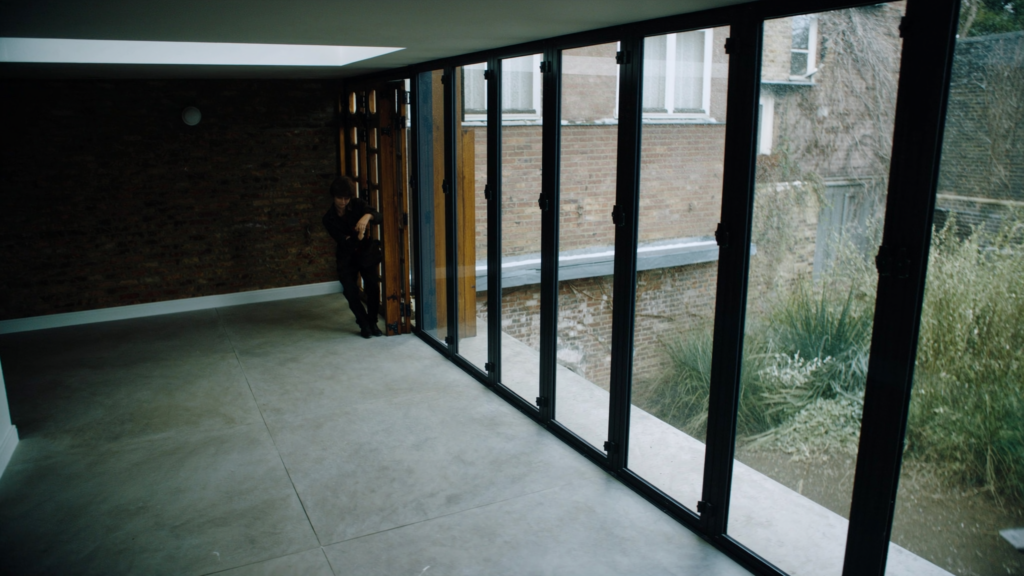
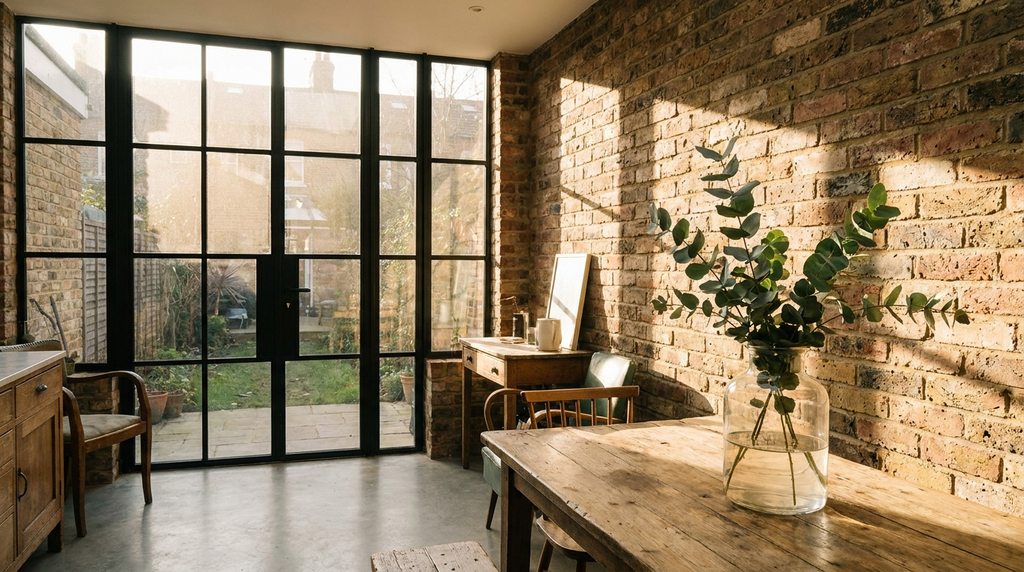
Aluminium is a metal, and as a window frame material it has properties that are quite different from uPVC in several important ways. It is exceptionally strong relative to its weight, which means aluminium profiles can be made considerably slimmer than uPVC equivalents while still providing the structural integrity needed to hold large glazing units securely. This gives aluminium windows their characteristic look, clean, slender sightlines with a high ratio of glass to frame. In rooms where natural light is at a premium, or in architectural settings where the window is a design feature in its own right, this quality is genuinely valuable.
The challenge with aluminium as a window material is that metal conducts heat and cold very efficiently. An aluminium frame without any thermal break would allow cold from outside to transfer directly through the metal into your home, a significant problem for both comfort and energy efficiency. Modern aluminium windows address this by incorporating a thermal break, which is essentially a strip of non-conductive material (typically a polymer) inserted into the frame profile to interrupt that thermal pathway. The quality and width of the thermal break varies between products, and this variation is one of the main reasons why aluminium window performance differs so considerably from one supplier to the next.
Aluminium is also fully recyclable, which gives it a strong sustainability argument for homeowners thinking about the environmental impact of their choices over the long term. The material does not degrade in the way that some plastics can, and at end of life it can be recycled with relatively low energy input compared to its initial production.
Practical tip, always ask any aluminium window supplier to confirm in writing that their frames include a thermal break, and ask for the U-value of the complete window unit (frame plus glass) rather than the glazing unit alone. The difference can be significant.
Comparing the Costs of uPVC and Aluminium Windows in 2026
Cost is often the deciding factor for homeowners, and the price difference between uPVC and aluminium is not trivial. As a general guide based on current market pricing in 2026, a standard uPVC casement window, supplied and fitted by a registered installer, typically costs between £300 and £600 per window, depending on size, specification, and location. A whole-house replacement across approximately ten windows in a typical three-bedroom semi-detached property might therefore range from around £3,500 to £7,000, though this figure will vary depending on the complexity of the installation and the region of the UK.
Aluminium windows carry a meaningful premium. Expect to pay roughly £500 to £1,200 per window installed, with more complex or bespoke sizes pushing beyond that range. A full house replacement in aluminium, again for a typical three-bedroom semi, could reach anywhere from £8,000 to £15,000 depending on specification, finish, glazing type, and whether any structural alterations are required. For larger homes or those with non-standard window openings, costs can be considerably higher still.
Several factors influence the final price for either material. Frame colour and finish play a role, standard white uPVC is the most affordable option, while foiled or painted finishes in both materials add cost. The number of glazing panes matters significantly, with triple glazing adding a meaningful premium over standard double glazing. Installer location is also a factor, with London and the South East consistently running higher than other regions. And if structural alterations are needed, enlarging an opening, changing the window style, or making good surrounding brickwork, those costs sit on top of the window price itself.
Regardless of which material you choose, always obtain a minimum of three quotes from FENSA or CERTASS-registered installers. These registration schemes ensure that your installation complies with UK Building Regulations and that you receive a valid compliance certificate on completion, something you will almost certainly need when you come to sell your home.
| Cost Factor | uPVC Windows | Aluminium Windows |
|---|---|---|
| Typical cost per window (supplied and fitted) | £300 to £600 | £500 to £1,200 |
| Whole-house replacement (approx. 10 windows, 3-bed semi) | £3,500 to £7,000 | £8,000 to £15,000 |
| Premium for triple glazing (per window, approx.) | £80 to £150 extra | £100 to £200 extra |
| Premium for coloured or foiled finish | £50 to £150 extra per window | Often included in standard pricing |
| Typical installer registration to look for | FENSA or CERTASS | FENSA or CERTASS |
How to get accurate window replacement quotes in the UK
Practical tip, ask each installer to provide a fully itemised quote showing the cost of frames, glazing, fitting, and any making-good work separately. This makes it much easier to compare quotes fairly when the prices look very different on the surface.
Energy Efficiency Ratings and What They Mean for Your Home
Windows in the UK are rated using the British Fenestration Rating Council (BFRC) Window Energy Rating system, which runs from G (the least efficient) through to A++ (the most efficient). Both uPVC and aluminium windows can achieve A and A+ ratings when properly specified, so the material alone does not determine energy performance. What matters is the combination of frame insulation, glazing specification, and installation quality.
U-values are the key technical measure to understand. A U-value tells you how much heat passes through a given element per square metre, per degree of temperature difference between inside and outside. The lower the U-value, the better the insulation. Building Regulations in England currently require a maximum U-value of 1.4 W/m²K for replacement windows under Part L, but the best modern products perform considerably better than this minimum standard.
UPVC frames naturally perform well thermally because of their chambered construction, and a well-specified uPVC double-glazed unit can achieve a whole-window U-value of around 1.2 to 1.4 W/m²K without difficulty. Quality aluminium windows with good thermal breaks can match or approach this performance, but cheaper aluminium products with inadequate thermal breaks can perform much worse, sometimes as poorly as 2.0 W/m²K or more, which would not meet Building Regulations for replacement windows.
Triple glazing is available in both materials and typically achieves whole-window U-values of around 0.8 to 1.0 W/m²K. At current energy prices, the additional upfront cost of triple glazing versus double glazing does not always pay back quickly in direct energy savings, but for rooms that feel uncomfortably cold, or for homeowners in northern regions of the UK where temperatures drop more severely, it may well be worth the investment for comfort reasons alone.
| Performance Measure | uPVC (well specified) | Aluminium with good thermal break | Aluminium without thermal break |
|---|---|---|---|
| Typical whole-window U-value (double glazed) | 1.2 to 1.4 W/m²K | 1.2 to 1.6 W/m²K | 2.0 W/m²K or above |
| Typical whole-window U-value (triple glazed) | 0.8 to 1.0 W/m²K | 0.9 to 1.2 W/m²K | Not recommended for triple glazing |
| BFRC rating achievable | A to A+ | A to A+ | C to E typically |
| Meets Part L Building Regulations (England) | Yes, when properly specified | Yes, when properly specified | Not reliably |
Practical tip, ask every installer for the BFRC Window Energy Rating certificate and the whole-window U-value for the specific product they are quoting. If they cannot provide these figures, treat that as a warning sign.
Durability and Lifespan, Which Type Will Last Longer
Longevity is worth thinking about carefully when comparing window materials, because the upfront cost difference between uPVC and aluminium looks rather different when you factor in how long each is likely to last. UPVC windows typically have a lifespan of 20 to 35 years with minimal maintenance. Modern formulations are significantly more resistant to UV yellowing and surface brittleness than the products installed in the 1980s and 1990s, though very prolonged exposure to intense sunlight can still cause some degradation over time, something more relevant in south-facing elevations.
Aluminium windows are widely regarded as having a longer potential lifespan, often quoted at 40 to 45 years or more. The material does not warp, rot, or fade in the same way that uPVC can, and powder-coated aluminium finishes are extremely durable. This longevity argument is genuinely persuasive for homeowners who are thinking about the long-term economics of the decision rather than just the upfront price.
Both materials share a common vulnerability, the hardware. Handles, hinges, locking mechanisms, and glazing seals will all wear out or need attention before the frame itself does. When choosing a supplier, it is worth asking about the availability and cost of replacement hardware, and whether the company has been trading long enough to make it likely that parts will still be available in fifteen or twenty years. Warranties also vary considerably between suppliers. Reputable uPVC suppliers typically offer 10-year frame guarantees, while many aluminium manufacturers offer 20-year or longer guarantees on both the frame and the powder-coat finish, though the terms and conditions of these warranties deserve careful reading before you take them at face value.
How to maintain uPVC windows and extend their lifespan
Practical tip, when reviewing any window warranty, check specifically what it covers, whether it is transferable to a new owner if you sell your home, and what the claims process involves. A warranty that is difficult to enforce is worth considerably less than its headline figure suggests.
Aesthetics and Kerb Appeal for Different UK Property Styles
Windows have a profound effect on the appearance of a home, both from the street and from inside, and the aesthetic differences between uPVC and aluminium are real, even if they are less dramatic than they once were. UPVC has historically carried associations with white frames on newer-build and mid-century homes. That reputation has shifted considerably thanks to the widespread availability of foiled uPVC, which realistically mimics woodgrain finishes, anthracite grey, slate, and a growing range of other colours. A modern foiled uPVC window in the right setting can look very convincing indeed.
Aluminium’s defining aesthetic quality is its slim sightlines, the visible portion of the frame when you look at the window from the front. Because aluminium is so much stronger than uPVC, the same structural performance can be achieved with a frame that is noticeably narrower. This gives aluminium windows a more refined, contemporary look that suits modern architectural styles particularly well, think large glazed extensions, contemporary new builds, or any home where maximising the amount of glass in a window opening is a priority.
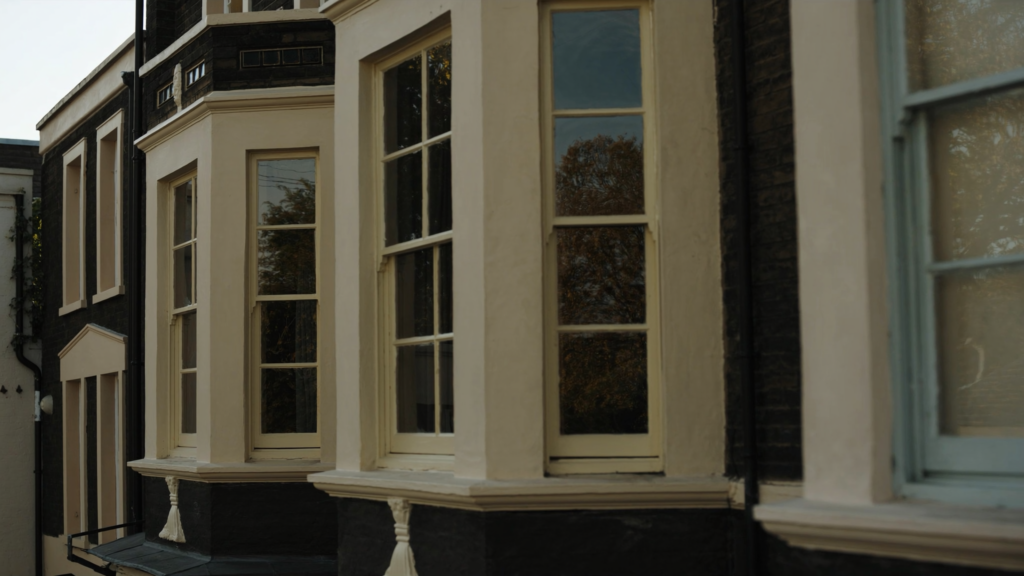
For period and heritage properties, the picture is more specific. Victorian terraces, Edwardian semis, and Georgian townhouses all have specific window proportions and profiles that were developed for timber joinery, and replicating that look convincingly in either uPVC or aluminium requires careful selection of the right profile. Slimline aluminium systems can replicate traditional sash window proportions well, and some manufacturers offer profiles specifically designed for heritage applications. Even so, in conservation areas or where a property is listed, the local planning authority may have specific requirements around window materials, profiles, and glazing bar arrangements that override any personal preference. Always check before ordering.
Replacing windows in conservation areas, what UK homeowners need to know
Practical tip, if you live in a conservation area or within the curtilage of a listed building, contact your local planning authority before getting any quotes. Even if your installer says you do not need planning permission, the consequences of getting this wrong can be costly and stressful to resolve.
Which Window Type Suits Your Home Best
Having weighed up cost, performance, durability, and aesthetics, it is worth drawing the threads together into some practical guidance for specific situations. There is no single right answer for every home, but there are some clear patterns in which material tends to serve different types of property and homeowner best.
For newer builds and modern homes, aluminium’s clean lines and slim frames complement contemporary architecture particularly well. The larger glass areas made possible by slimmer frames suit open-plan living spaces and maximise natural light. UPVC in anthracite grey or other contemporary finishes is a genuinely competitive and more affordable alternative that still looks sharp on the right property, so budget should matters in this decision.
For traditional and older properties, uPVC in woodgrain or heritage finishes can work well on standard Victorian and Edwardian homes where authenticity is not a planning requirement. For homeowners who want a more premium finish that genuinely reads as appropriate on an older property, slimline aluminium systems offer more convincing period proportions than standard uPVC profiles, though at considerably greater cost.
For homeowners on tight budgets, uPVC is the clear pragmatic choice. It offers good energy efficiency, excellent weather resistance, very low maintenance requirements, and a wide range of finishes, all at a price point that makes whole-house replacement achievable for most households without requiring significant borrowing.
For longer-term investment or premium properties, the higher upfront cost of aluminium may well be justified. The lifespan advantage alone, potentially 10 to 15 years more than uPVC, means the effective cost over time narrows considerably. On higher-value properties where kerb appeal has a measurable impact on resale value, the aesthetic quality of well-specified aluminium can be a worthwhile investment in its own right.
Practical tip, if you are genuinely undecided between the two materials, ask your installer to arrange a visit to a completed installation in each material so you can assess the look and finish in person rather than from a brochure or website image.
Grants and Financial Support Available to UK Homeowners in 2026
Window replacement is rarely inexpensive, and it is worth understanding what financial support might be available before committing to a particular specification or budget. The landscape of UK energy efficiency grants changes regularly, so the following guidance reflects the position in 2026 but should always be verified through official sources before you rely on it.
The ECO4 scheme, the Energy Company Obligation, provides funding for energy efficiency improvements for low-income or vulnerable households. Windows and glazing improvements can in some cases be funded through ECO4, though the scheme’s primary focus is insulation and heating. Eligibility is means-tested and linked to receipt of certain qualifying benefits. If you or someone in your household receives Universal Credit, Pension Credit, or a number of other means-tested benefits, it is worth checking eligibility through the Energy Saving Trust’s online tool or via Gov.uk.
The Great British Insulation Scheme closed on 31 March 2026. It funded insulation measures only and never covered windows or glazing. The scheme’s scope and available funding does change, so current eligibility should be confirmed directly. According to the Energy Saving Trust, combining window improvements with other energy efficiency measures tends to produce stronger outcomes for both comfort and energy bill reduction than tackling glazing in isolation.
The Boiler Upgrade Scheme does not directly fund windows, but As a connected consideration for homeowners thinking about heat pump installation. Improving window thermal performance reduces the overall heat load on a building, which in turn affects the heat pump capacity required, meaning better windows can make a heat pump installation more efficient and potentially more affordable to run. The two investments are genuinely complementary.
Glazing is standard-rated for VAT at 20%. The zero rate for energy-saving materials covers insulation, heat pumps and solar panels; HMRC names secondary and double glazing as excluded (VAT Notice 708/6). Always ask your installer to clarify the VAT treatment for your specific job and request a clear VAT breakdown in any written quote. If in doubt, check the current position with HMRC directly.
ECO4 scheme explained, how to check if you qualify in 2026
Practical tip, even if you do not qualify for a grant scheme yourself, ask your installer whether they work with any grant funding programmes. Some installers are registered with local authority or energy company referral schemes that can provide partial funding for households that do not qualify for national schemes.
UPVC vs Aluminium Windows, A Complete Side-by-Side Comparison
For homeowners who want a quick reference to sit alongside the detailed guidance above, the following table summarises the key differences between uPVC and aluminium windows across the factors that matter most in a typical UK home improvement decision.
| Feature | uPVC Windows | Aluminium Windows |
|---|---|---|
| Typical cost per window (supplied and fitted) | £300 to £600 | £500 to £1,200 |
| Whole-house replacement (3-bed semi, approx.) | £3,500 to £7,000 | £8,000 to £15,000 |
| Typical lifespan | 20 to 35 years | 40 to 45 years or more |
| Thermal performance (well specified) | Good, U-values from 1.2 W/m²K | Good, U-values from 1.2 W/m²K (requires quality thermal break) |
| Maintenance requirements | Very low, wipe clean | Very low, wipe clean |
| Slim sightlines (frame width) | Moderate | Narrow, more glass, less frame visible |
| Colour and finish options | Good, foiled finishes widely available | Excellent, powder-coated in virtually any RAL colour |
| Suitability for period properties | Moderate, woodgrain foils available | Good, slimline profiles available for heritage applications |
| Sustainability credentials | Moderate, recyclable but energy-intensive to produce | Strong, highly recyclable, very long lifespan |
| Typical frame guarantee | 10 years | 20 years or more |
| Best suited to | Budget-conscious homeowners, standard UK homes, rental properties | Modern architecture, premium properties, long-term investment |
The honest conclusion is that neither material is universally better than the other, the right choice depends on your property, your priorities, and your budget. For the majority of UK homeowners replacing windows in a standard residential property, well-specified uPVC with double or triple glazing represents outstanding value and will perform reliably for decades with minimal fuss. For homeowners with more demanding aesthetic requirements, a premium property, or a long-term investment mindset, the additional cost of quality aluminium can absolutely be justified.
What matters most in both cases is specification quality and installation standard. A poorly fitted aluminium window will underperform a well-fitted uPVC window every time. Always use a FENSA or CERTASS-registered installer, always request the energy performance figures in writing, and always get at least three comparable quotes before committing to any supplier.
Draughtproofing your windows before replacing them, a cost-effective interim measure
Practical tip, if your final decision still feels difficult after reading this guide, consider booking a survey with one uPVC specialist and one aluminium specialist. A reputable installer will visit your home, assess your specific situation, and give you a recommendation you can compare, often free of charge and without obligation.
Frequently Asked Questions
Aluminium windows typically cost between £600 and £1,200 per window fully installed, compared to £300-£600 for uPVC equivalents. The gap has narrowed slightly as aluminium manufacturing has become more efficient, but you can still expect to pay roughly double for aluminium on a like-for-like basis. For a standard three-bedroom semi-detached home requiring around eight windows, that difference can amount to £2,400-£4,800 in total.
Aluminium conducts heat far more readily than uPVC, but modern aluminium frames incorporate a thermal break — a non-conductive barrier inside the frame — which brings their thermal performance close to uPVC. A quality thermally broken aluminium window can achieve a U-value of around 1.4 W/m²K, while good uPVC windows typically achieve 1.2-1.4 W/m²K. The glazing unit itself makes a bigger difference to warmth than the frame material, so specifying double or triple glazing with a low-E coating matters more than the frame choice alone.
Aluminium windows generally outlast uPVC, with a typical lifespan of 40-45 years or more compared to 20-35 years for uPVC. UPVC can discolour or become brittle over time, particularly in south-facing aspects with prolonged UV exposure. Aluminium is more resistant to warping and weathering, which partly justifies its higher upfront cost when you factor in replacement cycles over several decades.
Most window replacements in England fall under permitted development rights, meaning you do not need planning permission as long as the new windows are similar in appearance to the originals. However, if your property is in a Conservation Area, an Area of Outstanding Natural Beauty, or is a listed building, you will likely need prior approval or listed building consent from your local planning authority. Regardless of planning rules, replacement windows must comply with Building Regulations Part L and your installer should register the work with FENSA or CERTASS.
Yes, uPVC manufacturers now offer a wide range of woodgrain foil finishes — including rosewood, golden oak, and grey — that can closely resemble timber or painted wood from a distance. However, planning and conservation officers often prefer authentic materials or slimmer aluminium profiles for period properties, as uPVC frames can appear bulkier. If you are in a sensitive area, check with your local authority before ordering, as some councils specify acceptable frame types in their design guidelines.