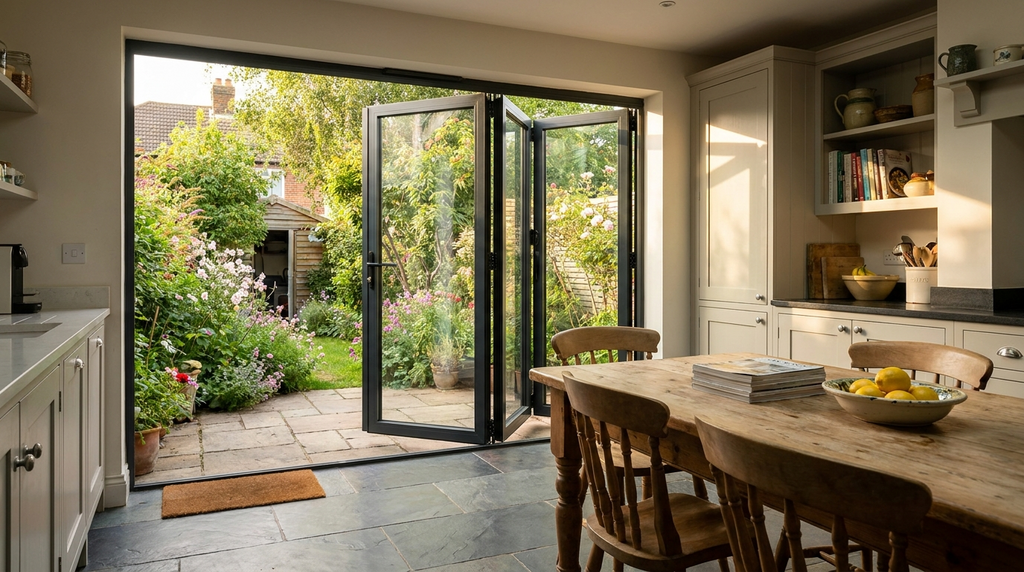
The defining trade-off with slim aluminium windows is thermal efficiency for sightline width
Homeowners restoring a period property often face a difficult choice between preserving the original aesthetic and meeting modern energy standards. Slim aluminium windows offer a way to keep the slender frame profile that matches historic steel or timber designs. The central compromise is that a narrower frame leaves less space for thermal breaks and insulating materials.
Modern slim aluminium frames can achieve sightlines as narrow as 35–50mm, compared to 70–120mm for standard uPVC or timber-aluminium composites. A typical slim aluminium double-glazed window achieves a centre-pane U-value of 1.2–1.4 W/m²K, but the whole-frame value can be 1.6–1.8 W/m²K depending on the profile depth (British Fenestration Rating Council (BFRC) window energy ratings database, 2026). For a period home, the visual benefit must be weighed against higher heat loss over the window’s lifetime.
How slim aluminium frames compare to steel, timber, and standard uPVC on thermal performance and cost
Steel frames, in the historic Crittall style, have typical whole-window U-values of 2.0–2.8 W/m²K. Slim aluminium improves on this but still lags behind modern uPVC, which achieves 1.2–1.4 W/m²K (Glass and Glazing Federation (GGF) technical data, 2026). Timber frames offer similar U-values to slim aluminium (1.4–1.8 W/m²K) but require more maintenance and have thicker sightlines (60–80mm) unless custom-made.
Cost is a major differentiator. Slim aluminium windows typically cost £600–£1,200 per square metre installed, compared to £400–£700 for standard uPVC and £800–£1,500 for timber (Checkatrade cost guide, 2026 edition). The premium over uPVC is justified only if the narrow sightline is a non-negotiable requirement for the period aesthetic.
Quick numbers, key specifications for slim aluminium windows in period homes
| Specification | Slim aluminium (typical range) | Standard uPVC (for comparison) | Notes |
|---|---|---|---|
| Sightline width (frame face) | 35–50mm | 70–120mm | Narrowest for heritage look |
| Whole-window U-value (double glazing) | 1.6–1.8 W/m²K | 1.2–1.4 W/m²K | BFRC-rated |
| U-value with triple glazing | 1.2–1.5 W/m²K | 0.9–1.1 W/m²K | Triple glazing thickens frame |
| Typical installed cost per m² | £600–£1,200 | £400–£700 | Excludes specialist heritage work |
| Expected lifespan | 40–50 years | 20–30 years | Aluminium corrodes less in UK climate |
The direct answer to whether slim aluminium windows are suitable for a period home
Yes, slim aluminium windows are suitable for period homes when the priority is preserving the original sightline aesthetic, for example, in listed buildings or conservation areas where planning permission requires a narrow frame profile. They are not suitable if the homeowner’s primary goal is maximising thermal efficiency or minimising upfront cost; a standard uPVC or timber-aluminium composite will outperform on both measures. The key condition is that the property must have cavity wall insulation or other fabric improvements to compensate for the higher window U-value, or the homeowner must accept a higher heating bill.
Planning permission and listed building consent requirements for slim aluminium windows
In a conservation area, replacing windows like-for-like in material and style is usually permitted development, but changing from timber or steel to aluminium may require prior approval from the local planning authority. For a listed building, any change to windows, including material, profile, or glazing type, requires listed building consent, and slim aluminium may be refused if the original is timber or steel unless a specialist heritage aluminium profile (for example, a flush-fit or rebated design) is used. The homeowner must submit a heritage statement showing the new windows match the original sightline and glazing bar pattern; the local authority conservation officer will assess this (Historic England guidance, “Windows in Listed Buildings,” 2026; GOV.UK page on listed building consent).
How to verify a slim aluminium window installer, MCS, TrustMark, and FENSA certification
For replacement windows in England and Wales, the installer must be registered with FENSA or CERTASS (or use local authority building control) to self-certify compliance with Building Regulations Part L (conservation of fuel and power). MCS (Microgeneration Certification Scheme) is not relevant unless the windows are part of a whole-house energy efficiency retrofit with heat pumps or solar; for windows alone, MCS is not required. TrustMark registration is a voluntary quality mark but is increasingly required by local authorities for conservation area work; check the installer holds TrustMark for “Windows and Doors.” Ask for a BFRC energy rating certificate for the specific window model; the rating must be at least C for a new-build or replacement window under Part L (GOV.UK Building Regulations Approved Document L, 2026; FENSA website).
How to choose between aluminium and uPVC windows for a listed building
Understanding U-values and window energy ratings for period homes