Why Hampstead Homeowners Are Taking a Fresh Look at Double Glazing Right Now
Hampstead sits at an interesting crossroads in 2026. The neighbourhood’s striking Georgian and Victorian terraces, mansion flats around Belsize Park, and Edwardian semis near South End Green are some of the most beautiful housing stock in London, but beauty and energy efficiency don’t always go hand in hand. With energy bills stubbornly high and the London Plan pushing harder than ever on residential sustainability, plenty of Hampstead residents are asking whether their windows are quietly costing them a fortune.
There’s also a very practical local driver at play. Hampstead Heath acts as a huge open green corridor, and the winds that funnel across it from the north and east hit the back and side elevations of countless homes on roads like Nassington Road, Parliament Hill, and South Hill Park particularly hard in winter. Single-glazed or older double-glazed units on those exposed elevations are working overtime just to keep draughts at bay.
And then there’s noise. Hampstead Village may feel like a world away from central London, but the rumble of traffic on Fitzjohn’s Avenue and Heath Street, the constant hum around Hampstead tube station, and the proximity of the A502 mean that acoustic performance is every bit as important as thermal performance for many households here. Modern double glazing addresses both at once.
What Double Glazing Actually Involves for a Typical Hampstead Home
Most homes in Hampstead fall into two broad categories, Victorian and Edwardian terraces, and purpose-built or converted flats, often in large stucco-fronted houses. Both present their own specific considerations for installing double glazing, and neither is straightforward.
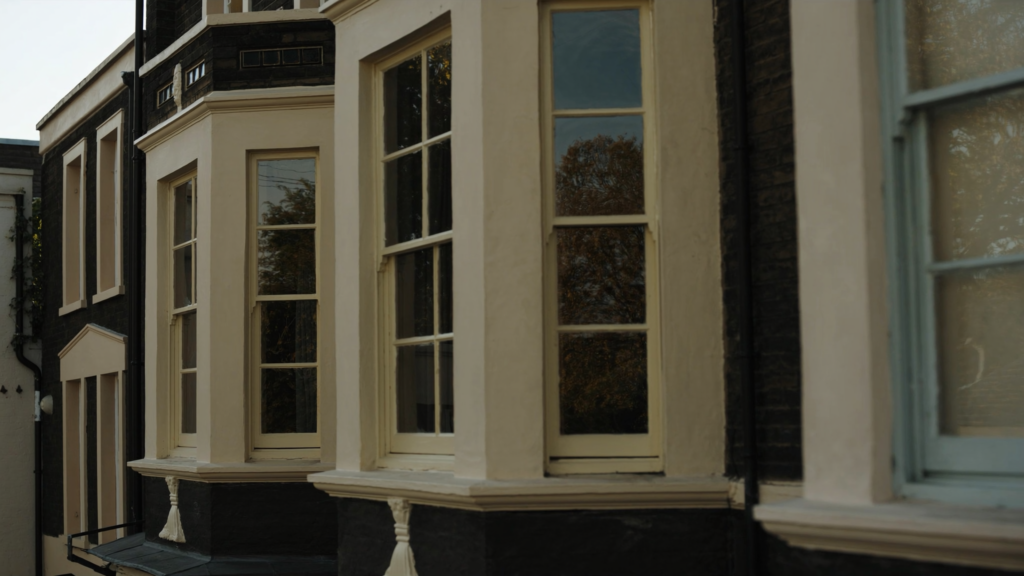
Victorian terraces (think the streets running off Haverstock Hill or around Chalk Farm Road) typically have bay windows on the ground floor, a mix of sash and casement windows on upper floors, and chunky timber frames that are often in surprisingly good structural condition but poorly sized for modern sealed units. Replacing sash windows like-for-like with slimline double-glazed sashes is very much achievable, but it costs more than a standard casement swap and requires a specialist, not every installer in the area carries the skills for heritage-style sash work.
Flats in converted properties bring a different headache: leasehold arrangements. If you own a flat in one of the grand Victorian or Edwardian houses on Ellerdale Road or Fitzjohn’s Avenue, you’ll almost certainly need written consent from your freeholder before touching the windows. This can add weeks or even months to your timeline. Check your lease before you get any quotes.
- Bay window frames in terraces often need structural support work before new units can be fitted, budget an extra £150–£300 for this
- Sash window replacements need purpose-built double-glazed sash units, not standard casements
- Period plasterwork around window reveals is easily damaged during removal, agree with your installer in advance who is responsible for making good
- Leasehold flats require freeholder consent and potentially a licensed surveyor sign-off
- Scaffolding is often unavoidable for upper-floor windows in tall terraces, this adds cost that many quotes initially leave out
The good news is that Hampstead’s housing stock tends to have solid brickwork and well-maintained lintels, which means the structural groundwork for a quality installation is usually already there. You’re not fighting crumbling masonry in the way some areas of post-war London housing can demand.
How Much Double Glazing Costs in Hampstead and the London Area in 2026
Let’s get straight to the numbers, because costs in Hampstead are genuinely higher than the national average, and you deserve to know that upfront rather than getting a nasty surprise at quote stage. London labour rates run 15–25% above the rest of England, and Hampstead adds further complexity through parking restrictions, ULEZ charges for installer vans, and the frequency of conservation area work.
| Window Type | Specification | Hampstead Cost (per window) | London Average | National Average |
|---|---|---|---|---|
| Standard casement (uPVC) | A-rated, argon-filled | £450–£650 | £400–£580 | £300–£450 |
| Timber-look casement | A+ rated, triple-glazing option | £650–£950 | £580–£850 | £450–£700 |
| Double-glazed sash (uPVC) | A-rated, spring-balanced | £700–£1,000 | £620–£900 | £500–£750 |
| Timber double-glazed sash | Heritage spec, A-rated | £1,100–£1,800 | £950–£1,600 | £750–£1,300 |
| Bay window unit (3-panel) | A-rated uPVC or timber | £1,800–£3,200 | £1,600–£2,800 | £1,200–£2,200 |
| Full house replacement (3-bed terrace) | A-rated, all windows | £5,500–£9,000 | £4,800–£8,000 | £3,500–£6,500 |
Always ask for scaffolding to be itemised separately in any quote, it can add £400–£800 to a job and is often buried in small print. Also ask specifically whether the quote includes removing and disposing of old frames, and whether making good the interior reveals is included. These are common areas where quotes and final invoices diverge.
Compared to neighbouring areas like Camden or Islington where access can be even more restricted due to narrow streets, Hampstead’s slightly wider residential roads often make logistics a little easier, which is a small but genuine cost advantage.
How Hampstead’s Weather and Location Change What You Should Be Buying
Hampstead’s position on one of London’s highest ridges means it catches more wind than almost anywhere else in NW3 or the surrounding boroughs. The easterly and north-easterly winds that drive across from the direction of Haringey and beyond are noticeably colder and more persistent here than they are down in the valley towards Kentish Town or Gospel Oak. This matters when you’re choosing glazing specifications.
For north and east-facing elevations, which cover the majority of rear and side windows on streets aligned with Hampstead’s hillside grid, a low-emissivity (low-E) coating is essential rather than optional. This thin metallic layer reflects heat back into the room rather than letting it escape through the glass. On a cold easterly night in January with Hampstead Heath amplifying the wind chill, the difference between low-E and standard glass is tangible.
South-facing rooms benefit from a slightly different calculation. Hampstead receives a respectable 1,200–1,500 sunshine hours per year, and with some of the best solar irradiance in the UK at around 1,100–1,200 kWh per square metre annually, south-facing windows can act as passive solar collectors. You want glass with a higher solar heat gain coefficient (SHGC) on these elevations, don’t use heavily tinted or solar-reflective glass on south-facing rooms or you’ll be blocking free heat in winter.
Rainfall is relatively modest at 500–700mm annually compared to wetter parts of the UK, so water ingress is less of a critical concern than in, say, the west of England. Even so, Hampstead’s elevation means it catches more precipitation than the lower-lying parts of London, and the quality of window seals and drainage channels still deserves attention.
The Products and Specifications That Actually Perform Well in Hampstead
Given the combination of exposed elevation, period housing stock, and significant conservation area coverage, here’s an honest steer on what works rather than a generic product brochure rundown.
For terraced Victorian and Edwardian properties not in a conservation area, a quality uPVC double-glazed sash window with a 28mm argon-filled unit and a warm-edge spacer bar is the sweet spot between performance and cost. Look for a U-value of 1.2 W/m²K or better. Avoid going to triple glazing unless noise is your primary concern, the additional weight on Victorian timber subframes can create more problems than it solves.
For conservation area properties (which covers a significant proportion of Hampstead, more on this below), slim-profile double-glazed units in painted timber or aluminium slimline frames are the appropriate choice. These can achieve U-values of around 1.4–1.6 W/m²K while maintaining the appearance required by Camden Council’s conservation area guidance. Secondary glazing is also a genuinely excellent and often overlooked option for listed buildings where window replacement isn’t permitted.
For flats and modern-era conversions, standard A-rated uPVC casements with argon fill and low-E coating are perfectly appropriate and represent good value. Prioritise acoustic laminated glass if you’re on a road with significant traffic, a 6.4mm acoustic laminate inner pane makes a very noticeable difference to street noise.
- Minimum U-value target: 1.4 W/m²K for any new installation
- Argon gas fill as standard, krypton fill available for slimmer frame requirements in heritage properties
- Warm-edge spacer bars (not aluminium) to reduce cold-edge condensation
- Acoustic laminate glass for street-facing windows on busy roads
- BFRC Window Energy Rating of A or A+ for all non-heritage installations
How to Find a Trustworthy Double Glazing Installer Near Hampstead
Hampstead is a small but affluent area, and that combination unfortunately attracts a proportion of high-pressure sales operations alongside genuinely excellent local installers. Knowing how to tell them apart saves both money and headaches.
The most important certification to look for is FENSA registration. FENSA-registered installers self-certify their work as compliant with Building Regulations, which means you don’t need a separate building control application for most standard window replacements. Ask any installer to confirm their FENSA number before you accept a quote, you can verify it on the FENSA website in about 30 seconds.
TrustMark registration is the government-endorsed quality mark that covers a wider range of installation standards and customer protection. For larger jobs or conservation area work, a TrustMark-registered installer provides an additional layer of consumer protection.
In terms of coverage, most of the better-regarded installers serving Hampstead are based in Camden, Islington, or Haringey, all within 5–6km. This is actually an advantage over more rural parts of the country where you might be waiting weeks for a specialist to travel in. Lead times in London currently run at around 4–8 weeks from survey to installation for standard work, though heritage and conservation area jobs can take 10–14 weeks to source appropriate frames.
- Always get three written quotes, not verbal estimates
- Ask specifically whether the installer has experience with Camden conservation area properties
- Check Google and Checkatrade reviews specifically for Hampstead, NW3, and NW6 postcodes
- Confirm insurance-backed guarantees are in place (not just manufacturer warranties)
- Avoid any company offering a same-day discount or time-limited pressure pricing
- Ask who actually carries out the work, some larger companies subcontract heavily
Grants and Funding Available to Hampstead Residents in 2026
The funding landscape for double glazing in 2026 is more nuanced than it was a few years ago, and eligibility criteria are tighter. Here’s a clear-eyed look at what’s actually available to Hampstead homeowners.
ECO4 (Energy Company Obligation) remains the primary national scheme, but eligibility is means-tested. To qualify, your household generally needs to be receiving certain benefits (including Universal Credit, Pension Credit, or Child Tax Credit) and have a property with an EPC rating of D or below. Given that Hampstead’s average EPC sits at Band C, already above the national average of Band D, many residents here won’t meet the property-condition threshold. If you’re in one of the lower-rated homes in the area, it’s absolutely worth checking.
The Great British Insulation Scheme closed on 31 March 2026. It funded insulation measures only and never covered windows or glazing. Contact Camden Council’s housing and energy team directly, they can assess eligibility and connect you with approved installers.
Camden Council’s own retrofit support programme offers advice, assessments, and in some cases grant support for energy efficiency improvements. Camden has been one of the more proactive London boroughs in this area, and their website maintains a current list of available funding streams. Ring their energy advice line rather than relying solely on the web pages, as availability changes throughout the year.
Glazing is standard-rated for VAT at 20%. The zero rate for energy-saving materials covers insulation, heat pumps and solar panels; HMRC names secondary and double glazing as excluded (VAT Notice 708/6). This is a meaningful saving, on a £7,000 full-house installation, zero VAT versus the standard 20% rate is a £1,167 saving built in automatically.
If you’re a private landlord in Hampstead, the Minimum Energy Efficiency Standards regulations continue to tighten, double glazing can contribute toward the EPC improvements required to remain compliant. This isn’t a grant, but it is a genuine financial incentive when viewed against the alternative of not being able to let a property.
Planning Permission and Conservation Area Rules in Hampstead
This is where Hampstead differs very significantly from most other London areas, and getting it wrong can be costly and stressful. A substantial portion of Hampstead falls within Camden’s designated conservation areas, including the Hampstead Conservation Area, the Heath Street and Village Conservation Area, and parts of Belsize Park. If your property sits within one of these areas, the rules around window replacement are considerably stricter than for an ordinary residential street.
For most standard window replacements (like-for-like in a non-conservation area), double glazing falls under Permitted Development rights, you don’t need to apply for planning permission as long as the replacement windows are a similar appearance to the originals. This applies to the majority of uPVC casement or sash replacements in Hampstead properties that fall outside the designated conservation zones.
However, in a conservation area, you must ensure that any replacement windows match the original style, material, and detailing. Camden Council’s conservation team takes a particularly active approach to enforcement, they have dedicated officers and a track record of requiring retrospective restoration where unapproved replacements have been made. Timber sash windows replaced with uPVC sashes of a different profile have been subject to enforcement action in the NW3 postcode.
- Check whether your property is in a conservation area before getting any quotes, use Camden’s online planning map
- Listed buildings require Listed Building Consent for any window changes, no