Why Builth Wells Homeowners Are Looking at Double Glazing Right Now
There’s a quiet revolution happening in the streets around the Wye Valley. Builth Wells homeowners, many sitting in Band E rated properties, are waking up to the fact that their energy bills are higher than they need to be, and single-glazed or failed double-glazed units are a major reason why.
The town’s average EPC rating sits at Band E, which is a full band below the Welsh and UK national average of Band D. That gap translates directly into money leaving your pocket every month. With gas usage averaging around 13,800 kWh per year locally, even modest improvements to your window efficiency can make a real dent in your heating costs.
What makes Builth Wells particularly interesting right now is the combination of factors pushing homeowners to act. The Welsh Government’s Warm Homes Nest scheme is actively funding improvements for eligible households. The town’s older housing stock, much of it Victorian and Edwardian terraced and detached property, is crying out for modernisation. And with installers regularly travelling from Brecon, Hay-on-Wye and beyond to serve this cluster of mid-Wales market towns, the market is more competitive than you might expect for a town of 2,829 people.
If your windows are draughty, misted, or simply old, this is genuinely a good moment to explore your options.
What Double Glazing Actually Involves for a Typical Builth Wells Home
Let’s talk about what installation actually looks like for the kinds of homes you find here. Builth Wells is predominantly a mix of Victorian-era terraced houses in the town centre streets and larger detached properties on the outskirts toward the surrounding hills. Each comes with its own set of practical realities.
Terraced Properties in the Town Centre
If you’re in a terraced house, particularly on streets close to the High Street or around the older residential areas, your biggest challenge is usually access. With properties sitting close to narrow pavements, installers often need to manage delivery of frames carefully. Parking a large installation van and bringing in full window frames through a tight frontage takes planning, and a good installer will survey this properly before giving you a quote.
These older terraced homes often have non-standard window sizes. Victorian window proportions were not built to modern modular measurements, which means you’re likely looking at made-to-measure frames rather than off-the-shelf units. That adds a little to the cost and lead time, but it also means a better fit and no ugly gaps or fillers around the frame.
Detached Properties on the Hillside Fringes
Detached homes on the edges of Builth Wells, particularly those looking out toward the Irfon Valley or set back from the main roads, tend to have more access flexibility, but can face elevation challenges. Properties on sloping ground sometimes need additional equipment for upper-storey work, which can push labour costs up slightly compared to a level urban site.
These homes also tend to be larger, meaning more windows to replace and a higher overall project cost, but also a proportionally bigger saving on energy bills once done.
Building Era Considerations
Most Builth Wells homes were built between 1880 and 1970, with a good proportion of Victorian and Edwardian construction. This matters because original window openings may have timber lintels rather than modern steel, and in some cases the masonry around original window openings needs checking before new frames are fitted. A competent installer will flag this during a survey, if they don’t check, that’s a red flag worth noting.
How Much Double Glazing Costs in Builth Wells and the Wales Area in 2026
Prices in mid-Wales are broadly comparable to Welsh averages, but there are local factors that nudge costs upward. Installers travelling from Brecon (23km) or Hay-on-Wye (21km) will typically factor in travel time and fuel, particularly for smaller jobs. Made-to-measure frames for older window sizes add to material costs. And if scaffolding is needed for upper floors on a hillside property, that’s an additional hire cost.
Here’s a realistic pricing guide for Builth Wells in 2026:
| Property Type | Number of Windows | Standard uPVC Double Glazing | Timber-Effect uPVC | Aluminium Frames |
|---|---|---|---|---|
| Small terraced (2 bed) | 4 to 6 | £2,800 to £4,200 | £3,400 to £5,100 | £4,500 to £6,500 |
| Mid-size terraced (3 bed) | 6 to 8 | £4,000 to £5,800 | £5,000 to £7,200 | £6,200 to £8,800 |
| Detached (3 to 4 bed) | 8 to 12 | £5,500 to £8,500 | £7,000 to £10,500 | £8,500 to £13,000 |
| Larger detached (4+ bed) | 12 to 16 | £8,000 to £12,000 | £10,000 to £15,000 | £13,000 to £19,000 |
Compared to the Wales average, Builth Wells quotes tend to run around 5 to 10% higher for smaller jobs due to travel time, but competitive for larger projects where installers see value in making the trip worthwhile. Neighbouring Brecon benefits from slightly more installer competition, which can keep prices marginally sharper, so it’s worth getting quotes from Brecon-based companies who regularly work in Builth Wells.
Insider tip: Always get at least three quotes. Prices for identical specifications can vary by 20 to 30% between installers even in this area, simply due to different overheads and how busy each company happens to be.
How Builth Wells’s Weather and Location Affect Your Double Glazing Choices
The Wye Valley setting of Builth Wells gives it a climate that’s genuinely interesting from a window specification point of view. You’re in a sheltered inland valley, which means you’re spared the ferocious coastal winds that batter properties in west Wales, but you’re also sitting at an elevation and latitude that brings its own demands.
Rainfall here runs between 700 and 1,000mm per year, moderate by Welsh standards but still meaningful. Rain penetration around poorly fitted frames is a genuine risk in this area, so the quality of the installation seal matters as much as the glazing specification itself. Ask your installer specifically about their sealing and weatherproofing approach, it’s not a question that should make a good installer hesitate.
Winters are real here. The valley can experience temperature inversions that make nights feel colder than the headline regional statistics suggest, particularly for properties on lower ground toward the Wye. A window U-value (a measure of heat loss) of 1.2 W/m²K or better is the standard you should be aiming for, the better installers will routinely offer units achieving 1.0 W/m²K or lower.
On the sunny side of the equation, Builth Wells gets reasonable solar gain from south and south-west facing windows. For rooms that face that direction, it’s worth considering low-emissivity (low-e) glass that lets solar heat in while keeping warmth from escaping. This is genuinely relevant here in a way it isn’t for shadier northern locations.
The Products and Options That Work Best Here
Given the housing stock and climate conditions specific to Builth Wells, here’s what actually makes sense rather than a generic list of options:
uPVC with Timber-Effect Finish
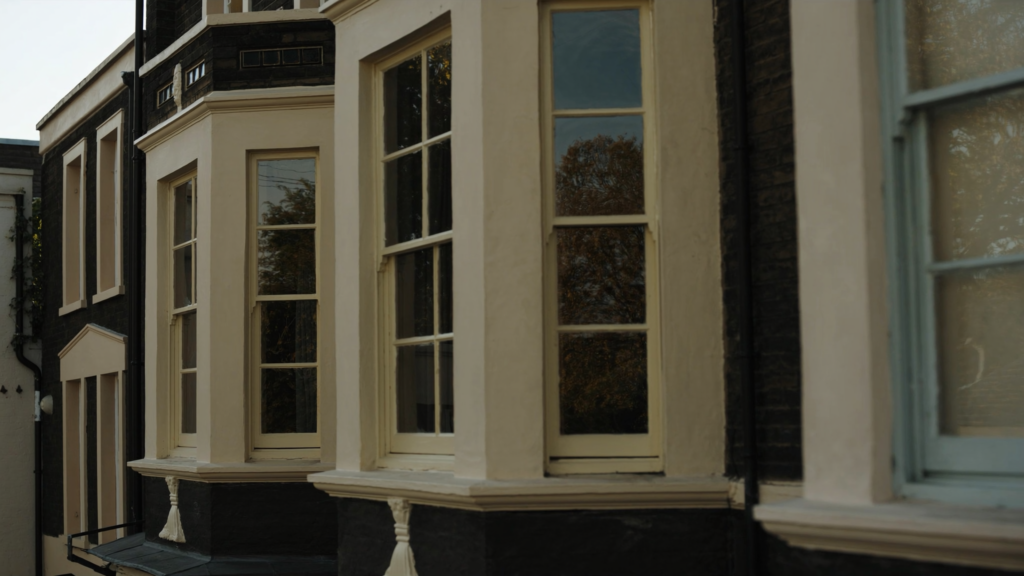
For Victorian and Edwardian terraced homes, standard white uPVC often looks wrong against traditional brickwork and stonework. Timber-effect uPVC, particularly in heritage colours like Chartwell Green or Anthracite Grey, gives you the low maintenance of modern uPVC while respecting the character of older properties. This matters particularly if you’re anywhere near the Builth Wells Conservation Area, where visual character is under greater scrutiny.
A-Rated or Better Double Glazing Units
Look for units rated A or A+ on the Window Energy Rating (WER) scale. Specifically, ask for:
- A centre-pane U-value of 1.0 to 1.2 W/m²K or better
- Argon-filled cavities (16mm to 20mm gap is the sweet spot for thermal performance)
- Warm-edge spacer bars rather than standard aluminium spacers, these reduce condensation on the inner frame edge and improve thermal performance noticeably
- Low-e coating on the inner pane to retain radiated heat
Triple Glazing, Worth It Here
Given that Builth Wells homes average Band E on energy performance, and that many are off-grid for gas (meaning heating is more expensive per unit of energy), triple glazing has a stronger case here than it does in milder urban locations. Triple glazed units typically achieve U-values of 0.6 to 0.8 W/m²K and cost around 20 to 30% more than equivalent double glazed units. For a property heating with oil, LPG or electric, the payback calculation is more favourable than for a gas-heated city home.
Acoustic Glazing
If your property is on or near the A483, the main road through Builth Wells, acoustic laminated glass in your front-facing windows is worth specifying. It won’t cost dramatically more but will make a noticeable difference to road noise, particularly from HGVs heading through town.
How to Find a Trustworthy Double Glazing Installer Near Builth Wells
Builth Wells doesn’t have a large number of glazing companies based in town itself, this is a small market, and most installers serving you will be travelling from Brecon, Hay-on-Wye, Presteigne or further afield toward Llandrindod Wells. That’s not a problem, but it does mean doing your homework is especially important.
Here’s what to look for:
- FENSA registration, This is the minimum standard for double glazing installers in England and Wales. A FENSA-registered company self-certifies that their work meets building regulations, saving you the cost of a separate building control inspection. You can check registration at the FENSA website.
- CERTASS membership, An alternative to FENSA, equally valid, used by many Welsh installers.
- TrustMark accreditation, Government-endorsed quality scheme. Particularly relevant if you’re accessing any grant funding, as some schemes require TrustMark installers.
- Insurance-backed guarantees, Any reputable installer should offer a 10-year guarantee backed by independent insurance, not just a company guarantee. If the company goes under, an insurance-backed guarantee still protects you.
When getting quotes, ask specifically whether the installer has worked on properties of your era and type in the Builth Wells area before. Ask them what they’ll do if they discover issues with the existing frame openings or lintels during installation. A confident, detailed answer indicates experience. Vagueness doesn’t.
Red flags include door-to-door cold calling, pressure to sign on the day, and quotes that seem suspiciously low. In a market where installers are travelling 20 to 30km to reach you, a genuinely cheap quote often means corners being cut somewhere in the process.
Grants and Funding That Could Reduce Your Costs in 2026
This is where Builth Wells homeowners have a genuine advantage over many parts of England. Wales has its own funding landscape, and with a local average EPC of Band E, many households here qualify for meaningful support.
Warm Homes Nest Scheme (Wales)
This is the Welsh Government’s flagship energy efficiency scheme and the first port of call for Builth Wells residents. It provides free energy advice and potentially free home improvements, including glazing upgrades, for households that are low income or receiving certain benefits, or living in a property with a low EPC rating. Given that the local average here is Band E, a significant proportion of residents may qualify.
To apply, call the Nest helpline or apply through the official Welsh Government Nest website. Powys County Council can also signpost you to the scheme through their housing support services.
ECO4 Scheme (Great Britain-Wide)
The Energy Company Obligation 4 scheme requires large energy suppliers to fund improvements for lower-income and fuel-poor households. Double glazing is eligible where it forms part of a broader energy improvement package. If you’re on qualifying benefits or have a household income below the scheme threshold, your energy supplier’s obligation under ECO4 could cover a substantial portion of your costs.
Great British Insulation Scheme (GBIS)
GBIS focuses on single-measure improvements and includes glazing upgrades in certain circumstances. Properties in lower council tax bands in Wales may qualify regardless of income, Powys has a significant proportion of Band A to C properties that could be eligible.
Powys County Council Support
Powys County Council administers several local housing improvement grants and loans. While these change periodically, the council’s Housing Standards team can advise on what’s currently available, particularly for older properties where double glazing forms part of a broader improvement programme.
Important note: Grant schemes require approved installers, TrustMark registered in most cases. Make sure any installer you’re considering can work within the scheme requirements before committing.
Planning Permission and Regulations in Builth Wells
For most Builth Wells homeowners, replacing windows with double glazing falls under permitted development rights, meaning you don’t need to apply for planning permission, provided certain conditions are met.
The rules under Welsh permitted development rights (which differ slightly from England’s) allow you to replace windows with like-for-like or similar style glazing without a formal planning application, as long as:
- The replacement windows are of similar appearance to the originals
- The property is not listed
- The property is not in a designated conservation area where additional restrictions apply
The Builth Wells Conservation Area
This is the key local consideration. Builth Wells has a designated Conservation Area covering the historic town centre. If your property falls within this boundary, you need to check with Powys County Council’s Planning Department before proceeding. Within conservation areas, replacing windows, particularly with uPVC, can require planning permission, and the council may require materials and styles that respect the historic character of the street scene.
This doesn’t necessarily mean you can’t have double glazing, it means the specification needs more care. Slim-profile double-glazed units in timber or timber-effect frames that replicate the proportions of original windows are often acceptable. Your installer should be familiar with this requirement, if they’re not, find one who is.
If you have a listed building anywhere in the Builth Wells area, the rules are stricter still, and listed building consent will almost certainly be required before any window replacement.
Contact Powys County Council’s Planning department directly at the offices in Llan