Overview of Double Glazing in Market Harborough
Market Harborough is a market town in south Leicestershire with a housing stock that spans several centuries, and a significant proportion of its 23,000 residents live in homes where single glazing or older double glazing is quietly draining heat and money every winter. Replacing or upgrading windows with modern double glazing is one of the most practical improvements a homeowner in this part of the East Midlands can make, delivering a genuine combination of lower energy bills, improved comfort, and a better EPC rating.
The town sits in a region where cold snaps from the north and east are a regular feature of winter, and homes on the edges of the town, particularly along the newer developments off Farndon Road or older semis around the Springfield Street area, often suffer from draughty frames and condensation on cold mornings. Modern double glazing, fitted correctly by a FENSA-registered installer, addresses all of these issues directly and with lasting results.
This guide is written specifically for Market Harborough homeowners who want honest, practical information before spending money on new windows. It covers real 2026 costs for the East Midlands, the types of glazing available, funding options, planning rules, and how to find a genuinely trustworthy local installer.
Why Market Harborough Homeowners Choose Double Glazing
The East Midlands Climate and Why It Matters
Market Harborough experiences a classic inland East Midlands climate, colder winters than the UK average, relatively low rainfall, and ground frost that can persist well into March. Unlike coastal towns that benefit from mild maritime air, Market Harborough sits at around 75 metres above sea level in the Welland Valley and is exposed to cold continental air masses tracking in from the east. Average January temperatures frequently drop to between 1°C and 3°C, and overnight frosts below -5°C are not uncommon in January and February.
This matters for your windows because a poorly insulated window is uncomfortable and acts as a radiator in reverse, pulling heat out of your room and condensing moisture on its surface. In a town with this kind of climate, the case for well-specified double glazing is stronger than in warmer southern regions.
The Local Housing Stock
Market Harborough’s housing is predominantly made up of semi-detached and detached properties built across a broad range of periods, Victorian and Edwardian terraces closer to the town centre, 1930s and post-war semis in areas like Burnmill Road, and large detached homes on newer developments such as Lubenham Hill and St Mary’s Road. Each of these property types has specific window considerations.
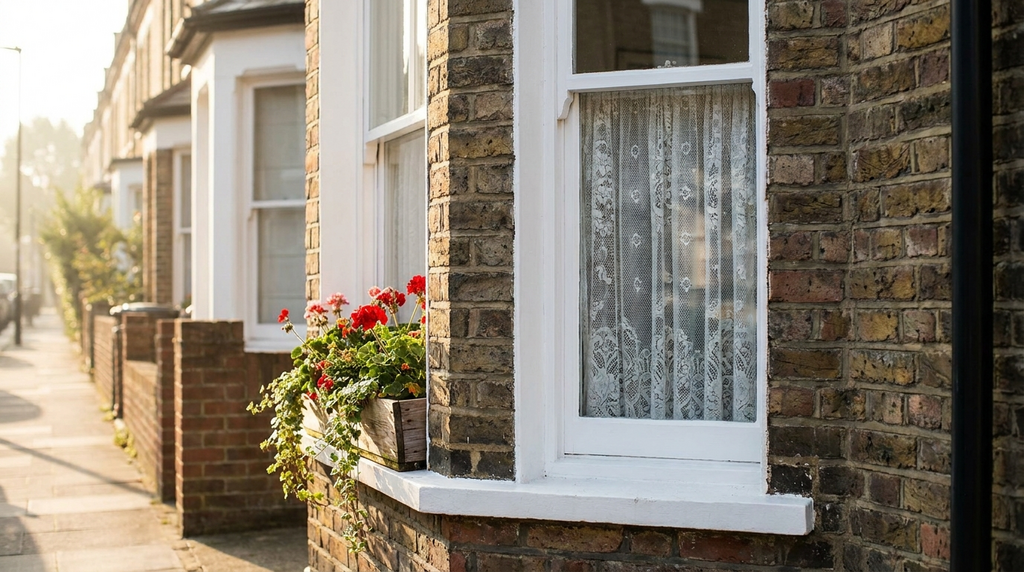
Victorian and Edwardian homes in the town centre often have original sash windows or wooden frames that are now well beyond their useful life. The 1930s semis that make up so much of Market Harborough’s residential streets frequently still have their original metal Crittal-style windows or early replacement double glazing from the 1980s and 1990s, which no longer meets modern thermal performance standards. Large detached homes on newer builds may have adequate glazing already but sometimes have oversized rear extensions with inadequate glazing specifications.
With an average EPC rating of Band C across the town, many homes are performing reasonably well, but moving from the lower end of Band C to a solid B often hinges on window and door upgrades, particularly in older properties.
2026 Costs for Double Glazing in Market Harborough
What You Can Expect to Pay
Double glazing costs in Market Harborough are broadly in line with East Midlands regional pricing, which sits slightly below London and the South East but reflects the town’s reasonable access to Leicester-based installers and regional glazing manufacturers. Prices vary considerably depending on frame material, glass specification, window style, and the size and number of windows being replaced.
Below is a detailed cost comparison table for typical double glazing installations in Market Harborough in 2026. These figures reflect fully installed prices including VAT, disposal of old frames, and FENSA certification.
| Window Type | Frame Material | Per Window (Typical) | Whole House (3-bed semi) | Whole House (4-bed detached) |
|---|---|---|---|---|
| Casement (standard) | uPVC | £400 – £650 | £3,200 – £5,200 | £5,000 – £8,500 |
| Casement (A-rated) | uPVC | £500 – £750 | £4,000 – £6,000 | £6,000 – £10,000 |
| Sash window | uPVC or timber | £800 – £1,400 | £6,400 – £11,200 | £9,600 – £16,800 |
| Bay window | uPVC | £1,200 – £2,200 | £1,200 – £2,200 (single bay) | £2,400 – £4,400 (two bays) |
| Tilt and turn | uPVC or aluminium | £550 – £900 | £4,400 – £7,200 | £6,600 – £10,800 |
| French casement | uPVC or aluminium | £700 – £1,100 | N/A (typically single units) | N/A (typically single units) |
Factors That Affect Your Final Price
Several things will move your quote up or down from the figures above. If your existing frames are rotted or badly fitted, additional preparation work adds cost. Non-standard sizes, common in Victorian properties near the town centre, require bespoke manufacture and push prices higher. Choosing aluminium frames over uPVC typically adds 20–35% to the cost but delivers a slimmer profile and greater durability. Opting for triple glazing rather than double glazing adds approximately 15–25% per window but delivers noticeably better thermal and acoustic performance.
You should always obtain at least three written quotes. Installers serving Market Harborough are typically based in Leicester, Northampton, or Kettering, and travelling time is rarely a significant factor in pricing for this area.
Types of Double Glazing Available
Frame Materials
uPVC frames remain the most popular choice for Market Harborough homeowners and offer the best combination of thermal performance, low maintenance, and value. Modern uPVC comes in a wide range of colours and finishes, including woodgrain effects that work well on traditional properties.
Timber frames are the right choice for period properties, particularly those in conservation areas or with original features worth preserving. They require more maintenance but offer excellent aesthetics and can achieve strong energy ratings when properly specified.
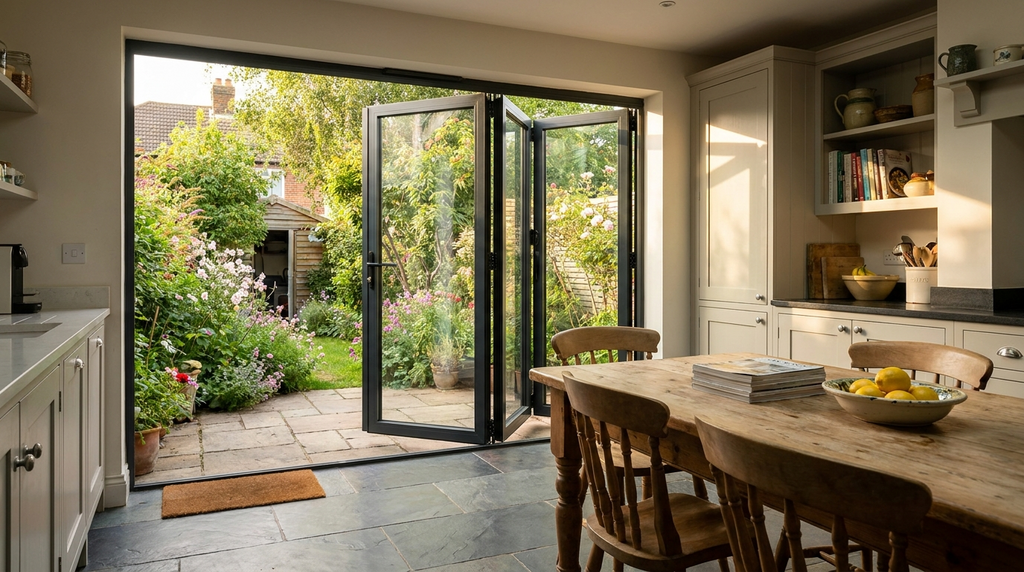
Aluminium frames are growing in popularity for modern extensions and contemporary-style homes. They are slimmer than uPVC, very durable, and suit larger glazed areas well.
Glass Specifications
The glass unit itself makes a substantial difference to performance. For East Midlands conditions, look for the following minimum specifications when buying in 2026. An A-rated or A+ rated window is the recommended standard, as defined by the British Fenestration Rating Council (BFRC). Look for a low-emissivity (low-e) coating on the inner pane, which reflects heat back into the room. Argon gas-filled units are standard and perform significantly better than air-filled alternatives. A warm-edge spacer bar reduces condensation around the window perimeter and improves the overall U-value.
For Market Harborough homes with significant road or railway noise (properties near the A6 or the Market Harborough railway station), acoustic laminated glass in the outer pane is worth the additional cost.
What to Look for in a Market Harborough Double Glazing Installer
Essential Accreditations
The most important accreditation for double glazing installers in the UK is FENSA registration. FENSA (the Fenestration Self-Assessment Scheme) allows registered companies to self-certify that their work complies with Building Regulations, saving you the cost and hassle of applying for a separate Building Regulations certificate. When you sell your home, solicitors will ask for FENSA certificates, without them, you may face delays or queries from buyers.
In addition to FENSA, look for membership of TrustMark, the government-endorsed quality scheme for home improvement trades. TrustMark members have been vetted for technical competence and customer service. The Glass and Glazing Federation (GGF) is another respected trade body, members must meet quality and ethical standards and operate a consumer protection scheme.
Questions to Ask Before Signing
- Are you FENSA registered, and will you provide a FENSA certificate on completion?
- What is the U-value of the units you are proposing, and what BFRC energy rating do they carry?
- What guarantee do you offer on frames and glass units separately?
- Is your guarantee backed by an insurance-backed warranty in case your company ceases trading?
- Do you include removal and disposal of existing frames in the quoted price?
- Can you provide references from recent installations in Market Harborough or nearby?
Reputable installers will answer all of these questions confidently and in writing. Be cautious of any company that pressures you to sign on the day or offers dramatic discounts for immediate commitment.
Government Grants and Funding for Double Glazing in 2026
ECO4 Scheme
The Energy Company Obligation (ECO4) is the UK government’s main scheme for funding home energy improvements for lower-income households. In 2026, ECO4 continues to operate through the major energy suppliers, who are legally obliged to fund improvements in eligible homes. Double glazing is included as a qualifying measure under ECO4 in certain circumstances, typically where it forms part of a broader package of improvements. To be eligible, households generally need to be in receipt of means-tested benefits such as Universal Credit, Pension Credit, or income-based Jobseeker’s Allowance, and the property must be below a certain EPC threshold.
Market Harborough homeowners can check their eligibility through the Energy Saving Trust’s website or by contacting Harborough District Council’s housing team directly.
Great British Insulation Scheme (GBIS)
The Great British Insulation Scheme, which sits alongside ECO4, primarily targets insulation measures but can sometimes include secondary glazing or window improvements where they contribute to broader thermal performance gains. Eligibility is broader than ECO4 and includes households not necessarily on benefits, assessed through a combination of council tax band and EPC rating. Properties in Market Harborough with lower EPC ratings or in council tax bands A to D may qualify.
Harborough District Council Local Schemes
Harborough District Council periodically administers Flexible Eligibility funding under ECO4, which can extend support to households that fall outside the standard national criteria. It is worth contacting the council directly or visiting their website to check whether any local flexible eligibility schemes are currently open. The Midlands Net Zero Hub also coordinates regional retrofit funding that occasionally supports window upgrades as part of whole-house assessments.
The Boiler Upgrade Scheme and VAT
While the Boiler Upgrade Scheme (BUS) does not fund double glazing directly, it is worth knowing that double glazing installed as part of an energy efficiency improvement qualifies for the reduced VAT rate of 0% in 2026, following the zero-rating of energy-saving materials introduced in 2022 and maintained through subsequent budgets. Glazing is standard-rated for VAT at 20%. The zero rate for energy-saving materials covers insulation, heat pumps and solar panels; HMRC names secondary and double glazing as excluded (VAT Notice 708/6). That makes it meaningfully cheaper than it was before this relief was introduced.
How Double Glazing Affects Your EPC Rating
Market Harborough’s average EPC of Band C is encouraging, but many individual homes sit at the lower end of that band or in Band D, particularly older semis and Victorian terraces. Double glazing contributes directly to your EPC score through its effect on the Dwelling Fabric Energy Efficiency (DFEE) calculation, which measures how well your home’s fabric retains heat.
Replacing single glazing with modern A-rated double glazing in a typical three-bedroom semi-detached property can improve an EPC score by 4 to 8 points, which in many cases is enough to move from a low Band D to a mid Band C, or from a low Band C to a solid Band C or even Band B. Upgrading from old inefficient double glazing (units from the 1980s or early 1990s typically have a U-value of around 2.8 W/m²K) to modern units with a U-value of 1.2 W/m²K or below produces a smaller but still meaningful EPC improvement of 2 to 5 points.
A stronger EPC has practical financial implications beyond energy savings. Mortgage lenders increasingly offer preferential green mortgage rates for properties in Band B or above, and estate agents in the Harborough area report that buyers actively seek out higher EPC-rated homes, with better-rated properties typically achieving a premium of 3–6% over otherwise equivalent homes in lower bands.
Planning Considerations for Market Harborough
Conservation Areas in the Town
Market Harborough has a designated Conservation Area covering the historic town centre, including streets around the Church of St Dionysius and the old grammar school. If your property falls within this area, you may need to apply for planning permission before replacing windows, particularly if you are changing the style, material, or appearance of the frames. In conservation areas, like-for-like replacements in traditional materials are usually acceptable, but switching from timber to uPVC may require consent.
You can check whether your property falls within the Market Harborough Conservation Area boundary using the Harborough District Council planning portal. If in doubt, contact the council’s planning team before commissioning any work, it is far easier to seek guidance in advance than to deal with an enforcement notice after installation.
Listed Buildings
A number of properties in Market Harborough are listed buildings, particularly in the town centre and in the surrounding villages that fall under Harborough District. Listed building consent is required for any works that alter the character of a listed building, and window replacements almost always require this consent. FENSA registration does not exempt you from listed building consent requirements. For listed properties, secondary glazing, fitted inside the existing window reveal, is often the most practical solution, as it preserves the original window while delivering significant thermal improvement.
Standard Permitted Development
For the majority of Market Harborough homeowners in standard residential properties outside conservation areas, window replacement is covered by permitted development rights and does not require planning permission. However, you must still comply with Building Regulations, which is precisely why FENSA registration matters.
Expected Savings and Payback Period
Energy Savings in Real Terms
The Energy Saving Trust estimates that replacing single glazing with A-rated double glazing in a typical semi-detached property in England saves approximately 330–500