Why Tenby Homeowners Are Taking Double Glazing Seriously Right Now
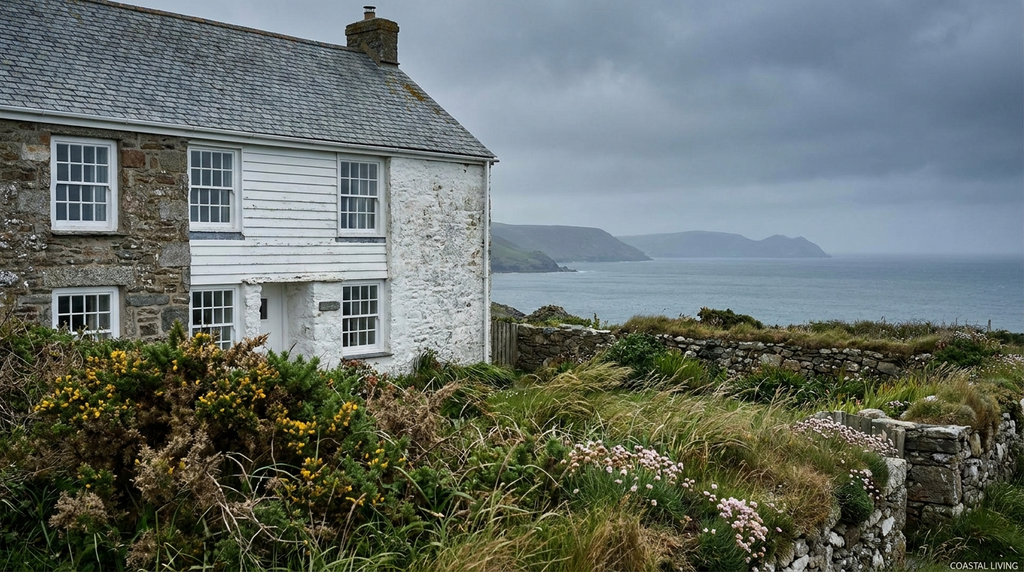
There’s something particular about living on the Pembrokeshire coast that concentrates the mind for windows. If you’ve spent a winter in Tenby, you’ll know exactly what we mean, those Atlantic westerlies that come sweeping in off the sea, the driving rain that hammers against the front of your Victorian terrace on North Beach Terrace or upper Tudor Square, and the persistent damp chill that can make a draughty window feel like a genuine enemy.
Tenby sits right on Carmarthen Bay, and that coastal exposure is the single biggest driver of double glazing demand here. Old single-glazed sash windows, common in the town’s substantial stock of Georgian and Victorian properties, were simply never designed for the rainfall levels Tenby receives, up to 2,000mm per year in the wettest seasons, driven almost horizontally by prevailing southwesterly winds.
On top of the weather, Tenby’s average EPC rating sits at Band D, exactly the UK national average, which means most homes here have real, measurable room for improvement. With energy bills still biting hard in 2026, upgrading to quality double glazing is one of the most visible and immediately impactful steps you can take. And with Wales-specific funding schemes available to eligible homeowners, there’s never been a better moment to seriously consider it.
What Double Glazing Actually Involves for a Typical Tenby Home
Tenby’s housing stock is fascinating from an installer’s perspective, and not always in a straightforward way. The town centre and surrounding streets are dominated by terraced and semi-detached properties built predominantly between 1850 and 1930, with a secondary cluster of post-war semis on the outskirts toward the Narberth Road area and more recent estates edging toward Penally.
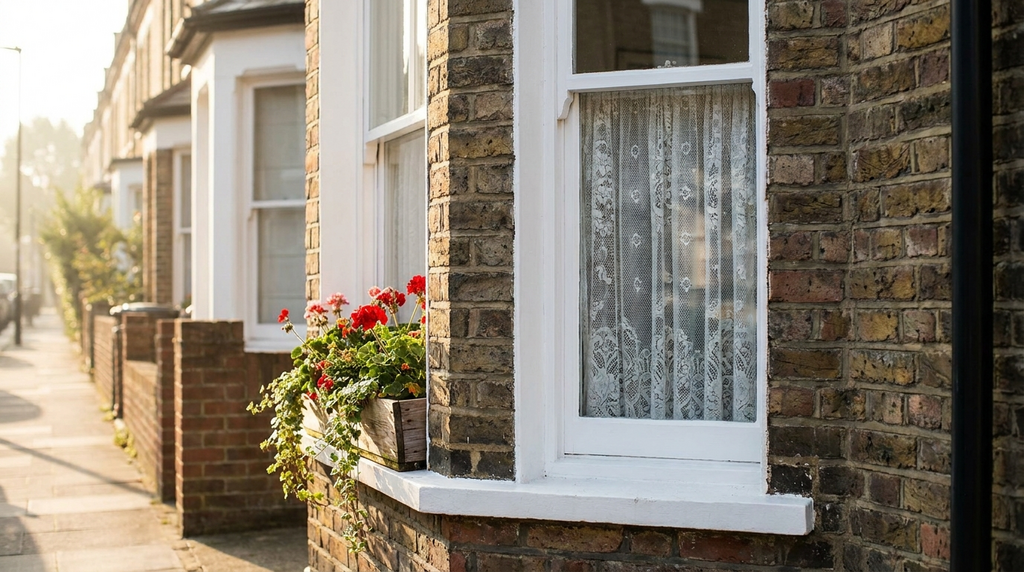
For those Victorian and Edwardian terraces, think the tall, narrow three-storey townhouses that line the seafront and the upper town, double glazing installation comes with some specific considerations:
- Original timber frames, Many period properties still have their original timber sash or casement frames. These need careful measurement and often bespoke sized units rather than standard off-the-shelf windows
- Solid stone and rubble-fill walls, Tenby’s older properties are built from local limestone and sandstone rubble, which means the window reveals can be unusually deep and irregular, requiring custom liners or subframes
- Access challenges, Upper-floor windows on three-storey seafront properties often require scaffolding or tower systems, which adds meaningfully to your cost
- Conservation area restrictions, A significant portion of central Tenby sits within a designated conservation area and within the Pembrokeshire Coast National Park, which imposes real constraints on what you can install and how it must look
For the post-war semis further out from the centre, many built with standard cavity brick construction, the job is typically more straightforward. UPVC frames are usually acceptable in these locations, measurements tend to be more regular, and access is simpler. Installers can often complete a four-bedroom semi in two days.
One thing worth knowing: because Tenby is a relatively small town of around 5,000 residents, most installers will be coming from Haverfordwest (23km), Milford Haven (24km), or occasionally Carmarthen (33km). That travel time factors into quotes, and you should expect it to show up as a modest premium compared to what homeowners in those larger towns might pay.
How Much Double Glazing Costs in Tenby and the Wales Area in 2026
Let’s get straight to numbers, because vague estimates help nobody. The figures below reflect typical 2026 installation costs for Tenby properties, including standard labour but excluding any specialist access equipment or conservation area upgrades. Always get three quotes, prices vary more here than in larger urban centres.
| Property Type | Number of Windows | Standard UPVC Double Glazing | Timber-Effect UPVC | Aluminium Frames |
|---|---|---|---|---|
| Mid-terrace (2 bed) | 6–8 | £3,400–£4,800 | £4,200–£5,800 | £5,500–£7,200 |
| End-terrace (3 bed) | 8–10 | £4,200–£5,800 | £5,200–£7,000 | £6,800–£9,000 |
| Semi-detached (3 bed) | 10–12 | £5,000–£6,800 | £6,200–£8,400 | £8,200–£11,000 |
| Period townhouse (3–4 storey) | 12–16 | £6,800–£9,500 | £8,500–£12,000 | £11,000–£16,000 |
| Add for scaffolding (upper floors) | , | £400–£900 | £400–£900 | £400–£900 |
| Conservation area/heritage specification | , | Add 20–35% | Add 15–25% | Add 10–20% |
Compared to the Wales average, Tenby homeowners typically pay around 8–12% more per window unit. This reflects both the travel costs from installers based in Haverfordwest or Milford Haven, and the higher proportion of complex older properties requiring non-standard solutions. Homeowners in Carmarthen, for example, benefit from a larger pool of local installers competing for work, which naturally suppresses prices.
Even so, Tenby properties, particularly the seafront terraces, tend to have well-above-average resale values, meaning the investment-to-value ratio for double glazing remains strong here compared to many Welsh towns.
How Tenby’s Weather and Location Affect Your Double Glazing Choices
This is where living in Tenby genuinely changes the conversation. Most double glazing advice you’ll read online is written for the Midlands or the Southeast, and it simply doesn’t translate well to a southwest-facing coastal town on Carmarthen Bay.
Here’s what the Tenby climate actually means for your windows:
- Salt air and corrosion, Properties within 200–300 metres of the beach (and in Tenby, that’s a lot of them) are exposed to salt-laden sea air year-round. This is genuinely damaging to certain frame materials and seals over time. UPVC handles this reasonably well, but cheaper aluminium powder coatings can deteriorate without marine-grade specification
- Driving rain resistance, With rainfall up to 2,000mm per year and prevailing westerlies, your windows need to be rated to a high weather performance class. Look specifically for BS 6375 weather performance ratings, Class 4 or above for wind resistance and exposure category E for water tightness on west-facing elevations
- Thermal performance matters less here than elsewhere, Tenby has milder winters than most of the UK, with only around 1,200–1,500 heating degree days per year. That doesn’t mean U-values don’t matter, but it does mean the payback from ultra-premium triple glazing is harder to justify on heating savings alone compared to, say, a property in Wrexham or the Brecon Beacons
- Solar gain is a genuine plus, Tenby enjoys some of the best solar irradiance in Wales at 1,100–1,200 kWh per square metre per year. South and southwest-facing windows can capture useful passive solar heat in winter if you choose glass with an appropriate solar heat gain coefficient (SHGC). Don’t let an installer talk you into solar-control glass on south-facing windows without thinking this through carefully
One thing that catches Tenby homeowners out: the wind-driven rain index for Pembrokeshire is among the highest in Wales. Poorly sealed or lower-specification windows will show water ingress within just a few winters here, even if they’d perform adequately in drier parts of the UK.
The Products and Options That Actually Perform Well Here
Based on the specific conditions in Tenby, coastal exposure, high rainfall, mild winters, and a stock of older properties, here’s what genuinely works best:
For the Victorian and Edwardian Terraces in the Town Centre
Slim-profile timber-effect UPVC in white or cream is usually the sensible choice where conservation restrictions don’t apply or are limited. It looks sympathetic to the period character, handles the salt air well, and sits within most budgets. Specify a minimum 28mm double-glazed unit with warm-edge spacer bars, these dramatically reduce condensation on the inner pane, which matters in Tenby’s damp winters.
For Properties Within the Conservation Area or National Park
You’re looking at either genuine slim-profile timber frames with modern sealed units (expensive but often the right answer), or high-quality aluminium with marine-grade powder coating in a colour approved by Pembrokeshire Coast National Park Authority. Some installers offer a ‘heritage’ UPVC that mimics traditional sash proportions convincingly, these have become significantly more accepted by planning officers in recent years.
For Post-War Semis Toward Narberth Road and Penally
Standard UPVC with A-rated or A+-rated sealed units is perfectly appropriate and cost-effective. Specify low-E (low emissivity) glass as standard, it’s barely any premium over uncoated glass and makes a meaningful difference to U-values. A 1.2 W/m²K or better centre-pane U-value is achievable at reasonable cost and is what to ask for.
What to Avoid
- Budget aluminium frames without marine-grade coating, they’ll show their age within five years this close to the sea
- Triple glazing unless you have a very specific reason, the extra cost is hard to recoup through heating savings in Tenby’s mild climate
- Solar-control or tinted glass on south or southwest-facing windows, you want that winter sun coming in, not blocked out
How to Find a Trustworthy Double Glazing Installer Near Tenby
Finding a quality installer when you live in a town of 5,000 people requires a slightly different approach than in a city. There isn’t a huge pool of Tenby-based glazing companies, most of your options will be firms operating out of Haverfordwest, Milford Haven, or occasionally as far as Carmarthen or Llanelli (37km away), who cover Tenby as part of their wider territory.
This isn’t necessarily a problem, many of these companies have decades of experience working with Pembrokeshire’s coastal properties. But it does mean you need to be proactive about vetting them properly.
Certifications to look for:
- FENSA registered, This is the key accreditation for replacement window installers in Wales. A FENSA-registered installer self-certifies that their work meets Building Regulations, and you receive a certificate that’s important when you sell your home
- TrustMark, Government-endorsed quality scheme. Worth checking even if not strictly required for windows
- Which? Trusted Trader, Independent vetting and review monitoring, useful for a smaller market like Tenby where word-of-mouth can be limited
Questions worth asking any installer:
- Have you worked on properties in Tenby’s conservation area before, and what was the outcome with Pembrokeshire Coast National Park Authority planning
- What weather performance class are the units you’re proposing, specifically for west-facing elevations
- How do you handle salt air exposure in your frame and hardware specifications
- What is your typical lead time for a job in Tenby
- What does your warranty cover and how do I make a claim if you’re based in Haverfordwest
Lead times from reputable installers across the Haverfordwest-Milford Haven corridor are currently running at four to eight weeks in 2026 for a standard residential job. Budget accordingly if you’re trying to get work done before a specific date.
Grants and Funding That Could Reduce Your Costs in 2026
Here’s where living in Wales genuinely works in your favour. The funding landscape for Tenby homeowners is meaningfully different, and in some ways more generous, than for equivalent properties in England.
Warm Homes Nest (Wales)
This is the Welsh Government’s flagship scheme for low-income households and remains the most directly relevant for many Tenby residents. Nest can fund free energy efficiency improvements, including windows, for households receiving qualifying benefits (such as Universal Credit, Pension Credit, or Child Tax Credit) or with a low income and a home rated below EPC Band C. Given that Tenby’s average EPC sits at Band D, a significant number of local households will qualify. Apply through the Nest website or call 0808 808 2244, it’s a free, impartial service.
ECO4 (Great Britain Scheme)
ECO4 runs alongside Nest in Wales and is delivered through energy suppliers. It targets fuel-poor and low-income households in properties with EPC ratings of D or below, which again covers much of Tenby’s housing stock. Double glazing can be funded as part of a broader package of measures under ECO4, though it’s rarely funded as a standalone measure. If you’re replacing windows alongside insulation, ECO4 is worth investigating.
GB Insulation Scheme (GBIS)
The Great British Insulation Scheme closed on 31 March 2026. It funded insulation measures only and never covered windows or glazing.
Self-Funding with VAT Considerations
If you’re not eligible for grant funding, budget for VAT at 20%. Double glazing is standard-rated across the UK, Wales included. Glazing is standard-rated for VAT at 20%. The zero rate for energy-saving materials covers insulation, heat pumps and solar panels; HMRC names secondary and double glazing as excluded from it (VAT Notice 708/6, checked August 2026). It’s worth a call to their housing team if you’re uncertain what you might qualify for.
Planning Permission and Regulations in Tenby, What You Actually Need to Know
This is where Tenby gets more complicated than most Welsh towns, and it’s worth understanding properly before you commit to anything.
For most standard residential properties in Wales, replacing windows with equivalent double glazed units falls under permitted development, meaning no planning permission is needed, provided