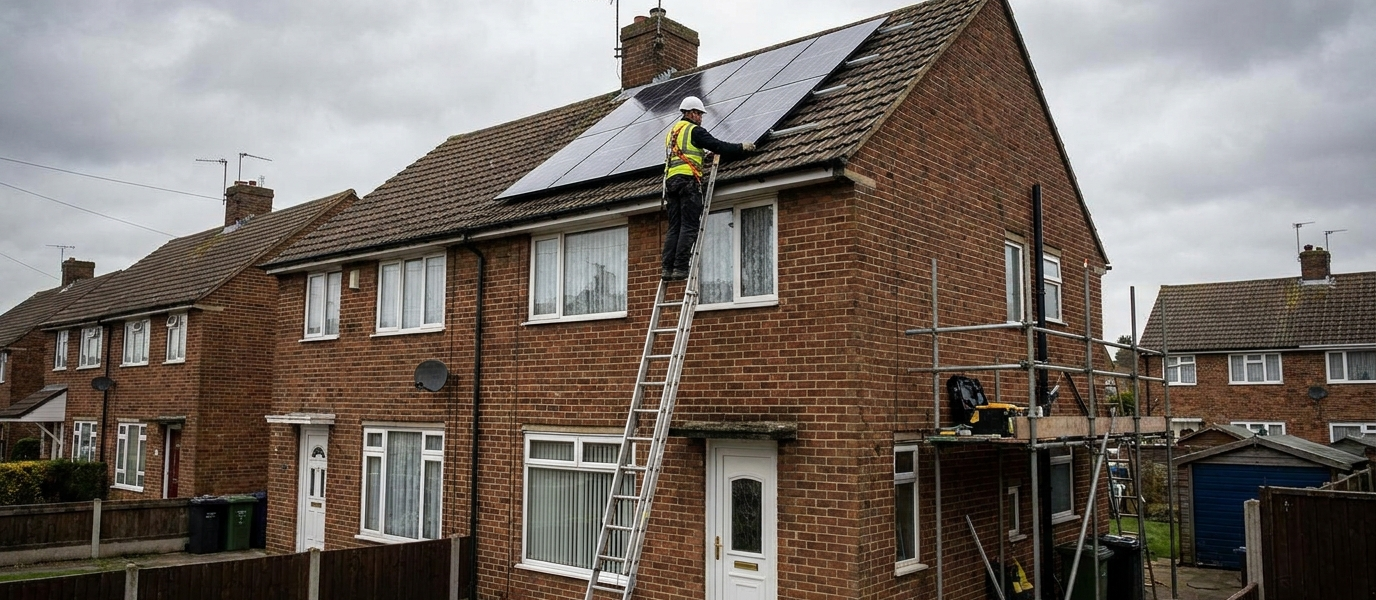
More than 2.5 million UK households live in fuel poverty, spending a double-digit share of their income on energy. The government’s ECO4 scheme, which offers free solar panels to some of them, has become a lifeline, but confusion about who qualifies is widespread. As reported by The Independent, the scheme is often misunderstood as being universally available. It is not.
Who qualifies, and who doesn’t
ECO4 is not a universal handout. Eligibility is tied to means-tested benefits: Universal Credit, Pension Credit, Income Support, Jobseeker’s Allowance, Housing Benefit, Child Tax Credit (with income below £17,005), or Working Tax Credit (with income below £17,005). The property must have an EPC rating of D, E, F, or G, homes already rated C or above are excluded. Owner-occupiers and private tenants can apply, but landlords must contribute up to one-third of the cost for rented properties.
The catch is scale. The Energy Saving Trust estimates that a typical 3-bed semi with 3 kW of solar panels saves around £270 a year on electricity bills. But ECO4 grants are not cash payments; they cover installation costs, which average £4,000–£6,000 for a standard system. Ofgem, which administers the scheme, confirmed that funds are allocated to energy suppliers, who then contract installers. Households cannot simply pick a panel brand or installer, they must use one approved by their supplier.
What it costs a typical 3-bed semi
For a qualifying household in a 3-bed semi using 3,500 kWh of electricity per year, a 3.5 kW solar PV system could cut the annual bill by roughly 40%. That’s about £270 saved, based on the current price cap of 24.5p per kWh. Over the system’s 25-year lifespan, total savings exceed £6,700, more than the installation cost. But the real-world benefit depends on orientation, shading, and how much daytime occupancy there is.
The scheme covers more than solar. ECO4 requires a whole-house approach: before panels go up, an assessor must evaluate insulation, heating, and draught-proofing. Many installations bundle solar with loft or cavity-wall insulation, or a new boiler. That can push the total grant value to £10,000 or more, but it also means the process takes months, not weeks.
How to apply, and the ticking clock
Applications go through your energy supplier or a certified ECO4 installer registered with Ofgem. The government’s Simple Energy Advice service (gov.uk/eco) provides a postcode checker. But there is a hard deadline: the scheme closes on 31 March 2026. Installations must be completed by that date, and suppliers are already reporting that funds in some regions are fully allocated.
Households on standard variable tariffs can apply now. Those with prepayment meters or in off-gas-grid homes may face longer waits, as suppliers prioritise cheaper-to-treat properties. If you are on Pension Credit or Child Tax Credit, check eligibility immediately, the average processing time from assessment to installation is 12–16 weeks.
What to do by when
Check your EPC rating on gov.uk. If it is D or below and you receive one of the qualifying benefits, contact your energy supplier today. Ask for an ECO4 assessment, there is no cost. If your supplier declines, try another: all major suppliers (British Gas, EDF, E.ON, Octopus, Scottish Power, OVO) must participate. The clock is ticking: after March 2026, the next scheme, ECO5, may have different rules and likely tighter budgets.
Frequently Asked Questions
You qualify if you own or privately rent a home with an EPC rating of D, E, F, or G and receive means-tested benefits like Universal Credit, Pension Credit, Income Support, or Child Tax Credit with income below £17,005. The scheme is not universal, so eligibility is strictly benefit-linked.
For qualifying households, ECO4 covers the full installation cost, which averages £4,000–£6,000 for a standard 3.5 kW system on a 3-bed semi. There's no cash payment to you, the grant pays the installer directly through your energy supplier.
A typical 3-bed semi using 3,500 kWh per year could save around £270 annually, based on the current price cap of 24.5p per kWh. Over the system's 25-year lifespan, total savings exceed £6,700, more than covering the installation cost.
The ECO4 scheme closes on 31 March 2026, and all installations must be completed by that date. Some regional funds are already fully allocated, so if you're on Pension Credit or Child Tax Credit, check eligibility now, processing takes 12–16 weeks.
No, you cannot pick your own installer or panel brand. Your energy supplier contracts approved installers, and you must use one from their list. The scheme also requires a whole-house assessment for insulation and heating before panels are installed.


