Gas standing charges will be scrapped for around 23 million households, Energy Secretary John Healey has announced, with a separate £100 energy payment for millions more. The Guardian broke the standing-charge story on 28 October; The Guardian puts the figure at 23m homes. GB News reports the £100 payment as a distinct measure (GB News), while a widely shared Facebook post sums it up as “major changes to energy bills” without the detail.
The two measures are being reported together, but they are not the same thing. The £100 is a one-off payment, cash in, once. The standing-charge change is structural: it rewrites how every gas bill in Great Britain is calculated, and it will still be shaping your direct debit long after the £100 has been spent.
What the standing-charge change actually does
Every gas bill carries two numbers. The unit rate, in pence per kWh, pays for the gas itself. The standing charge, in pence per day, pays for the pipe, the meter and the network, whether you use any gas or not. A typical dual-fuel household pays roughly 30p a day for gas standing charges, which is about £110 a year before a single kilowatt-hour is burned.
Healey’s plan removes that fixed daily charge and recovers the same money through the unit rate instead. The total revenue the networks collect does not change; the way it is split across households does. The Guardian’s reporting frames this as relief for households who barely use their boiler. It is, but only for them.
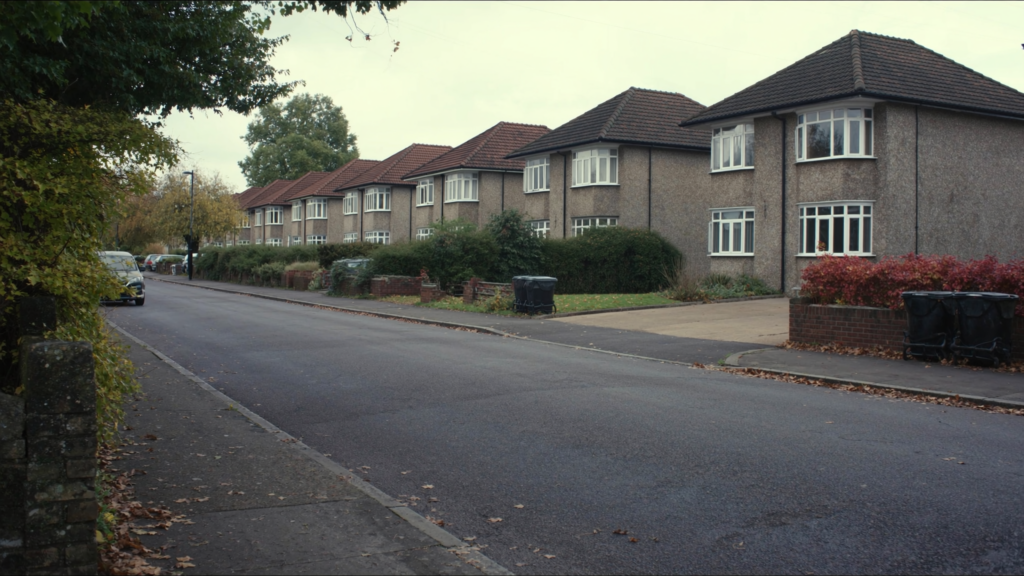
The distributional effect is straightforward arithmetic. A two-person household in a well-insulated flat using 4,000 kWh of gas a year currently pays around £110 in standing charges plus roughly £240 in unit charges. Fold the fixed cost into the unit rate and their unit price rises, but their total falls, because they were paying a fixed charge designed around a much larger user. A family in a poorly insulated 1930s semi using 18,000 kWh does the opposite: their unit rate goes up on every one of those 18,000 kWh, and their bill rises.
What it costs a typical 3-bed semi
Take a gas-heated 3-bed semi using 12,000 kWh a year, close to the Ofgem typical domestic consumption figure. At current capped rates, that household pays about £110 in gas standing charges and about £720 in unit charges, so roughly £830 before VAT. Under a revenue-neutral shift, the £110 is redistributed into the unit rate. If the same £110 is spread across 12,000 kWh, the unit rate rises by roughly 0.9p per kWh. That household’s total bill is broadly unchanged, but only because it sits near the average.
Households below about 10,000 kWh gain. Households above about 13,000 kWh lose. That is the whole policy in one sentence, and it is the sentence the announcements have not emphasised.
The £100 payment is separate and simpler. GB News reports it as a payment to millions of households; the eligibility detail has not been published in the coverage reviewed here, and officials have not confirmed the application mechanism or the payment date. Treat it as a one-off credit, not a tariff reform, and do not build a budget around it.
The catch: efficiency upgrades get harder to justify
Here is the part the headlines miss. The standing charge is the single strongest financial argument for insulating a home. It is the money you pay for the privilege of being connected, and it does not fall when you use less gas. Remove it, and every kilowatt-hour you save through loft insulation, cavity wall insulation or new glazing is worth slightly less, because the fixed component you were also avoiding has gone.
Run the numbers on a typical loft-top-up. Insulating a poorly insulated 3-bed semi to 300mm can cut gas use by around 1,500 kWh a year. At today’s unit rate that is roughly £90 saved annually, against an installed cost of £300–£500, a payback of four to five years. Under the new structure, the unit rate rises but the standing charge disappears; the saving on that 1,500 kWh is slightly larger per unit, but the household has lost the fixed-charge saving that used to make the case. Net effect: broadly neutral for a heavy user, negative for a light one.
The same logic bites harder on heat pumps. A well-installed air-source heat pump on a 3-bed semi can cut running costs against a gas boiler, but that calculation depends on the gas unit rate and the electricity unit rate. If gas unit rates rise to absorb the standing charge, the heat pump case improves slightly. The Boiler Upgrade Scheme grant, £7,500 towards an air-source installation, remains the largest single lever, and it is unaffected by this announcement.
EPC ratings, MEES and the rental trap
None of this changes the regulatory timeline. Landlords in England and Wales still face the requirement for EPC band C on new tenancies, and the cost cap and enforcement detail remain the subject of consultation. But the standing-charge reform interacts with it in a way worth flagging: a landlord weighing up whether to insulate to band C now faces a slightly weaker running-cost argument for doing so, at exactly the moment the compliance argument is getting stronger. The compliance case wins, but the numbers are less flattering than they were a month ago.
For owner-occupiers, the practical read is this. If your home is already at EPC C or above and your gas use is low, the standing-charge change is a modest win. If your home is at EPC D or E and your gas use is high, you are likely to be a net payer under the new structure, and the case for fabric improvements, glazing and draught-proofing is now about comfort and compliance rather than a quick payback.
What to do before the change lands
First, find your actual annual gas consumption in kWh on your last bill or in your supplier’s app. Not the direct debit, the kWh. That single number tells you whether you are a winner or a loser under this reform, and it takes two minutes to find.
Second, if you are above roughly 13,000 kWh, get a fabric survey before you consider a heat pump. A registered installer will tell you whether your walls, loft and glazing are costing you more than the tariff change will. The Energy Company Obligation (ECO4) and the Great British Insulation Scheme remain open for eligible households on means-tested benefits or in lower council tax bands, check eligibility through your supplier or gov.uk before assuming you will not qualify.
Third, if you are considering a heat pump, apply for the Boiler Upgrade Scheme through an MCS-certified installer now rather than waiting for the tariff detail. The grant is £7,500 for air-source, the application is made by the installer, and the scheme has a fixed budget that has run short before. The standing-charge reform will not change the grant; it may change the running-cost maths by a few tens of pounds a year, which is not a reason to delay.
Finally, watch for the consultation. The Guardian’s reporting sets out the direction; the mechanism, whether the charge is removed outright or replaced with a lower fixed element, and from what date, has not been confirmed. Households on prepayment meters and those in rented accommodation should check the detail carefully when it is published, because the distributional effects are largest at the low-use end, where those groups are over-represented.
Frequently Asked Questions
Only if you use less gas than the average household, roughly under 10,000 kWh a year. The fixed charge is being moved into the unit rate, so total revenue to the networks is unchanged. Light users gain, heavy users pay more, and households near the 12,000 kWh average are broadly neutral.
No. The £100 is a one-off payment reported by GB News. The standing-charge change is a permanent restructuring of how gas bills are calculated. Eligibility, timing and the application mechanism for the £100 have not been confirmed in the coverage reviewed.
No. The Boiler Upgrade Scheme grant of £7,500 for air-source heat pumps is unchanged, and the EPC band C requirement for rented homes is unaffected. The reform slightly changes the running-cost case for efficiency upgrades, but not the grants or the regulations.