The room that never felt quite right
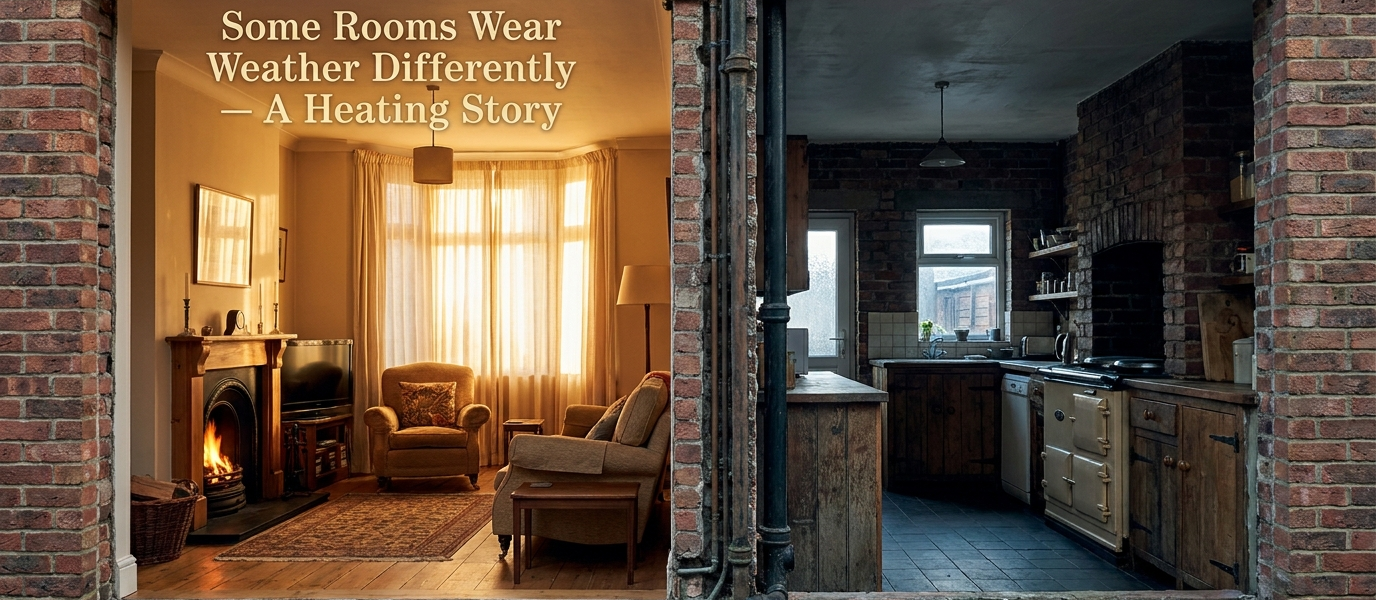
You know the one. The north-facing study that stays stubbornly cool long after the rest of the house has shrugged off the morning chill. Or the south-west extension that bakes in the afternoon while the hallway shivers. It’s the room where you keep a folded blanket on the armchair, the one you avoid in winter unless absolutely necessary.
This isn’t a thermostat problem. It’s not a boiler problem either. It’s a personality quirk of your home, a quirk that has nothing to do with the numbers you dial on the wall. The house isn’t broken. It’s just speaking a different language, and until you learn that language, you’ll keep chasing warmth room by room.
Before chasing warmth room by room
The makeshift fixes pile up over time. A space heater in the study that hums and costs a fortune to run. The door to the extension kept firmly shut to trap what little heat it holds. Rugs layered in certain spots, not for style, but because the floorboards radiate cold in a way the radiator can’t counter. And that one radiator in the spare room that hisses like a kettle but barely warms the air.
You resent it. You resent the energy bills, the draughts, the way your home seems to fight itself. But here’s the quiet realisation: the house isn’t malfunctioning. It’s telling you about its construction, its orientation, its history. The cold study faces north and has a single-pane sash window from 1905. The extension was built with a glass roof and no thought to thermal mass. These aren’t failures. They’re clues.
The moment the house started to make sense
Then a heating engineer or surveyor walks through your home, and everything shifts. They point to the north-facing wall and explain that it never sees direct sunlight, so it stays cold longer. They tap the window and note the draught. They trace the pipe run from the boiler and show you why the radiator in the study gets lukewarm water last, after every other room has had its fill.
Suddenly, the frustration dissolves into understanding. You begin to see your home through a new lens: the way the sun tracks across the rooms, the thickness of the walls, the gaps around the skirting boards. The house isn’t stubborn. It’s honest. And once you know why some rooms wear weather differently, you can start to soften them, not with brute force, but with small, thoughtful acts.
Eight ways to soften a stubborn room
- Install zoning controls. Split your heating system into zones so the cold study gets more heat when it needs it, without overheating the rest of the house. A simple room thermostat for the problem area can work wonders.
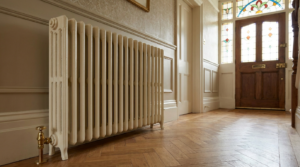
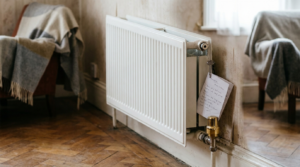
- Swap the radiator. A single-panel radiator in a north-facing room might be undersized. A double or even triple-panel model, or a vertical radiator that maximises surface area, can transform the room’s warmth.
- Add reflective panels. A sheet of foil-backed insulation behind the radiator reflects heat back into the room instead of letting it soak into the external wall. Cheap and surprisingly effective.
- Draught-proof everything. Windows, doors, letterboxes, keyholes. A simple brush strip on the bottom of the study door stops cold air from the hallway seeping in.
- Hang thermal curtains. Heavy, lined curtains that fall to the floor trap heat and block draughts. Pull them closed at dusk and open them when the sun hits the window.
- Reposition furniture. A sofa pushed against a radiator absorbs heat before it reaches the air. Pull it away by a few inches and let the warm air circulate.
- Fit a smart TRV. A thermostatic radiator valve that learns your schedule and adjusts the flow room by room. The study gets a boost in the morning; the bedroom stays cooler at night.
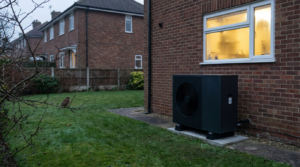
- Check for blocked airflow. Furniture, curtains, or clutter pressing against the radiator or blocking the air intake on a heat pump system can strangle the heat output. Give every heat source room to breathe.
Each of these is a small act of care. None requires a full system overhaul. But together, they shift the balance from fighting your home to working with it.
Why texture matters more than temperature
Here’s the part that surprises most people: you can make a room feel warmer without raising the thermostat a single degree. It’s not magic. It’s material science, applied gently.
Heavy wool rugs on a wooden floor trap a layer of air beneath your feet. Velvet cushions hold heat against your back. Linen curtains, not the sheer kind, but the thick, stonewashed type, slow the movement of cold air from the window. A chunky throw on the armchair invites you to sit down and stay, even when the room is still warming up.
The sensory payoff is immediate. The room begins to feel enveloping, protective. Your body registers the softness, the weight, the quiet warmth. The thermostat hasn’t moved, but your perception of the room has shifted entirely. This is the human gain: comfort that arrives without a fight.
After a house that holds its heat evenly
The lived result is almost anticlimactic in its simplicity. No more cold spots. No more juggling space heaters or resenting the radiator in the study. The morning routine becomes predictable: you walk into the study, and it’s warm. Not hot, not stuffy, just comfortably, evenly warm. The extension no longer overheats in the afternoon because the zoning control dials it back. The hallway, once a draughty corridor, now holds its own.
The quiet satisfaction comes from knowing the house finally matches its own rhythm. You don’t have to think about it anymore. You just live in it. The study, the room you used to avoid, is now where you want to sit in the afternoon with a book, watching the light fade through the old sash window.
What the house taught me about itself
In the end, the lesson was simple: a home is not a machine to be fixed. It’s a living thing with its own logic, its own quirks, its own language of heat and cold. The draught under the back door isn’t a failure. It’s the house telling you where the air moves. The radiator that takes ten minutes longer to warm up isn’t broken. It’s the house asking you to be patient.
Once you start listening, really listening, the house begins to cooperate. The stubborn corners soften. The cold spots fade. What was once a collection of separate climates becomes a single, breathing space. And that, more than any thermostat setting, is what makes a home feel like home.