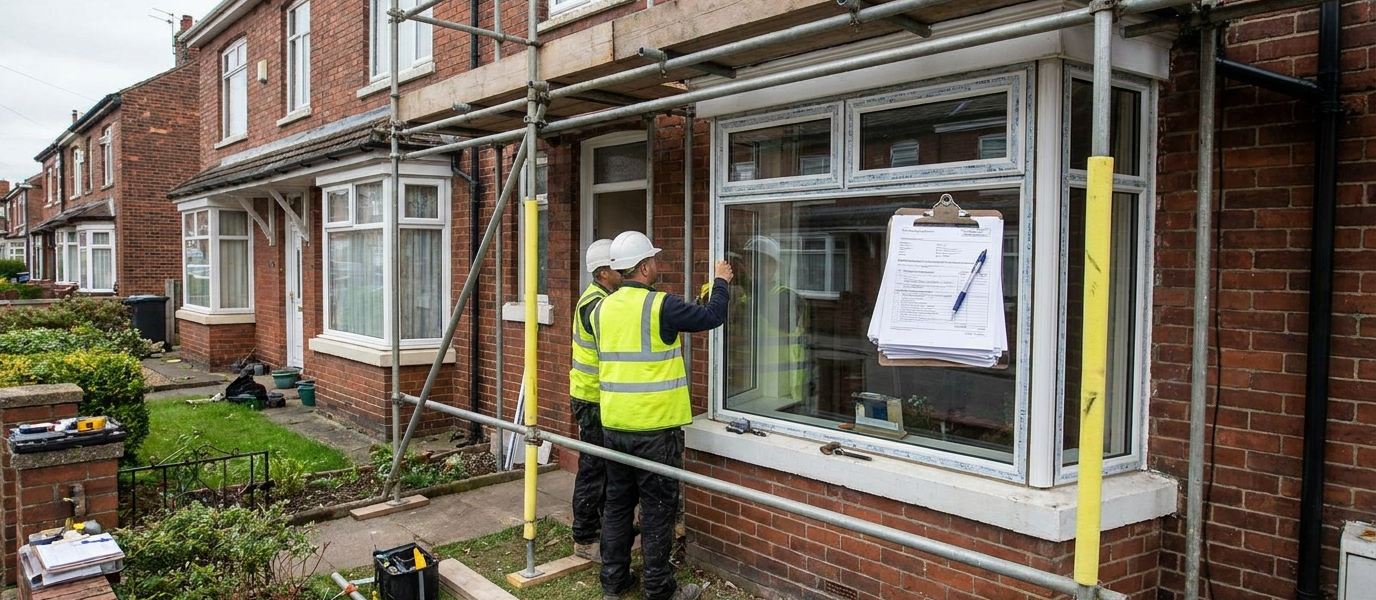
The 30% carbon reduction target became mandatory for new homes in June 2022, and it is already reshaping what a British house looks like. Part L 2021, the updated building regulation for energy efficiency, is now the baseline that every new home, extension, and major renovation must meet. For homeowners, the change is not abstract: it dictates the thickness of your insulation, the type of windows you can install, and whether your boiler will pass the final inspection.
As reported by Planning, Building & Construction Today, the practical challenge is bridging the gap between design-stage energy modelling and what actually happens on site. For the homeowner, that gap can mean the difference between a compliant home and a costly retrofit after the fact.
Who qualifies, and who doesn’t
Part L 2021 applies to any building work that requires a building notice or full plans submission. That includes new houses, extensions of any size, loft conversions, and renovations where you replace more than 25% of the existing fabric (walls, roof, floor). If you are simply redecorating or replacing a like-for-like boiler, you are exempt. But if you are adding a rear extension or converting a garage into a habitable room, the new standards bite.
The key metric is the Target Fabric Energy Efficiency (TFEE) and Target Emission Rate (TER). Your architect or energy assessor must show that the proposed design meets both. For a typical 3-bed semi, that means wall U-values around 0.18 W/m²K (down from 0.28), roof U-values of 0.11, and floor U-values of 0.13. Windows must achieve 1.2 W/m²K or better, effectively mandating double or triple glazing with low-E coatings.
What it costs a typical 3-bed semi
Higher fabric standards push up build costs. Industry estimates suggest an extra 5–15% on insulation and glazing for a new home, or roughly £3,000–£8,000 on a £200,000 build. For an extension, the premium is smaller but still real: better insulation and triple-glazed roof lights can add £1,000–£2,500. The trade-off is lower running costs. A Part L 2021-compliant home typically uses 25–30% less heating energy than one built to the previous 2013 standards, saving around £200–£350 a year on gas bills at current prices.
The catch is that building control officers are now checking these numbers on site. If your builder installs a cheaper insulation product that achieves a U-value of 0.21 instead of 0.18, the whole wall fails compliance. That means a redesign, a new energy calculation, and potentially a delay. The article from Planning, Building & Construction Today highlights exactly this tension: the design model assumes perfect installation, but real-world thermal bridging can degrade performance by 10–20%. Homeowners should ask their builder for a ‘thermal bridge’ strategy upfront, it is not optional under Part L.
Heat pump readiness and the future of heating
Part L 2021 does not ban gas boilers, but it nudges the whole system toward lower flow temperatures. New homes must be designed for ‘future heat pumps’, meaning pipework sized for 55°C flow rather than 80°C, and space allocated for a hot water cylinder. If you are building now, installing a heat pump from the start is often cheaper than retrofitting later. The Boiler Upgrade Scheme offers £7,500 off the installation cost, and the new home’s fabric efficiency means a smaller, cheaper heat pump will suffice.
For homeowners planning a major renovation, the same logic applies. Replacing a boiler with a like-for-like gas model is still allowed, but if you are stripping walls back to brick anyway, the extra cost of upgrading insulation to Part L standards is marginal compared to the lifetime savings. Energy Saving Trust data shows that a well-insulated 3-bed semi with a heat pump can cut heating bills by 40–50% versus an old gas boiler in a leaky house.
The bottom line: Part L 2021 is not a minor tweak. It raises the floor for energy performance and forces builders and homeowners to think about thermal bridging, airtightness, and heating system design from day one. The practical advice from the construction press is clear: get an accredited energy assessor involved before you submit plans, and ask your builder for a written commitment to the target U-values. The cost of getting it wrong, a failed building control inspection, a redesign, or a home that leaks heat, far outweighs the upfront premium.
Frequently Asked Questions
Part L 2021 is the updated building regulation for energy efficiency in England, effective from June 2022. It applies to any building work requiring a building notice or full plans submission, including new homes, extensions of any size, loft conversions, and renovations replacing over 25% of existing fabric. For a typical extension, you'll need to meet stricter U-values, such as wall insulation at 0.18 W/m²K and windows at 1.2 W/m²K or better.
For a typical 3-bed semi-detached home, meeting Part L 2021 adds roughly £3,000 to £8,000 on a £200,000 build (5-15% more on insulation and glazing). For an extension, the premium is smaller, around £1,000 to £2,500 for better insulation and triple-glazed roof lights. However, the higher upfront cost is offset by lower running costs, saving about £200 to £350 per year on gas bills due to 25-30% less heating energy use.
No, Part L 2021 does not ban gas boilers, but it requires new homes to be 'heat pump ready' with lower flow temperatures and appropriate pipework. This means your heating system must be built to work efficiently with future low-carbon heat sources, such as heat pumps. While you can still install a gas boiler, the regulation nudges you toward renewable heating to meet the Target Emission Rate (TER).
Under Part L 2021, for a typical 3-bed semi-detached home, wall U-values must be around 0.18 W/m²K (down from 0.28), roof U-values at 0.11 W/m²K, and floor U-values at 0.13 W/m²K. Windows must achieve 1.2 W/m²K or better, effectively mandating double or triple glazing with low-E coatings. These standards ensure your home meets the Target Fabric Energy Efficiency (TFEE) and Target Emission Rate (TER).
If your builder installs insulation or glazing that doesn't achieve the required U-values, the whole wall or window fails compliance. Building control officers now check these numbers on site, so you'd need a redesign, new energy calculations, and potentially costly delays. To avoid this, ask your builder for a 'thermal bridge strategy' upfront, as real-world performance can degrade by 10-20% due to poor installation. This is not optional under Part L 2021.



