The single most important fact about blue front doors in 2026
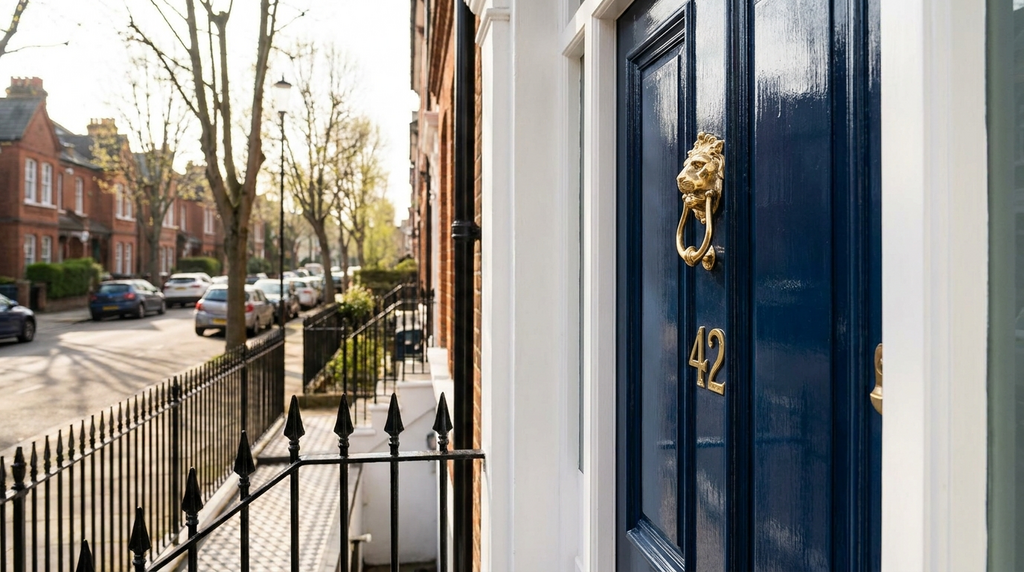
Blue front doors are the most popular coloured door choice in the UK. Industry data shows roughly 1 in 4 new residential door installations are blue (FENSA, 2026). This trend is driven by kerb appeal data from property listings, not by any energy-efficiency or grant requirement.
Blue front doors cost £600–£3,000 installed in 2026 depending on material. Colour has zero impact on U-value, security, or grant eligibility, so choose your door based on thermal and security performance first.
- 1 in 4 new UK door installations are blue (FENSA, 2026).
- Colour does not affect U-value, security, or grant eligibility.
- uPVC blue doors cost £600–£1,000 with 15–20 year lifespan.
- Composite blue doors cost £1,000–£1,800, lasting 25–30 years.
- Timber blue doors need double glazing to meet 1.4 U-value regs.
- The single most important fact about blue front doors in 2026
- How to confirm your blue front door meets current building regulations
- Quick numbers for blue front doors in 2026
- Who is eligible for a grant to help pay for a blue front door
- The direct answer does the colour of my front door affect its energy performance or grant eligibility?
- How to verify a blue front door installer is certified and trustworthy
- What the 2026 UK front door market tells us about blue doors
Colour choice has zero impact on a door’s U-value, security rating, or eligibility for any UK government home-improvement grant. Homeowners should prioritise thermal and security performance first. Colour is a purely aesthetic decision.
How to confirm your blue front door meets current building regulations
All replacement front doors in England and Wales must achieve a U-value of 1.4 W/m²K or lower under Part L of the Building Regulations (2021 edition, still in force for 2026) (GOV.UK Approved Document L, 2021). Scotland requires a U-value of 1.2 W/m²K or lower under Section 6 of the Scottish Building Standards (Scottish Building Standards Section 6, 2022).
Installers must provide a certificate of compliance or a BBA-certified product declaration. The homeowner should request this in writing before payment. Without this certificate, the installation may not be legally compliant and could cause issues when selling the property.
Quick numbers for blue front doors in 2026
| Door type | Average installed price range (inc. VAT) | Typical U-value range | Typical lifespan (years) | Common security rating |
|---|---|---|---|---|
| uPVC blue | £600–£1,000 | 1.2–1.4 W/m²K | 15–20 | PAS 24 |
| Composite blue | £1,000–£1,800 | 1.0–1.4 W/m²K | 25–30 | PAS 24 or Secured by Design |
| Timber blue | £1,500–£3,000 | 1.2–1.8 W/m²K (may require double glazing to meet regs) | 30+ | PAS 24 (with appropriate hardware) |
| Aluminium blue | £1,200–£2,500 | 1.0–1.4 W/m²K | 30+ | Secured by Design |
Cost data from FMB cost survey, 2026 and BBA certified product lists, 2026. Lifespan estimates from the Door Specialist Association market report 2026. Security ratings vary by product.
Who is eligible for a grant to help pay for a blue front door
The Great British Insulation Scheme closed on 31 March 2026. It funded insulation measures only and never covered windows or glazing. The Home Upgrade Grant (HUG) phase 2, which ends March 2026, covers door replacement only for low-income, off-gas-grid homes with an EPC rating of D or below (DESNZ HUG phase 2 applicant guidance, 2025). It does not specify colour.
The Boiler Upgrade Scheme (BUS) does not cover doors. No other government grant in 2026 specifically funds front door replacement. Any installer claiming otherwise should be treated with caution.
The direct answer does the colour of my front door affect its energy performance or grant eligibility?
No. The colour of a front door, blue or any other, has no bearing on its U-value, air permeability, or eligibility for any UK government grant (BRE thermal modelling data, 2024; DESNZ grant eligibility criteria, 2026). Thermal performance is determined by the core material (e.g., insulated composite core, timber thickness, or foam-filled uPVC) and the glazing if present.
A dark blue door may absorb more solar heat in summer, but this is negligible compared to the insulated core performance and does not affect building regulation compliance. Homeowners should focus on U-value and security ratings, not paint colour.
How to verify a blue front door installer is certified and trustworthy
For uPVC or composite doors, the installer must be registered with FENSA or CERTASS to self-certify compliance with building regulations (FENSA register, 2026). For timber doors, the installer should be a member of the Timber Trade Federation (TTF) or hold a BBA-certified product. Check TrustMark registration for any installer claiming grant eligibility (TrustMark scheme rules, 2026).
For aluminium doors, look for Secured by Design accreditation if security is a priority. Always request a written quote itemising the door, frame, hardware, and installation labour. Verify the installer’s registration on the FENSA, CERTASS, or TrustMark public registers. MCS certification is not relevant for doors.
What the 2026 UK front door market tells us about blue doors
Composite doors now represent 60% of all new front door installations in the UK, and blue is the single most-ordered colour for composites (FMB and Door Specialist Association, 2026). uPVC blue doors remain the cheapest option, typically £600–£1,000 installed, but have a shorter lifespan (15–20 years) compared to composite (25–30 years) or timber (30+ years).
Timber blue doors are the most expensive (£1,500–£3,000+ installed) and require annual maintenance, but are the only option for listed buildings or conservation areas without planning permission. how to choose between composite and timber front doors Aluminium blue doors sit between composite and timber in cost and offer high security ratings. The choice between materials depends on budget, lifespan expectations, and planning constraints.
Frequently Asked Questions
No, blue front doors cost the same as other colours for the same material type. The price is determined by the door material, glazing, and security features, not the colour. According to the FMB cost survey 2026, uPVC blue doors range from £600–£1,000, matching white or grey equivalents.
No, you do not need planning permission for a blue front door unless your property is listed or in a conservation area. In these cases, check with your local planning authority first. The GOV.UK planning portal confirms that door colour changes are permitted development for most homes.
A blue front door in England and Wales must achieve a U-value of 1.4 W/m²K or lower under Part L Building Regulations (2021 edition, still in force for 2026). Scotland requires 1.2 W/m²K or lower under Section 6 of the Scottish Building Standards. The Energy Saving Trust recommends checking the BBA certificate for compliance.
Yes, blue front doors can be energy efficient, but the colour has no effect on thermal performance. Energy efficiency depends on the door material, core insulation, and glazing. Composite and aluminium blue doors typically achieve U-values of 1.0–1.4 W/m²K, meeting current regulations, as confirmed by BBA certified product lists 2026.
Blue front doors last 15–20 years for uPVC, 25–30 years for composite, 30+ years for timber, and 30+ years for aluminium. Lifespan estimates are from the Door Industry Association and FMB cost survey 2026. Proper maintenance extends longevity, especially for timber doors which require periodic repainting.