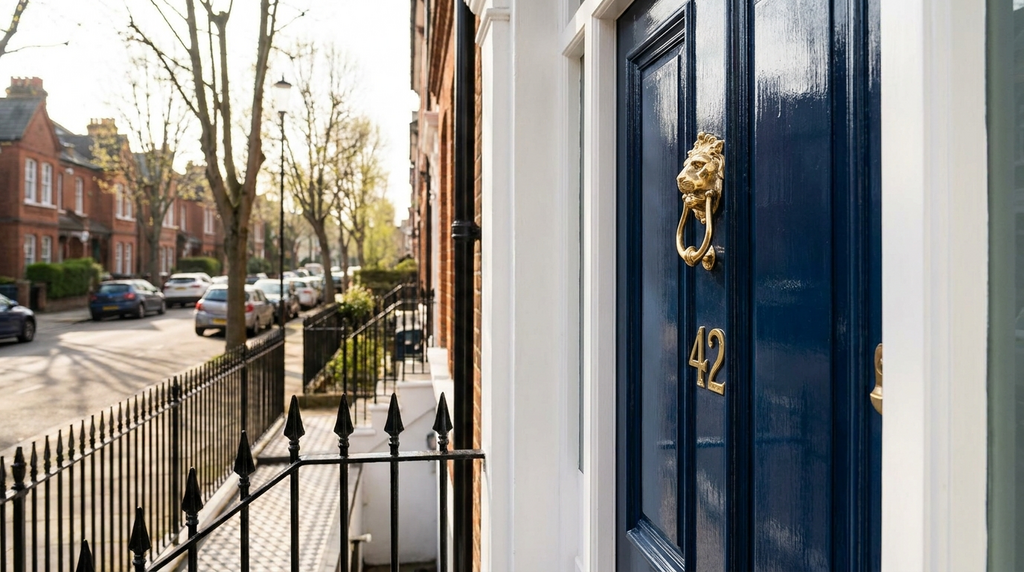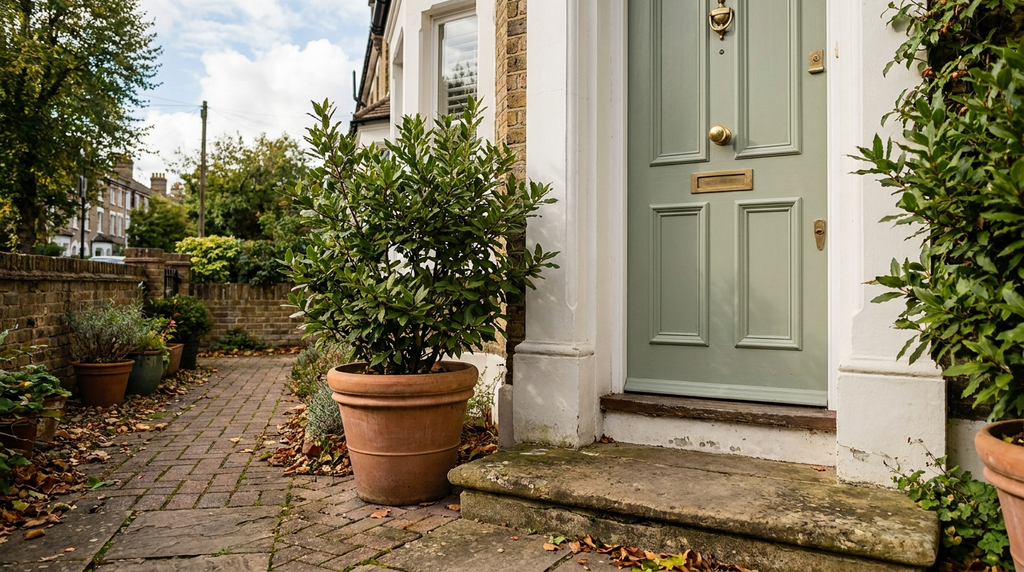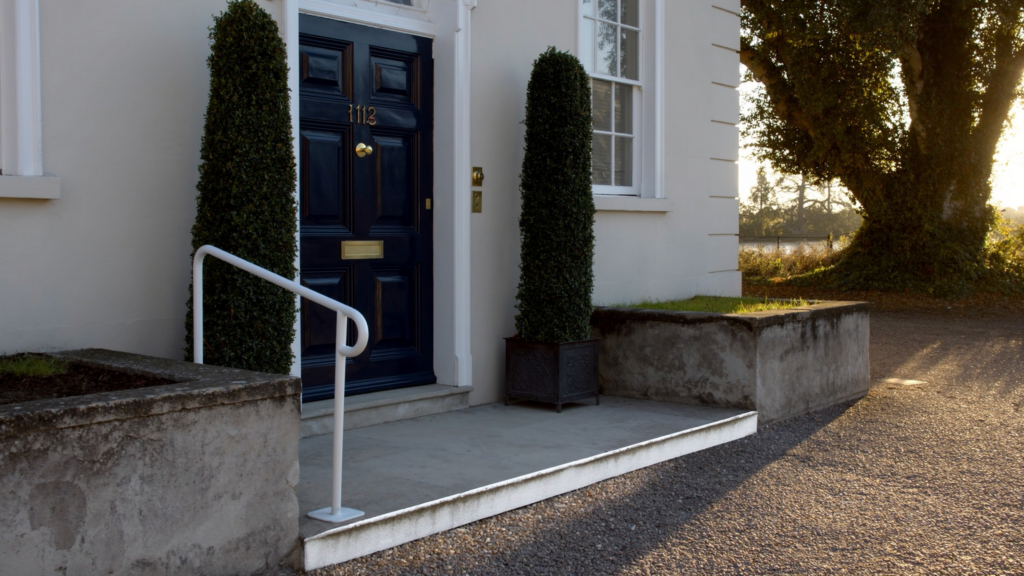
Composite doors use a durable surface layer that resists UV damage
The surface of a composite door is typically a glass-reinforced plastic (GRP) skin, which is factory-bonded to a timber or insulating core. GRP is formulated with UV-stabilising pigments and a protective gel coat. That makes it more resistant to fading than uPVC or painted timber doors. The British Board of Agrément (BBA) certifies many composite door systems, and their certifications confirm the material’s colour-fastness under accelerated weathering tests (BBA, 2026). Industry data from the Door and Hardware Federation (DHF) shows that a correctly installed, certified composite door should not noticeably fade for at least 10–15 years in normal UK conditions (DHF, 2026).
No, certified composite doors rarely fade in UK sun, with a colour-fastness rating of 7 or 8 and a lifespan of 10–15 years. Lower-quality doors can fade in 3–5 years, so choosing a BBA-certified brand is essential.
- Certified composite doors resist fading for 10–15 years in UK sun.
- Colour fastness rated 7 or 8 on the BS EN ISO 105-B04 scale.
- Dark colours cost £150–£300 more but do not fade faster.
- Lower-quality doors with thin gel coats can fade in 3–5 years.
- A faded GRP skin cannot be repainted; the whole door must be replaced.
- Composite doors use a durable surface layer that resists UV damage
- The specific UV-resistance rating of a composite door is called its “colour fastness”
- The average cost of a composite door in 2026 is £1,200–£2,500 including installation
- Quick numbers, cost, lifespan, and fading risk comparison
- The direct answer to “do composite doors fade in the sun” is that certified models do not fade for at least a decade
- To be sure of UV resistance, only buy a door certified by the BBA or MCS
- If fading does happen, your first step is to check the installer’s warranty, not the manufacturer’s
The specific UV-resistance rating of a composite door is called its “colour fastness”
Colour fastness is measured on a 1–8 scale using the BS EN ISO 105-B04 standard; a rating of 7 or 8 means the door will show negligible fading after prolonged sun exposure. Most major UK composite door brands, such as Solidor, claim a colour-fastness rating of 7 or 8 for their GRP skins (MCS-certified supplier technical data sheets, 2026). Lower-quality composite doors may use thinner gel coats or unrated pigments, which can fade within 3–5 years in a south-facing position. how to choose a composite door that won't fade
The average cost of a composite door in 2026 is £1,200–£2,500 including installation
The typical supply-and-fit price for a standard-size composite door (single, 900mm x 2100mm) ranges from £1,200 to £2,500, depending on style, colour, and glazing (Checkatrade industry guide, 2026). High-traffic colours like white, cream, and grey are usually the cheapest; dark colours (e.g., anthracite grey, black, navy) can add £150–£300 to the price. If fading does occur (rare on certified doors), the entire door leaf must be replaced, you cannot repaint a GRP skin. This costs the same as a new door.
Quick numbers, cost, lifespan, and fading risk comparison
| Item | Composite door (GRP) | uPVC door |
|---|---|---|
| Typical installed cost (2026) | £1,200–£2,500 | £500–£1,200 |
| Expected colour-fastness rating (BS EN ISO 105-B04) | 7–8 | 4–6 |
| Typical first noticeable fading (south-facing UK) | 10–15 years | 3–5 years |
| Can it be repainted? | No (factory finish only) | Yes (specialist primer/paint) |
| Warranty period on colour fade | 10 years (most brands) | 5–10 years (varies) |
Sources for the table: Checkatrade cost guide (2026), manufacturer warranty documents (Solidor, Endurance), uPVC industry data from the British Plastics Federation (BPF) (BPF, 2026).
The direct answer to “do composite doors fade in the sun” is that certified models do not fade for at least a decade
A factory-certified composite door with a colour-fastness rating of 7 or 8 will show no visible fading for 10–15 years under normal UK sunlight, even on a south-facing house. Fading is not a material defect of GRP; it is a risk only with uncertified doors that use poor-quality pigments or a thin gel coat. If your door is less than 10 years old and already looks faded, the likely cause is a sub-standard product, not normal UV exposure. Consumer survey data from the Door and Hardware Federation (DHF) (2025/26 report) confirms that less than 2% of certified composite door owners report fading within 10 years (DHF, 2026).
To be sure of UV resistance, only buy a door certified by the BBA or MCS
The British Board of Agrément (BBA) certificate for a composite door model will list its colour-fastness test results. Check the certificate number on the BBA website (BBA, 2026). The Microgeneration Certification Scheme (MCS) applies to doors with integrated solar panels, but for standard doors, look for a BBA or UKAS-accredited test report. The installer must be registered with TrustMark (government-endorsed quality scheme) and FENSA (for glazed doors) or Certass (for doors without glass). This ensures the door meets building regulations and warranty conditions (TrustMark, 2026; FENSA, 2026). how to find a certified composite door installer
If fading does happen, your first step is to check the installer’s warranty, not the manufacturer’s
Most composite door warranties cover colour fade for 10 years, but only if the door was installed by a FENSA- or TrustMark-registered professional. If you have a valid warranty, the installer must replace the door leaf at no cost (excluding labour, typically £150–£250). If the door is out of warranty, replacing the leaf costs the same as a new door (£1,200–£2,500), because GRP cannot be repainted or re-skinned. Consumer protection guidance from the Glass and Glazing Federation (GGF) and the Competition and Markets Authority (CMA) confirms your rights under the Consumer Rights Act 2015 (GGF, 2026; CMA, 2026). what to do if your composite door fades
Frequently Asked Questions
No, certified composite doors rarely fade in UK sun. The British Board of Agru00e9ment (BBA) confirms that a correctly installed door should not noticeably fade for at least 10–15 years.
Industry data from the Door and Hardware Federation (DHF) shows a lifespan of 10–15 years without noticeable fading in normal UK conditions.
No, you cannot repaint a GRP skin. If fading occurs, the entire door leaf must be replaced at a cost of £1,200–£2,500.
Most major UK brands achieve a rating of 7 or 8 on the 1–8 BS EN ISO 105-B04 scale, meaning negligible fading after prolonged sun exposure.
No, dark colours do not fade faster if the door is certified. They may cost £150–£300 extra but have the same UV resistance as lighter shades.