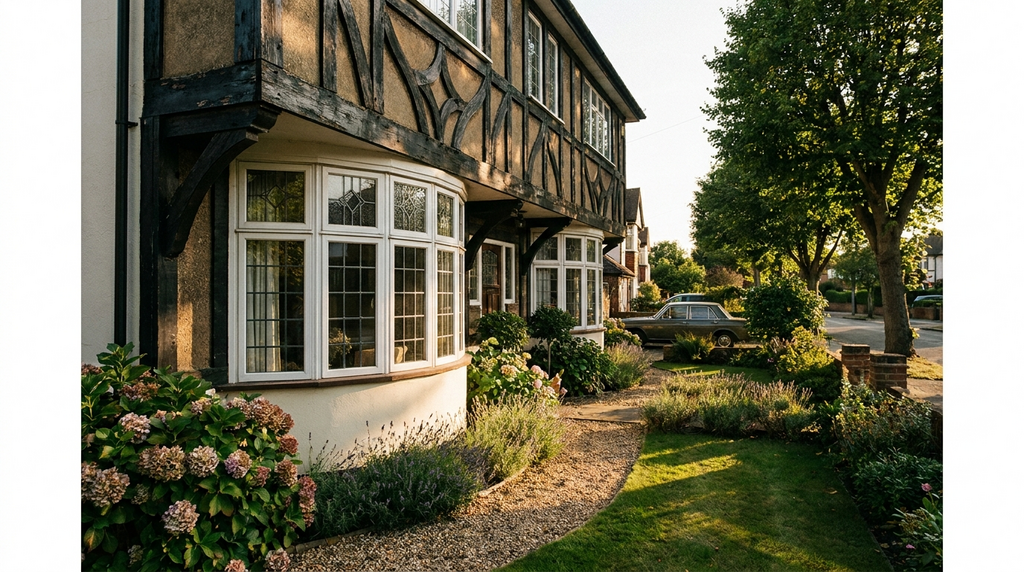
Why Peterhead homeowners are looking at Double Glazed Windows right now
If you live in Peterhead, you already know that winter here is no joke. With 2,200 heating degree days each year and average gas usage of 14,500 kWh per home, you are spending a serious chunk of change just to stay warm. That is 20% more heating than the typical UK home uses. Every draught, every single-glazed pane, every rattly frame is literally burning money.
The demand for Double Glazed Windows in Peterhead has jumped sharply in 2026. Three things are driving this. First, the Scottish Government’s Heat in Buildings Strategy is pushing everyone toward better energy performance, and windows are the easiest win. Second, energy prices remain stubbornly high, so the payback period has never been shorter. Third, more homeowners in areas like Cluny Place, Buchan Terrace, and the newer estates near the bypass are seeing their neighbours make the switch and hearing about the difference it makes.
Peterhead is a close-knit town of about 19,000 people. Word of mouth matters here. When one household on a terrace gets Double Glazed Windows installed, the rest of the street starts asking questions. The local climate means you feel the benefit immediately, not just in lower bills but in a house that stays warm without the heating running constantly.
What Double Glazed Windows actually involves for a typical Peterhead home
Most homes in Peterhead are either semi-detached or terraced, built in the Victorian era, the 1950s to 1970s, or the 1990s onward. Each type brings its own quirks.
If you own a Victorian or Edwardian terrace near the town centre, your windows will likely be set into stone or granite walls. These homes often have original sash and case windows. Replacing them with Double Glazed Windows requires careful measuring and sometimes bespoke joinery to match the character. The good news is that modern slimline double glazing can fit into existing frames without changing the look of your home.
For 1950s to 1970s semi-detached houses in areas like Dales Park or Balmoor, the windows are usually timber or metal framed. These are easier to replace because the openings are standard sizes. But you may find that the walls are solid brick or block with no cavity, so condensation can become an issue if you do not also improve ventilation.
Newer homes from the 1990s onwards, especially on estates like the one near the Peterhead Academy, already have double glazing in many cases. But if your windows are 20 years old, the seals may be failing and the frames may be warping. Replacement is straightforward and usually takes one to two days per house.
Access can be a challenge in Peterhead. If your home is on a narrow terrace with no rear lane, the installer may need to bring scaffolding through your house. Parking is another issue on streets like Queen Street or Ugie Street where space is tight. Always ask your installer how they plan to handle access before you commit.
How much Double Glazed Windows costs in Peterhead and the Scotland area in 2026
Prices in 2026 have settled after the volatility of previous years. The table below shows typical costs for Peterhead homes. Bear in mind that installers often travel from Aberdeen, Fraserburgh, or Inverurie, and that travel time can add a small premium to the quote.
| Property Type | Number of Windows | Standard Double Glazing (uPVC) | Premium Double Glazing (Timber or Aluminium) | Scotland Average |
|---|---|---|---|---|
| 1-bed terrace (e.g. older town centre flat) | 4-5 | £1,800 – £2,400 | £2,800 – £3,600 | £2,000 – £2,600 |
| 2-bed semi-detached (e.g. 1950s Dales Park) | 6-8 | £2,800 – £3,800 | £4,200 – £5,500 | £3,000 – £4,000 |
| 3-bed semi-detached (e.g. 1970s Balmoor) | 8-10 | £3,800 – £5,200 | £5,800 – £7,500 | £4,000 – £5,500 |
| 3-bed terrace (e.g. Victorian Buchan Terrace) | 8-10 | £4,000 – £5,500 | £6,500 – £8,500 | £4,200 – £5,800 |
Prices in Peterhead are broadly in line with the Scotland average, but you may pay slightly more than in Aberdeen because fewer installers operate locally. If you bring in a company from Fraserburgh or Inverurie, expect to cover their travel costs. Always get at least three quotes and ask for a breakdown of materials, labour, and any scaffolding fees.
How Peterhead’s weather and location affect your Double Glazed Windows choices
Peterhead sits on the north-east coast of Scotland, exposed to strong winds coming off the North Sea. Your windows need to withstand that. Standard double glazing with a wind load rating of 1,200 Pa is fine for most homes, but if you live on an exposed street near the harbour or the golf course, ask for windows rated to 1,600 Pa or higher.
Rainfall here is moderate at around 700-1,000mm per year, but the wind drives rain against your walls. Poorly sealed windows will let water in. Look for windows with a weathertightness rating of Class 9A or better. The gaskets and seals must be high quality, and the frame should have a drainage system to stop water pooling at the bottom.
Sunshine hours in Peterhead are only 700-900 per year, and winter daylight is short. This means solar gain from Double Glazed Windows is limited between October and February. You will not get much free heat from the sun during those months. Choose windows with a low U-value (the measure of heat loss) rather than focusing on solar heat gain coefficient. A U-value of 1.2 W/m²K or lower is ideal for Peterhead homes.
Snow loading is not a major concern for windows themselves, but if you have roof-mounted solar panels or a conservatory, make sure the frames are rated for the extra weight. The long summer days do help with solar gain in June and July, but that is a minor bonus compared to the main goal of keeping heat in during winter.
The products and options that work best here
For Peterhead’s climate and housing stock, I recommend the following specifications as a starting point.
Frame material: uPVC is the most cost-effective and performs well in coastal conditions if it has a reinforced steel core. Timber frames look fantastic on Victorian terraces but require annual maintenance to prevent rot in the damp climate. Aluminium frames are very durable and low maintenance but cost more. Composite frames offer a good middle ground.
Glass: Double glazing with a low-emissivity (Low-E) coating and argon gas filling is the standard choice. The Low-E coating reflects heat back into your home, and the argon gas reduces heat transfer through the gap. For Peterhead, choose a 4-16-4 configuration (4mm glass, 16mm gap, 4mm glass) or a 4-20-4 for slightly better performance.
Energy rating: Look for a Window Energy Rating of Band A or B. The British Fenestration Rating Council (BFRC) scale runs from A++ to G. Band A windows will save you the most energy. In Peterhead, every rating step matters because your heating demand is so high.
Acoustic performance: If you live near the A90 or the harbour, consider acoustic laminated glass. It adds a layer of soundproofing that makes a real difference in bedrooms. The extra cost is around £100-£150 per window.
Ventilation: Trickle vents are essential in Peterhead. The town’s damp climate means condensation can build up quickly if you seal your home too tightly. Trickle vents allow controlled airflow without letting all your heat escape.
How to find a trustworthy Double Glazed Windows installer near Peterhead
Finding a good installer in Peterhead takes a bit of legwork. There are no large national companies based here, so you will likely be dealing with firms from Aberdeen, Fraserburgh, or Inverurie. That is fine, but you need to check their credentials carefully.
Certifications to look for: FENSA or CERTASS registration is essential. These schemes certify that the installer meets building regulations. If your installer is not registered, you will need to involve building control separately, which adds cost and delay. Also check that they are members of the Glass and Glazing Federation (GGF) for added consumer protection.
Questions to ask: How long have you been trading in this area? Can you provide references from Peterhead customers? What is your warranty on frames and glass? How do you handle access on narrow streets? What is your policy on scaffolding costs if the quote changes?
Red flags: A quote that is significantly lower than others. A pushy salesperson who demands a deposit on the day. No physical address or showroom. Vague answers about lead times or warranties. In 2026, lead times for Double Glazed Windows in north-east Scotland are typically 6-10 weeks from order to installation.
Local recommendations: Ask neighbours who have had work done. Check local Facebook groups for Peterhead and the surrounding area. The Peterhead Community Group is a good place to ask for honest feedback. Installers who have worked on similar properties in your street will know exactly what to expect.
Grants and funding that could reduce your costs in 2026
Scotland has its own energy efficiency schemes, and Peterhead residents can benefit from several of them. Do not assume you do not qualify, the criteria are broader than you might think.
Home Energy Scotland Loan: This is the most accessible option. You can borrow up to £15,000 interest-free for energy efficiency improvements, including Double Glazed Windows. The loan is available to all homeowners in Scotland regardless of income. You repay it over a period of up to 10 years. The application is straightforward and done through the Home Energy Scotland website or by phone.
Warmer Homes Scotland: This scheme provides free insulation and heating improvements for households on certain benefits or with a low income. It covers Double Glazed Windows in some cases, but the focus is on more vulnerable homes. If you receive Pension Credit, Universal Credit, or Child Tax Credit, you may qualify. Call Home Energy Scotland to check your eligibility.
ECO4 (Energy Company Obligation): This UK-wide scheme applies in Scotland too. Energy suppliers are required to fund energy efficiency measures for low-income households. Double Glazed Windows are included under ECO4, but only if your home has single glazing and you meet the eligibility criteria. Contact your energy supplier directly to ask about ECO4 funding.
Council Tax Discount: Aberdeenshire Council does not offer a specific discount for Double Glazed Windows, but improving your EPC rating could reduce your council tax band if your home is in Band A or B. This is rare but worth checking if your home is currently rated poorly.
All of these schemes are open to Peterhead residents. The key is to apply before you start any work, because retrospective funding is not available. Call Home Energy Scotland on 0808 808 2282 for a free advice session tailored to your circumstances.
Planning permission and regulations in Peterhead
For most homes in Peterhead, Double Glazed Windows are considered permitted development. That means you do not need planning permission as long as the new windows are similar in appearance to the old ones.
Exceptions: If you live in a listed building, you will need listed building consent. Peterhead has several listed buildings, particularly in the town centre and around the harbour area. Check with Aberdeenshire Council’s planning department before ordering anything.
Conservation areas: Parts of Peterhead are designated as conservation areas, including the Broad Street area and some streets near the old town. In these areas, you may need planning permission if you change the window style, material, or colour. You can usually replace like-for-like without permission, but double check with the council.
Building regulations: All Double Glazed Windows must comply with Scottish Building Regulations, specifically Section 6 (Energy) and Section 3 (Environmental). Your installer should handle this if they are FENSA or CERTASS registered. The key requirement is that the windows meet a minimum U-value of 1.6 W/m²K, but I recommend aiming for 1.2 W/m²K or lower for Peterhead homes.
Flood risk: Some parts of Peterhead, particularly near the River Ugie and the harbour, are in flood risk zones. If your home is in a flood zone, your windows should include flood-resistant measures like raised sills and sealed frames. This is not a legal requirement but is strongly recommended by the Scottish Environment Protection Agency (SEPA).
Contact Aberdeenshire Council’s planning team in Peterhead directly for specific advice. They are based at the Town House on Broad Street and are usually helpful for quick queries.
What you will actually save
Let us run the numbers for a typical Peterhead home. We will use the average gas usage of 14,500 kWh per year and average electricity usage of 3,500 kWh per year. Your current EPC rating is Band D.
Annual heating savings: Replacing single glazing with modern Double Glazed Windows typically reduces heat loss through windows by 50-60%. For a 3-bed semi-detached home, windows account for about 15-20% of total heat loss. That translates to a saving of roughly 1,500-2,000 kWh of gas per year. At current 2026 gas prices of around 6.5p per kWh, that is £97 to £130 saved annually on your gas bill.
Electricity savings: If you use electric heating in any room, the savings are similar in percentage terms but higher in cash terms because electricity costs about 28p per kWh in 2026. If you heat one room with electricity, expect to save £30-£50 per year on that alone.
Total annual saving: Between £130 and £180 per year, depending on your home size and heating habits. That does not sound huge, but remember that energy prices are not going back to 2020 levels. Over 10 years, you save £1,300 to £1,800, and the windows last 20-25 years.
EPC improvement: Moving from single glazing to Double Glazed Windows will typically improve your EPC rating by 5-10 points. If you are at the bottom of Band D, this could push you into Band C. Combined with loft insulation and draft proofing, you could reach Band B. That higher rating adds value to your home when you sell.
Payback period: If you spend £4,000 on Double Glazed Windows for a 3-bed semi and save £150 per year, the simple payback is 26 years. That is longer than many people stay in a home. But the real value is in comfort, reduced condensation, no more draughts, and a higher sale price. Most homeowners recoup 70-80% of the cost when they sell.
Comfort and health: This is harder to quantify but equally important. A warm, draught-free home reduces damp and mould, which is a real issue in Peterhead’s damp climate. Your home stays warmer for longer, and you use less heating overall. That matters when the wind is howling off the North Sea in January.