Why Aberdare Homeowners Are Turning to Double Glazing Right Now
There’s a quiet revolution happening on the terraced streets of Aberdare. With the average home sitting at EPC Band E, a full band below the national average, local energy bills are stubbornly high, and residents are starting to connect the dots between draughty single-glazed windows and eye-watering monthly costs.
Aberdare sits in the Cynon Valley, hemmed in by hillsides that channel wind and trap moisture. That combination of elevation, valley position, and older housing stock creates a perfect storm for heat loss. The town’s characteristic rows of Victorian and Edwardian terraces, particularly around the Aberaman, Cwmbach, and Llwydcoed areas, were built long before anyone worried about energy efficiency, and their windows show it.
Rhondda Cynon Taf Council has been pushing hard on retrofit improvements across the borough, and Wales-wide schemes like Warm Homes Nest have made funding more accessible than ever. Add in rising fuel costs and you’ll understand why double glazing enquiries in the RCT area have surged. For many Aberdare homeowners, right now genuinely is the best moment to act.
What Double Glazing Actually Involves for a Typical Aberdare Home
Most homes in Aberdare are either Victorian or inter-war terraces, with a smaller proportion of post-war semis built between the 1950s and 1970s. Each era brings its own quirks for fitting double glazing.
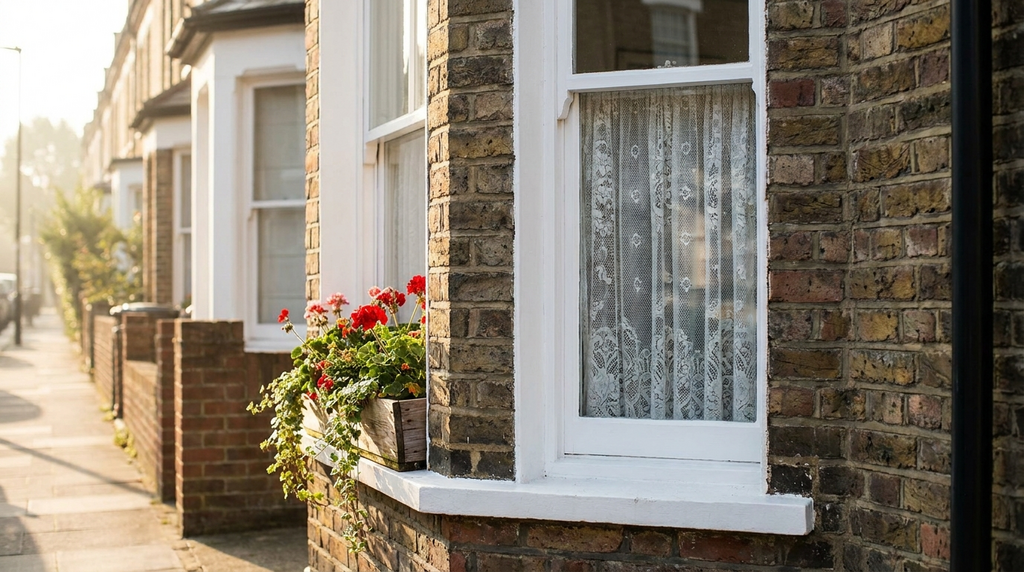
Victorian terraces, the kind you’ll find lining the streets near Aberdare town centre and running up toward Trecynon, typically have deep stone or brick reveals, timber sash windows, and chunky original frames. That actually gives installers something solid to work with, but the irregular sizing of older openings means frames often need custom manufacturing rather than off-the-shelf units. Budget extra time and money for survey-to-fit work.
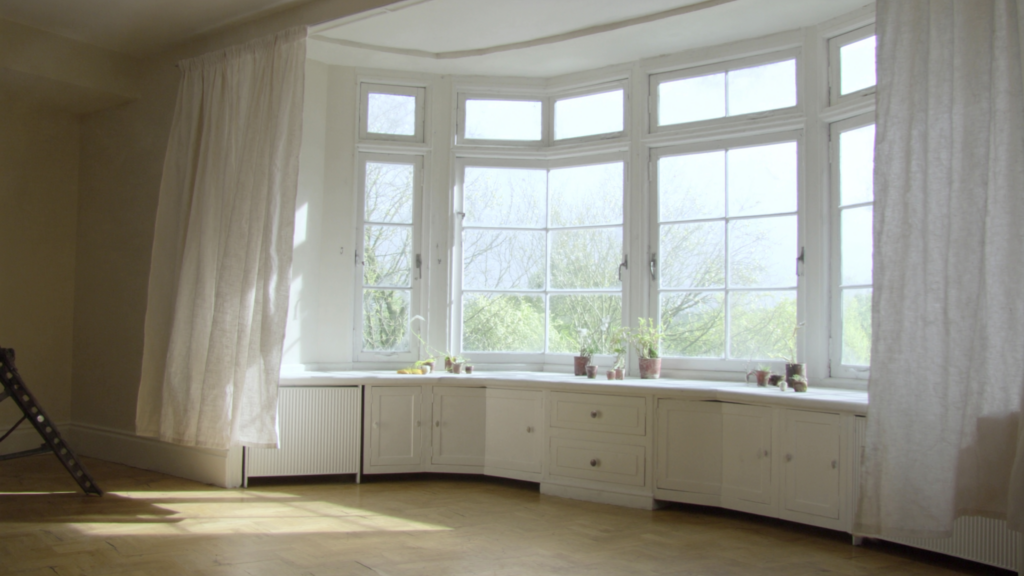
The inter-war semis around Llwydcoed and the lower Cynon Valley tend to have larger window openings, including bay windows and leaded light features. Bays require specialist fitting and additional labour, expect to add £300–£600 per bay window compared to a flat casement.
A few other things specific to Aberdare homes worth knowing upfront
- Party wall access, On tightly packed terraces, scaffolding or ladders on the gable end can be tricky. Check that your installer has factored in access costs before you sign anything
- Lintel condition, Older homes sometimes have deteriorating lintels above window openings that only become apparent during removal. A good installer will flag this during the survey
- Valley dampness, The Cynon Valley’s high rainfall (routinely over 900mm annually) means frame sealing and drainage channels matter enormously. Poorly fitted frames will cause condensation and ingress within a few years
- Period features, If your home is in a conservation area or is listed, the window style may be restricted. More on that in the planning section below
The good news for most Aberdare homeowners is that standard uPVC double glazing is a straightforward fit. Access is generally easier here than in tighter urban centres like central Cardiff, and installers covering the RCT area are familiar with the local housing stock.
How Much Double Glazing Costs in Aberdare and the Wales Area in 2026
Let’s get straight to the numbers. Prices below reflect what you should realistically expect to pay from a reputable installer serving Aberdare and the surrounding Cynon Valley in 2026. These are supply-and-fit costs including VAT.
| Property Type | Windows Replaced | uPVC Double Glazed | Timber Double Glazed | Aluminium Double Glazed |
|---|---|---|---|---|
| 2-bed terrace | 4–6 windows | £2,800–£4,200 | £4,500–£6,500 | £5,200–£7,000 |
| 3-bed semi-detached | 6–8 windows | £3,800–£5,500 | £6,000–£8,500 | £6,500–£9,000 |
| 3-bed terrace (Victorian) | 6–8 windows (custom sizes) | £4,200–£6,000 | £6,500–£9,500 | £7,000–£10,000 |
| 4-bed semi | 8–10 windows | £5,000–£7,500 | £8,000–£12,000 | £9,000–£13,000 |
| Bay window addition | Per bay | +£800–£1,200 | +£1,200–£2,000 | +£1,400–£2,200 |
Aberdare sits roughly in line with the Wales average for double glazing installation costs. You’ll typically pay 5–8% less than Cardiff rates due to lower labour overheads, but slightly more than some flatter rural areas because of access complications on hillside streets. Compare this to Merthyr Tydfil (6km away), where prices are broadly similar, installers often cover both towns on the same round.
Pontypridd-based installers (14km south) frequently quote competitively for Aberdare jobs, so it’s worth getting quotes from both valley-focused firms and those based slightly further afield. Don’t be put off by the distance, many of the most reputable RCT installers work across the whole cluster including Tredegar and Bargoed.
Insider tip, Get at least three written quotes. Prices for the same job in this area can vary by 20–30%. Ask each company to itemise disposal of old frames, scaffolding costs, and glazing specification separately so you’re comparing like for like.
How Aberdare’s Weather and Valley Location Shape Your Double Glazing Choices
Aberdare’s position in the Cynon Valley means it experiences something slightly different from what you’d expect looking at Wales on a map. The valley orientation channels prevailing south-westerly winds, which arrive laden with moisture after tracking across the Atlantic and over the Brecon Beacons. Annual rainfall regularly tops 950mm, enough to make frame drainage and seal quality a non-negotiable priority.
Interestingly, the valley also benefits from more sheltered conditions than the exposed ridge tops around Hirwaun and Rhigos. That means cold wind-driven rain is less of an extreme problem than it would be for, say, a property sitting on the edge of the Brecon Beacons. But moisture ingress and condensation management are still your biggest enemies.
On the thermal performance side, Aberdare’s winters are mild by UK standards, the Cynon Valley rarely sees sustained freezing temperatures. That means the main argument for double glazing here isn’t about surviving Arctic blasts; it’s about consistent warmth, reduced condensation on cold frames, and keeping that Band E energy rating from costing you a fortune every winter.
What this means in practical terms
- Prioritise frames with effective drainage channels and good weather seals rated for at least 600Pa wind resistance
- Argon-filled units rather than air-filled are worth the modest premium, they perform noticeably better in the damp conditions typical of valley climates
- Low-emissivity (Low-E) glass coatings are a must in a valley setting where overcast days outnumber sunny ones, they reflect heat back into the room rather than letting it escape
- North and east-facing windows in properties running along the valley sides lose the most heat, these are your priority replacements if you’re doing it in stages
The Products and Options That Actually Perform Well in This Area
Given the combination of valley moisture, moderate cold, and the specific demands of Aberdare’s older housing stock, here’s an honest expert opinion on what to specify rather than just a generic list of options.
uPVC Frames with Reinforced Profiles
For the vast majority of Aberdare homes, white uPVC is the most practical and cost-effective choice. Specify a minimum 70mm profile system (Rehau Synego, Veka Spectral, or equivalent) with multi-chamber construction for best thermal performance. These systems achieve U-values of 1.2 W/m²K or better, well within current Building Regulations requirements. Avoid thin-profile budget systems; the valley’s damp conditions will expose any weaknesses quickly.
Low-E Argon-Filled Units
Specify 4-16-4mm or 4-20-4mm double glazed units with a soft-coat Low-E coating and argon gas fill as standard. The wider 20mm gap gives marginally better thermal performance and is worth requesting. Look for a whole-window U-value of 1.4 W/m²K or lower, ask installers to provide this figure in writing. Units meeting EN 1279 standards are your baseline quality assurance.
Timber Alternatives for Conservation Zones
If you’re in the Aberdare Conservation Area or have a property with character features that matter to you aesthetically, engineered timber or timber-alternative composite frames (Rationel, for example) deliver good thermal performance while maintaining the period appearance. These cost more but are appropriate for homes near the town centre where planning restrictions may apply.
What to Avoid
- Very cheap sealed units without Low-E coating, they’ll mist up within a few years in Aberdare’s damp climate
- Single-point locking systems on older-style frames, multi-point locking improves both security and weather sealing
- Installer-own-brand products with no traceability, you want glass units you can get warranty service on regardless of which company fitted them
How to Find a Trustworthy Double Glazing Installer Near Aberdare
The double glazing industry has improved enormously in the last decade, but you still need to do your homework. Here’s what actually matters when choosing an installer for an Aberdare property.
FENSA registration is non-negotiable. FENSA-registered installers self-certify their work as compliant with Building Regulations, without it, you’d need to apply to RCT Council for a building notice, which adds cost and hassle. Check the FENSA online register before any conversation goes further.
TrustMark registration is a useful additional layer of vetting. TrustMark-endorsed businesses have been assessed for trading standards and quality, which is particularly reassuring for larger jobs.
Questions worth asking every installer
- Are you FENSA registered, and will you provide the certificate on completion
- What U-value will the installed units achieve, get this in writing
- Is the quote fixed-price or subject to survey adjustments
- Do you manufacture frames yourselves or source them, and where
- What is your process if a sealed unit fails within the warranty period
- Can you provide three local references from jobs completed in the last 12 months
Most reputable double glazing companies serving Aberdare are based either in the town itself, in Merthyr Tydfil, or in Pontypridd. A Merthyr-based firm covering the 6km to Aberdare is perfectly normal and often brings excellent local knowledge. Be wary of national firms that subcontract locally, you’ll pay a premium and have less clarity over who’s actually doing the work.
Red flags, pressure to sign on the day, no written quotation, no FENSA number available on request, or a price that’s dramatically lower than three other quotes. That last one hurts to say, but suspiciously cheap double glazing almost always means corners cut on glass specification or frame quality.
Grants and Funding Available to Aberdare Residents in 2026
This is where Aberdare residents are genuinely better positioned than many UK homeowners. Wales has its own funding landscape that operates alongside UK-wide schemes, and the combination can make double glazing remarkably affordable.
Warm Homes Nest (Wales)
The Warm Homes Nest scheme is run by the Welsh Government and is specifically designed for lower-income households in Wales experiencing fuel poverty. Eligible homeowners can receive free energy efficiency improvements, including double glazing, with no upfront cost at all. Eligibility is based on household income, benefits received, and current EPC rating. Given that so many Aberdare homes sit at Band E, a large proportion of residents will qualify. You apply through the Nest Wales website or by calling the free advice line.
ECO4 (UK-Wide)
The Energy Company Obligation 4 scheme funds upgrades for low-income households across Great Britain. Your energy supplier is obligated to fund improvements for eligible customers. Double glazing can be funded under ECO4 as part of a whole-home improvement package, particularly when combined with insulation measures. If your home is Band E or below and you receive qualifying benefits, this is worth investigating immediately.
Great British Insulation Scheme (GBIS)
The Great British Insulation Scheme closed on 31 March 2026. It funded insulation measures only and never covered windows or glazing. The Great British Insulation Scheme closed on 31 March 2026. It funded insulation measures only and never covered windows or glazing.
RCT Council Support
Rhondda Cynon Taf Council periodically runs its own home improvement loan and grant schemes through its housing division. These can supplement national schemes, particularly for homeowners who fall just outside the income thresholds for Nest or ECO4. Contact RCT Council’s housing improvement team directly to ask what’s currently available.
Key eligibility summary
- Nest Wales, household income under approximately £31,000, or receiving means-tested benefits, property Band E or below
- ECO4, receiving qualifying benefits (Universal Credit, PIP, Housing Benefit, etc.), EPC Band D or below
- GBIS, EPC Band D or below, owner-occupier or private tenant with landlord consent
If you don’t qualify for free upgrades, the Welsh Government’s Optimised Retrofit Programme has also generated a pipeline of affordable loan products through social landlords and community organisations, worth asking about even if you’re a private homeowner.
Planning Permission and Building Regulations for Aberdare Properties
The good news for most Aberdare homeowners is that replacing windows with double glazing falls under permitted development rights, meaning you don’t need to apply for planning permission. This applies to standard residential properties, terraces and semis alike, provided the replacement windows are similar in appearance to what’s being removed.
However, there are important exceptions specific to this area that you should check before proceeding.
Aberdare Conservation Area
Parts of central