Why Bridgend Homeowners Are Looking at Double Glazing Right Now
There’s a particular kind of draughty misery that Bridgend residents know well. When the westerly winds come rolling in off the Bristol Channel and the rain hammers against your windows, single glazing or tired old double glazing just doesn’t cut it anymore. With energy bills still running high and the average Bridgend home sitting at EPC Band D, upgrading your glazing has become one of the most practical things you can do this year.
Bridgend is a town of semi-detached streets and terraced rows, from the older Victorian and Edwardian terraces near the town centre to the post-war estates spreading out towards Pencoed and Brynmenyn. A huge proportion of these homes were built before modern glazing standards existed, which means there’s a genuine upgrade opportunity here across entire streets, not just the odd property.
The Welsh Government’s push toward its Net Zero Wales housing targets is also creating a real sense of momentum. If you’re thinking about selling, remortgaging, or just making your home more comfortable through another wet Welsh winter, double glazing sits near the top of the list for bang-per-pound improvements.
What Double Glazing Actually Involves for a Typical Bridgend Home
For most Bridgend properties, a full double glazing installation is more straightforward than many homeowners expect, but there are some local nuances worth knowing about before you get quotes.
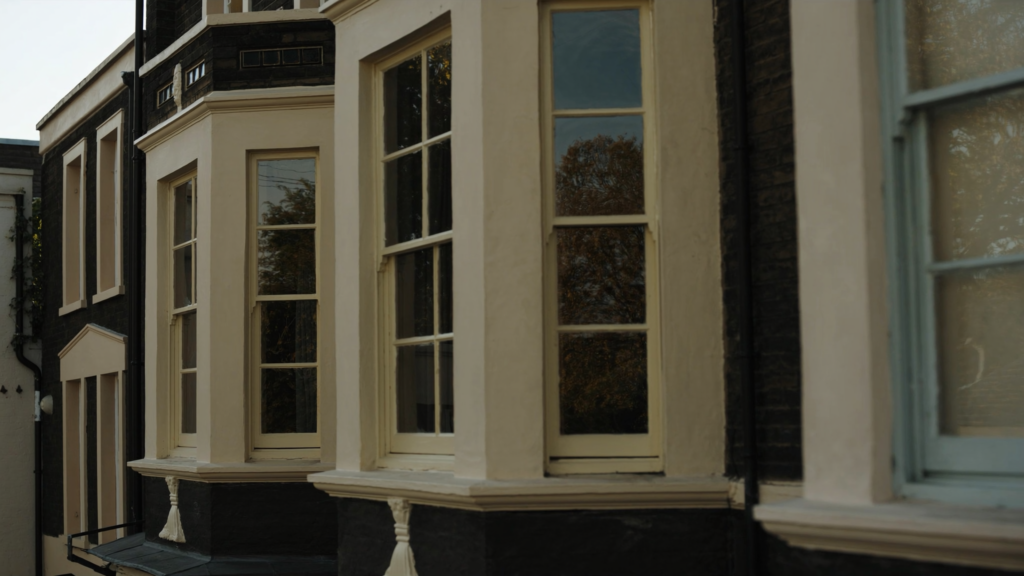
The terraced homes along streets like those in Oldcastle, Tremains, and the older parts of Coity Road are often built with standard-sized sash or casement openings, which keeps costs predictable. Semi-detached homes on the larger estates around Brackla and Litchard typically have slightly bigger windows and sometimes bay fronts, which adds modest cost but nothing dramatic.
Where things get more complex in Bridgend’s housing stock is with older pre-1919 properties. These homes often have slightly irregular window openings, years of settlement mean frames are rarely perfectly square. A good installer will survey every opening individually and manufacture frames to measure rather than using off-the-shelf sizes. Always confirm this upfront.
Practical Installation Considerations
- Access and parking, Many of Bridgend’s terraced streets have limited kerbside access and tight on-street parking. Installers bringing large frame deliveries need to plan this in advance, and some will charge a small logistics fee for difficult streets
- Cavity wall interaction, Most post-1945 Bridgend semis have cavity walls, and if you haven’t already had cavity wall insulation done, doing the glazing and insulation together in one visit is more economical
- Render and pointing, The driving rain Bridgend gets means any gaps left around new window frames will cause damp ingress quickly. Insist on proper mastic sealing and make sure your installer checks the surrounding render or pointing as part of the job
- Conservation areas, Parts of the older town, particularly around Bridgend town centre and some of the older village cores like Merthyr Mawr, have restrictions on window styles. More on this further down
How Much Double Glazing Costs in Bridgend and the Wales Area in 2026
Getting a real sense of what you’ll pay before you invite installers round puts you in a much stronger position. Here’s a breakdown of typical 2026 costs for Bridgend properties, based on standard uPVC double glazing with A-rated units unless stated otherwise.
| Property Type | Number of Windows | Standard uPVC Double Glazing | Premium uPVC or Aluminium | Triple Glazing Upgrade |
|---|---|---|---|---|
| 2-bed terraced | 6–8 windows | £3,200–£4,500 | £4,800–£6,200 | £5,500–£7,000 |
| 3-bed semi-detached | 8–11 windows | £4,500–£6,000 | £6,200–£8,500 | £7,000–£10,500 |
| 3-bed terraced (mid) | 7–9 windows | £3,800–£5,200 | £5,200–£7,000 | £6,000–£8,500 |
| 4-bed detached | 12–16 windows | £6,500–£9,000 | £9,000–£13,000 | £11,000–£16,000 |
| Single window replacement (any type) | 1 window | £350–£650 | £650–£1,100 | £750–£1,300 |
Bridgend costs sit roughly in line with the Wales average, which tends to run about 5–8% below the England and Wales national figure. Installers serving Bridgend typically also cover Porthcawl, Port Talbot, Neath, and Pontypridd, so you benefit from competitive pricing across a reasonably dense cluster of towns. You’re unlikely to face the rural surcharges that push prices up in more isolated parts of Wales.
The main factors that push costs up locally are conservation area requirements (requiring timber-look or specifically styled frames), first-floor bay windows needing scaffolding access, and any properties with non-standard window openings in older terraces. Budget an extra £150–£400 if scaffolding is needed for any upper floor bays.
How Bridgend’s Weather and Location Affect Your Double Glazing Choices
Bridgend’s position in South Wales means it catches a lot of what the Atlantic throws at Britain. Annual rainfall here sits between 1,000 and 1,400mm, noticeably wetter than most of England, and the prevailing south-westerlies mean that rain doesn’t just fall, it’s often driven hard against west and south-facing elevations.
This has real, practical implications for what you buy and how it’s installed.
Why Weathertight Installation Matters More Here
The sealing and finishing around window frames matters enormously in Bridgend. In a drier climate, a slightly imperfect mastic joint might go unnoticed for years. Here, you’ll know about it by the second winter. Always ask your installer specifically about their sealing approach for the external frame-to-wall junction, foam backing rod plus a fully tooled mastic bead is the minimum standard you should accept.
Glazing Specification for Western Exposure
For any windows on your west or south-west facing elevation, seriously consider warm edge spacer bars as a standard inclusion rather than an upgrade. These reduce condensation on the inner pane during cold, wet weather, exactly the conditions Bridgend gets regularly from October through to March.
The good news is that Bridgend actually gets decent solar gain. Despite the rain, south-facing windows here still benefit from solar heat contribution in winter, so low-emissivity (low-E) coatings on south-facing glass that allow solar gain rather than block it will reduce your heating bills noticeably.
The Products and Options That Work Best Here
Given everything above, here’s honest guidance on what actually performs well in Bridgend’s conditions, not a generic catalogue rundown.
Frame Material
uPVC remains the best all-round choice for most Bridgend homes. It handles the rainfall and moisture exposure extremely well, requires virtually no maintenance, and the cost-to-performance ratio is unbeatable for terraced and semi-detached properties. White uPVC is the most common choice, but woodgrain foil finishes in anthracite grey or Irish oak are increasingly popular on Bridgend’s older streetscapes and hold their appearance well in this climate.
Aluminium is worth considering if you have larger modern-style openings or want slim sight lines, and it performs brilliantly in wet climates, but it adds roughly 30–40% to your cost for equivalent energy performance.
Glazing Units
- A-rated double glazing with argon gas fill, The sweet spot for most Bridgend homes. U-values of around 1.2–1.4 W/m²K, excellent condensation resistance, and realistic payback periods
- Warm edge spacer bars, Non-negotiable given local humidity and temperature swings. These cost very little extra and prevent that cold inner frame edge that leads to mould patches on window reveals
- Triple glazing, Worth considering if you’re in a particularly exposed position, anywhere facing open country toward the Garw or Ogmore valleys, or on the windward side of an elevated estate. The extra thermal mass of triple glazing makes a real difference in exposed spots, though the payback period is longer
- Acoustic glazing, If you’re near the A48, the M4 corridor, or the busy retail areas around the town centre, laminated acoustic double glazing is a meaningful upgrade. The noise reduction is immediately noticeable
Hardware and Seals
Opt for multipoint locking systems as standard, they pull the frame tighter against the draught seals when locked, which matters when you’re getting driving rain. This is a security upgrade that also happens to be a weatherproofing upgrade. Two birds, one stone.
How to Find a Trustworthy Double Glazing Installer Near Bridgend
Bridgend is served by a mix of local South Wales independents and larger regional companies operating out of Cardiff, Swansea, and the Vale of Glamorgan. Both can be excellent, what matters more is their certification and their approach.
Certifications to Insist On
- FENSA registration, This is the essential one for replacement glazing in Wales. FENSA-registered installers self-certify that work complies with Building Regulations, saving you from applying for a Building Regulations certificate yourself. Always ask for the FENSA certificate on completion
- TrustMark accreditation, Government-endorsed quality scheme. Particularly important if you’re accessing any Welsh Government grant funding
- Which? Trusted Traders, A useful additional check, especially for larger jobs
- Insurance-backed guarantees (IBGs), Any reputable installer will offer a 10-year guarantee backed by an independent insurer. This protects you if the company closes before your guarantee expires, something that does happen with smaller firms
Questions Worth Asking Before You Commit
- Do you manufacture your own frames, or are you a reseller of another company’s products
- How do you handle the external sealing on wet-climate installations
- Can you provide three local references from Bridgend or nearby, Porthcawl, Pencoed, Maesteg, from the last 12 months
- What’s included in your survey, do you measure every opening individually
- What happens if condensation appears between panes within the guarantee period
Lead times in the South Wales area currently run at around 4–8 weeks from survey to installation for most standard jobs. If a company is quoting you less than two weeks, ask why, it can sometimes mean off-the-shelf frames rather than made-to-measure units.
Red flags to walk away from, high-pressure same-day signing discounts, no FENSA registration, no physical survey before quoting, unwillingness to provide a written specification of the units being installed.
Grants and Funding That Could Reduce Your Costs in 2026
Bridgend homeowners have access to a genuinely useful set of funding options, and the Welsh-specific schemes are worth paying particular attention to.
Warm Homes Nest Scheme (Wales)
This is the Welsh Government’s flagship energy improvement programme and the most relevant one for many Bridgend residents. If you’re a homeowner or private renter in receipt of means-tested benefits, including Universal Credit, Pension Credit, or income-related ESA, you may qualify for free glazing upgrades as part of a whole-house improvement package. Nest doesn’t just hand out glazing, it takes a whole-home approach, but double glazing frequently features in the recommended measures for Band D properties. Contact Nest directly on 0808 808 2244 or through the Welsh Government website to get a free assessment.
ECO4 Scheme
The UK-wide Energy Company Obligation scheme funds insulation and heating improvements for lower-income households. While ECO4 doesn’t typically fund glazing as a standalone measure, it can fund it as part of a package where other insulation measures are being installed simultaneously. If your Bridgend home qualifies, combining cavity wall insulation with new glazing under ECO4 can dramatically reduce your out-of-pocket cost.
Great British Insulation Scheme (GBIS)
The Great British Insulation Scheme closed on 31 March 2026. It funded insulation measures only and never covered windows or glazing. The Great British Insulation Scheme closed on 31 March 2026. It funded insulation measures only and never covered windows or glazing.
Bridgend County Borough Council
Bridgend County Borough Council has historically offered discretionary housing improvement grants for low-income homeowners. Availability and eligibility criteria change, so contact the Council’s housing team directly to ask what’s currently on offer. It’s worth a phone call, local authority grants are underused simply because people don’t know to ask.
Planning Permission and Regulations in Bridgend
For the majority of Bridgend homeowners, replacing windows with double glazing falls under permitted development rights, meaning you don’t need to apply for planning permission, provided the replacement windows are similar in appearance to the originals.
However, there are important exceptions specific to Bridgend.
Conservation Areas
Bridgend County Borough includes several designated conservation areas where permitted development rights are restricted. If your home is within one of these areas, including parts of the historic Bridgend town centre, the village of Merthyr Mawr, or other protected settlements in the borough, you will need to apply for planning consent before replacing windows. Bridgend County Borough Council’s planning department can confirm whether your address is in a conservation area, and it’s always worth checking before ordering.
Within conservation areas, timber windows or high-quality timber-effect uPVC may be required rather than standard white uPVC. This adds cost but the results can look genuinely excellent on period properties.
Listed Buildings
If your home is a listed building, and there are a number of listed properties across the borough, particularly in the older village settlements, you will need listed building consent in addition to any planning permission. Standard double glazing is rarely approved for listed buildings; secondary glazing is usually the recommended and consented route instead.