Why Cardiff Homeowners Are Rushing to Upgrade Their Windows Right Now
Walk down any street in Roath, Canton, or Pontcanna and you’ll spot the telltale signs, condensation clouding old frames, draughty bay windows, and single-glazed panels rattling in the Welsh wind. Cardiff’s housing stock is crying out for better glazing, and more homeowners than ever are doing something about it.
The city’s average EPC rating sits at Band D, which means most homes here are losing significant heat through their windows every single day. With Cardiff Council’s ambitious climate commitments under its One Planet Cardiff strategy, and the Welsh Government pushing hard on its Net Zero Wales targets, there’s never been more pressure, or more support, to get your home insulated properly.
There’s also a practical Cardiff-specific reason driving demand right now. The city’s population has grown significantly, and with that comes a busier property market. Estate agents across CF1 to CF24 will tell you that homes with modern double or triple glazing are selling faster and commanding better prices than their draughty counterparts. Upgrading your windows improves warmth and is a genuinely smart investment in Cardiff’s competitive housing market.
And then there’s the noise. Living in a dense city of 362,000 people, sandwiched in a terrace off City Road or close to the A48, means traffic and urban noise are constant companions. Modern double glazing with acoustic laminate glass can transform how peaceful your home feels, something no Cardiff homeowner should underestimate.
What Double Glazing Actually Involves for a Typical Cardiff Home
Cardiff’s housing stock tells a very particular story. The city grew rapidly during the Victorian and Edwardian eras, driven by coal trade wealth, which means thousands of homes in areas like Splott, Grangetown, Adamstown, and Cathays date from the 1880s to 1920s. These properties have their own quirks for double glazing installation.
Older Cardiff terraces typically have timber frames with sash or casement windows, often set into stone or brick reveals with non-standard dimensions. That means off-the-shelf window units rarely drop straight in. A good installer will need to measure carefully, and you should expect made-to-measure units rather than standard stock, which affects both cost and lead time.
The Bay Window Factor
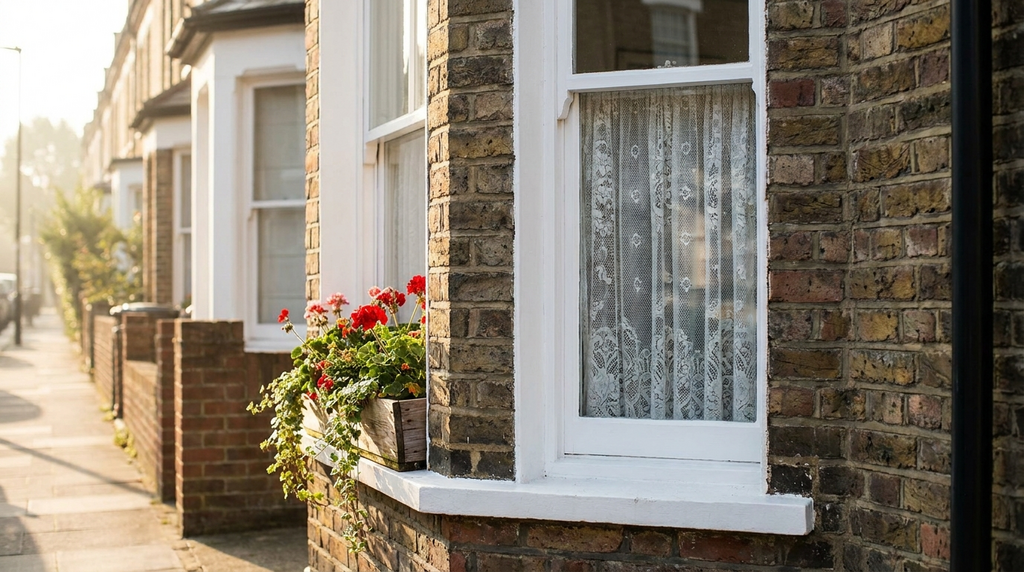
One of the most common challenges for Cardiff homeowners is the bay window. Edwardian terraces and semis throughout Llandaff North, Pontcanna, and Roath frequently feature large angled bays on the ground floor and sometimes upper storeys too. Replacing these properly, maintaining the original shape and proportions, requires more complex frame fabrication and careful installation. Rushed installers sometimes flatten or simplify bays to save time, which destroys the character of the property and can cause planning headaches in conservation areas.
Post-war semis in areas like Llanrumney, Ely, and Rumney from the 1950s and 60s tend to be more straightforward. These properties often already have some form of early double glazing installed, units from the 1990s that are now well past their useful life. Replacing these is generally simpler because the frames are already designed for double-glazed units, though original measurements may not match modern standard sizes precisely.
Access and Parking Realities
Cardiff’s terraced streets, think Kimberley Road, Ninian Park Road, or Whitchurch Road, present a practical installation challenge that homeowners in more rural areas simply don’t face. Narrow streets with no off-road parking mean installers need to plan their vehicle access carefully. In some cases, scaffold or cherry picker access to upper floors requires temporary road closures or special arrangements with Cardiff Council’s highways team, which adds both time and cost to the job.
- Ground floor windows in terrace rows are generally straightforward to replace
- Upper floor access on narrow streets may require ladders, scaffolding, or hired access equipment
- Some Edwardian terraces have unusually deep reveals that affect frame depth and fitting
- Original timber frames in good condition can sometimes be overhauled rather than fully replaced
- Party walls in terraces mean working carefully around neighbours, communication matters
How Much Double Glazing Costs in Cardiff and the Surrounding Wales Area in 2026
Cardiff sits at a slightly higher labour cost than towns like Caerphilly, Barry, or Pontypridd. This reflects its city status and higher overheads for local businesses. Expect to pay roughly 8–12% more than the Wales national average for the same job. Newport, being a similar urban centre 17km east, tends to sit at a comparable price point to Cardiff.
Here’s what you should realistically budget for in 2026, based on typical Cardiff property types:
| Property Type | Number of Windows | Standard uPVC Double Glazing | Timber-Effect uPVC | Triple Glazing Upgrade |
|---|---|---|---|---|
| 2-bed mid-terrace (e.g. Splott, Adamsdown) | 6–8 | £3,200–£4,400 | £4,100–£5,600 | £5,000–£6,800 |
| 3-bed end-terrace with bay (e.g. Roath, Canton) | 8–10 | £4,100–£5,800 | £5,200–£7,200 | £6,400–£9,000 |
| 3-bed semi-detached (e.g. Llandaff North, Heath) | 9–12 | £4,800–£6,500 | £6,000–£8,200 | £7,500–£10,500 |
| 4-bed detached (e.g. Cyncoed, Lisvane) | 12–16 | £6,500–£9,000 | £8,200–£11,500 | £10,000–£14,500 |
| Conservation area, like-for-like timber replacement | Per window | £800–£1,400 each | £1,100–£1,800 each | £1,400–£2,200 each |
A note on these figures: prices assume standard installation without significant access complications. Add £300–£800 for scaffolding on taller properties, and factor in an extra £200–£400 if you’re on a particularly tight street requiring specialist access equipment. Prices include VAT, fitting, and removal of old units.
Compared to the Wales average, Cardiff prices run higher, but you’re also getting more installer choice, meaning more ability to shop around and negotiate, especially in the quieter January to March period when most glazing companies are hungry for work.
How Cardiff’s Weather and Location Shape Your Double Glazing Choices
Cardiff occupies an interesting climatic sweet spot. It’s southern enough to enjoy the mildest winters in Wales, sitting at roughly 1,200–1,500 heating degree days per year compared to the colder Welsh valleys just to the north. This is genuinely relevant to your glazing decisions, because it affects which products deliver the best return on investment for your specific conditions.
The city also benefits from some of the best solar irradiance in the UK, around 1,100–1,200 kWh per square metre per year. South and southwest-facing windows in Cardiff receive meaningful passive solar gain throughout the year, particularly in the Victorian terraces facing those directions in Pontcanna and Llandaff. That passive solar warmth is real free energy, and the wrong glazing specification can actually block it rather than harvest it.
Rainfall and Frame Materials
Cardiff receives 700–1,000mm of rainfall annually, not the highest in Wales by any stretch (the valleys and Snowdonia get far more), but enough to matter. Persistent damp weather means that any gaps in your window installation will cause problems over time. This makes installation quality critical, a slightly poorly fitted frame in Brecon might take years to cause visible damage, but in a Cardiff terrace with a damp-prone party wall, you could see issues within a single winter.
The moderate but consistent rainfall also means your external seals and drainage channels need to be correctly specified. Always ask your installer how they handle the drainage detail on sill trays, this is where cheaper Cardiff installation jobs often cut corners.
Wind Exposure in Cardiff
Cardiff is fairly sheltered compared to coastal towns like Barry just 12km south, or exposed valley-mouth locations near Pontypridd. For most Cardiff residents, standard double glazing with a decent weather seal is perfectly adequate. However, homes on elevated ground around Pentwyn, Tongwynlais, or the northern suburbs near Radyr do experience noticeably stronger wind exposure, and for these properties a slightly higher-specification unit with reinforced weather sealing is worth the modest additional cost.
The Products and Options That Actually Perform Well in Cardiff Conditions
Given Cardiff’s mild-but-damp southern Welsh climate, here’s what genuinely experienced local installers will recommend, not a generic product list, but specifications that make sense for this city’s homes.
Frame Materials
uPVC remains the most popular choice for Cardiff’s terraces and semis, and for good reason, it handles the city’s damp conditions well, requires virtually no maintenance, and performs excellently thermally. For conservation areas and period properties in Pontcanna or the Cathedral Road area, timber-effect uPVC gives you the aesthetic without the maintenance burden of real timber in a wet climate.
Aluminium is increasingly popular for larger, more contemporary homes in areas like Cardiff Bay’s newer developments or modern extensions. Slim sightlines and excellent longevity in damp conditions make it a strong choice, though thermal performance requires quality thermally-broken frames to match uPVC.
Glazing Specifications Worth Knowing
- Low-E coating, essential for all Cardiff homes; look for a U-value of 1.2 W/m²K or better for the whole window unit
- Warm-edge spacer bars, these reduce condensation on the inner pane edge and improve overall thermal performance; worth specifying explicitly
- Argon gas fill, standard in quality units; avoid any installer quoting units without this
- Solar control glass for south-facing rooms, with Cardiff’s good solar irradiance, south-facing glazing can overheat in summer; a light solar control coating balances winter gain with summer comfort
- Acoustic laminate interlayer, particularly worthwhile for homes near the A48, City Road, or Newport Road where urban noise is a daily reality
- Triple glazing, Cardiff’s milder winters mean the payback period for triple over double is longer than in colder regions; it’s worth the upgrade if you’re future-proofing or planning a heat pump installation
Finding a Trustworthy Double Glazing Installer Near Cardiff
Cardiff’s size works in your favour here, you have genuine choice. There are dozens of installers operating across the city and covering the nearby towns of Caerphilly, Barry, Newport, and Pontypridd. But more choice also means more variation in quality, so knowing what to look for is essential.
Certifications That Actually Matter
FENSA registration is the most important credential for window installers in Wales. FENSA-registered companies self-certify that their installations comply with Building Regulations, which saves you the hassle and cost of applying to Cardiff Council for a building notice separately. Always ask for the FENSA certificate after installation, you’ll need it when you sell your home.
TrustMark accreditation indicates the installer has been vetted against government-endorsed quality standards. With Welsh Government retrofit programmes increasingly requiring TrustMark-accredited contractors for any funded work, choosing one now is sensible forward planning.
Which? Trusted Trader and similar consumer-backed schemes are worth looking for, though they’re supplementary rather than essential.
Questions to Ask Before You Sign Anything
- Are you FENSA registered and will you provide the certificate on completion
- How do you handle access to upper floor windows on narrow terraced streets
- What U-value will the installed units achieve as a whole window
- What warranty do you provide on frames, glass units, and installation labour separately
- Are you familiar with Cardiff Council’s requirements for conservation areas
- Can you provide three recent references from Cardiff jobs specifically
Red flags to watch for: high-pressure same-day-sign tactics, unusually low quotes without explanation, no physical business address in the Cardiff or South Wales area, and vague answers about U-values or certification. Several national “glazing chains” operate in Cardiff with aggressive sales teams, their products aren’t necessarily bad, but the pressure selling is a warning sign worth noting.
Lead times in Cardiff currently run at four to eight weeks for standard orders, and up to twelve weeks for bespoke or conservation-grade units. Anything quoted at under two weeks should raise an eyebrow about the quality of fabrication.
Grants and Funding Available to Cardiff Residents in 2026
Cardiff homeowners have access to some of the most comprehensive retrofit funding available anywhere in the UK, thanks to the combination of UK-wide schemes and Wales-specific programmes.
Warm Homes Nest Scheme
This is Wales’s flagship energy efficiency programme for low-income households and is administered by the Welsh Government. If you’re a Cardiff homeowner receiving qualifying benefits, or your household income falls below a set threshold, Nest can fund free energy improvements, and that can include window upgrades as part of a wider retrofit package. Cardiff Council works closely with Nest to identify eligible residents, so your first call should be to Nest directly on 0808 808 2244 (free helpline) or through the Cardiff Council energy advice service.
ECO4 (Energy Company Obligation)
ECO4 is the UK Government’s supplier obligation scheme, requiring larger energy companies to fund improvements in fuel-poor homes. In Cardiff, ECO4 can cover double glazing costs where it’s part of a broader insulation package and where the property and household meet eligibility criteria around income and current energy performance. Cardiff’s Band D average EPC rating means many homes here qualify, particularly older terraces in Splott, Butetown, and Llanrumney.
Great British Insulation Scheme (GBIS)
The Great British Insulation Scheme closed on 31 March 2026. It funded insulation measures only and never covered windows or glazing. Given that Cardiff’s average sits squarely at Band D, a meaningful number of Cardiff homeowners could qualify. The Great British Insulation Scheme closed on 31 March 2026. It funded insulation measures only and never covered windows or glazing.
Optimised Retrofit Programme
While this primarily targets social housing stock in Wales, it’s worth knowing about if you live in a Cardiff housing association property. Whole-house retrofits under this programme can include double or triple glazing as part of a coordinated package.