Why Cwmbran Homeowners Are Taking Double Glazing Seriously Right Now
Cwmbran sits in a curious sweet spot. As one of Wales’s planned post-war towns, it has a housing stock that’s largely from the 1950s, 60s, and 70s, an era when thermal performance wasn’t exactly a design priority. Many of those semi-detached and terraced homes across Llantarnam, St Dials, and Greenmeadow still have their original single-glazed windows, and homeowners are starting to feel the pinch every winter.
The current wave of interest is driven by both energy costs and the realisation that Cwmbran already performs better than most. The town sits at an average EPC Band C, above the national average of Band D, which means the gap between “decent” and “genuinely efficient” is actually within reach. Double glazing is often the final push that tips a Band C home into solid B territory, and that makes a real difference on your energy bills, your mortgage valuation, and your carbon footprint.
There’s also the noise factor. Cwmbran’s road network, particularly around the A4051 corridor and the town centre ring roads, generates more background traffic noise than you’d expect from a town this size. Acoustic double glazing is getting a lot of attention from homeowners in Fairwater and Pontnewydd who want to reclaim some peace and quiet.
What Double Glazing Actually Involves for a Typical Cwmbran Home
The majority of Cwmbran’s housing stock falls into two categories, the post-war semi-detached homes that were built as part of the new town development from the 1950s onwards, and the Victorian and Edwardian terraces that pre-date the planned town expansion, particularly around Old Cwmbran and parts of Pontnewydd. Each type comes with its own set of quirks for double glazing installation.
The post-war semis typically have standard brick-and-block construction with relatively predictable window openings. These are generally the most straightforward installations, frames are often already replacement-ready, and access is usually good. You can expect a typical two-storey semi to take one to two days for a full installation team.
The older terraced properties around Old Cwmbran are a different story. Narrower access between properties, smaller window reveals, and occasionally unusual masonry can all add complexity. If your terrace has a rear alley or a tight side passage, your installer will need to plan the logistics carefully, particularly for larger pane sizes.
- Post-war semis (1950s–70s), Standard reveals, usually good parking access, occasional asbestos in window surrounds from this era worth checking before work begins
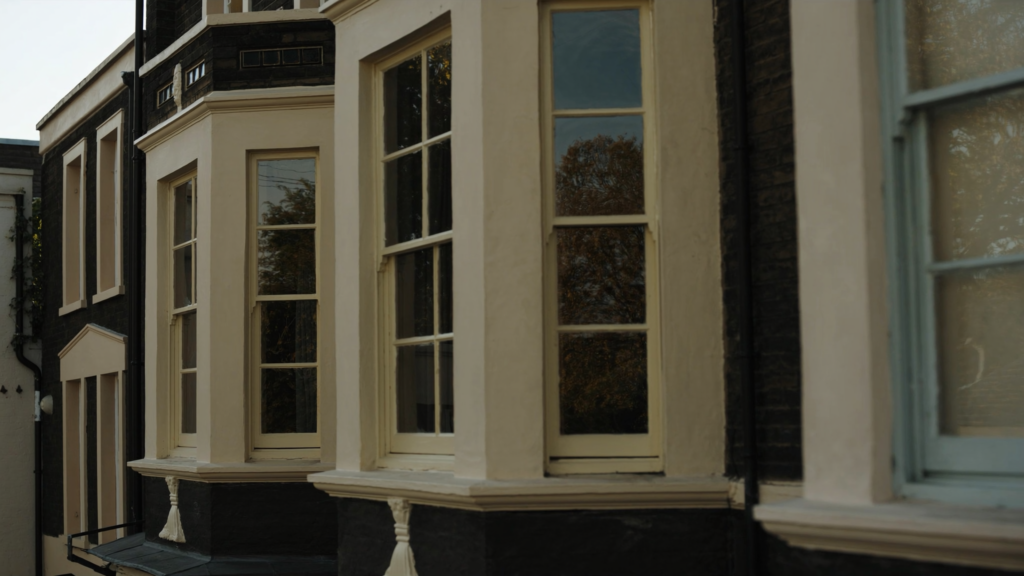
- Victorian terraces (pre-1930), Deeper reveals, sash window replacements more common, may require specialist profiles to match original character
- 1980s–90s estates, Often already have first-generation double glazing that’s now underperforming and due for replacement
- Flat roofed extensions, Common in Cwmbran’s older stock, sometimes complicating access to rear windows
One thing installers who work regularly in Cwmbran will tell you, parking and site access around the denser residential areas near the town centre can slow a job down. Factor this into your scheduling, especially if you’re in a terrace where the van needs to be close to the property.
How Much Double Glazing Costs in Cwmbran and the Wales Area in 2026
Prices in Cwmbran sit broadly in line with the South Wales average, but slightly below what you’d pay closer to Cardiff or Newport. Installers based in the region tend to serve Cwmbran alongside Newport (8km), Caerphilly (16km), and Abergavenny (19km), which keeps competition reasonable and means you’re not paying a premium for a specialist to travel out of their area.
Here’s a realistic pricing guide for 2026, based on uPVC double glazing with standard argon-filled units and low-E glass coating, the sensible baseline for most Cwmbran homes.
| Property Type | Number of Windows | Basic uPVC (A-rated) | Premium uPVC (A+ rated) | Aluminium Slim-Frame |
|---|---|---|---|---|
| 1-bed flat / maisonette | 4–5 | £2,200–£2,800 | £3,000–£3,800 | £4,200–£5,500 |
| 2-bed terrace | 6–8 | £3,000–£3,800 | £4,000–£5,200 | £5,500–£7,200 |
| 3-bed semi-detached | 8–10 | £3,800–£5,000 | £5,200–£6,800 | £7,000–£9,500 |
| 4-bed detached | 10–14 | £5,500–£7,500 | £7,200–£9,500 | £9,500–£14,000 |
| Victorian terrace (sash windows) | 6–8 | £4,500–£6,500 | £6,000–£8,500 | N/A, timber advised |
Compare these to the Wales average, which runs roughly 5–8% lower than England for like-for-like installations, largely due to lower labour costs in the valleys. Newport tends to be slightly pricier than Cwmbran due to higher overheads for larger city-based firms. Abergavenny can be more expensive again if you’re relying on a smaller pool of rural installers.
Watch out for the extras that can push your quote up, scaffolding for high rear windows (add £300–£600), specialist heritage profiles for conservation-adjacent properties, and oversized bay window units which are priced per pane rather than per window.
How Cwmbran’s Weather and Location Affect Your Double Glazing Choices
Cwmbran sits in the Afon Lwyd valley, sheltered to the east by the Mynydd Maen ridge and to the west by Twmbarlwm. This valley geography does something interesting to the local microclimate, it keeps the town relatively sheltered from the worst Atlantic weather that hammers the Brecon Beacons and the Valleys further north, but it also traps moisture and creates morning mist and condensation that persists longer than you’d expect.
That persistent dampness matters for double glazing in two ways. First, it means your frames and seals need to be genuinely weathertight, sloppy installation that might get away with itself in a drier climate will show problems quickly here. Second, it means the thermal bridge around your window frame matters more than average. Choose warm-edge spacer bars (rather than aluminium spacers) and you’ll significantly reduce the chance of condensation forming at the glass edge during those damp Cwmbran mornings.
On the upside, Cwmbran’s inland location means wind-driven rain exposure is moderate, you’re rated Category 3 (severe) in some parts of the Valleys, but central Cwmbran generally sits at Category 2 (moderate). This means standard double-sealed units are perfectly adequate, you don’t need the triple-sealed heavy-duty units that coastal Wales homeowners should consider.
Winters here are milder than you might think, with heating degree days in the 1,200–1,500 range, similar to parts of the South Midlands rather than the harsh upland winters of Merthyr or Ebbw Vale. This means the payback on super-premium triple glazing is longer than in colder areas, and A+ rated double glazing typically gives you the better return on investment.
The Products and Options That Work Best for Cwmbran Homes
Based on the local housing stock, climate, and typical budgets, here’s what actually performs well in this area rather than a generic product list.
For most post-war semis and terraces, A+ rated uPVC with warm-edge spacers
This is the workhorse recommendation for the majority of Cwmbran homes. Look for a U-value of 1.2 W/m²K or better (the window as a whole unit, not just the glass). A+ rated windows from established manufacturers like Rehau, Eurocell, or Deceuninck sit in this range and are widely available through regional installers. The argon fill is standard and worthwhile, krypton fill isn’t necessary at Cwmbran’s climate level.
For Victorian and Edwardian terraces in Old Cwmbran
Slim-sightline uPVC or timber-effect composite frames are the better call here. Standard chunky uPVC profiles look jarring on period properties and may raise issues with Torfaen County Borough Council’s design guidance even outside formal conservation areas. Sash replacements should use authentic-looking box sash double-glazed units, modern versions perform well thermally while respecting the original character.
For road-facing rooms near the A4051 or town centre routes
Acoustic laminated glass is worth the upgrade cost, typically £80–£150 per window additional. Look for units with an Rw rating of at least 32dB. The difference in a bedroom facing a busy road is genuinely significant, and it’s something many Cwmbran homeowners don’t discover until after they’ve already fitted standard glass.
- Frame material, uPVC for most homes, composite for heritage character, aluminium where you want slim sight-lines on modern extensions
- Glass specification, A+ rated, argon-filled, low-E coating, warm-edge spacer bars
- U-value target, 1.2 W/m²K or below for the whole window unit
- Acoustic upgrade, 6.4mm laminated inner pane for road-facing windows
- Security, PAS 24 certified hardware as standard, this meets the Welsh Building Regulations requirement and is non-negotiable for insurance purposes
How to Find a Trustworthy Double Glazing Installer Near Cwmbran
The good news is that Cwmbran is well-served by installers. The cluster of towns, Newport, Caerphilly, Cwmbran, and Pontypool, means regional companies are actively competing for business here, which keeps quality up and prices honest. You’re not in a rural blackspot where you’ll only get one quote.
The key certification to look for is FENSA registration, this is the competent person scheme for window and door replacement in Wales, and a FENSA-registered installer can self-certify that your installation complies with Building Regulations without you needing to apply for a separate Building Notice. This saves you money and hassle. Always ask to see a FENSA certificate at the end of the job.
Also check for TrustMark registration, which signals the installer has been vetted for trading standards compliance. For the installation itself, membership of the Glass and Glazing Federation (GGF) or the British Standards Institute’s Kitemark scheme on the units themselves are useful quality markers.
Questions worth asking before signing anything:
- Are you FENSA registered, and will I receive a FENSA certificate on completion?
- What U-value does the complete window unit achieve, not just the glass?
- What’s your guarantee on frames, sealed units, and installation workmanship separately?
- Do your sealed units carry a manufacturer’s warranty against seal failure and condensation?
- Can I see two or three recent jobs in the Cwmbran or Torfaen area I could visit?
Red flags include pressure selling with same-day discounts, quotes that don’t specify U-values or energy ratings, and installers who can’t name the manufacturer of the sealed units they’re fitting. Lead times across South Wales currently sit at four to eight weeks for most jobs, be cautious of anyone promising significantly faster turnaround on a full house.
Grants and Funding That Could Reduce Your Costs in 2026
Wales has a genuinely different funding landscape from England, and Cwmbran homeowners should understand what’s available specifically through Welsh Government channels before assuming the English-focused schemes apply here.
Warm Homes Nest Scheme (Wales)
This is the flagship Welsh Government programme for energy efficiency improvements, and it covers double glazing as an eligible measure. The scheme is targeted at low-income households and those living in properties with poor energy performance. If you’re on qualifying benefits or have a household income below the threshold (assessed at application), you could receive fully funded double glazing rather than a contribution. Contact Nest on 0808 808 2244, it’s free, and the assessment is obligation-free.
ECO4 (Great Britain Scheme)
ECO4 operates in Wales as in England, administered through energy suppliers. Double glazing is an eligible measure under ECO4, though it typically needs to be paired with other improvements (insulation, heating) rather than as a standalone installation. Eligibility is means-tested. Contact your energy supplier or a local retrofit coordinator to assess your eligibility.
With Cwmbran averaging Band C, many homes won’t qualify, but if your property is still at Band D or below, it’s worth exploring. Again, contact your energy supplier to begin the assessment.
Optimised Retrofit Programme
If you’re a social housing tenant in Cwmbran, Bron Afon Community Housing is the main registered social landlord in the area, this Welsh Government programme funds whole-house retrofits for social housing stock. Speak to Bron Afon directly if you’re a tenant and your windows are in poor condition.
One honest note, if your home is already Band C and you own it outright without qualifying benefits, grant funding is unlikely. In that case, the focus shifts to comparing installer quotes carefully and taking advantage of any 0% finance offers from established installers, which are widely available in the South Wales market.
Planning Permission and Regulations in Cwmbran, What You Need to Know
For most Cwmbran homeowners, replacing existing windows with double glazing is permitted development, meaning you don’t need to apply for planning permission. This applies to the majority of semi-detached and terraced homes across the town.
The planning authority is Torfaen County Borough Council, and they’ve maintained consistent guidance on window replacements in residential areas. The key rule under permitted development is that replacement windows must be of a “similar appearance” to those they replace, so if your home has casement windows, fitting sash-style replacements could technically require permission, even if the energy performance is identical.
However, there are situations where you will need to check with Torfaen’s planning department first:
- Listed buildings, any window changes require Listed Building Consent. There are listed properties in Old Cwmbran village and around Llant