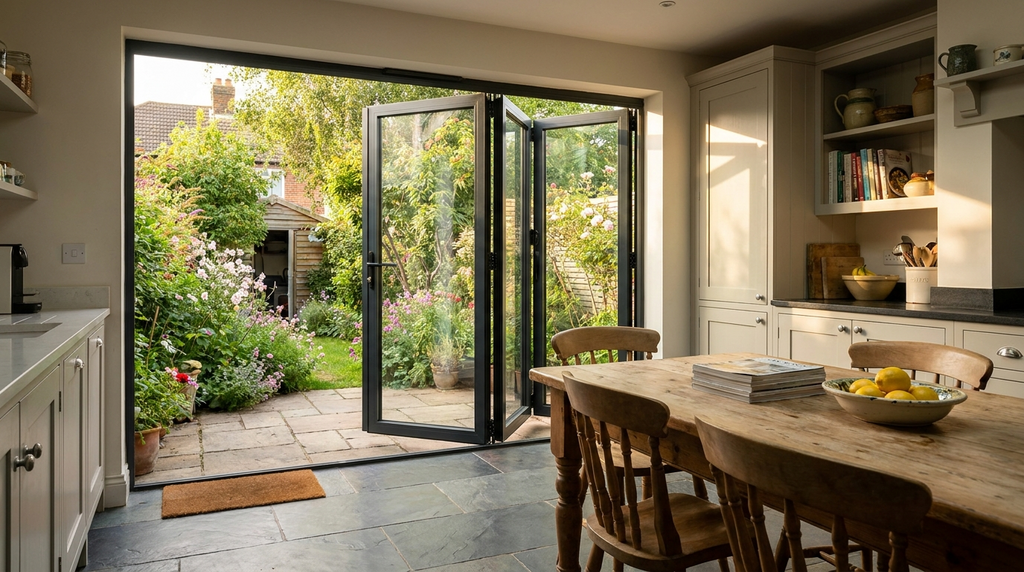
Typical cost of noise reduction windows starts at £800 per window and can exceed £2,500 depending on specification
If you live near a busy road, railway, or flight path, noise can be the single biggest factor affecting your comfort at home. The question of whether new windows can fix it is a common one, but the answer depends heavily on budget and specification.
Noise reduction windows cost £800 to £2,500 per window installed. For a three-bedroom semi-detached house with five to seven windows, total costs typically range from £4,500 to £8,000 depending on specification and frame material.
- Budget £800-£2,500 per noise reduction window installed.
- A 3-bed semi with 5-7 windows totals £4,500-£8,000.
- Triple glazing or laminated glass adds up to 30% more.
- Look for Rw ratings of 35 dB for traffic, 40 dB for aircraft.
- FENSA registration ensures compliant installation and warranty.
- Typical cost of noise reduction windows starts at £800 per window and can exceed £2,500 depending on specification
- How noise reduction windows are rated, the Rw and STC scales explained
- Quick numbers, comparing noise reduction options by cost, decibel reduction, and U-value
- The direct answer to "Do noise reduction windows work?", yes, but with limits
- Which noise reduction window type suits your home, double glazing, triple glazing, or laminated glass
- Eligibility, certification, and installer verification, what to check before you buy
- How to measure your current noise levels to decide if an upgrade is worth it
- How noise reduction windows affect your energy bills, the trade-off with thermal performance
The direct answer is that a standard-sized noise reduction window installed by a FENSA-registered professional typically costs between £800 and £1,500, while triple-glazed or laminated options can reach £2,000 to £2,500 or more per window (FENSA, 2026).
For a three-bedroom semi-detached house with five to seven windows, the total cost usually falls between £4,500 and £8,000, depending on the number of windows and the noise-reduction rating you choose. Additional costs may include frame upgrades, for example, moving from uPVC to aluminium adds roughly 20–30% to the frame cost, and specialist installation for listed buildings or conservation areas, where planning permission may be required and bespoke sash windows can push costs higher (Glass and Glazing Federation, 2026).
How noise reduction windows are rated, the Rw and STC scales explained
Noise reduction is measured using two similar scales: the Sound Transmission Class (STC) and the Weighted Sound Reduction Index (Rw). Both work on the same principle, higher numbers mean better sound blocking. For residential windows, the difference between Rw and STC is minimal, and UK product specifications use them interchangeably (GGF, 2026).
A standard double-glazed window typically has an Rw value of 28–32 dB. A specialist noise-reduction window can achieve 40–48 dB (BRE, 2026). To put that in context, a 10 dB reduction is perceived by the human ear as roughly halving the loudness. For traffic noise, you should look for windows with a minimum Rw of 35 dB. For aircraft or railway noise, aim for 40 dB or higher. The rating method is defined by British Standard BS EN ISO 717-1, which all UK manufacturers follow.
Quick numbers, comparing noise reduction options by cost, decibel reduction, and U-value
| Window type | Typical Rw/STC (dB) | Typical U-value (W/m²K) | Typical cost per window (installed) |
|---|---|---|---|
| Standard double glazing | 28–32 dB | 1.2–1.6 | £400–£700 |
| Acoustic double glazing | 35–40 dB | 1.0–1.4 | £800–£1,500 |
| Laminated glazing | 38–45 dB | 1.0–1.3 | £1,200–£2,000 |
| Triple glazing with acoustic pane | 40–48 dB | 0.7–1.0 | £1,500–£2,500 |
Data sourced from the GGF 2026 product database and FENSA 2026 installation cost survey.
Yes, but with limits
Noise reduction windows can cut perceived traffic noise by 50–70%, which corresponds to a reduction of 10–15 dB. They cannot, however, eliminate all sound. The reduction is most effective for high-frequency noises such as voices, sirens, and bird calls, and less effective for low-frequency vibrations like rumbling lorries or bass music (GOV.UK, 2026).
Performance depends on the entire window assembly, frame, seals, and installation quality, not just the glass. A poorly sealed frame can undo much of the benefit of expensive acoustic glass. A 10 dB reduction is perceived by the human ear as roughly halving the loudness, so a drop from 60 dB to 50 dB is a significant improvement (DESNZ, 2026).
Which noise reduction window type suits your home, double glazing, triple glazing, or laminated glass
Double glazing with a wider air gap (12–20 mm) offers moderate noise reduction, achieving an Rw of 30–35 dB, and is the most common upgrade. Triple glazing, with three panes, can reach Rw 40+ dB but is heavier and may require stronger frames, always check load limits with your installer (GGF, 2026).
Laminated glass, which contains a plastic interlayer between two glass sheets, is the most effective option for high-frequency noise and is often used in conservation areas where frame changes are restricted. For most suburban homes, acoustic double glazing, a laminated inner pane combined with a standard outer pane, offers the best balance of cost and performance (FENSA, 2026).
How to choose the right glazing for your home
Eligibility, certification, and installer verification, what to check before you buy
All noise reduction window installations must comply with Building Regulations Part L (thermal performance) and Part E (sound insulation). Your installer should provide a certificate of compliance. Use only FENSA-registered installers, FENSA certification is required for most replacement window work in England and Wales (GOV.UK, 2026).
For acoustic performance claims, ask for a manufacturer’s test certificate showing the Rw value for the specific window unit, not just a generic product brochure. If you live in a conservation area or listed building, check with your local planning authority before ordering, as some noise-reduction windows may require planning permission (FENSA, 2026).
How to measure your current noise levels to decide if an upgrade is worth it
Use a free smartphone app such as NIOSH SLM or Decibel X to measure peak noise levels inside your home during busy traffic hours. Readings above 55–60 dB indoors suggest a noise problem. Compare your measured levels to World Health Organisation guidelines, which recommend indoor noise should not exceed 30 dB for good sleep quality (WHO, 2018).
A 5 dB reduction, for example, from 60 dB to 55 dB, is noticeable. A 10 dB reduction, to 50 dB, is a significant improvement. If your indoor levels are already below 45 dB, the cost of specialist noise reduction windows may not be justified (HSE, 2026).
How to soundproof your home without replacing windows
How noise reduction windows affect your energy bills, the trade-off with thermal performance
Acoustic windows often have lower U-values, meaning better insulation, than standard double glazing, reducing heating costs by 10–15% annually (Energy Saving Trust, 2026). Triple-glazed acoustic windows can achieve U-values as low as 0.7 W/m²K, potentially saving £100–£150 per year on a typical semi-detached house (DESNZ, 2026).
However, the heavier glass may reduce natural light transmission slightly, by 2–5%, and the cost premium over standard double glazing can take 10–15 years to recoup via energy savings alone. For homes where noise is the primary concern, the energy savings are a secondary benefit, not the main reason to upgrade.
Frequently Asked Questions
A standard noise reduction window costs between £800 and £1,500 installed, while triple-glazed or laminated options range from £2,000 to £2,500 per window, according to FENSA (2026).
For traffic noise, aim for a minimum Rw of 35 dB; for aircraft or railway noise, 40 dB or higher is recommended. The Building Research Establishment (BRE) states specialist windows can achieve 40-48 dB.
Yes, they can reduce perceived loudness by half with a 10 dB improvement. A standard double-glazed window offers 28-32 dB, while specialist noise reduction windows reach 40-48 dB (Glass and Glazing Federation, 2026).
Standard double-glazed windows block 28-32 dB, while specialist noise reduction windows block 40-48 dB. The human ear perceives a 10 dB drop as halving the noise (BRE, 2026).
Yes, if you live near a busy road, railway, or flight path. The starting cost is £800 per window, but the improvement in comfort can be significant. Compare quotes from FENSA-registered installers to check value.