Why Belfast Homeowners Are Looking at Double Glazing Right Now
If you live in Belfast and your heating bills have been climbing year after year, you’re not imagining it. The city sits in one of the most energetically demanding positions in the UK, battered by westerly Atlantic winds, drenched by over 1,000mm of rainfall annually, and facing cold winters that rack up somewhere between 1,800 and 2,200 heating degree days every year. That’s a lot of heat escaping through single-glazed or ageing double-glazed windows.
The average Belfast home sits at EPC Band D, which means there’s real, measurable room for improvement. With gas usage averaging 13,000 kWh per year across the city, and many homes still on oil heating rather than gas, energy efficiency upgrades aren’t a luxury, they’re increasingly a financial necessity.
There’s also something specific happening in Belfast’s housing stock right now. A significant portion of the city’s terraced and semi-detached homes in areas like the Holylands, lower Ormeau Road, and parts of north and west Belfast were built between the 1890s and 1950s. These properties often still have their original timber frames, and even where double glazing was fitted in the 1990s or early 2000s, those units are now reaching the end of their effective lifespan. Seals fail, gas fills deplete, and frames warp, so there’s a natural replacement wave happening across the city at the moment.
Add in Belfast City Council’s active climate and retrofit agenda, plus Northern Ireland-specific funding through the NI Sustainable Energy Programme, and you’ve got real incentives to act now rather than wait.
What Double Glazing Actually Involves for a Typical Belfast Home
For most Belfast homeowners, double glazing installation is a two-to-three day job per property, but the specifics depend heavily on what type of home you have and when it was built.
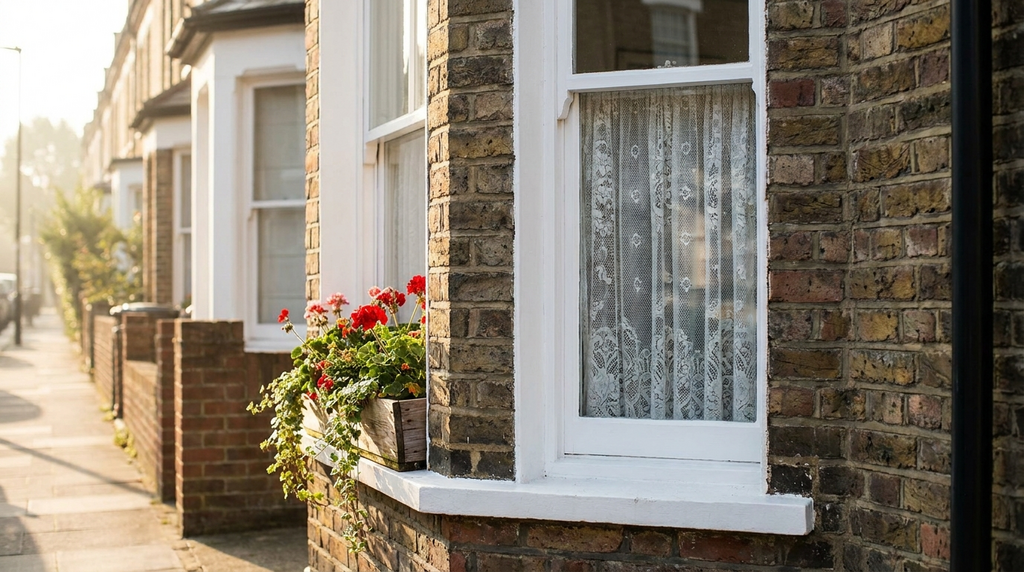
If you’re in one of the classic red-brick terraces that line streets across the Ormeau Road, Ravenhill Road, or inner east Belfast, your windows are likely set into solid brick reveals. That’s actually good news, solid masonry provides a firm fixing point and tends to hold frames securely. The challenge is that Victorian and Edwardian window openings are often tall and narrow, with distinctive proportions that need careful frame matching to avoid ruining the character of the property.
Semi-detached homes built between the 1930s and 1970s, think large swathes of Castlereagh, Finaghy, and Dunmurry, often have larger picture windows and bay fronts. These need specialist bay window units, which are more expensive and more technically demanding to install correctly.
Here’s what the process typically looks like from start to finish:
- A surveyor visits to measure up and assess your frame condition, reveal depth, and lintel integrity
- Frames are manufactured to measure, standard lead times in Belfast are currently four to six weeks
- Old frames are removed and new ones fitted, usually in one day per room if access is straightforward
- Gaps are sealed, internal trims are finished, and drainage channels in the sill are checked
- A FENSA certificate (or BFRC equivalent under NI Building Regulations) is issued on completion
One thing to know about Belfast specifically, access can be genuinely tricky in the city’s tighter terraced streets. Narrow entries, on-street parking, and proximity to neighbours means installers sometimes can’t use a full van or equipment run. Ask any company upfront how they handle access on your specific street, especially in areas like the Markets, Sandy Row, or the tightly packed streets of north Belfast.
How Much Double Glazing Costs in Belfast and the Northern Ireland Area in 2026
Costs in Belfast sit slightly above the Northern Ireland average due to higher labour rates and city-centre logistics. Here’s a realistic breakdown for 2026:
| Property Type | Number of Windows | uPVC Frames (standard) | uPVC Frames (premium) | Aluminium Frames |
|---|---|---|---|---|
| Mid-terrace (2-bed) | 4-6 | £2,800 – £4,200 | £4,200 – £5,800 | £5,500 – £7,500 |
| End-terrace / semi-detached (3-bed) | 6-9 | £4,000 – £6,000 | £6,000 – £8,200 | £7,800 – £10,500 |
| Larger semi-detached / detached (4-bed) | 9-12 | £6,200 – £8,500 | £8,500 – £11,500 | £11,000 – £15,000 |
| Apartment (ground or mid-floor) | 2-4 | £1,800 – £2,800 | £2,800 – £3,800 | £3,500 – £5,000 |
Belfast prices are typically 8 to 12 percent higher than comparable installations in Lisburn or Newtownards, primarily because of parking restrictions, tighter access, and higher base labour rates in the city. Carrickfergus and Bangor-based installers sometimes offer slightly lower rates and do cover Belfast jobs, so it’s worth getting quotes from companies based across the wider cluster.
Triple glazing commands a premium of roughly 25 to 35 percent over standard double glazing, and given Belfast’s climate, it’s worth serious consideration, more on that below.
How Belfast’s Weather and Location Affect Your Double Glazing Choices
This is where Belfast genuinely differs from most of England, and where generic advice will let you down.
Belfast faces prevailing westerly winds rolling in off the Irish Sea and beyond, bringing consistent driving rain that hammers west and north-facing facades. If your front or side elevation faces west, very common in the grid-pattern streets of west Belfast and parts of south Belfast, you need windows with exceptional weathersealing. Look specifically for windows rated to British Standard BS 6375, achieving at least Class 3 air permeability and Class A watertightness.
The coastal proximity matters too. Salt-laden air from Belfast Lough accelerates corrosion on metal fixings, locking mechanisms, and hinges. If you’re in Titanic Quarter, Sydenham, or anywhere along the lough shore, marine-grade stainless steel hardware is not optional, it’s a requirement for longevity. Standard zinc fixings can fail within five to seven years in these conditions.
Belfast’s low sunshine hours (850 to 1,000 per year) mean that passive solar gain is genuinely valuable. South-facing windows should have a higher solar heat gain coefficient (SHGC above 0.35) to capture every bit of warmth during the day. Don’t let an installer talk you into low solar gain glass across the board, it makes sense on north-facing windows but actively works against you on south elevations in a city that doesn’t get much sun to spare.
Finally, Belfast’s rainfall is relentless. Water management around your new frames matters enormously. Make sure your installer fits proper drainage slots in the outer sill, uses good quality silicone sealant rated for high-exposure conditions, and that any cill overcladding properly directs water away from the reveal.
The Products and Options That Work Best Here
Based on Belfast’s specific conditions, here’s what actually performs well rather than what simply sounds good in a brochure:
Frame material, For most Belfast homes, high-quality uPVC remains the best value choice. Look for A-rated or A+-rated profiles from established manufacturers. In coastal locations or for homes where aesthetics matter (Victorian terraces, for example), composite frames with a timber-look interior and uPVC exterior give you the best of both worlds without the maintenance headache of pure timber in this climate.
Glazing specification, Standard double glazing with a low-E coating and argon fill is the baseline. But for Belfast, seriously consider upgrading to triple glazing on north and west-facing windows, where the extra thermal resistance genuinely earns its cost back faster than it would in southern England. A U-value of 0.8 W/m²K or better on the overall window unit is achievable and worth targeting.
Gas fill, Always specify argon, not air. Some budget suppliers still offer air-filled units. For maximum performance, krypton-filled glazing is available but commands a significant price premium; it’s worth it mainly for heritage-style windows where slim profiles are needed.
Hardware, Specify stainless steel or marine-grade hardware throughout. Non-negotiable for anything within 2km of the lough.
Acoustic performance, If you’re near the Westlink, the M2, Boucher Road, or under the flight path from George Best City Airport (particularly Sydenham and Titanic Quarter), ask specifically about acoustic laminated glass. A 6.4mm laminated inner pane makes a substantial real-world difference to noise reduction and is worth the modest premium.
How to Find a Trustworthy Double Glazing Installer Near Belfast
Belfast has no shortage of double glazing companies, but the quality varies considerably. Here’s how to separate the good from the mediocre.
The key accreditation to look for in Northern Ireland is FENSA registration or, for NI-specific compliance, a company that issues certificates under the NI Building Control scheme. Under Northern Ireland Building Regulations (which differ from England and Wales), replacement windows must comply with conservation of fuel and power requirements, and your installer should provide documentation confirming this, not just promise it verbally.
Also look for TrustMark registration, which applies UK-wide including Northern Ireland, and membership of the Glass and Glazing Federation (GGF). The GGF has a deposit indemnity scheme which matters if a company goes under between order and installation, a real risk with smaller operations.
Questions worth asking any installer:
- Are you FENSA-registered or do you notify Belfast City Council Building Control directly
- What warranty do you offer on the sealed unit itself (look for at least 10 years on the glass unit)
- Do you manufacture locally or import frames from outside Northern Ireland
- How do you handle access on narrow terraced streets
- Can you provide references from comparable properties in the same era of housing
Red flags include pressure to sign on the day, unusually low quotes that don’t itemise specification, and any company that can’t clearly explain how they will notify Building Control.
Many of the best-reviewed installers in the area also serve Lisburn, Carrickfergus, Newtownards, and Bangor regularly. A company covering this cluster of towns will have more experience with varied property types and is often more competitive on price than one working solely in Belfast.
Grants and Funding That Could Reduce Your Costs in 2026
Northern Ireland operates its own energy efficiency funding landscape, which is genuinely more generous in some areas than what’s available in England. Here’s what’s live in 2026:
The Affordable Warmth Scheme, Administered by the NI Housing Executive, this provides fully funded or heavily subsidised home energy improvements including windows for households on qualifying low incomes or benefits. The household income threshold for eligibility is currently set at £23,000 per year or below. If you qualify, this is by far the most valuable route, windows can be covered at no cost to you.
NI Sustainable Energy Programme (NISEP), NISEP funds are channelled through energy suppliers including Power NI and SSE Airtricity. These schemes change in eligibility criteria from year to year, so check directly with your supplier. Grants typically cover 30 to 50 percent of installation costs for qualifying households, with the focus on properties currently rated EPC Band E or below.
ECO4, This Great Britain scheme technically operates differently in Northern Ireland, but Northern Ireland does have access to some ECO-style funding via the NI-specific Boiler Replacement Scheme and associated fabric improvements. Your installer should be able to advise whether your project qualifies.
NI Housing Executive Improvement Grants, If you’re in a house in multiple occupation (HMO) or a qualifying older private property, the Housing Executive’s renovation grant programme can contribute toward window replacement as part of a broader improvement project.
Belfast City Council also periodically runs targeted retrofit programmes in specific areas, the Dunmurry regeneration zone and parts of north Belfast have both seen focused retrofit investment recently. It’s worth checking the Council’s current sustainability initiatives directly, as these schemes open and close throughout the year.
Planning Permission and Regulations in Belfast
For most Belfast homeowners, replacing windows with double glazing is covered under permitted development rights and does not require planning permission, provided the replacement windows are similar in appearance to the originals. However, there are some important local exceptions you need to know about.
Belfast has a significant number of Conservation Areas, including the Cathedral Quarter, parts of the Ormeau Road, the Malone Road corridor, and sections of east Belfast’s Victorian streetscape. If your home is within a Conservation Area, permitted development rights may be restricted, and you may need formal planning consent from Belfast City Council’s Planning Department before replacing windows. The key test is whether your proposed replacement windows would alter the character or appearance of the Conservation Area.
If your home is a Listed Building, there are a number of listed terraces and individual properties in the city, particularly in south and east Belfast, you will almost certainly need Listed Building Consent before touching any windows. Contact Belfast City Council’s planning team early, and expect the process to take eight to twelve weeks.
For the majority of standard terraced and semi-detached homes outside these designations, the regulatory requirement is simpler: your installer must either be FENSA-registered (so they self-certify compliance) or notify Belfast City Council Building Control directly, who will issue a completion certificate. Keep this certificate, you’ll need it when you sell the property.
What You Will Actually Save, Realistic Numbers for Belfast Homes
Let’s work with real Belfast figures rather than national averages that don’t apply here.
With a typical gas usage of 13,000 kWh per year and an EPC Band D rating, a Belfast semi-detached home is losing meaningful heat through its windows. Older single glazing accounts for roughly 25 to 30 percent of heat loss; ageing double glazing from the 1990s might account for 18 to 22 percent once seals have failed and gas fill has depleted.
Upgrading to modern A-rated double glazing across a three-bedroom semi-detached home typically reduces heat loss through windows by 50 to 70 percent compared to single glazing, or 30 to 40 percent compared to failed 1990s double glazing.
In practical terms for Belfast:
- Conservative estimate, saving 1,200 to 1,500 kWh of gas per year, worth approximately £90 to £115 annually at current rates
- Mid-range estimate, saving 1,800 to 2,200 kWh per year, worth approximately £135 to £165 annually
- Optimistic estimate (replacing failed single glazing across whole house), saving 2,500 to 3,000 kWh per year, worth approximately £190