Why Lisburn Homeowners Are Turning to Double Glazing Right Now
There’s a quiet revolution happening across Lisburn’s residential streets, from the Victorian terraces near the city centre to the newer estates out towards Sprucefield and Ballymacash. With energy bills remaining stubbornly high and the average Lisburn home sitting at EPC Band D, thousands of homeowners are realising that draughty, inefficient windows are one of the biggest culprits behind expensive heating bills.
Lisburn has a particular problem that doesn’t get talked about enough. Sitting just 12km from Belfast, the city benefits from good installer competition, but it also sits right in the path of Northern Ireland’s prevailing south-westerly winds. That means rain-lashed facades, wind-driven cold penetrating older window frames, and a heating season that stretches well into April most years. Single glazed or old-style double glazed windows simply cannot cope with that kind of sustained exposure.
There’s also the oil heating factor. A large proportion of Lisburn homes are off the gas grid and rely on oil-fired central heating, making those 12,500 kWh of annual gas-equivalent consumption even more costly to replace when temperatures drop. Every bit of heat that leaks out through poorly sealed windows is money draining away. Upgrading your glazing improves comfort, and in Lisburn, it is genuinely one of the most cost-effective things you can do.
What Double Glazing Actually Involves for a Typical Lisburn Home
Most homes in Lisburn fall into one of two broad categories, semi-detached properties built between the 1950s and 1980s, and detached homes ranging from pre-war stock near the historic core to more recent builds on the outer estates. Each type brings its own set of installation considerations.
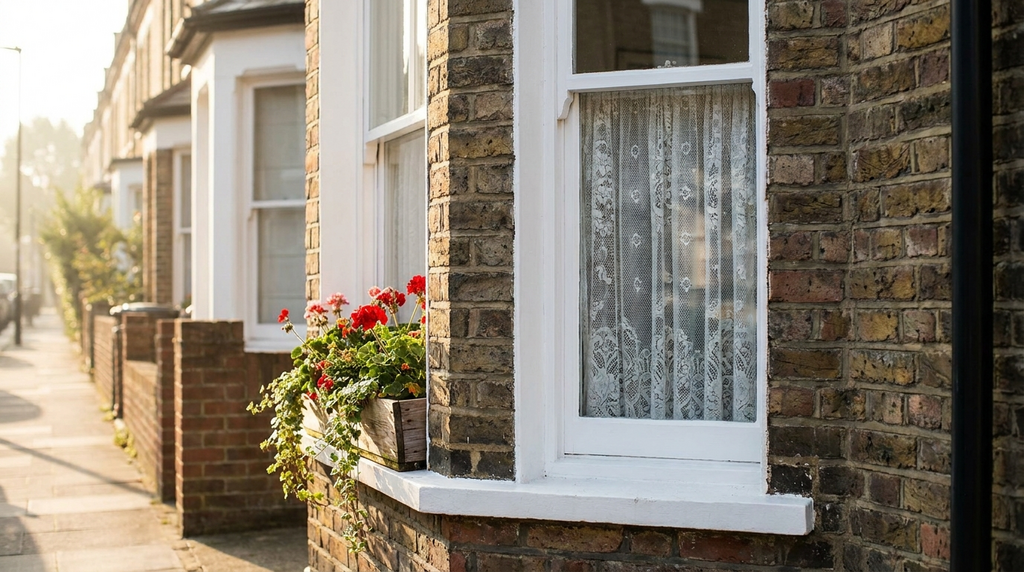
For those 1960s and 70s semi-detached homes so common in areas like Hilden, Dunmurry and the streets around Seymour Street, the original windows were often metal-framed single glazing, sometimes later replaced with early uPVC units that are now well past their best. If your uPVC frames have yellowed or the sealed units have gone misty, you’re likely losing significant heat. A full replacement typically means new frames and glass units, with installation taking one to two days for an average semi.
Detached properties, particularly the larger Victorian and Edwardian houses you’ll find near Lisburn’s city centre and around the Cathedral Quarter, often have wider, taller window openings that require bespoke sizing. Sash-style windows in older properties need careful measurement and, in some cases, specialist timber or flush-sash uPVC to maintain their appearance.
What Makes Installation Trickier Here Than in Some Other Towns
- Older masonry, Many Lisburn homes have solid brick or rendered blockwork rather than cavity walls, so securing new frames requires extra care to avoid cracking older render
- Salt-laden air, Proximity to the east coast of Northern Ireland means metal hardware, hinges, and locking mechanisms face accelerated corrosion, marine-grade fittings are worth the upgrade
- Damp reveal conditions, Higher rainfall means window reveals can hold moisture, and any installer should check for damp before sealing new frames
- Access on terraced and semi-detached streets, Tight driveways on many of Lisburn’s older estates mean scaffolding or ladders need careful positioning, which can add a small labour premium
How Much Double Glazing Costs in Lisburn and the Northern Ireland Area in 2026
Double glazing prices in Lisburn tend to sit broadly in line with the Northern Ireland average, which runs slightly below mainland GB costs thanks to lower labour overheads, though this gap has narrowed in recent years. Your actual quote will depend heavily on frame material, glass specification, the number of windows, and whether you need any structural or reveal repairs before fitting.
The table below gives realistic installed costs for Lisburn in 2026, assuming standard replacement windows with A-rated double glazing units in uPVC frames. Premium materials like aluminium or timber, or triple glazing, add to these figures.
| Property Type | Number of Windows | Standard uPVC Double Glazing | Aluminium Frames | Triple Glazing Upgrade |
|---|---|---|---|---|
| 2-bed semi-detached | 6–8 | £3,200–£4,800 | £4,800–£6,500 | Add £600–£900 |
| 3-bed semi-detached | 8–10 | £4,500–£6,200 | £6,500–£8,500 | Add £900–£1,400 |
| 3-bed detached | 10–12 | £5,500–£7,500 | £8,000–£10,500 | Add £1,200–£1,800 |
| 4-bed detached | 12–16 | £7,000–£10,000 | £10,500–£14,000 | Add £1,500–£2,400 |
| Older sash-style property | 8–12 | £6,500–£9,500 | £9,500–£13,000 | Rarely applicable |
Compared to the GB national average, Lisburn prices run roughly 8–12% lower for standard installations. However, if an installer is travelling from Belfast or Craigavon to cover your job, some firms apply a small travel surcharge, worth asking about upfront.
Insider tip, get at least three quotes from companies who actively work in the Lisburn area rather than using national chains. Local firms that also serve Banbridge, Antrim town, and Craigavon tend to have more competitive day rates because they batch their Northern Ireland work efficiently.
How Lisburn’s Weather and Location Shape Your Double Glazing Choices
Lisburn averages between 1,800 and 2,200 heating degree days per year, a technical way of saying your heating system works hard for a long time. Combined with 1,000–1,400mm of annual rainfall and almost constant exposure to Atlantic westerlies, the demands on your windows are genuinely higher than much of southern England.
The driving rain exposure is the factor most often overlooked. Water under pressure from wind-driven rain will find any weakness in a poorly fitted window seal. Poorly bedded frames or cheap sealant around reveals can allow damp to creep into wall cavities, which then undoes the thermal benefit you were aiming for. This is why installation quality matters as much as product quality in Lisburn.
What Lisburn’s Climate Means in Practical Terms
- Warm edge spacer bars, standard aluminium spacers conduct cold from the glass edge into your frame, causing condensation. In Lisburn’s cold winters, foam or thermoplastic warm edge spacers make a real difference and should be specified as standard
- Low-E glass coatings, a hard or soft coat low-emissivity layer is essential, not optional. It keeps radiated heat inside during those long Northern Ireland winters
- Argon or krypton gas fill, argon is the standard choice and performs well here; krypton offers marginally better performance but costs more and is rarely worth the premium unless you’re also going triple-glazed
- Marine-grade stainless steel hardware, standard zinc die-cast handles and hinges can corrode noticeably within a few years in Lisburn’s moisture-laden air. Spend a little more on marine-grade fittings and you’ll thank yourself in five years
- Drainage channels in frames, check that any uPVC profile you’re quoted has adequate drainage slots to prevent standing water pooling in the frame bottom, a common issue with cheaper profiles in high-rainfall areas
The Products and Options That Actually Perform Well in Lisburn
Given everything above, here’s an honest expert view on what works well for Lisburn’s housing stock, rather than a generic catalogue of options.
For Most Semi-Detached Homes, White uPVC with A++ Rating
A high-quality white uPVC frame with a 28mm double-glazed unit, argon fill, warm edge spacer, and soft-coat low-E glass consistently delivers the best value for money in Lisburn’s typical semi-detached stock. Look for profiles with a U-value of 1.2 W/m²K or better for the whole window. This is genuinely achievable at mid-range prices.
For Larger or More Modern Detached Properties, Aluminium or Composite
If your home has large glazed areas or contemporary styling, particularly the newer builds around Sprucefield and the Knockmore area, aluminium or composite frames offer better rigidity across wider spans. Thermally broken aluminium (with a polyamide break through the frame) is the key specification to insist on; non-broken aluminium is a thermal disaster in Northern Ireland winters.
For Older and Period Properties
Flush-sash uPVC is a genuinely convincing option for older Lisburn properties where appearance matters but budget doesn’t stretch to timber. A decent flush-sash unit from a reputable manufacturer looks far closer to timber than older-style uPVC and offers better performance than actual timber in Lisburn’s wet climate.
Triple Glazing, Is It Worth It in Lisburn?
Triple glazing is worth serious consideration for Lisburn homes, more so than in southern England. With heating costs elevated by the long season and the prevalence of oil heating (where every kWh saved is directly valuable), the additional spend on triple glazing can pay back more quickly here than in milder parts of the UK. On a north or north-west facing elevation that catches the worst of the weather, triple glazing with a centre-pane U-value of around 0.5–0.6 W/m²K is worth the premium. On south-facing windows, a high-performance double unit is usually sufficient.
Finding a Trustworthy Double Glazing Installer Near Lisburn
The good news is that Lisburn’s proximity to Belfast means you have access to a reasonably competitive installer market. The less good news is that this also attracts some of the less scrupulous national chains who use high-pressure sales tactics. Here’s how to navigate it.
Certifications to Look For
- FENSA or Certass registration, mandatory for any installer replacing windows in Northern Ireland, as these schemes self-certify compliance with building regulations. Always ask for your FENSA or Certass certificate at job completion
- TrustMark, a government-endorsed quality scheme worth seeking out, particularly if you’re also accessing grant funding
- BSI Kitemark on the glass unit, look for the CE mark and British Kite mark on the sealed unit itself. This tells you the unit was made to proper standards, regardless of who fitted it
Questions Worth Asking Any Installer
- Are you FENSA or Certass registered, and will you provide the certificate when the job is done?
- Do you manufacture your own units or source them, and from where?
- What’s the exact U-value of the whole window unit you’re quoting, not just the glass?
- What’s your lead time currently for Lisburn installations?
- Can you provide two or three references from jobs within the last six months in this area?
Lead times in the Lisburn and Belfast corridor currently run at four to eight weeks for most reputable firms. Be cautious of any company promising installation within a week, that’s either a cancellation slot or a red flag.
Firms regularly working the Lisburn–Belfast–Craigavon triangle tend to offer better ongoing aftercare than those coming in from further afield, as call-out costs for warranty issues are lower. It’s worth asking where their nearest service engineer is based.
Grants and Funding That Could Cut Your Costs in Lisburn in 2026
Northern Ireland has its own distinct energy efficiency funding landscape, separate from England and Wales, and it’s worth understanding what’s actually available to you as a Lisburn homeowner in 2026.
The Affordable Warmth Scheme
Administered by the NI Housing Executive, the Affordable Warmth Scheme provides grants for energy efficiency improvements, including windows, for low-income owner-occupiers and private tenants. To qualify, your household income generally needs to be below £23,000 per year and your property must have an EPC below Band C. Given that most Lisburn homes sit at Band D, many residents are eligible in principle. The grant can cover a substantial proportion of improvement costs, and in some cases the full cost for qualifying households. Apply directly through the Housing Executive or via your local council office.
NISEP (Northern Ireland Sustainable Energy Programme)
The NI Sustainable Energy Programme is funded through a levy on energy suppliers like SSE Airtricity and Power NI. It funds a range of energy efficiency measures for homes, with double glazing included as an eligible improvement under certain conditions. Availability varies year to year depending on budget allocation, so it’s worth checking current availability with your energy supplier directly.
ECO4 in Northern Ireland
The GB Energy Company Obligation (ECO4) scheme operates differently in Northern Ireland, but some of the larger energy suppliers do offer equivalent schemes here. If you’re a low-income household receiving qualifying benefits, including Universal Credit, Pension Credit, or Child Tax Credit, you may be eligible for significant contributions toward window and wider insulation upgrades. Contact Power NI or SSE Airtricity to ask about their current ECO-equivalent obligations in Northern Ireland.
Lisburn and Castlereagh City Council Support
Lisburn and Castlereagh City Council periodically runs home improvement support programmes in partnership with the Housing Executive. It’s worth contacting the Council’s Environmental Health or Housing team directly to ask what’s currently active, these local programmes are often under-advertised and can complement the larger schemes above.
Important note, grants for windows are generally only available as part of a wider retrofit package, not as a standalone measure, unless you’re applying under the Affordable Warmth Scheme. If you’re planning multiple improvements, doing them together maximises your funding eligibility.
Planning Permission and Building Regulations in Lisburn
Planning permission is not required for standard double glazing replacement on most residential properties in Lisburn, this falls under permitted development rights. However, there are important exceptions that apply to a meaningful number of homes in this area.
Conservation Areas and Listed Buildings
Lisburn has a designated Conservation Area around its historic city centre and Cathedral Quarter. If your home falls within this area, you are likely to need planning consent before replacing windows, and there may be specific requirements about frame material, colour, and style, particularly a preference for timber or authentic-