Why Bournemouth Homeowners Are Talking About Double Glazing Right Now
There’s something quietly significant happening across Bournemouth’s residential streets right now. From the Victorian terraces near the town centre to the post-war semis spreading out through Winton, Moordown, and Charminster, homeowners are finally getting serious about their windows, and double glazing is at the top of the list.
Part of this is the energy cost hangover from recent years. Bournemouth households sitting on a Band D EPC rating, which is exactly where the town’s average sits, are losing real money through draughty, ageing single-glazed or tired old double-glazed units every single winter. With average gas usage of around 10,800 kWh per year here, there’s a meaningful amount of energy (and cash) drifting straight out through the glass.
Heating bills are only part of the picture. Bournemouth’s coastal-adjacent location means that while the winters are genuinely milder than most of the UK, the town sits close enough to the sea for noise, moisture, and salt-laden air to become real concerns, especially for homes near the seafront in Boscombe, Southbourne, or East Cliff. Double glazing addresses all of these things at once, which makes it one of the most practical home improvements you can make here.
There’s also the demographic angle. Bournemouth has a high proportion of retired and semi-retired residents who are at home more and therefore care deeply about warmth, quiet, and energy costs. If you’ve bought a flat in Westbourne or a semi in Kinson in the last decade, the chances are your windows are already doing reasonable work, but if your home pre-dates the 1990s and hasn’t had a window refresh, you’re almost certainly leaving comfort and money on the table.
What Double Glazing Actually Involves for a Typical Bournemouth Home
Bournemouth’s housing stock is genuinely varied, but two property types dominate, flats and semi-detached homes. These sit in very different contexts for double glazing installation, so let’s be honest about what each one involves.
Flats, particularly in purpose-built blocks
Bournemouth has a high concentration of purpose-built flats, many dating from the 1960s and 1970s, especially along the cliff-top roads, in central areas, and across the suburbs stretching toward Pokesdown and Springbourne. In a leasehold flat, you almost certainly need freeholder or management company consent before replacing windows, full stop. Don’t skip this step, because unapproved installations can cause real headaches when you come to sell.
The practical reality for flat installations is that window styles tend to be standardised (often casement or tilt-and-turn), which actually makes ordering and fitting more straightforward. Access can be trickier for upper-floor units, particularly in older blocks without wide corridors, which may add modestly to labour time and therefore cost.
Semi-detached homes, the bread and butter of Bournemouth suburbs
For a typical Bournemouth semi in Northbourne, Townsend, or Queens Park, installation is generally very manageable. Most semis here were built between the 1920s and 1970s, meaning timber frames have often degraded over the decades. Many homeowners find they need full frame replacements rather than just glass unit swaps, so budget for that from the outset rather than being surprised mid-project.
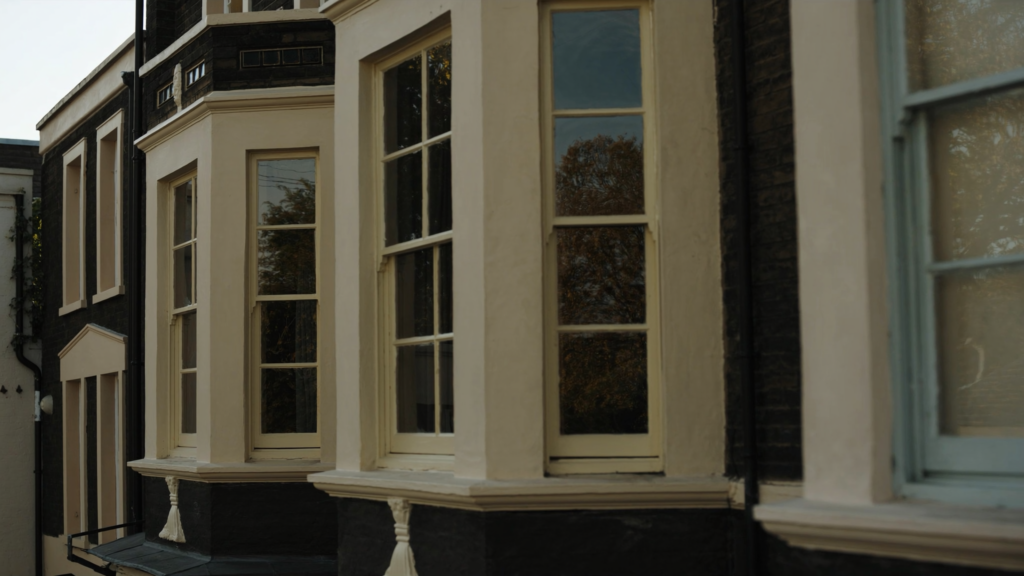
- 1920s–1940s semis often have larger, multi-pane bay windows at the front, these need careful measuring and can require bespoke frames
- 1950s–1960s builds typically have simpler casement arrangements and are the most straightforward to replace
- 1970s–1980s properties may already have first-generation double glazing that’s now past its thermal performance life, a full replacement is usually the right call
One local consideration worth flagging, Bournemouth’s sandy subsoil in parts of the town can cause slight subsidence and settlement in older properties. If your frames are noticeably distorted or your windows are sticking, get a structural check before assuming new windows will solve everything.
How Much Double Glazing Costs in Bournemouth and the Surrounding Area in 2026
Let’s talk numbers, because vague ranges help nobody when you’re trying to budget. Bournemouth sits in a reasonably competitive installer market, with companies based in the town itself plus others covering the Poole, Ringwood, and Lymington corridor. Labour costs are moderate compared to London but slightly above rural Dorset towns further inland like Dorchester.
| Property Type | Number of Windows | Standard uPVC Double Glazing | A-Rated uPVC Double Glazing | Triple Glazing Upgrade |
|---|---|---|---|---|
| One-bedroom flat | 4–5 windows | £2,400 – £3,200 | £3,000 – £4,000 | £4,200 – £5,500 |
| Two-bedroom flat | 6–8 windows | £3,200 – £4,500 | £4,000 – £5,500 | £5,500 – £7,500 |
| Two-bedroom semi | 7–10 windows | £3,800 – £5,200 | £4,800 – £6,500 | £6,500 – £9,000 |
| Three-bedroom semi | 10–13 windows | £5,000 – £7,000 | £6,200 – £8,500 | £8,500 – £12,000 |
| Four-bedroom detached | 13–16 windows | £7,000 – £10,000 | £8,500 – £12,000 | £12,000 – £16,000 |
What pushes costs up locally, conservation area requirements in parts of central Bournemouth and Boscombe can mean you need heritage-style frames or specific colour matches, adding 15–25% to standard pricing. Upper-floor flat work may require scaffold platforms or specialist access equipment. Properties with unusual bay or curved window arrangements need bespoke manufacturing runs, which increases lead time and cost.
Compared to nearby Poole, prices in Bournemouth tend to be marginally lower simply because there’s denser installer competition in the larger town. Ringwood and Lymington customers sometimes pay 5–10% more due to travel time from the main installer bases. The South West regional average for a three-bedroom semi sits around £6,500 for A-rated double glazing, Bournemouth is broadly in line with that figure.
How Bournemouth’s Weather and Location Shape Your Window Choices
Here’s the honest truth about Bournemouth’s climate, it’s genuinely one of the most favourable in the UK, and that actually changes the maths on double glazing in a way that’s worth understanding.
With only 1,200–1,500 heating degree days annually (compared to 2,000+ in Scotland), Bournemouth winters are mild. You’re not fighting the same brutal cold that drives people in the North East toward triple glazing as a necessity. What you are dealing with is something slightly different, sea-influenced moisture, moderate winds that can carry salt, and a year-round humidity level that affects condensation behaviour in window units.
The good news is that Bournemouth enjoys some of the best solar irradiance in the UK, hitting 1,100–1,200 kWh/m² per year. This means south-facing windows can contribute meaningfully to passive solar gain, a well-specified double glazed unit on a south-facing elevation in Bournemouth can offset a real chunk of your winter heating load without any additional technology.
Practical implications for your window spec
- For most Bournemouth properties, A-rated double glazing (U-value around 1.2 W/m²K) hits the sweet spot, it’s genuinely effective here without the premium cost of triple glazing
- Properties within a kilometre of the sea, think Southbourne, Boscombe seafront, Canford Cliffs, benefit from marine-grade hardware fittings to resist salt corrosion
- Argon-filled units are standard and sensible here; the marginal cost over air-filled is minimal and the thermal improvement is worth having
- Low-E glass coatings make excellent sense given Bournemouth’s solar resource, they admit solar gain in winter while limiting summer overheating
- Moderate rainfall (700–900mm annually) means standard drainage and weather sealing is sufficient, you’re not in a high-exposure zone requiring specialist weatherproofing
The Products That Actually Perform Well in Bournemouth Homes
Given everything above, here’s a genuinely practical product steer rather than a generic spec sheet.
uPVC casement windows with A-rated glass units
For the vast majority of Bournemouth semis and flats, standard uPVC casement frames with a 28mm A-rated sealed unit (argon-filled, low-E coating, warm-edge spacer bar) are the right choice. Look for a centre-pane U-value of 1.0–1.2 W/m²K and a window energy rating of A or A+. This configuration handles Bournemouth’s climate beautifully, is widely stocked by local suppliers, and keeps costs reasonable.
Flush casement or heritage sash for older properties
If you’re in one of the Edwardian or Victorian streets near the town centre, St Peter’s area, or parts of Pokesdown, a standard modern casement window will look architecturally wrong and may attract pushback from the council. Flush casement uPVC, where the frame sits flat rather than protruding, is a sensible compromise that looks period-appropriate while still delivering full thermal performance. Purpose-made sash windows in uPVC or slim aluminium are worth the extra cost here to preserve character and avoid planning issues.
Triple glazing, when it’s worth it in Bournemouth
Triple glazing makes most sense for rooms facing main roads (the A338, the Wessex Way corridor, or the busy stretches of Charminster Road and Wimborne Road) where noise reduction is a priority. Thermally, the marginal benefit over A-rated double glazing in Bournemouth’s mild climate means the payback period extends significantly, it’s a comfort and acoustic upgrade more than a pure energy play here.
Aluminium frames for contemporary homes
For post-1990s homes or recent extensions, slimline aluminium frames with thermally broken profiles are worth considering, they allow larger glass areas (maximising that excellent Bournemouth solar irradiance), look modern, and are highly durable. Expect to pay 20–35% more than equivalent uPVC.
How to Find a Trustworthy Double Glazing Installer Near Bournemouth
The installer market in and around Bournemouth is reasonably healthy, you’re not short of options. Companies based in the town serve the full coastal strip from Christchurch to Poole, and several well-established firms cover the wider triangle across to Ringwood and down toward Lymington. Even so, the glazing industry still attracts its share of rogue traders, so here’s how to separate the good from the bad.
Certifications that actually matter
- FENSA registration, this is the most important one for double glazing. FENSA-registered installers self-certify that replacement windows meet Building Regulations, so you get a certificate automatically rather than needing to pay for a council inspection. Always ask for the installer’s FENSA number upfront
- TrustMark, a government-endorsed quality scheme that’s increasingly relevant for any installation linked to grant funding
- CERTASS, an alternative to FENSA offering the same self-certification pathway; both are legitimate
- Which? Trusted Trader, useful for local reputation verification
Questions worth asking before you sign anything
- Are you FENSA or CERTASS registered, and will I receive a certificate on completion
- Who manufactures your sealed units, and what is the warranty on the glass units specifically
- Do you use warm-edge spacer bars as standard or only as an upgrade
- What is your typical lead time from order to installation in the current period
- Are you able to provide references from recent installations in Bournemouth specifically
Current lead times in the South West for quality installers are typically 4–8 weeks from order to installation. Be cautious of anyone promising installation within two weeks, it can suggest they’re using off-the-shelf stock units rather than made-to-measure frames.
Red flags to watch for, pressure selling on the doorstep, “today only” discounts that vanish tomorrow, quotes that include large upfront deposits over 25%, and anyone who can’t produce their FENSA number immediately.
Grants and Funding That Could Reduce Your Costs as a Bournemouth Resident in 2026
Bournemouth sits within BCP Council (Bournemouth, Christchurch and Poole Council), which is the authority responsible for administering local retrofit and energy efficiency schemes alongside national programmes. Here’s what’s realistically available to you right now.
ECO4, Energy Company Obligation
ECO4 is the main national scheme for lower-income households and can cover the full cost of double glazing installation in eligible properties. To qualify, you generally need to be receiving a qualifying means-tested benefit (such as Universal Credit, Pension Credit, or similar) and have a property rated EPC Band D or below, which covers most of Bournemouth’s housing stock. Contact BCP Council’s energy team or a TrustMark-registered ECO4 installer to check eligibility. Don’t pay anyone to access ECO4, legitimate routes are free.
Great British Insulation Scheme (GBIS)
GBIS can partially subsidise window upgrades as part of a broader insulation package. It has a slightly broader eligibility reach than ECO4, covering some households in Council Tax bands A–D even without benefit receipt. It’s worth checking through the government’s simple eligibility checker, many Bournemouth homeowners are surprised to find they qualify.
BCP Council Local Authority Delivery
BCP Council periodically runs locally funded retrofit schemes, particularly targeting fuel poverty in areas like Boscombe and parts of Springbourne. These schemes change annually, so contact BCP Council’s housing energy team directly to ask what’s currently running. Waiting lists do form, so applying early pays off.
Warm Homes Plan, watch this space
The government’s Warm Homes Plan, rolling out through 2026, is expected to expand grant eligibility for energy efficiency measures including glazing. Eligibility details are still being confirmed at the time of writing, keep an eye on the