Why Havering Homeowners Are Looking at Double Glazing Right Now
Something interesting is happening across Havering’s housing estates right now. From the sprawling 1960s semis of Harold Wood to the larger detached properties out towards Upminster and Cranham, homeowners are replacing single-glazed windows at a rate not seen since the early 2000s boom, and the reasons go well beyond just “saving money on heating bills.”
Havering sits on the eastern fringe of Greater London, and that position matters more than people realise. The borough catches cold easterly winds funnelling in from the North Sea and Essex coast during winter, the kind of bitter, persistent chill that makes draughty window frames feel absolutely miserable. If your home still has its original single glazing, you’ll know exactly what we mean.
There’s also the noise factor. The A12, A127, and the Elizabeth line corridor all cut through or border Havering, and aircraft noise from the Heathrow flightpath affects parts of the borough too. Modern double glazing with acoustic laminate glass improves warmth and genuinely transforms the daily comfort of homes near these routes.
Then there’s the EPC angle. Havering’s average energy rating sits at Band D, right at the national average, but with property prices in the borough still commanding healthy sums (particularly for detached homes in Emerson Park or Upminster), sellers and landlords alike are discovering that nudging an EPC up to Band C can meaningfully affect valuations and rental viability under tightening minimum energy standards.
What Double Glazing Actually Involves for a Typical Havering Home
The most common properties in Havering are semi-detached and detached homes, with a significant chunk of the housing stock dating from the 1930s through to the 1970s. That building era creates a very specific set of considerations that you won’t face if you live somewhere with mainly Victorian terraces.
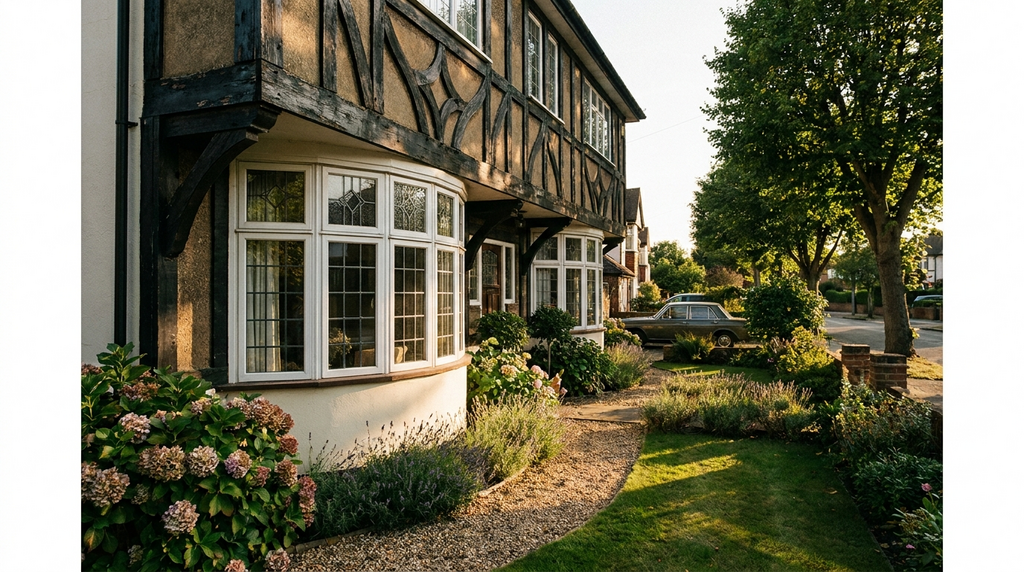
Interwar homes (1930s–1950s), which dominate areas like Gidea Park, Hornchurch, and Romford’s outer suburbs, typically have wide timber casement or sash windows with deep reveals. The good news is these homes usually have solid brick reveals that make installation relatively straightforward. The challenge is that original timber frames often have unusual dimensions, meaning you’ll almost certainly need made-to-measure units rather than off-the-shelf sizes.
Post-war council and private estates from the 1950s–1970s, think parts of Harold Hill, Elm Park, and Collier Row, often have aluminium or steel-framed single glazing. Replacing these requires careful measurement as the frames can be irregular, and some will need structural work to the surrounding masonry. Budget a little extra for this era of property.
Newer homes from the 1980s and 1990s (common in developments around South Hornchurch and Rainham) may already have double glazing fitted, but if it’s original to the build, it’s likely an older sealed unit with argon gas that has since escaped, meaning condensation between the panes and significantly reduced thermal performance. Replacement sealed units rather than full frame replacement can be a cost-effective option here.
Access is rarely a huge issue for Havering’s typical semi-detached and detached homes, you generally have side access and driveways, but properties close to Romford town centre or on tighter streets in Collier Row may face the same parking and scaffolding challenges common elsewhere in London, which does push costs up.
How Much Double Glazing Costs in Havering and the London Area in 2026
Let’s talk real numbers. London installers typically charge 15–25% above the national average, and Havering sits at the lower end of that London premium, you’re not paying inner-city rates, but you’re not getting Essex-town prices either. Installers serving Havering also cover Redbridge, Newham, Waltham Forest, and Greenwich, so competition keeps things reasonably honest.
| Property Type | Number of Windows | uPVC Double Glazing | Aluminium Double Glazing | Triple Glazing Upgrade |
|---|---|---|---|---|
| 2-bed semi (e.g. Elm Park) | 6–8 windows | £3,800–£5,200 | £5,500–£7,500 | Add £900–£1,400 |
| 3-bed semi (e.g. Hornchurch) | 8–10 windows | £4,800–£6,500 | £7,000–£9,500 | Add £1,200–£1,800 |
| 4-bed detached (e.g. Gidea Park) | 10–14 windows | £6,500–£9,000 | £9,500–£14,000 | Add £1,800–£2,800 |
| Large detached (e.g. Upminster) | 14–18 windows | £9,000–£13,000 | £13,000–£19,000 | Add £2,500–£4,000 |
| National average (3-bed semi) | 8–10 windows | £4,100–£5,500 | £6,000–£8,000 | Add £1,000–£1,500 |
Factors that push costs higher in Havering specifically include
- Restricted parking near Romford, Collier Row, or Harold Hill adding scaffolding and logistics costs
- Conservation area requirements (see below) requiring specialist or heritage-style frames
- Non-standard window sizes in 1930s–1950s properties requiring bespoke manufacturing
- ULEZ and congestion charge costs passed on by installers working across east London
- Gidea Park conservation area requiring sympathetic design approval
Always get three quotes. The spread between the cheapest and most expensive quote in London can easily be 40%, so shopping around genuinely pays off here.
How Havering’s Weather and Location Affect Your Double Glazing Choices
Havering’s climate is genuinely a bit different from the rest of Greater London, and it should influence what you buy. Sitting at the eastern edge of the capital, the borough experiences more cold easterly and north-easterly winds in winter than boroughs further west. These winds sweep across from the Essex coast and Thames Estuary, and they hit east-facing windows hard, creating both heat loss and condensation risk on any glazing with a poor warm-edge spacer bar.
On the flip side, Havering enjoys some of the best solar exposure in Greater London. With 1,200–1,500 sunshine hours per year and solar irradiance of around 1,100–1,200 kWh per square metre annually, south and west-facing windows in Havering can contribute meaningfully to passive solar gain. This means you don’t necessarily want highly reflective solar control glass on south-facing elevations, you’d actually be blocking free winter warmth.
Rainfall here is lower than the UK average at 500–700mm per year, which is actually good news for timber window surrounds and for any external work, installers have more reliable dry-weather installation windows than they’d get further north or west. Damp isn’t a big driver of window failure in Havering the way it can be in, say, Wales or the northwest.
Practical takeaways for Havering homeowners
- Prioritise thermally broken frames on north and east-facing elevations, these face the worst of the cold easterly winds
- Don’t over-specify solar control glass on south-facing rooms, standard low-E coating is usually sufficient here
- Warm-edge spacer bars (like Super Spacer or Swisspacer) are a worthwhile upgrade given the cold easterly exposure
- Argon gas-filled units are the minimum, krypton-filled triple glazing is worth considering for rooms facing north or northeast
The Products and Options That Actually Work Best Here
Given Havering’s housing stock and climate, here’s what a knowledgeable installer who really knows this borough would recommend, not a generic product list, but honest advice for these specific homes and conditions.
For 1930s–1950s Semis in Hornchurch, Gidea Park, and Romford Suburbs
Flush casement uPVC in white or woodgrain finish respects the period character without breaking the bank. Look for a U-value of 1.2 W/m²K or better (the current Building Regulations minimum is 1.4, but you want better than minimum). A-rated or A+ units with warm-edge spacers and argon fill are the sweet spot for these properties.
For Conservation Areas (Gidea Park, Parts of Upminster)
You’ll need to match the existing window style closely. Timber or composite frames are often preferred or required, expect to pay £800–£1,400 per window for quality timber double-glazed units. Some installers now offer a convincing slim-profile aluminium alternative that satisfies planners while outperforming timber on thermal performance. Always check with the London Borough of Havering planning team before ordering.
For Larger Detached Homes in Emerson Park and Upminster
Aluminium frames with a thermally broken core deserve serious consideration. They look sharp on larger, more contemporary-style homes, they’re incredibly durable (40+ years with minimal maintenance), and modern powder-coated finishes hold their appearance far better than uPVC in direct sun, relevant given Havering’s above-average sunshine hours. Target a U-value of 1.0 W/m²K or below for the full frame assembly.
Triple Glazing, Is It Worth It in Havering?
Honestly, in Havering’s relatively mild climate (1,200–1,500 heating degree days), triple glazing offers a modest rather than dramatic improvement over high-spec double glazing. It’s worth the upgrade cost specifically for north and east-facing bedrooms where cold easterly draughts are most noticeable, or for homes right next to the A12 or the Elizabeth line where acoustic performance matters as much as thermal. Triple glazing adds meaningful noise reduction.
How to Find a Trustworthy Double Glazing Installer Near Havering
The London double glazing market has no shortage of installers, but quality varies enormously. Here’s how to protect yourself and find someone genuinely good.
Certifications to insist on
- FENSA or CERTASS registration, mandatory for any installer replacing windows in England. They self-certify the installation meets Building Regulations, saving you an extra fee for a council inspection
- TrustMark accreditation, the government-endorsed quality scheme; particularly important if you’re using grant funding
- Which? Trusted Trader, useful secondary check for reputation
Questions worth asking before you sign anything
- Are you FENSA or CERTASS registered, and will you provide the certificate on completion?
- What is the warranty on frames versus sealed units (these are often different, 10 years on frames, 5 on units is common but you can negotiate better)?
- Who manufactures your frames, and where?
- Do you have experience working in Havering’s conservation areas?
- Will you handle the Building Regulations self-certification, or do I need to notify the council separately?
Red flags to watch for
- Pressure to sign on the day with “today only” discounts
- No physical business address (common with one-person operations who won’t honour warranties)
- Cash-only payment requests
- No mention of FENSA or building regulations compliance
Many of the best installers serving Havering also cover Redbridge, Newham, Waltham Forest, and Greenwich, meaning they’re busy and you may wait 4–8 weeks for an installation slot in peak periods (autumn and early spring). Book early if you want the work done before winter sets in.
Grants and Funding That Could Reduce Your Costs in 2026
Double glazing funding is more targeted than some other home improvements, but there are genuine routes to financial help for Havering residents.
ECO4 Scheme
The Energy Company Obligation scheme (ECO4) can cover window replacement as part of a whole-home retrofit, but windows must usually be accompanied by other measures (insulation, heat pumps) to qualify. Eligibility is means-tested, you’ll typically need to be receiving a qualifying benefit (Universal Credit, Pension Credit, Child Tax Credit among others) and have a home with an EPC below Band D. Given Havering’s average Band D rating, many properties sit right on the boundary, it’s worth checking even if you’re unsure.
Great British Insulation Scheme (GBIS)
The Great British Insulation Scheme closed on 31 March 2026. It funded insulation measures only and never covered windows or glazing. The Great British Insulation Scheme closed on 31 March 2026. It funded insulation measures only and never covered windows or glazing.
London-Specific Support
The Mayor of London’s Warmer Homes programme offers funded retrofits to lower-income Londoners across all 32 boroughs including Havering. In 2026 this remains one of the more accessible routes to subsidised glazing work. Contact the GLA or Havering Council’s energy advice line to check current availability and apply, waiting lists exist but they move.
Home Upgrade Grant (HUG)
For off-gas-grid homes or those in the lowest EPC bands, HUG funding can contribute to window upgrades. Fewer Havering homes are off-grid than in rural areas, but it’s worth checking if your property uses oil or electric heating.
Honest note, if your home already has double glazing and you’re upgrading to newer units, grant funding is harder to access than if you’re replacing single glazing. Prioritise checking eligibility before you commit to any contractor, as grant-funded work must use TrustMark-accredited installers.
Planning Permission and Regulations in Havering, What You Actually Need to Know
For most Havering homeowners, replacing windows is covered by permitted development rights, meaning no planning permission required. But there are important exceptions specific to this borough.
Standard rules for semi-detached and detached homes
- Replacement windows in the same style and material as originals fall under permitted development, no application needed
- Changing the style significantly (e.g. from casement to sash, or adding new openings) may require planning permission
- Building Regulations compliance