Why Newham Homeowners Are Looking at Double Glazing Right Now
Newham is changing fast. With the legacy of the Olympic Park regeneration still reshaping Stratford and surrounding areas, thousands of homeowners across E6, E7, E13, and E15 are rethinking their properties, and double glazing is sitting right at the top of the list. Energy bills have bitten hard, and in a borough where the average EPC sits at Band D, the gap between what your home could do and what it’s actually doing is significant.
There’s another driver too. Newham’s housing stock is heavily Victorian and Edwardian, think those deep terraced rows stretching through Forest Gate, Manor Park, and Plaistow. Many of those homes still have their original single-glazed sash windows, draughty frames, and thin glass that does almost nothing against cold easterly winds blowing in off the Thames estuary. Replacing them improves comfort and genuinely reduces what you spend every single month.
Then there’s the noise. Newham sits under the Heathrow and City Airport flight paths, borders the A13, and has busy Crossrail corridors running through its heart. Acoustic performance is something local residents care about deeply, and it’s one area where quality double glazing genuinely delivers, not just energy savings, but a noticeably quieter home.
What Double Glazing Actually Involves for a Typical Newham Home
Most homes in Newham fall into two camps, Victorian or Edwardian terraces built between roughly 1880 and 1914, and post-war or newer flats, including the high-rise blocks around Canning Town, Custom House, and Green Street. Both present specific installation realities that differ from a semi-detached suburban home in the Home Counties.
For terraced properties, access is often the first challenge. Many Newham terraces have no side access, meaning installers have to carry everything through the front door or use the back alleyways that run between rows. These are frequently narrow, sometimes gated, and rarely built with large window frames in mind. This adds time, and in London, time means money.
Sash windows are extremely common in the older terraces around Upton Park, Plaistow, and Forest Gate. Standard casement replacement windows won’t do here, you’re looking at purpose-made sliding sash double-glazed units, which cost more than standard casements but are the right product for these properties. Forcing a casement window into a Victorian sash opening looks wrong, reduces kerb appeal, and can cause issues with planning compliance.
For flats, particularly in blocks, there’s a important additional consideration. If you own a leasehold flat, your lease may require landlord or management company consent before you can change your windows at all. Some blocks have a standard window specification that all residents must use. Check your lease first, before getting a single quote.
- Victorian terraces (1880–1914), Likely need sliding sash or sympathetic casement replacement; original frames may be rotten and need full removal
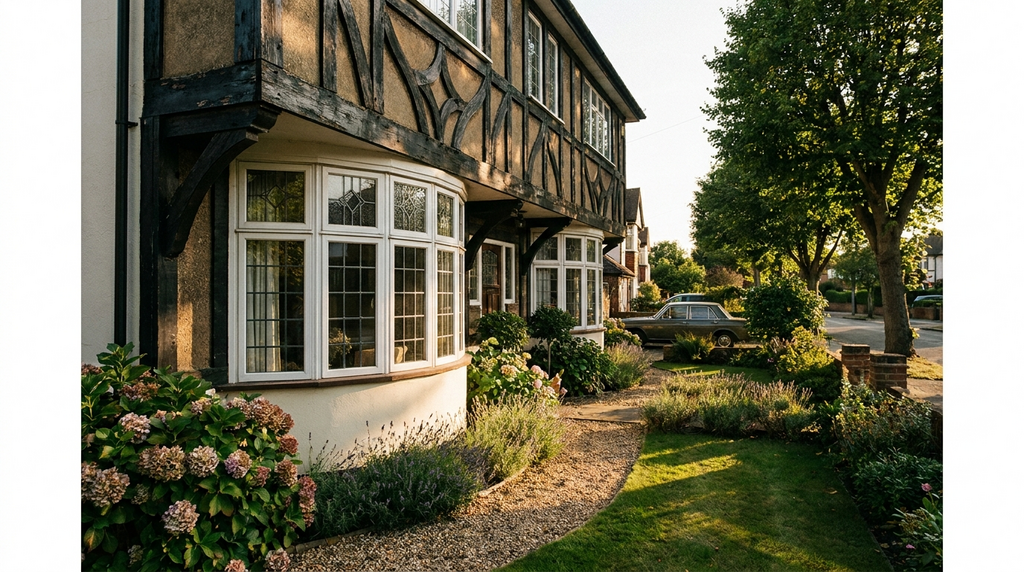
- Edwardian terraces (1900–1920), Often have larger bay windows at the front, which require careful measurement and higher costs
- Post-war maisonettes and flats (1950s–1980s), Usually already have some form of double glazing; upgrades focus on replacing failed sealed units or improving U-values
- New-build flats (1990s onwards), May already meet modern standards; get an EPC check before spending unnecessarily
One insider tip worth knowing, Newham’s older terraces often have non-standard window openings. Years of settlement mean perfectly square openings are rare. Always insist on a surveyor measuring up in person rather than you giving dimensions over the phone. A good surveyor will spot issues that a quick estimate would miss entirely.
How Much Double Glazing Costs in Newham and the London Area in 2026
Let’s get into the numbers, because this is where Newham is genuinely different from most of the UK. London labour costs run 15–25% above the national average, and Newham-specific factors, parking restrictions, ULEZ charges for older installer vans, narrow access routes, and the sheer volume of work in East London, push costs up further still.
| Property Type | Number of Windows | Newham / East London Cost | UK National Average |
|---|---|---|---|
| 1-bed flat | 3–4 windows | £2,800 – £4,200 | £2,200 – £3,400 |
| 2-bed flat | 4–6 windows | £3,500 – £5,400 | £2,800 – £4,400 |
| 2-bed terraced house | 6–8 windows + front door | £4,800 – £7,200 | £3,800 – £5,800 |
| 3-bed terraced house | 8–10 windows + door | £6,200 – £9,500 | £4,800 – £7,500 |
| Victorian bay-fronted terrace | 8–10 windows inc. bay | £7,500 – £11,000 | £5,800 – £8,500 |
| Sliding sash upgrade (full house) | 6–10 sash windows | £8,500 – £14,000 | £6,500 – £11,000 |
Compare Newham’s costs to neighbouring Tower Hamlets (3km west) and you’ll find broadly similar pricing, both boroughs carry the same London premiums. Move out to Redbridge (5km north) or Greenwich (5km south) and you might shave 5–10% off labour, as installers face fewer access complications. Hackney (7km northwest) tends to be similarly priced to Newham for like-for-like work.
The ULEZ compliance zone covers all of Greater London, so any installer using an older van will either have already upgraded their fleet or be charging a levy to cover the daily charge. Ask specifically about this when comparing quotes, it’s a legitimate cost but shouldn’t be a hidden surprise.
How Newham’s Weather and Location Affect Your Double Glazing Choices
Newham’s climate is genuinely interesting from a double glazing perspective, and it should directly influence what you buy. Being in East London and close to the Thames estuary means the borough experiences cold, dry easterly winds in winter more acutely than much of inner London. These winds come straight off the North Sea with little to stop them, and they create a significant wind chill effect on exposed east-facing elevations, which, given many of Newham’s terraces run east-west, means front or rear walls often bear the brunt.
The good news is that Newham also benefits from the best solar irradiance in the UK, roughly 1,100–1,200 kWh per square metre per year. That matters enormously if you choose glass with a high solar gain coefficient (g-value). South-facing rooms in Forest Gate or Stratford terraces can benefit substantially from passive solar heat gain through well-chosen glazing, helping offset heating costs without any additional technology.
Rainfall here is actually relatively low, 500–700mm per year compared to well over 1,000mm in parts of the north and west. That means frame degradation from persistent wet weather is less of a concern than elsewhere, and uPVC frames will hold up well over time without the moisture-related warping that affects rainier parts of the UK.
- East-facing windows, Prioritise low U-values (0.8 W/m²K or better) to resist cold easterly wind penetration
- South-facing windows, Consider a higher solar g-value (0.40–0.55) to maximise free passive heat in winter
- North-facing windows, Minimise heat loss with high-performance warm-edge spacer bars and triple glazing if budget allows
- Street-facing windows near the A13 or rail lines, Specify acoustic laminated glass in the outer pane for meaningful noise reduction
The Products and Options That Work Best Here
Given Newham’s combination of Victorian housing stock, noise exposure, easterly winds, and excellent solar potential, here’s what actually makes sense rather than a generic product list.
For Victorian and Edwardian terraces, sliding sash double-glazed windows with a uPVC or timber-effect frame are the right call in most cases. Aim for a whole-window U-value of 1.2 W/m²K or better, this exceeds current Building Regulations minimums and makes a meaningful difference to your heating bill. Warm-edge spacer bars (the strip between the two panes of glass) are non-negotiable at this price point, they eliminate cold-edge condensation and improve the overall U-value by around 10%.
For noise-affected properties near the DLR, Crossrail, Barking Road, or under flight paths, specify asymmetric glazing, typically 6mm outer pane and 4mm inner pane with a wider cavity, rather than the standard 4/4 configuration. The different glass thicknesses break sound waves at different frequencies, delivering noticeably better acoustic performance.
For flats in mid-century blocks, check whether the existing frames are aluminium. If they are and the building specification allows replacement, modern thermally-broken aluminium frames offer a slim, modern sightline that suits these buildings well, with U-values competitive with uPVC.
Key specifications to look for on any quote:
- Whole-window U-value of 1.2 W/m²K or below (not just the centre-pane figure)
- Low-E (low emissivity) coating on the inner face of the outer pane
- Argon gas fill in the cavity (standard on most quality units)
- Warm-edge spacer bars, look for brands like Swisspacer or Thermix
- BFRC energy rating of Band A or above
- Acoustic laminated outer pane if you’re within 100 metres of a major road or rail line
How to Find a Trustworthy Double Glazing Installer Near Newham
East London has no shortage of double glazing companies, the challenge is finding one worth trusting. The good news is that most reputable installers covering Newham also serve Tower Hamlets, Hackney, Redbridge, and Greenwich, meaning you have a genuinely competitive marketplace and can gather multiple quotes without difficulty.
The non-negotiable certification to look for is FENSA registration. FENSA-registered installers are authorised to self-certify their work as meeting Building Regulations, without FENSA (or CERTASS as an alternative), you’ll need to organise your own Building Control inspection, which adds cost and admin. A FENSA certificate is also something your solicitor will want when you eventually sell.
Look for TrustMark registration alongside FENSA, TrustMark is the government-endorsed quality scheme and means the business has been independently vetted. Check reviews specifically mentioning work in East London postcodes, as a company that works regularly in Newham will be familiar with the access and parking realities here.
Questions worth asking any installer before signing anything:
- Are you FENSA or CERTASS registered, and will I receive a certificate on completion
- Is your surveyor the same person who manages the installation, or does someone else take over
- How do you handle parking or access restrictions in E7 or E13, do you arrange permits
- What is your process if the finished window doesn’t pass a visual inspection on completion day
- What does your ten-year guarantee actually cover, and who underwrites it if your company closes
Red flags include pressure to sign on the day, deposit requests over 25% of the total job value, and guarantees not backed by an independent insurance policy. Lead times in the London area currently run at four to eight weeks for measured-and-made-to-order units, so be cautious of anyone promising installation within two weeks of survey.
Grants and Funding That Could Reduce Your Costs in 2026
Funding for double glazing specifically has become more targeted in 2026, but there are still real options available to Newham residents, and the borough’s demographics mean a significant proportion of households qualify for meaningful support.
ECO4 (Energy Company Obligation) remains the primary national route for lower-income households. If your home is EPC Band D or below (which most Newham homes are) and you receive qualifying benefits including Universal Credit, Pension Credit, or certain income-related payments, you may be eligible for fully-funded or heavily subsidised double glazing. ECO4 is delivered through energy suppliers, contact your energy company directly or use the government’s Simple Energy Advice service to check eligibility.
The Great British Insulation Scheme closed on 31 March 2026. It funded insulation measures only and never covered windows or glazing. Eligibility requires either a low EPC rating or lower household income, and the scheme prioritises whole-home approaches rather than windows alone, but double glazing installed as part of a wider upgrade can qualify.
Newham Council’s own retrofit and energy efficiency programmes are worth investigating directly through the London Borough of Newham’s website. The borough has historically participated in area-based retrofit initiatives targeting its older terraced housing stock, and the GLA’s Warmer Homes programme has funded upgrades in East London boroughs. Funding availability shifts quarterly, so check with the council’s energy team directly rather than relying on any fixed list.
The Warm Homes Plan, the government’s successor programme to various legacy schemes, is expanding through 2026, watch for announcements about wave funding that may extend grants to owner-occupiers in Band D properties specifically.
One practical tip, if you’re a private landlord with Newham tenants, you’re legally required to reach EPC Band C by the current target dates. Double glazing is one of the most effective ways to push a Band D property into Band C territory, and some landlord-specific funding streams remain available through ECO4. Keep records of all improvements, as they feed directly into your EPC assessment.
Planning Permission and Regulations in Newham
For most Newham homeowners, double glazing falls under permitted development rights, meaning you don’t need planning permission as long as the replacement windows are similar in appearance to what was there before and you’re not in a designated area. This applies to the vast majority of terraced houses and owner-occupied flats with their own external walls.
However, Newham has several areas where additional restrictions apply, and getting this wrong can result in enforcement action. The London Borough of Newham has designated conservation areas including parts of Forest Gate and certain streets in West Ham. Within these areas, you must apply for planning permission before replacing windows, specifically if the change would alter the character of the building, which virtually any change from timber sash to uPVC casement would do.
In conservation areas, the council will typically require: