Why Henley-on-Thames Homeowners Are Turning to Double Glazing Right Now
Henley-on-Thames sits in one of the most desirable stretches of the Thames Valley, and that reputation comes with a particular kind of pressure. Property values here track closely with the wider South East premium, which means any investment you make in your home, including double glazing, has a genuine chance of paying back in more ways than one. You’re not just cutting energy bills; you’re protecting a significant asset.
There’s also something specific to Henley worth mentioning straight away. The town’s mix of Georgian townhouses along Hart Street and New Street, Victorian terraces near the station, and the post-war semis spreading up toward Harpsden and Rotherfield Greys means that double glazing here isn’t a one-size-fits-all job. Age, style, and conservation status all come into play, and that makes local knowledge genuinely valuable.
With the average Henley home already sitting at EPC Band C, above the national average of Band D, many residents have already done some of the easy wins. Double glazing is often the next logical step for homes that still have original timber sashes or older single-glazed units, pushing you from “reasonably efficient” toward genuinely low running costs.
What Double Glazing Actually Involves for a Typical Henley-on-Thames Home
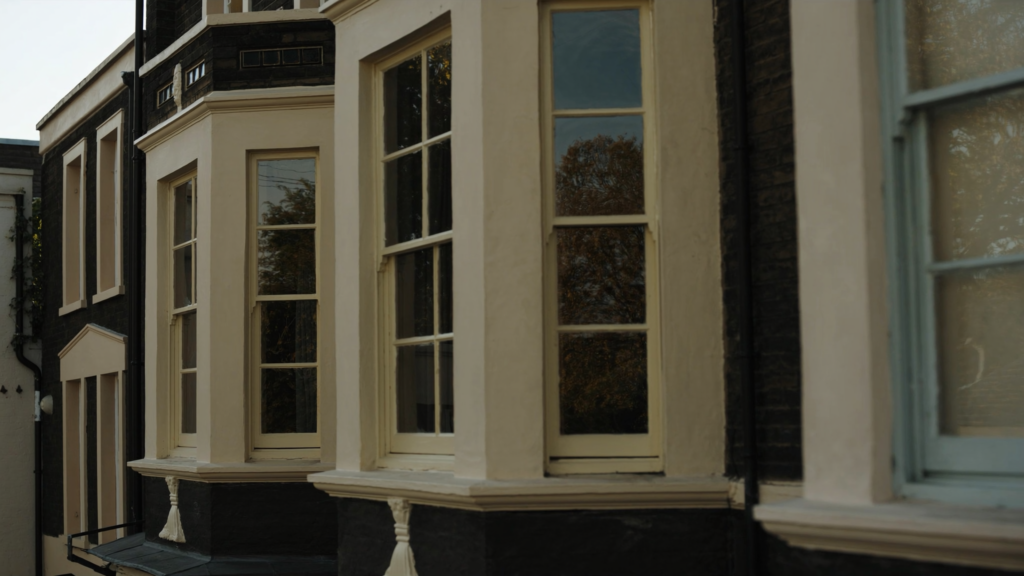
Most of the housing stock in Henley falls into two broad eras. You have the Victorian and Edwardian originals, particularly around Friday Street and the older parts of town near the river, where tall sash windows are the norm. Then you have the mid-20th century detached and semi-detached homes that fill out the residential streets further from the centre, these often have casement windows that may already have had a first generation of double glazing fitted 20 or even 30 years ago.
For the older Victorian properties, the main challenge is aesthetic compatibility. Sash window double glazing has come a long way, modern slim-profile units with a 4mm gap can look remarkably close to the originals, but getting the detail right matters here, especially near conservation-sensitive streets. Expect a more involved survey process and slightly longer lead times for bespoke timber or timber-effect uPVC sash units.
For the post-war semis, particularly those built between the 1950s and 1980s, you’re more likely dealing with a straightforward casement replacement. These properties typically have standard window openings, good access, and no heritage complications, which keeps costs down and installation times short. A full house replacement on a three-bedroom semi in this category can often be completed in a single day by an experienced two-person team.
- Older timber sash windows, require specialist slim-profile units, often bespoke, longer lead time
- 1950s–80s casements, typically a clean replacement job, standard sizing, fastest turnaround
- 1990s–early 2000s double glazing, may need full replacement as seals fail; check for misting before assuming a full unit change
- Detached properties, more windows, higher total cost, but also more to gain in heat retention
One practical challenge that catches Henley homeowners off guard is access and parking for larger installations. The older streets near the town centre have limited kerb access, and installers sometimes need to factor in extra time and potentially mini-skip permits for waste glass and frames. It’s worth flagging your property location clearly when requesting quotes.
How Much Double Glazing Costs in Henley-on-Thames and the South East Area in 2026
Let’s get into real numbers, because that’s what you actually need when planning this kind of project. Prices in Henley sit slightly above the national average. This reflects South East labour rates and the higher proportion of bespoke work required for older properties. Even so, you benefit from strong competition among installers who cover the Reading, Marlow, and Maidenhead corridor, more on that shortly.
| Property Type | Number of Windows | Standard uPVC Casement | Timber-Effect uPVC | Timber or Aluminium Slim-Profile |
|---|---|---|---|---|
| 2-bed semi-detached | 6–8 | £3,200–£4,500 | £4,000–£5,500 | £5,500–£7,500 |
| 3-bed semi-detached | 8–10 | £4,200–£5,800 | £5,200–£7,000 | £7,000–£9,500 |
| 3-bed detached | 10–14 | £5,500–£7,500 | £6,800–£9,200 | £9,000–£13,000 |
| 4-bed detached | 14–18 | £7,000–£10,000 | £8,500–£12,000 | £11,500–£17,000 |
| Conservation area uplift | , | +10–15% | +10–15% | +15–25% |
These figures include supply, installation, and VAT at 5% (the reduced rate applicable to energy-saving materials). Scaffolding is rarely needed for most standard two-storey residential work, but if your property has awkward rooflines or dormer windows, common on some of the larger detached homes around Badgemore, budget an additional £400–£800.
Compared to the South East average, Henley prices run about 5–10% above Reading and Wokingham, largely due to access considerations in the town centre and the higher proportion of non-standard window shapes. Marlow and Maidenhead are roughly comparable, while prices in Reading itself tend to be slightly lower due to greater installer density and fewer bespoke requirements.
How Henley’s Weather and Location Shape the Best Double Glazing Choices
Henley sits in a genuinely favourable climate zone. The Thames Valley location gives you milder winters than much of England, with heating degree days in the 1,200–1,500 range, meaning your heating system isn’t working as hard as a home in Yorkshire or the Midlands. That might sound like an argument against double glazing, but it actually changes the calculation in a more nuanced way.
Because your heating demand is moderate rather than extreme, the payback case for double glazing here leans heavily on comfort and draught elimination rather than pure fuel savings. Single-glazed or failed double-glazed units create cold spots near windows that affect how comfortable a room feels even when the thermostat says it’s warm. Eliminating those cold radiant surfaces makes a noticeable quality-of-life difference, often more immediately than you’d feel in a consistently cold northern climate.
The Thames itself is worth thinking about. Properties within a few hundred metres of the river, particularly those along Riverside, Remenham Lane, or overlooking the regatta course, can experience elevated humidity and occasional mist, especially in autumn and winter. This increases the importance of good perimeter sealing around your frames and choosing windows with warm-edge spacer bars rather than older aluminium spacers. Warm-edge technology significantly reduces condensation on the glass edge, which is where you’ll see the first signs of moisture issues in riverside homes.
Rainfall in Henley averages around 650–700mm per year, which is moderate rather than high. Wind exposure is sheltered by surrounding hills, particularly to the north and west, so you don’t need to specify extreme weather ratings for most properties. Even so, homes on exposed elevated positions, those on the higher ground toward Rotherfield Greys or on the Harpsden Road ridge, will benefit from specifying a higher air permeability rating on their window frames.
The Products and Options That Genuinely Perform Well Here
Given the combination of Henley’s housing stock and climate, here’s what I’d genuinely recommend rather than a generic list of window types.
For Victorian and Edwardian properties, slim double-glazed sash windows with a 12mm or 14mm argon-filled cavity remain the best balance of thermal performance and authenticity. Avoid units with a very wide outer frame; the visual proportions matter on older buildings and affect both character and planning acceptability. Look for a centre-pane U-value of 1.2 W/m²K or better.
For post-war semis and detached homes, standard uPVC casement windows with a triple-chamber profile and 16mm argon-filled cavity are the sweet spot. A whole-window U-value of 1.4 W/m²K or better qualifies comfortably for Building Regulations compliance and is a meaningful upgrade over anything installed before 2010.
- Warm-edge spacer bars, non-negotiable for riverside or low-lying properties; reduces edge condensation significantly
- Argon fill, standard on most modern units; worth confirming rather than assuming
- Low-E coating, ask for a softcoat (hard-to-damage internal coating) on main living room south-facing windows to manage solar gain without blocking light
- Acoustic glazing, properties near the A4155 or close to the town centre on market days may benefit from laminated acoustic inner panes; adds around £80–£120 per window
Triple glazing is worth considering for north-facing or particularly exposed elevations on larger detached properties, but for most Henley homes in this climate zone, the extra cost (typically 20–30% above equivalent double glazing) doesn’t deliver proportionate energy savings given the milder winters. Spend the difference on better frame quality instead.
How to Find a Trustworthy Double Glazing Installer Near Henley-on-Thames
Henley itself doesn’t have a large cluster of dedicated glazing companies based in town, with a population of 11,000, that’s not surprising. In practice, most installations are carried out by companies based in Reading, Marlow, or Maidenhead that cover the surrounding towns as part of their regular service area. This is entirely normal and nothing to worry about, but it does mean you should check that the installer has genuine familiarity with Henley’s planning requirements and building stock rather than just including the town on a broad coverage map.
The certifications that genuinely matter for double glazing work are straightforward. Look for FENSA registration, this is the industry-standard competent person scheme for window and door installation, and a registered installer can self-certify that the work meets Building Regulations without you needing a separate council inspection. CERTASS is an equally valid alternative scheme.
Beyond that, TrustMark registration is a good additional indicator of quality, and membership of the Glass and Glazing Federation (GGF) suggests a company that takes professional standards seriously. For what it’s worth, the major national brands do serve this area but tend to use high-pressure sales tactics, getting three independent quotes from FENSA-registered local companies will almost always give you better value.
Questions worth asking every installer before you commit
- Are you FENSA or CERTASS registered and will you handle the compliance certificate
- What U-value do your standard units achieve for the whole window, not just the glass centre
- Do your windows carry a British Standards kitemark or equivalent European certification
- How do you handle Victorian or non-standard window openings, do you subcontract bespoke frames
- What is the guarantee on both the sealed units and the frames separately
Current lead times in the South East are running at 4–8 weeks for standard units and 8–14 weeks for bespoke timber or heritage-style sash windows. If a company promises installation in under two weeks without very good reason, treat that as a red flag, quality bespoke work takes time to manufacture.
Grants and Funding That Could Cut Your Costs in 2026
The honest picture on double glazing grants in 2026 is this, standalone double glazing rarely qualifies for direct grant funding unless it’s part of a broader energy efficiency package. But there are routes worth exploring for Henley residents.
ECO4 (Energy Company Obligation), This scheme funds energy improvements for low-income or vulnerable households. Double glazing can be covered under ECO4, but typically only as a secondary measure alongside primary work like insulation or heating upgrades. To check eligibility, you’ll need to be receiving qualifying benefits or have a low household income. Contact Oxfordshire County Council’s Warmer Communities team, who coordinate ECO4 referrals for residents across the county including Henley.
Great British Insulation Scheme (GBIS), Similarly, GBIS focuses primarily on insulation, but glazing improvements in homes with poor EPC ratings (Band D or below) can sometimes be bundled into an application. Given that Henley’s average is Band C, fewer homes will qualify at the upper end, but Band D and E properties absolutely should explore this route.
South Oxfordshire District Council schemes, Henley falls under South Oxfordshire District Council, which has periodically run its own retrofit support schemes through its climate action commitments. It’s worth checking the council’s current retrofit support pages directly, as locally funded interest-free loan schemes for energy efficiency measures have been available to residents in previous years and may continue in 2026.
VAT at 5%, This isn’t a grant but it is a genuine saving. Glazing is standard-rated for VAT at 20%. The zero rate for energy-saving materials covers insulation, heat pumps and solar panels; HMRC names secondary and double glazing as excluded (VAT Notice 708/6). Make sure any quote you receive explicitly applies the 5% rate, most reputable installers will, but it’s worth confirming.
Planning Permission and Local Regulations in Henley-on-Thames
For most Henley homeowners, double glazing falls under permitted development rights, meaning you don’t need planning permission, and the installation only needs to comply with Building Regulations, which your FENSA-registered installer handles automatically.
However, Henley has several conservation areas where things work differently. The Henley-on-Thames Conservation Area covers a substantial portion of the historic town centre, including much of Hart Street, New Street, Bell Street, and the streets immediately surrounding the Market Place. If your property falls within this designation, and a significant number of the older properties in town do, you’ll need to ensure any replacement windows match the appearance, materials, and proportions of the originals. In practice, this usually means timber or very high-quality timber-effect frames, slim sightlines, and potentially specific colour requirements.
South Oxfordshire District Council (SODC) is your planning authority for Henley. Their conservation officers are generally pragmatic and will often advise informally before you commit to a product, a 15-minute call can save you from ordering the wrong specification. If your property is a Listed Building rather than simply within the conservation area, you’ll need Listed Building Consent before carrying out any glazing changes, and this is a more formal process with specific material requirements.
Properties not in conservation areas or listed status follow the standard national rules. Window replacements must achieve a minimum whole-window U-value of 1.6 W/m²K (most modern double-glazed units far exceed this) and must not significantly alter the external appearance in ways that affect neighbours or street character.
What You Will Actually Save, Honest Numbers for Henley Homes
With Henley’s